- Later half, we’ll learn Non-Linear Data Structure.
A tree and its components
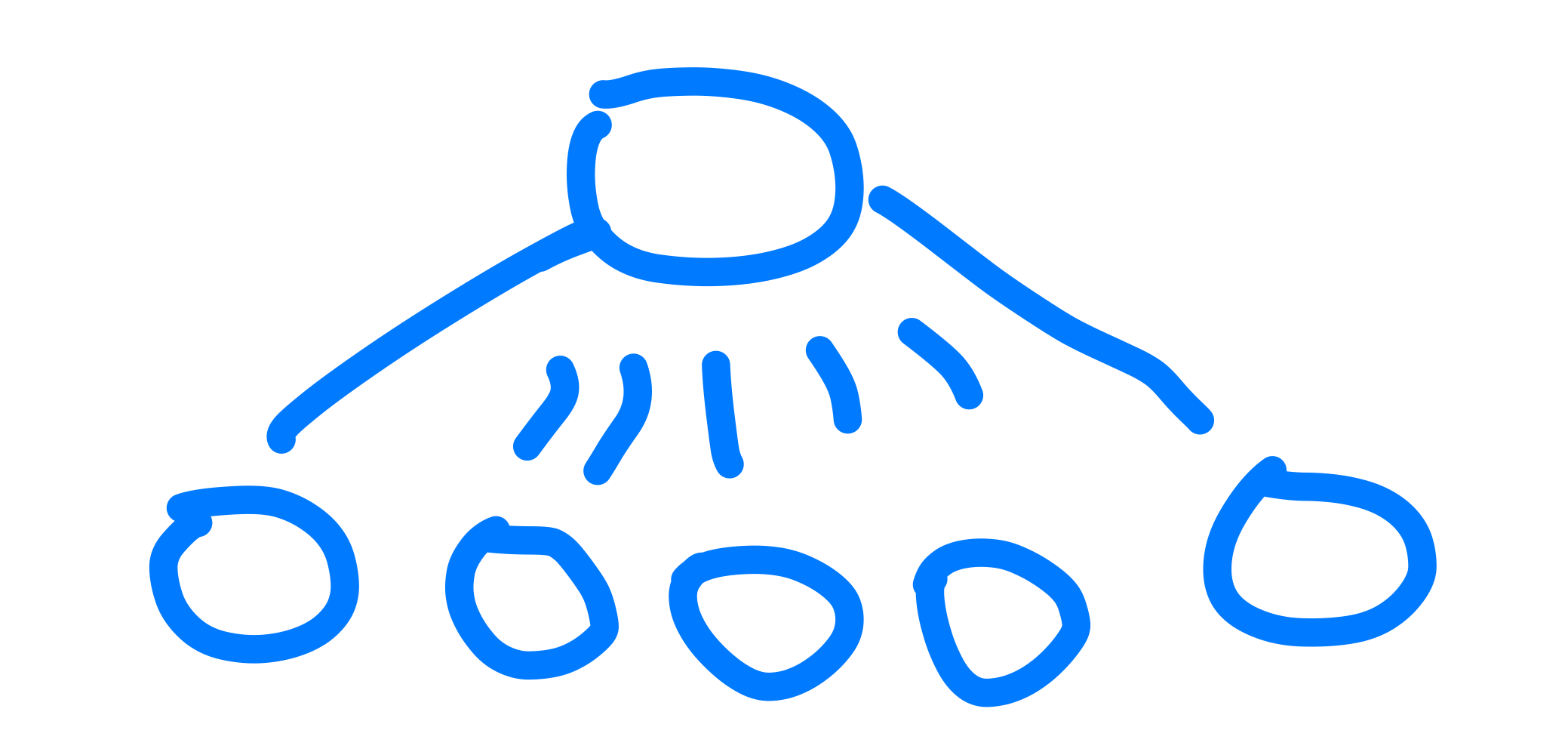
- A tree is a hierarchical nonlinear data structure which composes of nodes and branches
- The root is the node at the top of the hierarchy. (เอาต้นไม้มาพลิกกลับด้าน)

- The leaf node is the node that has no branch leaving from it
Indegree, Outdegree, and Degree
- The indegree of a node is the number of branches that point inward to it.
- Number of arrow ที่ point ไปยัง Node นั้น ๆ
- The outdegree of a node is the number of branches that point outward from it.
- Number of arrow ที่ point ออกจาก Node นั้น ๆ
- The degree of a node is equal to its indegree plus its outdegree.
- เอา Indegree บวกกับ Outdegree
- The maximum indegree of a tree is the highest indegree among all nodes.
- ก็ดูว่า Node ไหนมี Indegree มากสุด เปรียบเทียบกับทั้ง Tree
- The maximum outdegree of a tree is the highest outdegree among all nodes.
Parent, Child, Leaf
- A parent node is a node with a nonzero outdegree. (แปลว่ามีต่อไปข้างล่าง)
- A child node is a node with a nonzero indegree.
- A leaf node is a node that has no children; its outdegree is zero.
- A root is a node with a zero indegree.
Level and Height
- The level (L) of a node in a tree is the distance from the root to that node.
- Concept คล้าย ๆ Array ที่เริ่มจาก 0
- The height (H) of a node in a tree is the number of levels of that node plus 1.
- A tree of size has a height of at most .

- A tree of size has a height of at least .
A subtree
- A subtree of a tree is a smaller tree that is part of the larger tree.
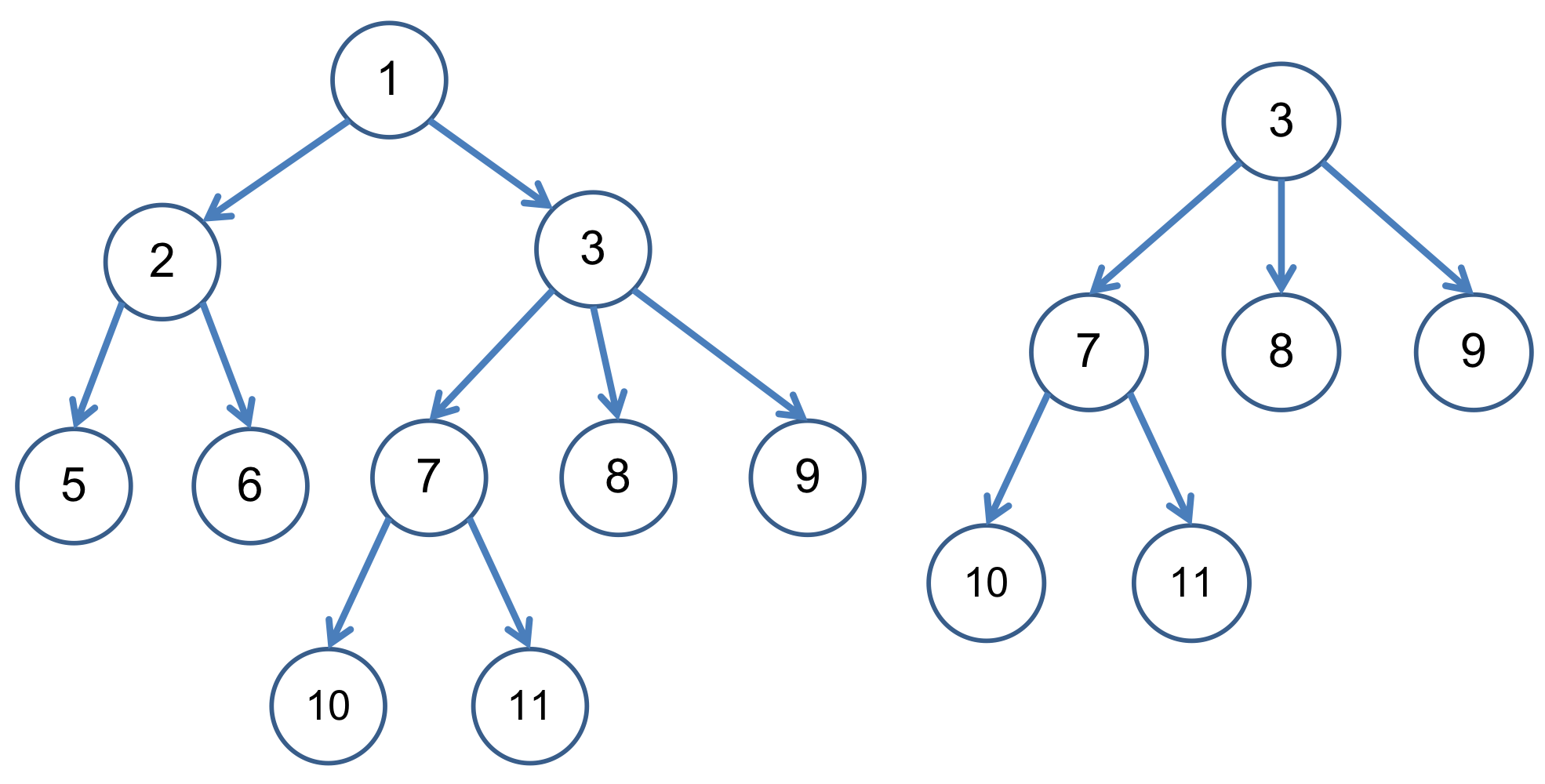
The tree on the right is the subtree of the tree on the left
Binary Tree (BT)
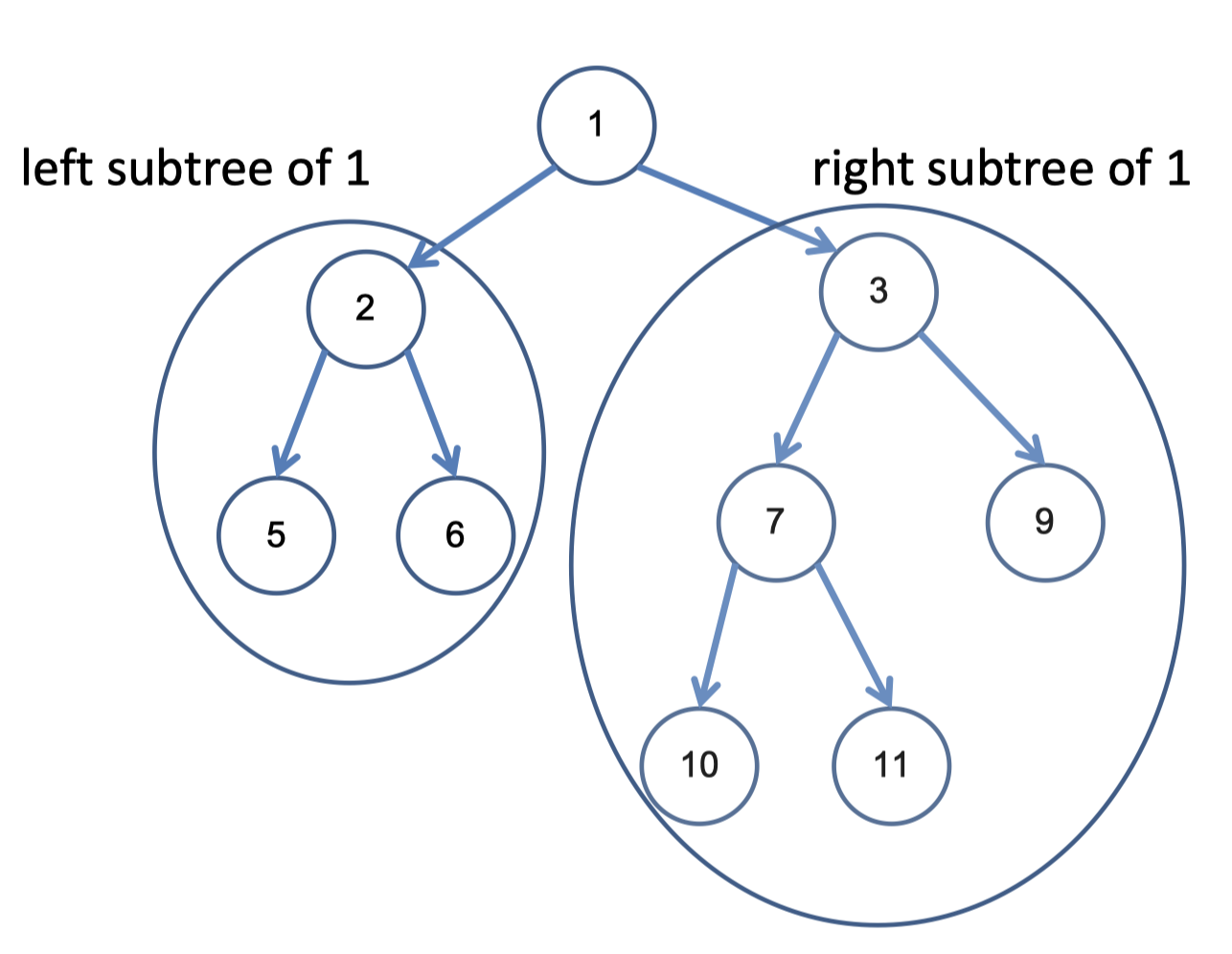
A binary tree (BT) is a tree in which ==each node has at most two children.==
- The left subtree of a BT is the subset of the BT that contains all nodes and branches from the left side of the BT.
- The concept of the right subtree of a BT is similar.
Balance Factor
- ย้ำอีกครั้งว่า A binary tree (BT) is a tree in which each node has at most two children.
- The balance factor () of a node is the difference between the height of its left subtree and the height of its right subtree (), i.e.
- A BT is balanced if the absolute balance factor () of every node in the tree is either 0 or 1
Height of a Binary Tree
- A binary tree of size has the height at most
- A BT with one node per each level.
- A BT with one node per each level.
- A binary tree of size has the height at least
- สูตรนี้ได้มาจากการคำนวณ นั่นแหละ ไม่มีไรมากก จำไปเลย!
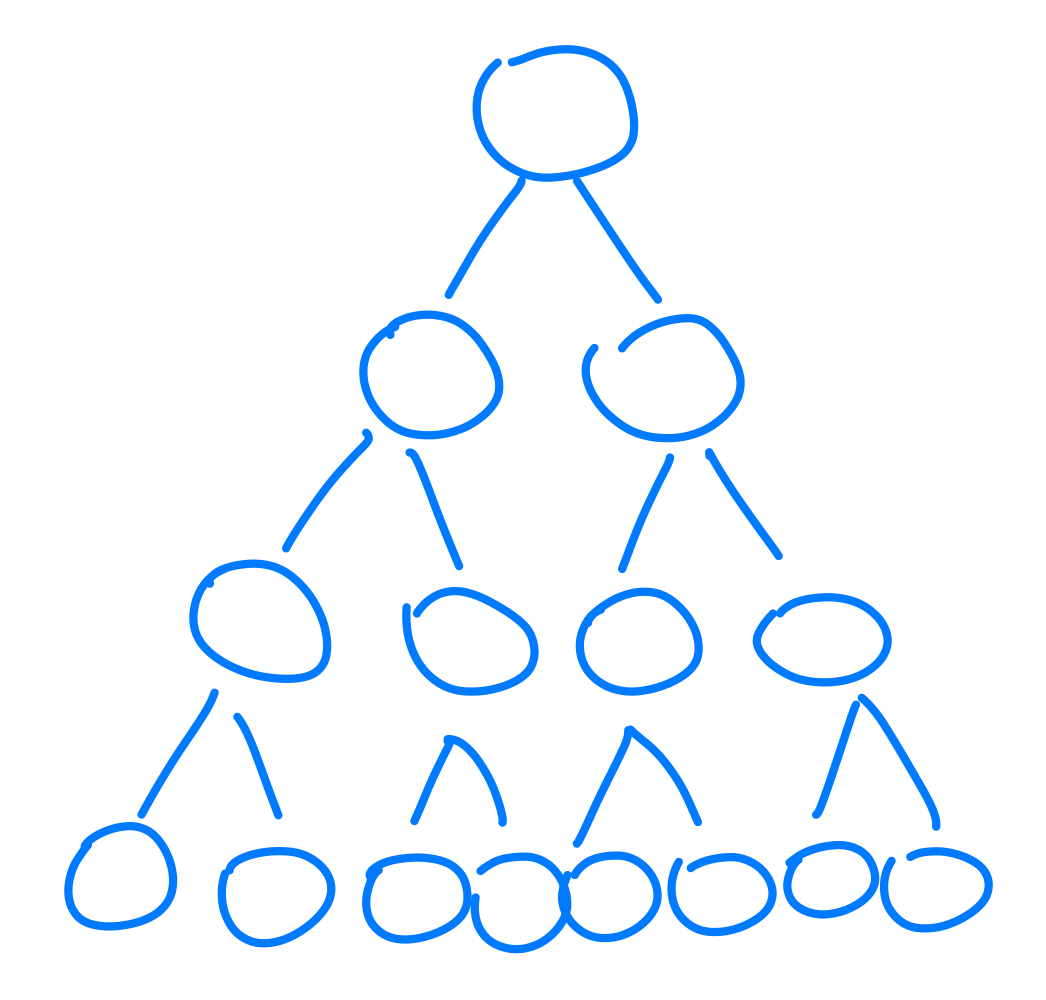
- สูตรนี้ได้มาจากการคำนวณ นั่นแหละ ไม่มีไรมากก จำไปเลย!
Complete, Nearly Complete
- A BT tree is complete or ==full if and only if every level is full.==
- A BT tree is nearly complete if and only if all levels, excepts the last, are full, and the elements in the last level are filled consecutively from left to right.
- The height of a complete or nearly complete BT of size n is
Binary Tree Application
1. Expression Tree
- มาจาก Infix ใน 07 Stack and its Applications
เวลา Pop-out ให้อันที่อยู่ข้างบนไว้ขวามือนะ!
- แยกออกเป็น 2 Stack: Tree กับ Operator
2. Huffman Coding
- Huffman coding was invented by David Huffman.
- It is used for file compression.
- It saves space compared to fixed-length encoding by using short codeword strings to encode high-frequency characters and long codeword strings to encode low-frequency characters.
- The Huffman code is used to assign variable bit lengths to each character based on its frequency of appearance.
- A character that appears more often is assigned a shorter bit length compared to other characters.
Steps
- เขียน Frequency ของแต่ละตัวอักษรที่ปรากฎอยู่ในคำ (ขั้นตอนนี้นับดี ๆ)
- บรรทัดล่างสุด เรียง Frequency ของแต่ละตัว จาก (มาก → น้อย, ซ้าย → ขวา) — ไม่ต้องห่วงเรื่องการเรียงตัวหนังสือที่เท่ากัน เพราะแต่ละคนจะเรียงไม่เหมือนกันอยู่แล้ว
- แล้วก็ Construct ออกมาได้เลย
3. Visiting Nodes in a tree (Searching)
- อันนี้มันไม่ใช่ Linear แล้ว ดังนั้นการจะ Search มันก็จะยากขึ้น ดังนั้นเราจะ Collapse Tree ให้เป็น Linear-ich??
Binary Tree Traversal
- Tree traversal is useful for listing out data or to visit nodes in the tree
- The traversal can also be used for searching for a specific element
- Five ways to visit nodes in tree
- Traverse nodes according to the order of the root, its left node, and its right node
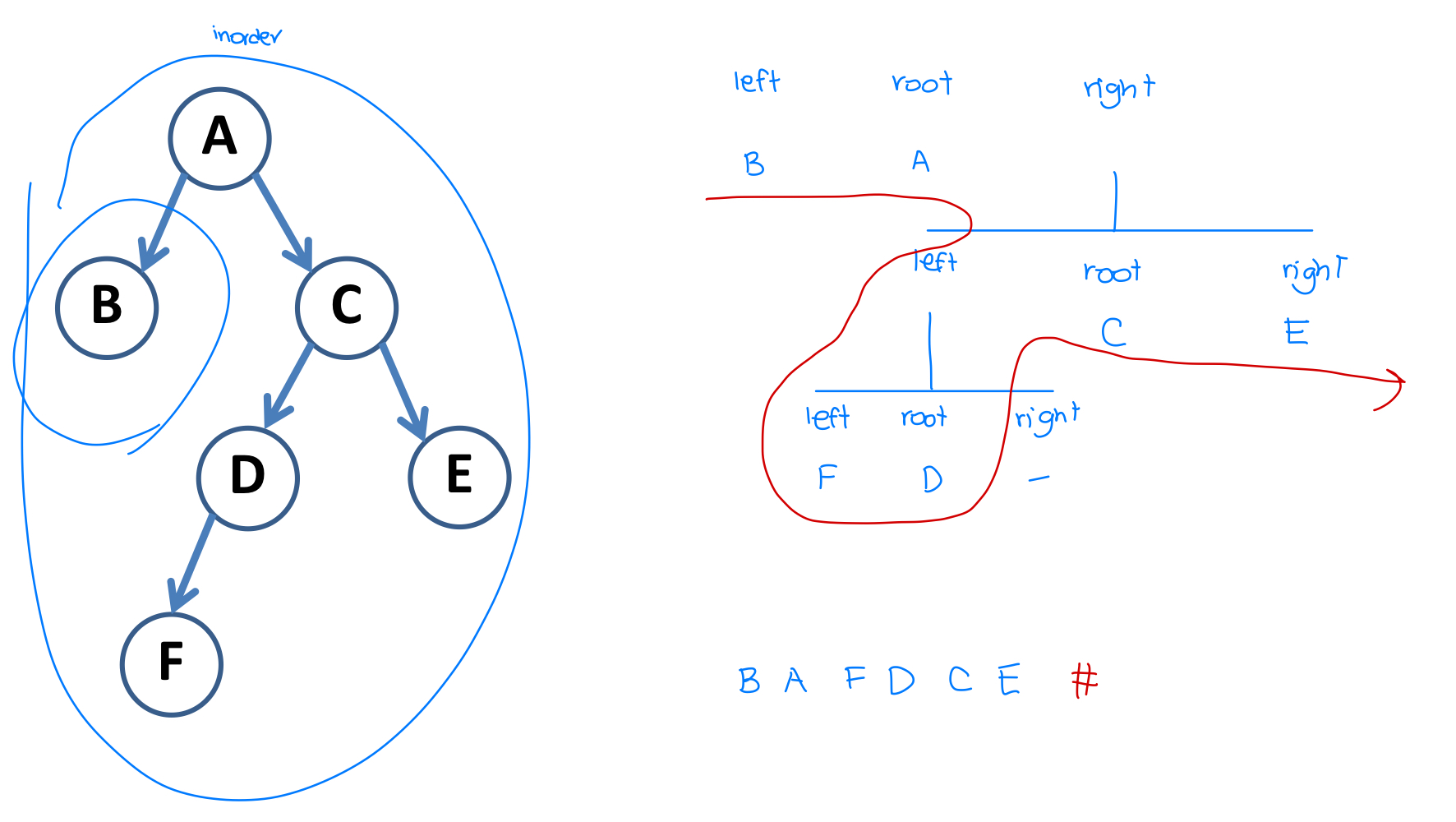
- Inorder traversal: left root right
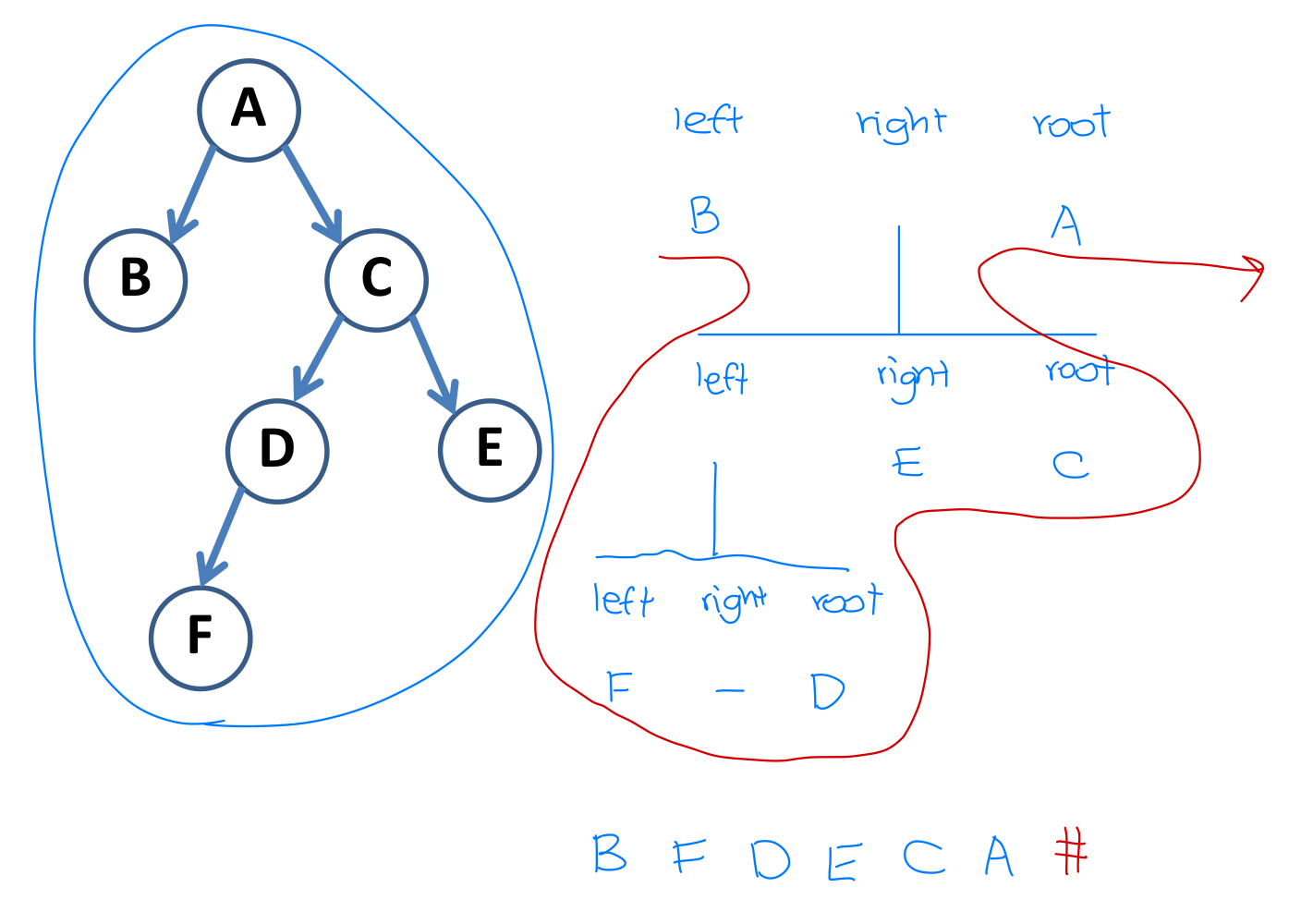
- Postorder traversal: left right root
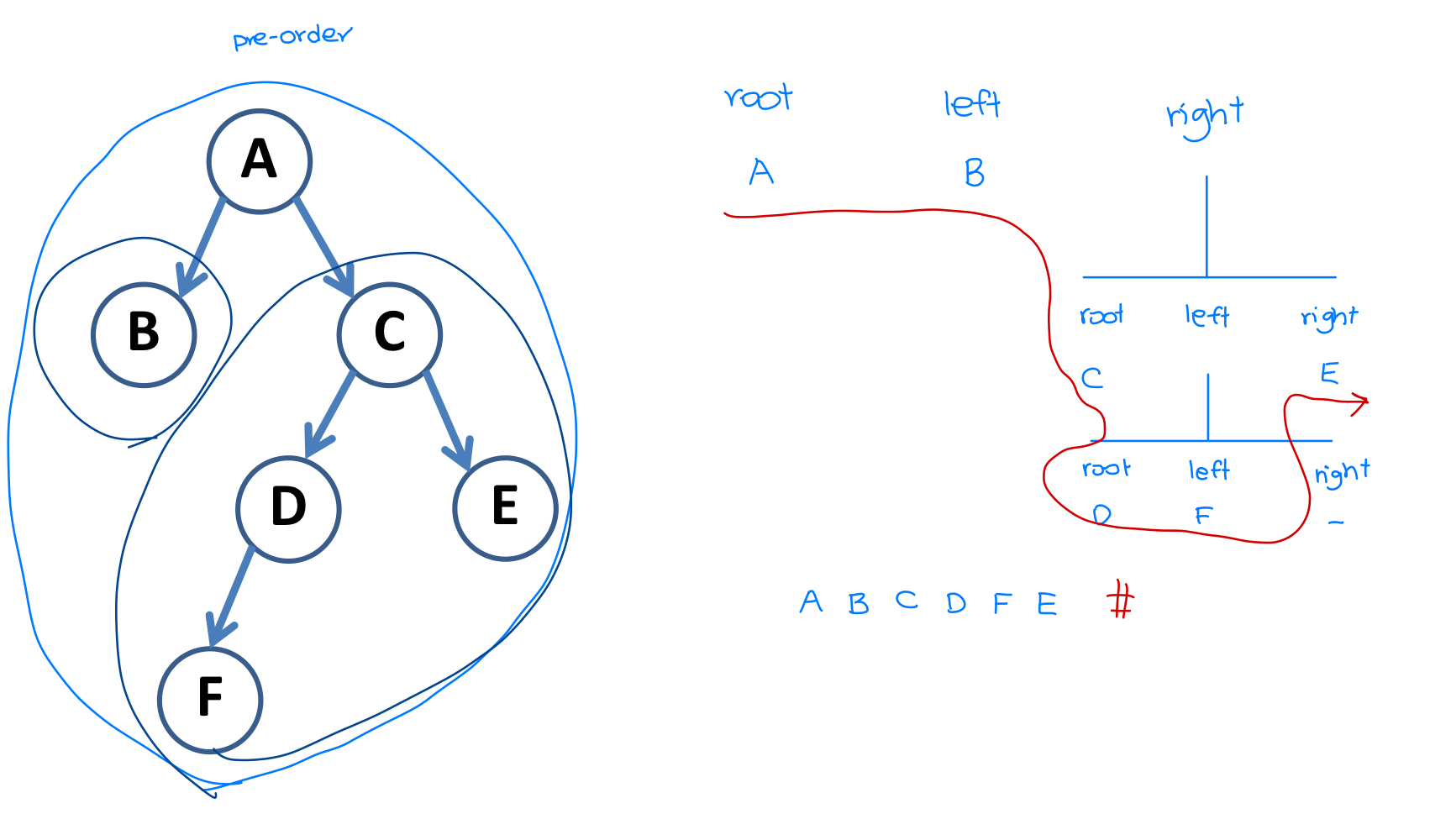
- Preorder traversal: root left right
ไอ่ตัวบอกตำแหน่งเนี่ยให้ focus ที่ root— in ก็หมายถึง “middle” ดังนั้น root ก็อยู่ตรงกลาง แล้วที่เหลือก็คือ left, right (ตามลำดับ)
- Traverse nodes vertically/horizontally
- Depth first traversal: visit nodes from top to the bottom.
- Breadth first traversal: visit nodes level by level
- Traverse nodes according to the order of the root, its left node, and its right node
Pre-order
- Base case of recursive preorder: Preorder of a tree with size 1 (or just a tree with a single node) →
printตัวนั้น ๆ ออกมาเลย
In-order
- The concepts of In-order traversal are similar
- Recursion can be used for implementation
Post-order
- The concepts of Post-order traversal are similar
- Recursion can be used for implementation
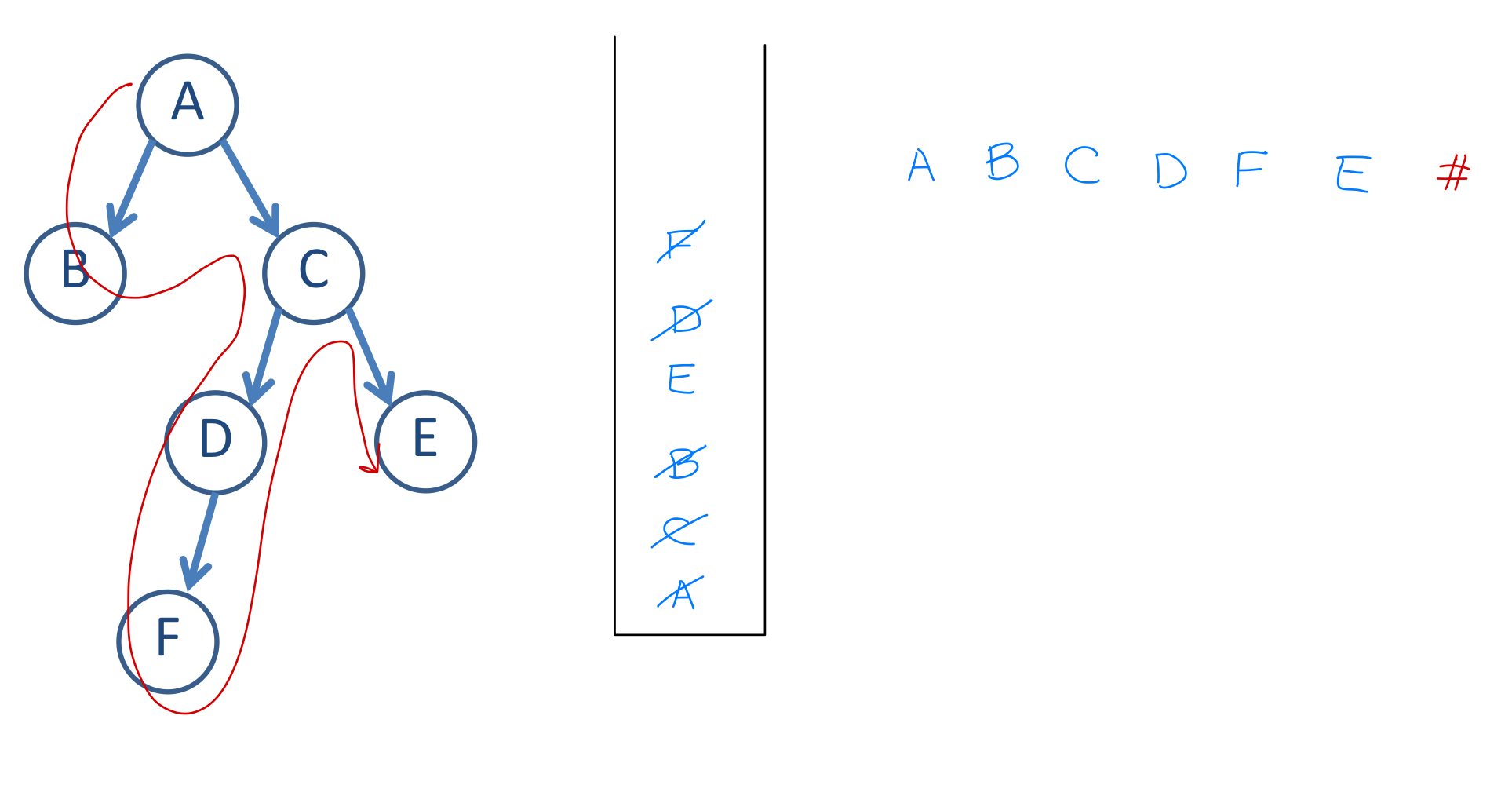
Depth First Traversal (DFT)
- Traverse the tree vertically, left subtree has higher priority than the right subtree (L > R)
- Note that the depth first traversal is as same as PRE-ORDER
- ต้องใช้ Stack to solve the problem
- Create a stack S
- Insert the root to S
- Until S is empty
- Pop and print the top element in S
- If right child of the popped element exists, push it to S (เอา right ก่อนเสมอ!)
- If left child of the popped element exists, push it to S
pop print push
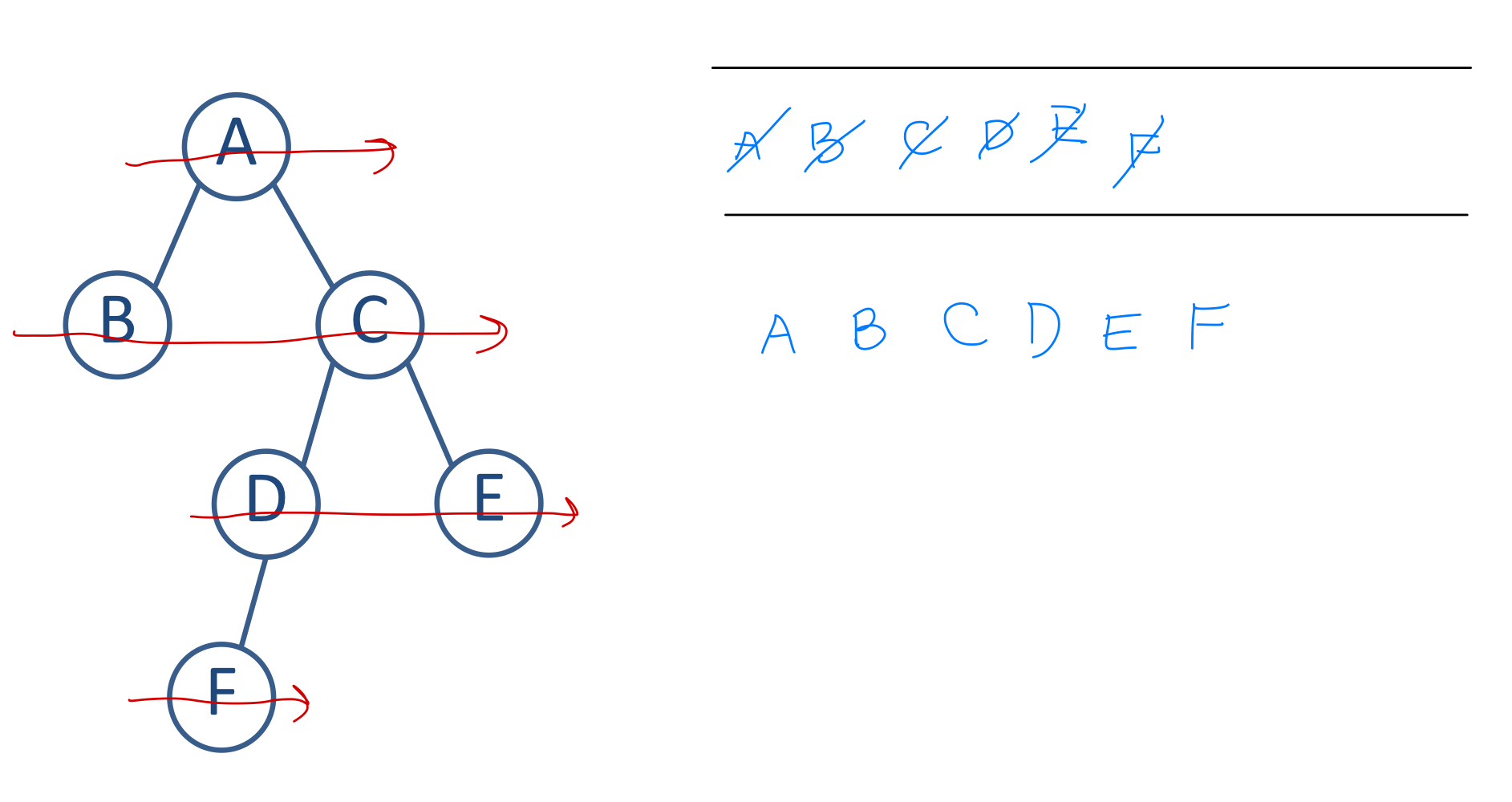
Breadth First Traversal (BFT)
- Traverse the tree horizontally level by level (each layer), from top to bottom, from and left to right
- ต้องใช้ Queue to solve the problem
- Create a queue Q
- Insert the root to Q
- Until Q is empty
- dequeue and print the front element of Q
- enqueue left and right children of the dequeued element to Q (เวลา enqueue ซ้าย ไป ขวา ตามที่เราเห็นเลย)
dequeue print enqueue