Agenda
- CT & Marketing and Advertisement
- CT & Mass Media (media literacy)
- CT & Science Reporting
1. CT & Marketing and Advertising
Marketing
- Definition: The process by which companies engage customers, build strong customer relationships, and create customer value in order to capture value from customers in return
Topics Covered
- Strategies used in marketing research and marketing
- Impact of marketing and advertising on the consumer
- Fallacies and rhetorical devices used in advertising
Marketing Research
Overview
- AKA: Discovering customers' 'hot buttons'
- Uses approaches that require CT
Research Methods
- Surveys
- Interviews
- Observation
- Experimentation
- Focus groups
Key Points
- Mostly uses inductive reasoning, resulting in 'probable' outcomes
- Example: Marc Ecko was successful in marketing his new line of urban clothing because he first carefully researched his target audience's "hot buttons"
Cognitive Errors in Business
The Problem
- Business organizations have a strong affinity toward research, yet they still make the wrong decisions due to cognitive errors
Common Errors
- Confirmation Bias
- Probability Error
- One of us/one of them error
The "Doom Loop"
"A business starting out with questionable assumptions can make incorrect predictions, inappropriate actions, and wind up with disappointing outcomes– a process sometimes referred to as the doom loop."
Case Study: Datsun/Nissan's 1,000cc Sedan in US Markets

The Mistake
- Datsun started with the wrong premise that the Japanese market is the same as the American market
- They invested in selling a car with a small engine to Americans who are used to driving wider and longer highways
Internal Opposition
- Datsun's own Yutaka Katayama challenged the company's strategy
- He highlighted that Datsun (now Nissan) had the wrong product
- His challenges were ignored for years
Escalation of Commitment (Loss Aversion)
Sony ก็รู้ว่า คนนิยม VHS แต่ยังบอกว่า จะขาย จะขาย Betamax อยู่
Definition
- The overcommitment to a particular answer or solution
- When a business continues to pursue an erroneous course of action instead of changing course and cutting its losses

Examples
- Sony's Betamax vs JVC VHS
- Lego and its unpopular Lego theme parks
Poor Communication & Listening Skills
The Pattern
- Business assumes its customers have the same product expectations
- Creates a customer persona (CP)
- Determines the CP's preferences
- Disconfirming data is ignored and distorted
Example: Swimsuit Industry
- For many years the swimsuit industry failed to examine its assumption that women liked to wear sexy bathing suits
- In 1987, market research conducted by the Swimsuit Manufacturers Association found that "most women would rather have a root canal without Novocain than buy a swimsuit"
Avoiding Confirmation Bias
Best Practices
- Businesses often hire independent marketing research companies to avoid logical errors and confirmation bias within the company
- Accurate, complete, and unbiased marketing research is particularly important when introducing a product to the international market
International Marketing Considerations
- What may sell well in one country may not sell in others
- Factors to research:
- Presentation
- Packaging
- Name of the product
- Customers' interest in the product itself
Product Name Translation Failures
Verified Examples
-
Colgate Toothpaste (France)
- Brand Name: "Cue"
- Issue: Cue was also the name of a French porn magazine
-
Ford Pinto (Brazil)
- Issue: "Pinto" in Brazilian Portuguese is slang for "tiny male genitals"
-
Mitsubishi Pajero (Spanish-speaking countries)
- Issue: "Pajero" means "self-pleasurer" in Spanish slang
-
Parker Pen (Mexico)
- Original Claim: "It won't leak in your pocket and embarrass you"
- Translation: Became "It won't leak in your pocket and make you pregnant"
Unverified Urban Legends
- Chevrolet Nova (Latin America): "Nova" supposedly translates to "doesn't go" (no va)
- Pepsi's Slogan in China: "Pepsi brings you back to life" supposedly became "Pepsi brings your ancestors back from the grave"
- Coors Beer (Spain): "Turn it loose" supposedly rendered as "Suffer from diarrhea"
Strategic Planning
Strategic Plan
- Definition: A method by which an organization deploys its resources to realize a goal
The SWOT Model
Four Components
Strengths (Internal, Helpful)
- A company's assets and core competencies
- What it does best
- Examples:
- Location of facilities
- Unique selling points
- Large customer base
- Commitment/productivity of employees
- Ability to meet demand
- Quality of product or service
- Company reputation
- Customer service program
- Strong management
- Brand recognition
- Marketing distribution
Weaknesses (Internal, Harmful)
- Things that a company lacks or does poorly
- Examples:
- Outdated facility/equipment
- Insufficient information
- Debts or limited financial resources
- Weak consumer demand
- Strong competitors
- Poor management
- Poor marketing
- Inability to meet deadline pressures
- Lack of expertise
Opportunities (External, Helpful)
- New technology
- Increases in consumer spending
- Untapped markets
- Examples:
- New markets
- Competitor's vulnerabilities
- Industry or lifestyle trends
- Technology developments/innovations
- Global influences
- Chance to buy out a rival company
- Fashion influences
- Increase in consumer spending
- New partners
Threats (External, Harmful)
- Negative and unavoidable realities contrary to the well-being of a business
- May seriously debilitate or even destroy it
- Examples:
- Competitors
- Restrictive legal regulations
- Global warming
- Natural disasters
- New technologies
- Shift in consumer demands
- Consumer dissatisfaction
- Slow economy
- Negative media coverage
- Rising cost of wages/benefits
- Outsourcing
From SWOT to TOWS
H. Weihrich's Extension
- Expands on traditional SWOT analysis by pairing internal factors (Strengths and Weaknesses) with external factors (Opportunities and Threats)
- Introduces the TOWS matrix as a strategic tool
Four Types of Strategies
- SO strategies: Use Strengths to take advantage of Opportunities
- WO strategies: Reduce Weaknesses by exploiting Opportunities
- ST strategies: Use Strengths to counteract Threats
- WT strategies: Minimize Weaknesses and avoid Threats
Marketing Philosophy
"Marketing, if done properly with an attitude of mutual respect, can result in a win-win situation in which both parties are better off. The consumer gets something he or she wants, and the manufacturer and seller gain economically."
Why Engineers Need Marketing Knowledge
Key Reasons
- We are all consumers, and we are subjected to many marketing actions
- In the age of start-ups, product developers and service providers need basic understanding of marketing
- Several information analysis and strategizing models from marketing can be adopted for your own groups or organization
Case Study: Starbucks
Analysis Questions
- Successful in Thailand
- Less successful in Europe (most successful in UK and Spain)
- 'Failed' in Australia (currently around 70 stores nationwide, mostly airports and tourist locations)
- Why?
- For Thais, we don’t make the coffee ourselves
Advertising
Definition
- Advertising: The placement of announcements and persuasive messages in time or space purchased in mass media
Self-Assessment Questions
Rate Your Relationship to Advertising (1-5 Scale)
- 1: I never pay attention to advertising; it never affects me
- 2: I notice ads occasionally, but they rarely influence my decisions
- ==3: I sometimes consider ads when deciding what to buy, but I'm not strongly persuaded ==
- 4: I often find ads shaping my preferences or choices, even if indirectly
- 5: I am often and easily persuaded by advertising to buy something
Reflection Questions
- How many advertisements do you see every day?
- Not that much now!
- (If online were taking into account) A lot!, then.
- Finish the sentence: If the product is free...
- You’re the product!
- What does this mean?
- Platforms like Facebook are free, but they make money by collecting user data and selling access to that audience to advertisers.
- What is meant by the well-known phrase 'sex sells'?
- I don’t know, maybe they uses models
- I am loyal to certain brands (True/False)
- Yes, Apple!
- How do media outlets (e.g. newspapers, free-to-air TV) make their money?
- They persuaded people who read/watch those ads
- What does advertising sell?
- Brand image, branding
- Emotion!
- Have you ever bought something you regretted?
- Yes! A lot of things.
Purposes of Advertising
- Create product awareness
- Inform consumers about a product
- Motivate customer demand for the product, aim to create customer loyalty
The Dark Side of Advertising
"...advertisements can manipulate us into buying a product that we neither need nor would have wanted before being exposed to the advertisement. They use tactics to prevent or avoid consumers from thinking critically."
How Advertisements Work
- Advertisements essentially make arguments, aiming to convince the consumer of the value of a product
- These arguments are based on:
- Linguistic appeals
- Psychological appeals
- Emotional claims
- Often logical fallacies
Common Appeals in Advertisements
1. Emotional Appeal: Fear (Scare Tactics)
- The use of fear or anxiety
- Playing with our insecurities
- We are never attractive, thin, clean enough, etc.
- Example: Dettol hand sanitizer ad - "Whose hand are you holding?"
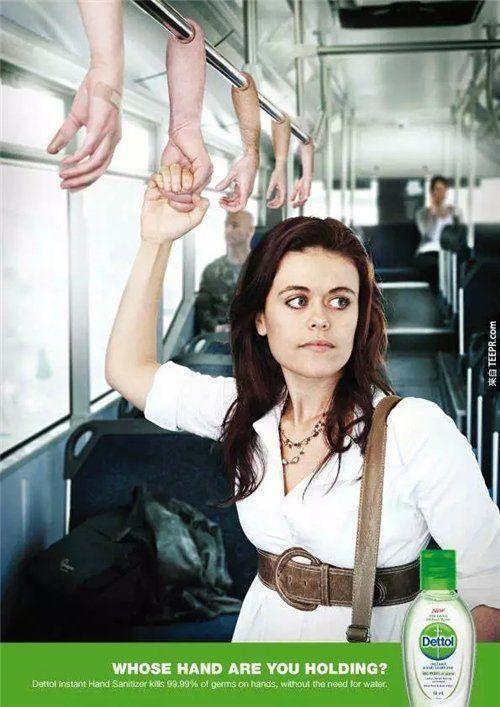
2. Fallacy of Questionable Cause
- Creating false expectation that something wonderful will result from using the product
- Examples:
- Being more beautiful
- Becoming thinner
- Being happier
- Example: Lichi Diet product claiming "Lose up to 25 pounds fast!"

3. Causal Fallacy + Emotional Appeal
- Used in conjunction with emotional appeals:
- Happiness
- Success
- Popularity
- Status
- Security
- Example: Estée Lauder perfume wedding ad - "This is your moment to be beautiful"
4. Fallacy of Popular Appeal (Bandwagon)
- Creating the impression that "everyone" is using the product
- Examples:
- "Over 1 million people have switched to Brand X—don't be left out!"
- "America's favorite coffee"
- Example: Gap "Moving Forward Together" ad
5. Snob Appeal
- Sets up an association between a product and people who are attractive or popular
- Association with an idealism like nationalism
- Example: TAG Heuer watch with Ryan Gosling
6. Fallacy of Inappropriate Authority (Appeal to Authority)
- Using a celebrity to promote a product outside of the celebrity's expertise
- Examples:
- Jared Leto promoting Twentynine Palms skincare products
- Brad Pitt promoting De'Longhi coffee machines
7. Hasty Generalization
- Reinforcing stereotypes:
- Women as pencil-thin sex objects
- Young men as mindless pleasure seekers
- Blacks as athletes or musicians
- Asians as very studious
- Example: LeBron James for Nike (reinforcing athlete stereotype)
Common Fallacies in Advertisements
1. Fallacy of Amphiboly
- Confusing language makes us uncertain about the claim
Examples:
- Holland America Line: "Lowest fare advertised on Holland America guaranteed"
- Question: Lowest fare overall, or lowest fare they advertise?
- Special Morning: "33% more nutrition"
- Question: More compared to what?
2. Weak or False Analogy
- Example: "Like a Rock" (Chevrolet)
- Question: How is a car 'like a rock'?
3. Missing Information
- Missing statistics or premises
- Claims without context
Other Appeals That Make an 'Argument'
1. Romance Appeal
2. Scarcity Appeal
3. Snob Appeal
- Hard to get
4. Scientific/Rational Appeal
Example: Seaport Airlines ad - "My commute has become 50% FASTER and completely hassle free"
Rhetorical Devices & Misleading Language
1. Euphemism & Hyperbole
- FTC (Federal Trade Commission) forbids outright deception in advertisements in the USA
- But permits the use of rhetorical devices:
- Euphemism: economical (cheap), quaint (small)
- Hyperbole: the best, most, etc.
Emotive Words
- Fresh
- Miracle
- Light
Example: Philip Morris "San Mig Light" beer
2. The Scientific Claim
- Uses statistics or scientific sounding language to impress the consumer
- Claims some sort of scientific proof or experiment
- Very specific numbers
- Impressive sounding mystery ingredient
Examples:
- "Certs contains a sparkling drop of Retsyn"
- "ESSO with HTA"
- Historical example: Chesterfield cigarettes claiming "10 Months Scientific Evidence"
3. The Weasel Claim
- Weasel word: A word that sounds like it is saying something, but is almost meaningless
- In advertising, practically negates the claim that follows
Common Weasel Words:
- Helps
- Virtually
- Acts
- Can be
- Up to
- Refreshes
- Comforts
- Fights
- The feel of
- The look of
- Fortified
- Enriched
- Strengthened
Examples:
-
"Helps control dandruff symptoms with regular use"
- The weasels: "helps control," "symptoms," "regular use"
- Note: Does NOT say "stops dandruff"
-
"Leaves dishes virtually spotless"
- Audiences think "spotless" rather than "virtually" spotless
-
"Only half the price of many color sets"
- "Many" is the weasel word
- Gives impression that the set is inexpensive
-
"Listerine fights bad breath"
- Note: Uses "fights," not "stops"
-
"Lots of things have changed, but Hershey's goodness hasn't"
- Does NOT say Hershey's chocolate hasn't changed
4. Images and Slogans
- Used to create a feel-good situation without telling us much about the product
- Example: McDonald's "i'm lovin' it"
5. Vague, Ambiguous, or Obscure Language
- Example: "50% faster than other brands"
- Faster than what? Which brands?
- Use of obscure technical terms
Example: Apple MacBook Air with Tim Cook
Analyzing Advertisements
Framework for Analysis
| Language Technique | Claim | Psychological Appeal |
|---|---|---|
| What kinds of language tricks does the ad use? | What does the ad say about the product that you are expected to believe? | What does the ad say about your life/feelings if you have (or don't have) the product? (e.g., happiness, love, success) |
Questions to Consider in Evaluating Advertisements
Critical Evaluation Checklist
- Does the ad use scare tactics to persuade us that we need the product?
- Does the ad provide credible evidence and/or statistics to support any causal claims?
- Does the ad play on our tendency to give in to group pressure?
- Does the ad set up a desirable image or lifestyle that may not be related to the product?
- Does the ad use any other informal fallacies?
- Does the ad use emotive language, images, or euphemisms?
- Is the grammar confusing or the wording misleading?
- Is the language vague, ambiguous, or obscure?
- Are the claims exaggerated?
- Does the ad leave out information that is necessary for us to make a decision?
- If the ad uses an analogy, is the analogy relevant?
Application
- Answer the questions referring to a specific ad or product in the text to illustrate each question
Criticisms of Advertising
Critics Claim:
- Advertising damages society through fallacies, rhetorical devices, and distortion of consumer thinking
- Advertising creates markets for nonessential goods and services
- Ads help big corporations kill small businesses
- Advertisements mislead people's expectations of life, and make people feel inadequate if they fall short of the ideals of the ads
In Defense of Advertising
Counter-Arguments:
- Ads merely reflect cultural values
- People who bought things they did not need were given needed info via the ads
- Banning ads is undermining capitalism and freedom of expression
- Advertisement funds media
The Role of Advertising
- Advertising is the keystone of the mass media
- Mass media attracts advertisement
- Advertisement supports mass media
- Role of Nielsen Media Research
2. CT & MASS MEDIA
"If it bleeds it leads"
Problems with News Media
Key Issues
- In addition to the problems of coverage content, news media are prone to other problematic practices
These include:
- Lack of credibility
- Sensationalism
- Political or ideological bias
- Gender bias
- Cultural bias
- Lack of in-depth analysis
- "Pay to sway"
- Confirmation bias
Critical Thinking Approach
- As critical thinkers, we cannot assume that the news media is presenting unbiased and balanced coverage of an event
- We should also keep in mind that the news being reported is to a large extent determined by the need to attract and keep advertisers and to hold the interest of the audience
Science Reporting
The Problem
- Most of us tend to accept the truth behind "scientific" news and information
Critical Approach Needed
- However, as with other forms of mass media, we need to remain skeptical and evaluate so-called "scientific" news just like other forms of media information
Reporter Limitations
- News reporters are rarely trained in science
- Sometimes make mistakes in scientific reporting
Common Issues in Science Reporting
1. Sensationalization and Misrepresentation
- Scientific findings may be sensationalized or misrepresented
- Examples:
- Presenting hypotheses as factual findings
- Interpreting news in light of cultural norms and the reporters' own biases
2. Corporate and Government Influence
- Science reporting may be biased in favor of government policy and the interests of big corporations
- Due to dependence on press releases by the reporters
Exercise: Analyzing Science Headlines
Practice Headlines
Try to identify how these headlines might be misleading:
อาจารย์บอกว่าแปลงเป็น SCP ก่อนได้ แต่ไม่แน่ใจว่าทำไปทำไม?
- "Massive Review Finds No 'Safe' Level of Processed Meat Consumption"
- Why it misleads:
- The headline suggests that any amount of processed meat is extremely dangerous, which sounds alarming. In reality, the study found weak associations between processed meat and increased risk of colorectal cancer and diabetes, based on observational data. It did not establish causation, and the absolute risk increase was small. The nuance-that risk rises gradually and is relatively modest-was lost in the headline. [sciencealert.com]
- "New Research Shows Even Moderate Drinking Isn't Good for Your Health"
- Source: ABC News
- The headline implies that moderate drinking is definitively harmful, contradicting decades of mixed evidence. The underlying meta-analysis found no clear health benefit and some increased risks, but it did not conclude that moderate drinking is universally harmful for all individuals.
- The headline oversimplifies a complex risk-benefit discussion and ignores confounding factors like lifestyle and genetics. [abcnews.go.com]
- "Hair Dyes Could Raise Risk of Breast Cancer"
- "Aspirin Can Increase Your Chances of Major Bleeding by 71%"
- Source: ClearerThinking.org
- Why it misleads:
- The headline emphasizes a 71% increase, which sounds huge. But the actual numbers:
- Without aspirin: 0.18% risk of major bleeding
- With aspirin: 0.31% risk
- That's an increase of 13 cases per 10,000 people. The relative risk (71%) grabs attention, while the absolute risk (still less than one-third of one percent) is tiny. [clearerthinking.org]
Media Literacy
Definition
- Media Literacy is the ability to:
- Understand and critically analyze the influence of the mass media on our lives
- Use different media forms to access information
Importance in Democracy
- Media literacy is important in a democracy, where we are expected to:
- Participate in discussions of issues
- Make informed political decisions
Development Strategy
- To foster media literacy skills, we need to employ the three-tier model of thinking:
- Experience
- Interpretation
- Analysis
Analyzing Media Messages
Key Questions to Ask:
- Who created the message?
- What is the purpose of the message?
- What techniques are used to attract and hold your attention?
- What values and points of view are represented in the message?
- What was your reaction to the message?
- Is your interpretation of the message reasonable and well informed?
- How might different people interpret the message?
- Is the message biased?
- Is the message backed by good reasoning and facts?
- What are the possible effects of the message on individuals and society?
Application
- Find an example of an answer to each of these questions in the text
Exercise: Analyze Your News Sources
Steps:
- Identify: Where do you get your news from?
- List: Make a list
- Example: If you use X (Twitter), scroll through the headlines and their news outlets
- Investigate: Research:
- Their owners
- Political leanings
- Advertisers
Final Exam Information
LAS101 Final Exam
Part 1 (Multiple-Choice Questions)
30 Items covering:
- 8. Generalizations & Analogy
-
- Causal Arguments
-
- Propositions
-
- Standard Categorical Propposal
-
- Immediate Inference
-
- Syllogisms
-
- Proving Syllogisms
-
- Applying Critical Thinking
Summary
Key Takeaways:
- Marketing & CT: Businesses use critical thinking in marketing research but are still susceptible to cognitive biases
- Advertising Tactics: Advertisements use fallacies, emotional appeals, and rhetorical devices to persuade consumers
- Media Literacy: Essential skill for critically evaluating mass media messages
- Science Reporting: Requires skepticism and careful evaluation, even for "scientific" claims
- Strategic Thinking: Tools like SWOT/TOWS analysis help in systematic decision-making
Final Thought:
Critical thinking is essential for navigating the modern landscape of marketing, advertising, and media consumption. Being aware of persuasion techniques and biases helps us make more informed decisions as consumers and citizens.