-
Which of these statements best represents the author's ideas?
1.Teens today are less nationalistic than the older generations. 2.Today, they support foreign pop culture more than their own. 3.The older generations watched locally-made movies and bought albums by local artists. 4.As a result, the teens of the past generations had a deep understanding of the national topics and themes that were explored in local songs and movies. 5.Unfortunately, our teens now are only aware of the lives of global superstars. 6.Love for our own country will be gone in a few years.- If you do not support our local pop culture, you will suffer from my hands.
- We must support our own pop culture. You will cause profound pain on our own artists if you don't.
- How can you support the works of foreign artists when these artists do not have the same religion as ours?
- Either you support our local artists or you hate our own country.
From the passage, the author argues that teens today are less nationalistic and support foreign pop culture over local culture, leading to the conclusion that "Love for our own country will be gone in a few years." This reflects concern for supporting local culture, making option 2 the best representation.
-
Deductive conclusions
- necessarily follow their premises
- probably follow their premises
- conditionally follows their premises
- unconditionally follows their premises
According to the lecture notes, "Deductive arguments: The conclusion must be true if the reasons (premises) are true."
-
Which statement is the conclusion?
1.Teens today are less nationalistic than the older generations. 2.Today, they support foreign pop culture more than their own. 3.The older generations watched locally-made movies and bought albums by local artists. 4.As a result, the teens of the past generations had a deep understanding of the national topics and themes that were explored in local songs and movies. 5.Unfortunately, our teens now are only aware of the lives of global superstars. 6.Love for our own country will be gone in a few years.- Statement 1
- Statement 4
- Statement 6
- There is no conclusion in this passage.
Statement 6 "Love for our own country will be gone in a few years" represents the author's final judgment/prediction based on all the premises provided. The lecture notes explain that conclusions are the writer's interpretation or judgment.
-
Based on the attached passage, which is NOT true?
1.Teens today are less nationalistic than the older generations. 2.Today, they support foreign pop culture more than their own. 3.The older generations watched locally-made movies and bought albums by local artists. 4.As a result, the teens of the past generations had a deep understanding of the national topics and themes that were explored in local songs and movies. 5.Unfortunately, our teens now are only aware of the lives of global superstars. 6.Love for our own country will be gone in a few years.- The author thinks that the older generation loves their own country more than today's teens.
- The author thinks that loving your own country means singing your local songs and watching your local movies.
- The author thinks that knowing global superstars will keep your love of your own country stronger.
- The author thinks that love of one's country will be gone in a few years.
- There is no conclusion in this passage.
The passage actually argues the opposite - that knowing global superstars (statement 5) weakens love for one's country, not strengthens it.
-
Which of these is a proposition?
- Put the book down now.
- Where is the book?
- Oh my word!
- The book is gone.
According to the lecture notes, "A proposition is a complete statement that can be true or false." "The book is gone" is the only statement that can be evaluated as true or false. The others are directive, interrogative, or expressive.
-
It is silly that your company only looks at attendance and tardiness in your performance. It is not right to ignore the details of what you bring to the company's success. What type of premise is the underlined sentence?
- Descriptive
- Prescriptive
- Definitional
- Analogical
The lecture notes define prescriptive premises as "Contain value statements about ought or not ought to be done." The statement "It is not right to ignore..." contains a value judgment about what ought not to be done.
-
Usually, it lacks enough consideration of opposing evidence since its primary goal is to win over people toward the position that it is defending.
- Rhetoric
- Argument
- Proposition
- Premise
The lecture notes define rhetoric as "Focused on persuading people, Even if it ignores important evidence of opposing views, Aims to win." This matches the description given.
-
The promises he makes is like a greasy kitchen floor. One careless step and you will take a hard fall. You better not rely on him. What type of premise is the underlined sentence?
- Prescriptive
- Analogical
- Definitional
- Descriptive
The lecture notes define analogical premises as making "Comparison between two similar events or things." The comparison of promises to "a greasy kitchen floor" is an analogy.
-
Which is an argument?
- My phone was on mute. Then the alarm rang but there was no sound. And then, I didn't wake up when I was supposed to. After that, I got to school an hour after the class had started.
- They say that social media has made people today impatient and unable to focus. That is not true.
- The campus is 15 minutes away from Future Park. The university is also close to the old international airport..
- I can think therefore I am a person.
This is the only option that provides a premise ("I can think") to support a conclusion ("therefore I am a person"). The others are descriptions, disagreements, or explanations without supporting reasons.
-
Based on the set of premises, which is the most logical conclusion to be drawn?
1.The project massively underperformed, with results that fell far behind the target. 2.The problem it aimed to solve did not significantly decrease.3.The huge amount of time and money spent on the project did not have an impact on the target.- The project was a failure.
- The project met a lot of challenges.
- The project was too expensive.
- The next stage of the project will no longer happen.
All three premises (underperformed, problem didn't decrease, time/money had no impact) logically lead to the conclusion that the project failed. This is the most comprehensive conclusion that encompasses all the evidence.
-
The conclusion is "Exams that are too easy devalue the faculty." Which of these are joint (dependent) premises for this conclusion?
- The students finish the course with a shallow understanding. Good instructors do not feel good about their work.
- The lectures are too short. Students mistakenly think that this helps them.
- The faculty produces graduates who fail to get an SPL. The SPL is the Standardized Professional License you need to work in your profession.
- The instructors do not try their best. The students do not come to class.
These two statements work together as dependent premises - the second statement defines what SPL means, which is necessary to understand why failing to get an SPL is problematic for the faculty.
-
Which statement could be added to the attached passage to turn it into an argument?
1.We discovered that smoke came out of the oven.2.The fumes then triggered the online alarm which was connected to the fire department. 3.The fire brigade said they had received the alarm. 4.In the end, it only took them 5 minutes to come to get to the house and put out the fire quickly.- I do not think so.
- The dining room got wet.
- What do I think about fire alarm systems?
- The alarm system prevented things from getting worse.
The passage currently only describes events. Adding this conclusion would create an argument by making a judgment about the effectiveness of the alarm system based on the described events.
-
Which is an argument?
- The chunks of pork are in the middle of the plate. They sit on layers of braised vegetables. The sauce is delicious.
- The chef slow-cooked the pork belly in a steamer for 6 hours. Only organic ingredients from China were used.
- The pork belly is tender. You can taste the balance of flavor and spices in the deepest part of the meat. The dish is marvelous.
- The chef prepares the dish. The app notifies diners about the menu. Finally, the diners cue up at the restaurant.
This provides premises (tender meat, balanced flavors) to support a conclusion (the dish is marvelous). The others are descriptions without conclusions.
-
Which statement is the conclusion?
1.We discovered that smoke came out of the oven.2.The fumes then triggered the online alarm which was connected to the fire department. 3.The fire brigade said they had received the alarm. 4.In the end, it only took them 5 minutes to come to get to the house and put out the fire quickly.- Statement 1
- Statement 2
- Statement 4
- There is no conclusion in this passage.
The passage only describes a sequence of events without making any judgment or interpretation. According to the lecture notes, conclusions interpret information to make a judgment.
-
Which proposition functions as a sub-conclusion in the passage?
1.Mr. Butch White should not have joined the speech contest. 2.His participation is not fair. 3.Nepositism is the unethical practice of giving an advantage or privilege to relatives or friends. 4.Mr. Butch White is the nephew of the organizer of the contest.- Proposition 1
- Proposition 2
- Proposition 3
- Proposition 4
"His participation is not fair" serves as a sub-conclusion that supports the main conclusion (Proposition 1) while also being supported by the other premises about nepotism and family relationships.
-
What happens if proposition 3 is false?
Jake cannot join the contest because he is Australian, and this contest is for Koreans only.- The conclusion will have only one premise providing evidence to it.
- The argument will lose a sub-conclusion.
- The whole argument is destroyed.
- The argument will lose an independent premise.
-
Which is NOT true regarding the diagram?
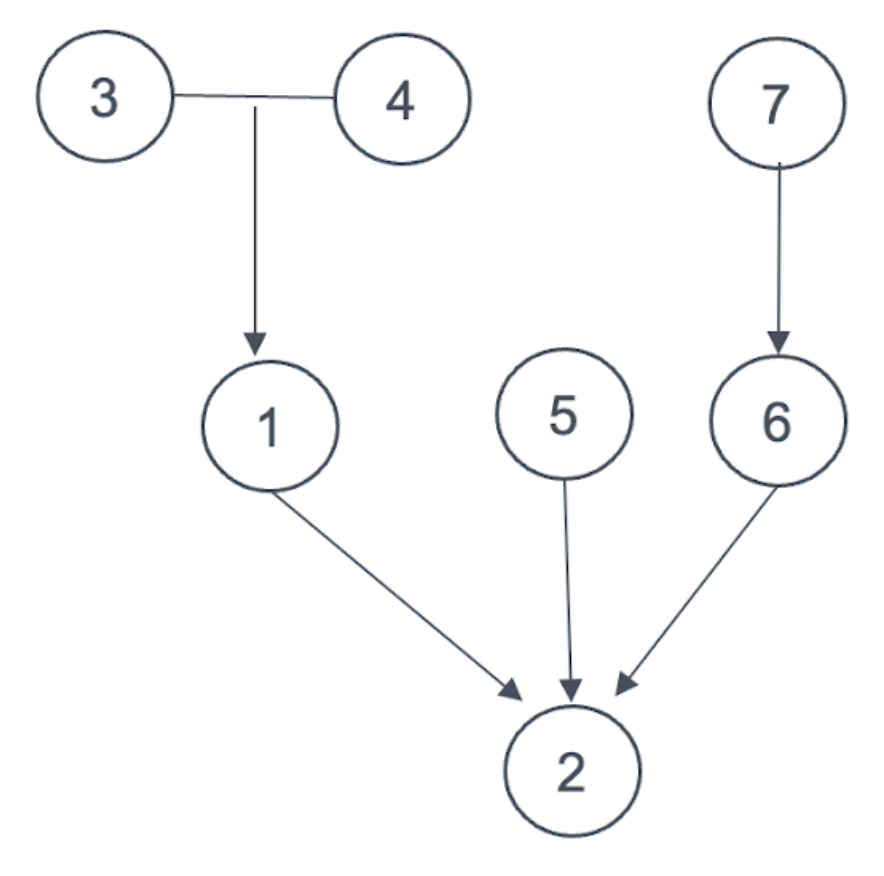
- There are 7 propositions.
- There is a conclusion and 2 sub-conclusions.
- Proposition 5 is a subconclusion.
- Propositions 3 and 4 and joint or independent reasons.
-
**Which statement functions as the conclusion?
- Mr. Butch White should not have joined the speech contest.
- His participation is not fair.
- Nepositism is the unethical practice of giving an advantage or privilege to relatives or friends.
- Mr. Butch White is the nephew of the organizer of the contest.
- Proposition 1
- Proposition 2
- Proposition 3
- Proposition 4
Mr. Butch White should not have joined the speech contest" is the main conclusion that all other propositions work to support.
-
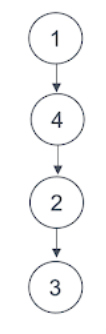
**Which is the correct representation of the text below?
- Mr. Butch White should not have joined the speech contest.
- His participation is not fair.
- Nepositism is the unethical practice of giving an advantage or privilege to relatives or friends.
- Mr. Butch White is the nephew of the organizer of the contest.
- Diagram K
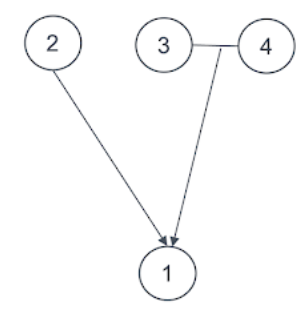
- Diagram Y
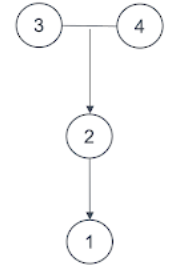
- Diagram N
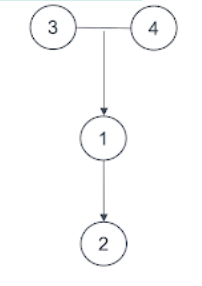
- Diagram F
-
Which is true regarding the attached text?Jake cannot join the contest because he is Australian, and this contest is for Koreans only.
- The text is not an argument.
- The text does not contain a conclusion.
- There are three premises.
- The premises are joint or independent.
The text "Jake cannot join the contest because he is Australian, and this contest is for Koreans only" contains premises that work together to support the conclusion that Jake cannot join.