-
Are vapes safe? Which of these sources is the most credible in addressing the question?
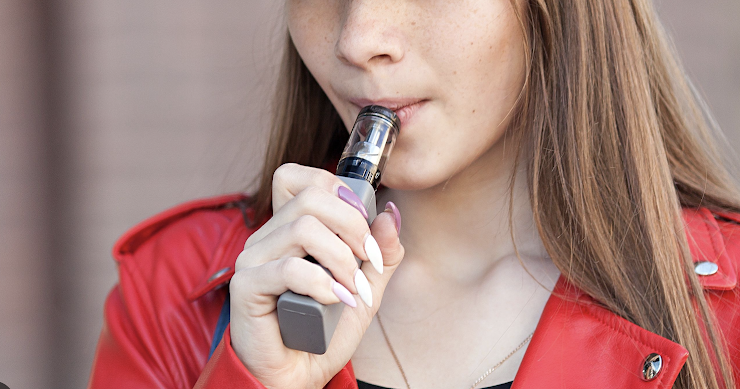
- A research paper made by pulmonary doctors using funding from Best Vapes Co., a company that manufactures vapes.
- A collection of testimonies from people who review vapes and vaping fluid.
- A government national data on life expectancy of the people in the last decade.
- An independent research by pulmonary doctors and biochemists on the chemical compounds found in vapes and their effect on the air sacs.
From the lecture on "Experts & Credibility" - credible sources should be unbiased and have proper qualifications. The independent research avoids conflicts of interest (unlike the company-funded study) and uses relevant experts (pulmonary doctors and biochemists).
-
"We do not see the world for what it is, but because of who we are," in Kantian perspective means that:
- Knowledge, which is information that has justification and evidence, is achieved through a series of argumentation and reasoning.
- Variations in the structures of the mind causes us to filter, interpret, and remember reality differently
- Expert opinion matters the most because they know the full explanation behind the facts and theories that we know.
- Experience, the gaining of information via any of our senses, is the basis of truth.
Lecture section "Structure of the Mind (Immanuel Kant)" - "our brain shapes and filters what we see and understand" and "two people might experience the same event — but see it differently, because their minds interpret it differently."
-
In a class of thirty, 22 students thought they would do poorly in their Literature class. The same 22 students rarely came to class. They reported not having read the assigned reading materials and, most of the time, just stared at their phones during lectures. When asked about this, the common response was, "Why even try?" These 22 students got terrible scores on their Literature midterm test. This is an example of:
- Self-fulfilling Profecy
- Diffusion of responsibility
- Overestimation Bias
- Lake Wobegon Effect
Lecture section on "Self-Fulfilling Prophecy" - "occurs when our exaggerated or distorted expectations reinforce actions that actually bring about the expected event."
-
In the experiment that involved volunteer students and an incident in an apartment, which of these is not true?
- Some volunteers were made to believe that they were the only one with the actor in the building.
- The volunteers helped the actor who pretended to be choking if the actor was more actrractive.
- The rate of helping was smaller when the volunteers thought that there were many others who could help the victim.
- The experiment tried to find out the influence of other people in our perception of a situations that required people to help.
The lecture describes the "Diffusion of Responsibility" study but mentions nothing about attractiveness affecting help rates - only the number of bystanders present.
-
"When I drink milk from a free-range white goat's milk, I have a very good night's sleep and wake up very alert the next day."
This is an example of which type of evidence?
- Expert interview
- Peer-reviewed scientific research
- Anecdotal
- Scholarly journals
Lecture section "Hearsay & Anecdotal Evidence" - "Anecdotal evidence: A personal story or example that someone shares."
-
They believe that truth and knowledge are based on our experience.
- Atheists
- Rationalists
- Empiricists
- Fideists
Lecture section "Rationalism & Empiricism" - "Empiricists: Claim that we learn truth through what we see, hear, and experience."
-
The Ash Line experiment tried to prove that:
- Our desire to conform can overtake our perception
- Direct pressure can lead to people not using critical thinking
- The number of people around us can affect our ability to do good for others
- Our memories are susceptible to suggestions
Reference: Lecture section "Group Pressure & Conformity (Part 2)" describes the Asch experiment where "75% of the naïve subjects also gave the same wrong answer" despite clear visual evidence.
-
This type of information is something we believe to be true based on reasons or proof.
- Knowledge
- Sensation
- Bias
- Experience
Reference: Lecture definition - "Knowledge: Information or experience we believe to be true & for which we have justification or evidence."
-
A person in a certain city took pictures of the sunset sky and posted on social media saying that the cloud looked like one of the goddesses. This could be an example of:
- Social errors
- Polarization
- Perceptual errors
- Lake Wobegon Effect
Reference: Lecture section "Perceptual Errors" and the "Pareidolia Example" - "the tendency to perceive meaningful images or patterns where none exist."
-
According to our text, we do not often hear words like middle-aged straight male senator or able-bodied CEO to describe people. One reason could be:
- Our reasons influence our experience with reality
- We identify and label minorities
- We have an inborn bias toward ourselves
- Our actions tend to realize the negative predictions we make about ourselves
Reference: Lecture section "One of Us/One of Them Error" mentions "We add labels that signal someone is not like us" - we don't typically label the majority group.
-
When people were told that there had been an alien invasion and after hearing others give their experience of hearing or seeing something strange, more people started to report that they had also heard or seen something strange.
This is an example of the effect that social expectations can have on people.- Self-serving bias
- Polarization
- Us versus them error
- Collective delusion
Reference: Lecture section "Social Expectations" mentions "Social expectations can be so powerful that they may lead to collective delusions."
-
This is the tendency to split issues into two opposite ends. The common consequence is the lack of a middle ground.
- Bystander effect
- Stereotyping
- Polarization
- Social Expectations
Reference: While not explicitly defined in the lecture, this matches the concept mentioned in "One of Us/One of Them Error" where "Our opinions become more extreme because we only listen to people who agree with us."
-
A: The group can influence its members to adopt ideas they would have never supported by themselves.
B: Group pressure cannot affect our perception of evidence.- A and B are both true.
- Only A is true.
- Only B is true.
- A and B are both not true.
Reference: Lecture section "Group Pressure & Conformity" states both that groups can influence individuals AND that "Group pressure is so powerful... it can lead people to deny contrary evidence that is right before their eyes."
-
Which of these is not one of the things associated with grouping people into insiders and outsiders?
- Unconscious bias
- Collaborating on common goals with members of other camps/groups
- Using labels to identify minorities
- Difference in treatment according to race, religion, politics, gender, etc.
Reference: The lecture section "One of Us/One of Them Error" lists negative behaviors, but collaboration with other groups would be the opposite of this error.
-
"I know that drinking milk from free-range white goats can make you sleep better and feel more alert the next day because this is what my best friend told me about his experience." This type of information can be best classified as:
- Expert testimony
- Us versus them
- Hearsay
- Confirmation bias
Reference: Lecture definition - "Hearsay: When a person hears something and passes it on."
-
Based on the statements, which is correct?
- A: The number of people around us cannot affect our perception of what is happening to us.
- B: People may treat others differently because of sex or religion or race.
- A and B are true.
- Only A is true.
- Only B is true.
- A and Be are not true.
Reference: The lecture clearly shows people ARE affected by numbers of others (Asch experiment, diffusion of responsibility), and discusses differential treatment in "One of Us/One of Them Error."
-
The people who witnessed the bomb explosion at a downtown hotel started to recall the event differently as the years passed. Most of them started forgetting details and added some that were not part of the original event. This is an example of:
- mental imagery
- false memory syndrome
- product misrepresentation
- experts and cridibility
Reference: Lecture section "False Memory Syndrome" - "people remember events that never really happened — or they 'remember' things in the wrong way" and memories "can be changed by time."
-
When Poon slipped on the floor in a hallway where there were two other people, Poon got help from one of the two people. When he slipped on the floor at the crowded lobby, no one came to help him. What could explain this?
- Conformity
- Bystander effect
- Social expectations
- One of Us/One of Them
Reference: Lecture section "Diffusion of Responsibility" shows "the greater the number of bystanders present, the smaller the proportion who help."
-
"When I took the entrance exam, I got a very high score, and I wore my purple sneakers that day. In the coming midterm exams, I will wear my purple sneakers again so I will get a high score too." This case is similar to:
- Gambler's error
- Self-serving bias
- Lake Wobegon effect
- Self-fulfilling profecy
Reference: Lecture section "Probability Errors" - "Gambler's Error: wrongly think that past random events can influence future ones."
-
"What we know is from what we see, touch, feel, hear, and smell." The statement reflects which perspective?
- Dualist
- Absolutist
- Empericist
- Rationalist
แอบซ้ำป้ะะ Reference: Lecture section "Rationalism & Empiricism" - "Empiricists: Claim that we learn truth through what we see, hear, and experience."