Data Communication
Definition
- Data communications deals with the transmission of signals in a reliable and efficient manner
- Ultimately, it's about transmitting data (i.e., bits) across some physical transmission medium:
- Electricity - copper wire, twisted pair, undersea cable
- Light - infra-red through air, laser through fibre-optic cable
- Electromagnetic radiation - radio, microwave, satellite
What is Communication?
- The term communication is defined as the act of disseminating information
- Prerequisites for communication:
- There is information to disseminate (เผยแพร่)
- The desire or requirement to disseminate exists
- There is an agency to send/transmit information
- There is a means of encoding information
- There is a medium to carry the information
- There is a recipient to receive the information
- The recipient is capable of understanding the information received
Communication Properties
Required properties between two entities:
- Modulation - Conversion of brain waves into speech
- Signal compatibility - Agreement on vocabulary to use
- Signal strength - Agreement on volume level for comfortable hearing
- Data rate - Agreement on talking rate for understanding
- Protocol - Agreement on rules for when to speak and listen
- Demodulation - Conversion of audio signals into brain waves
Transmission Terminology
Medium Types
- Guided medium
- Waves are guided along a physical path
- Examples: twisted pair, coaxial cable, optical fiber
- Unguided/wireless medium
- Provide means for transmitting electromagnetic waves but don't guide them
- Examples: air, water, vacuum
Cable Types and Characteristics
Twisted Pair Cable
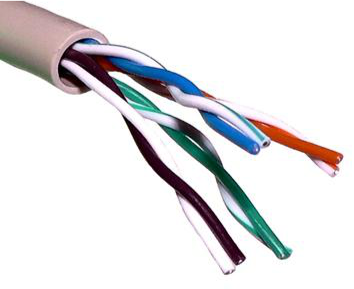
- Transmission: Electrical form over metallic conducting wires
- Advantages:
- Cheapest
- Easy to install
- Disadvantages:
- Low noise immunity
- Low bandwidth
- Very high attenuation
- Gets disrupted by external magnetic field
Coaxial Cable
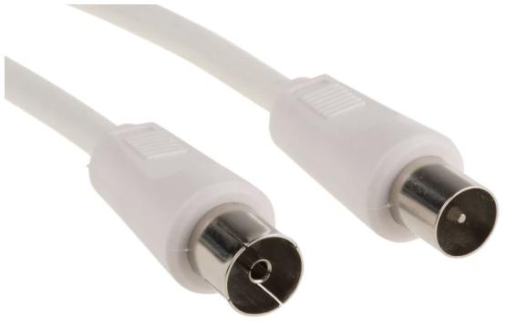
- Transmission: Electrical form over inner conductor
- Characteristics:
- Higher noise immunity than twisted pair
- Moderate cost
- Moderate high bandwidth
- Low attenuation
- Easy to install
- Gets disrupted by external magnetic field
Optic Fiber Cable
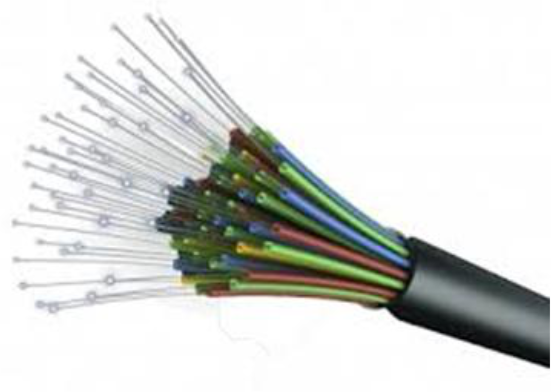
- Transmission: Optical form over glass fiber
- Advantages:
- Highest noise immunity
- Very high bandwidth
- Very low attenuation
- Not affected by external magnetic field
- Most efficient
- Disadvantages:
- High cost
- Difficult to install
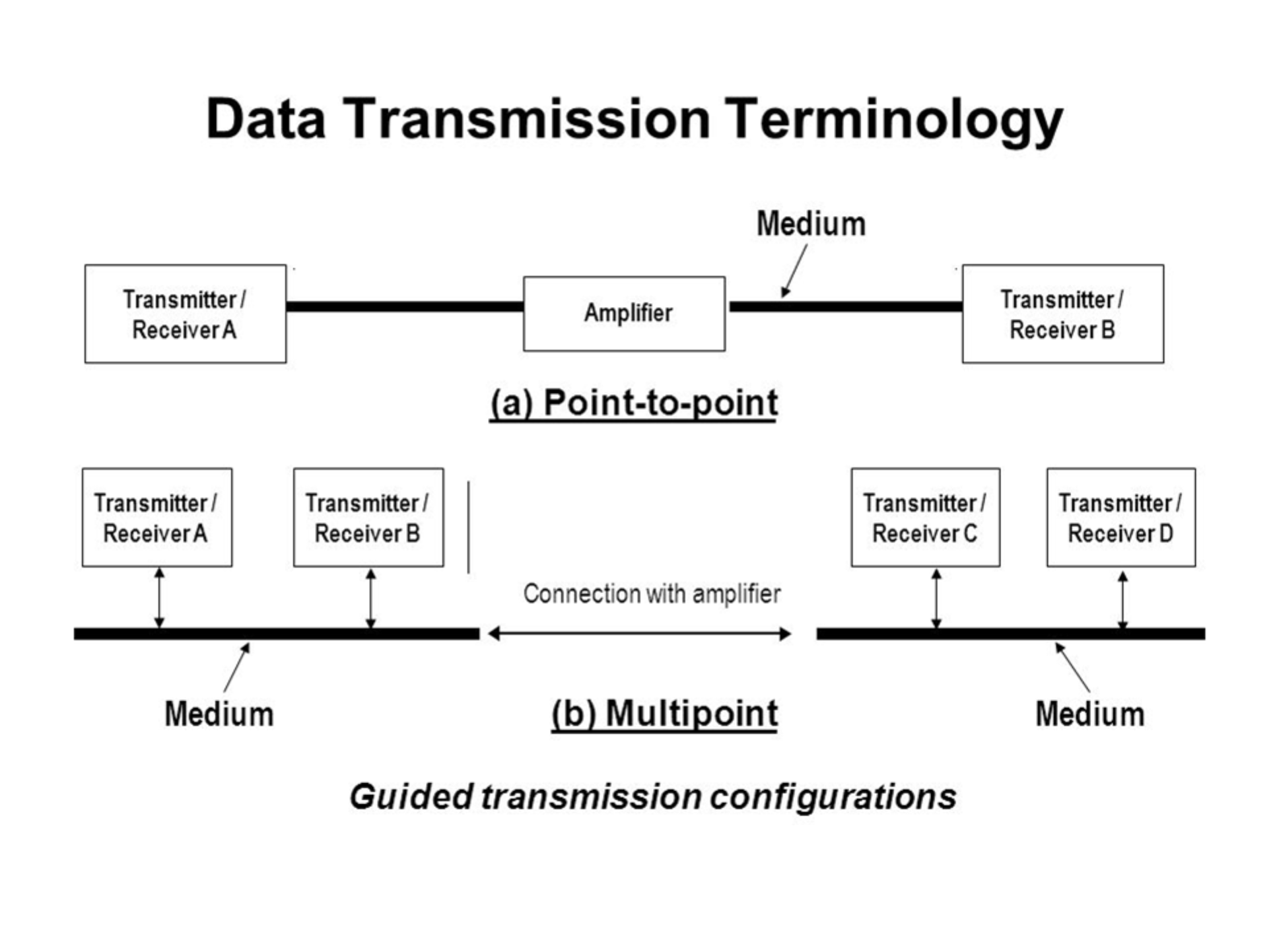
Link Types
- Direct link: No intermediate devices
- Point-to-point: Direct link with only 2 devices sharing the link
- Multi-point: More than two devices share the link
Data Flow Types
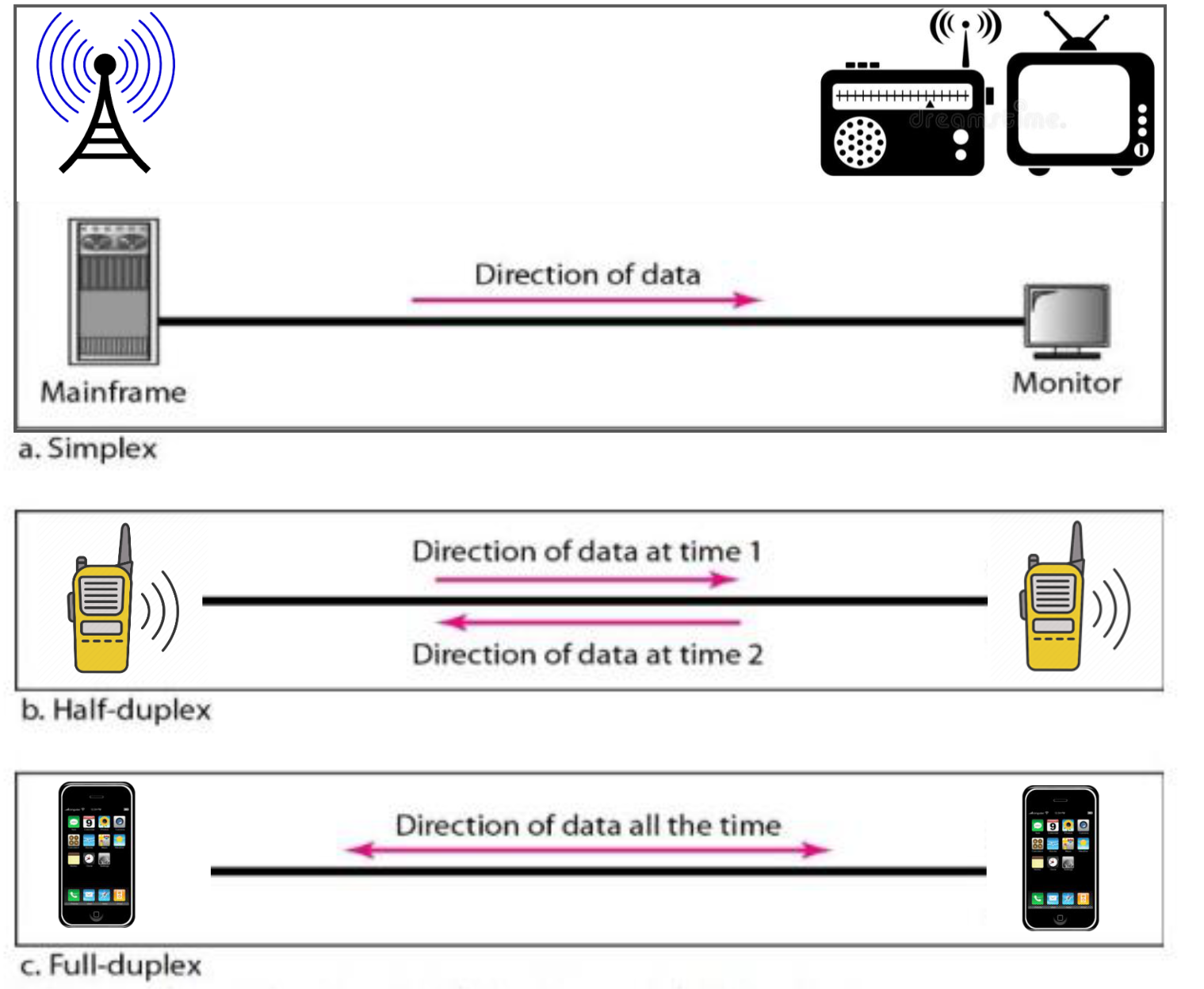
- Simplex: One direction only (e.g., television)
- Half duplex: Either direction, but only one way at a time (e.g., police radio)
- Full duplex: Both directions at the same time (e.g., telephone)
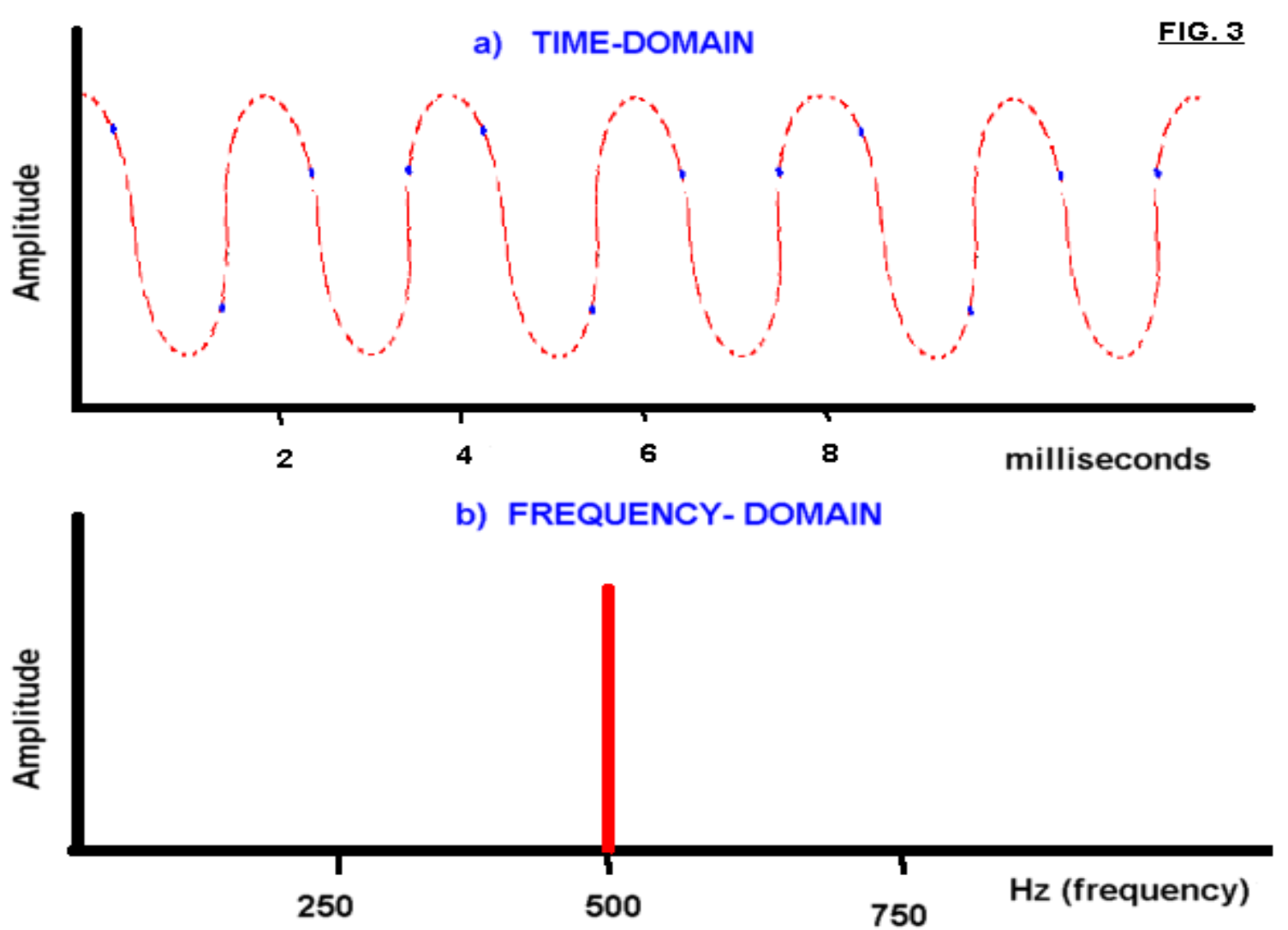
Time and Frequency Domain
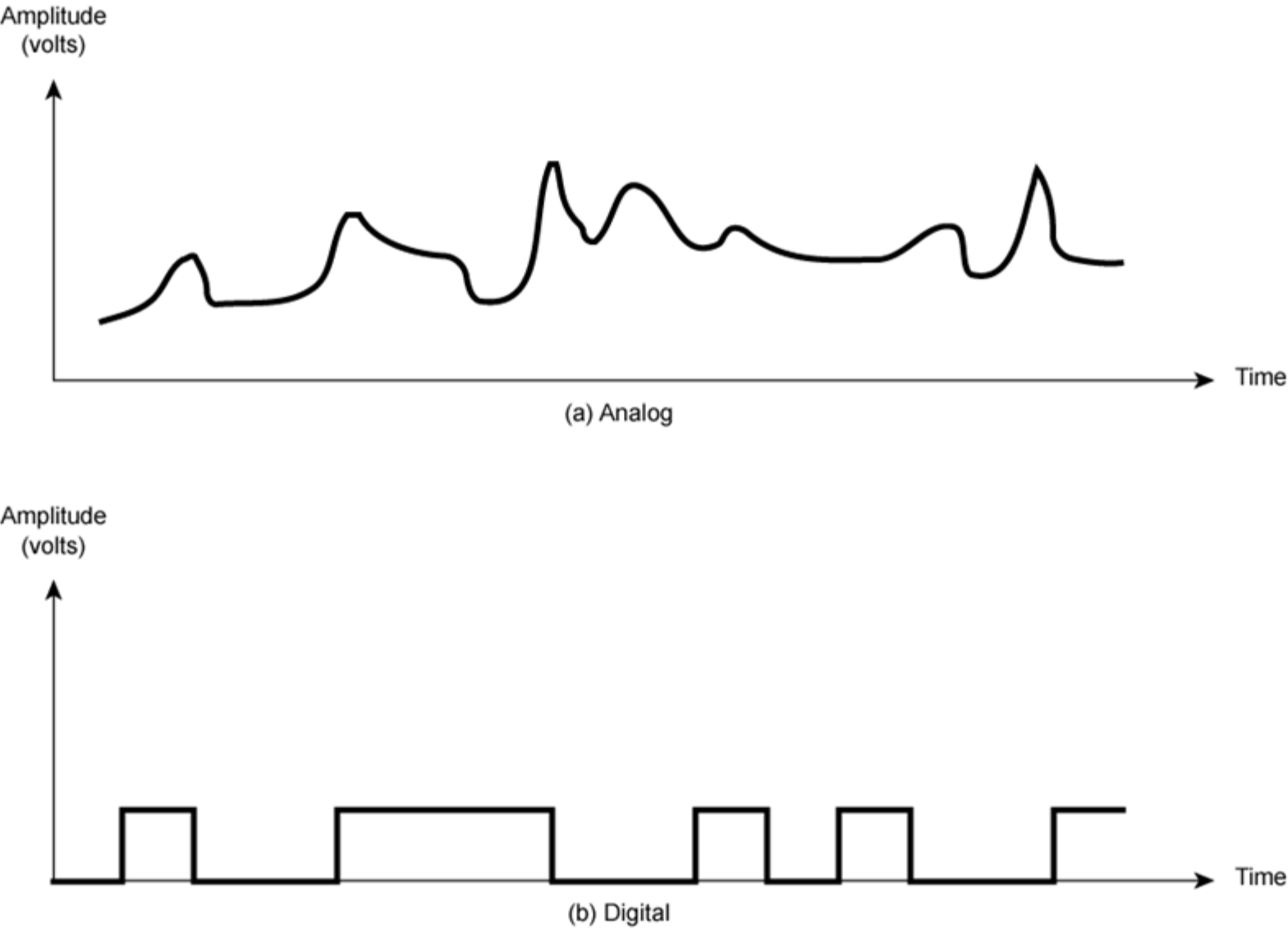
Time Domain Concepts
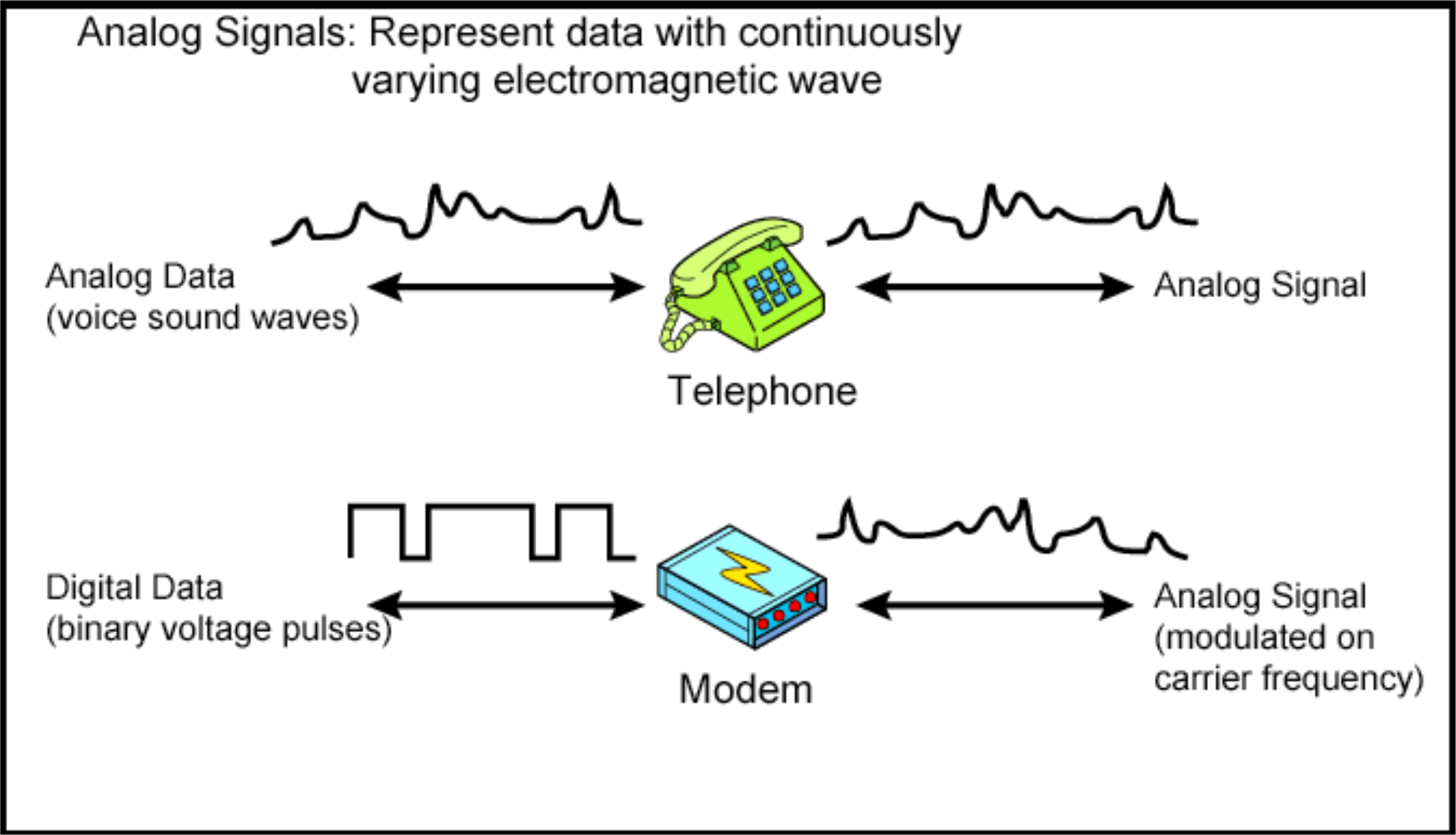
- Analog signal: Varies smoothly over time with no breaks or discontinuity
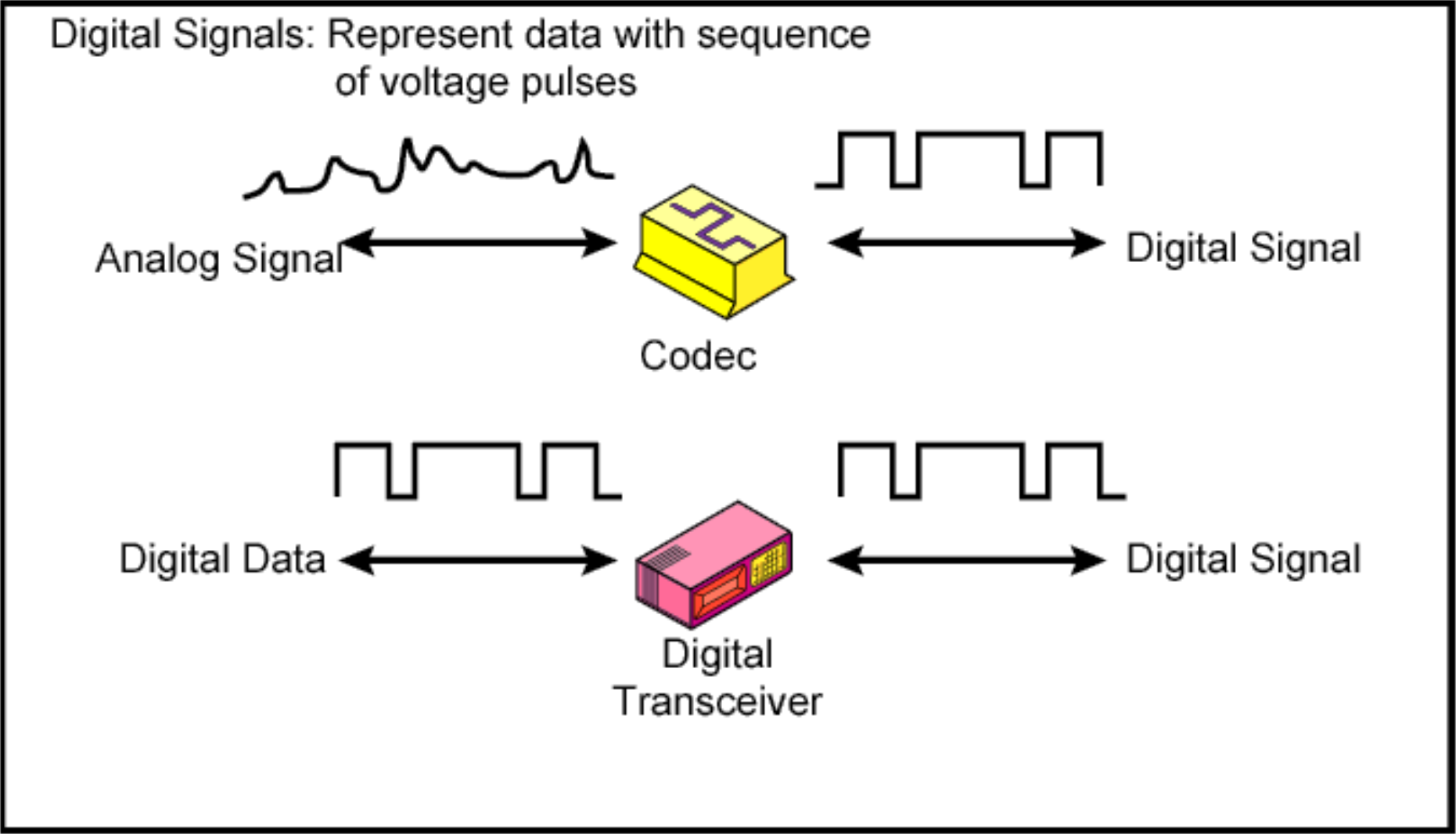
- Digital signal: Maintains constant level then changes to another constant level
- Periodic signal: Pattern repeated over time
- Aperiodic signal: Pattern not repeated over time
Sine Wave Parameters
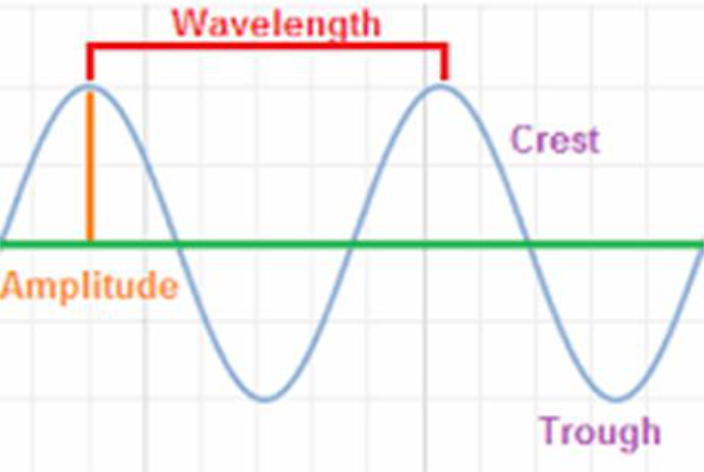
- Peak amplitude (A): Maximum strength of signal (volts)
- Frequency (f): Rate of change of signal (Hertz/Hz or cycles per second)
- Period (T): Time for one repetition, so
- Phase (φ): Measure of relative position in time within a single period
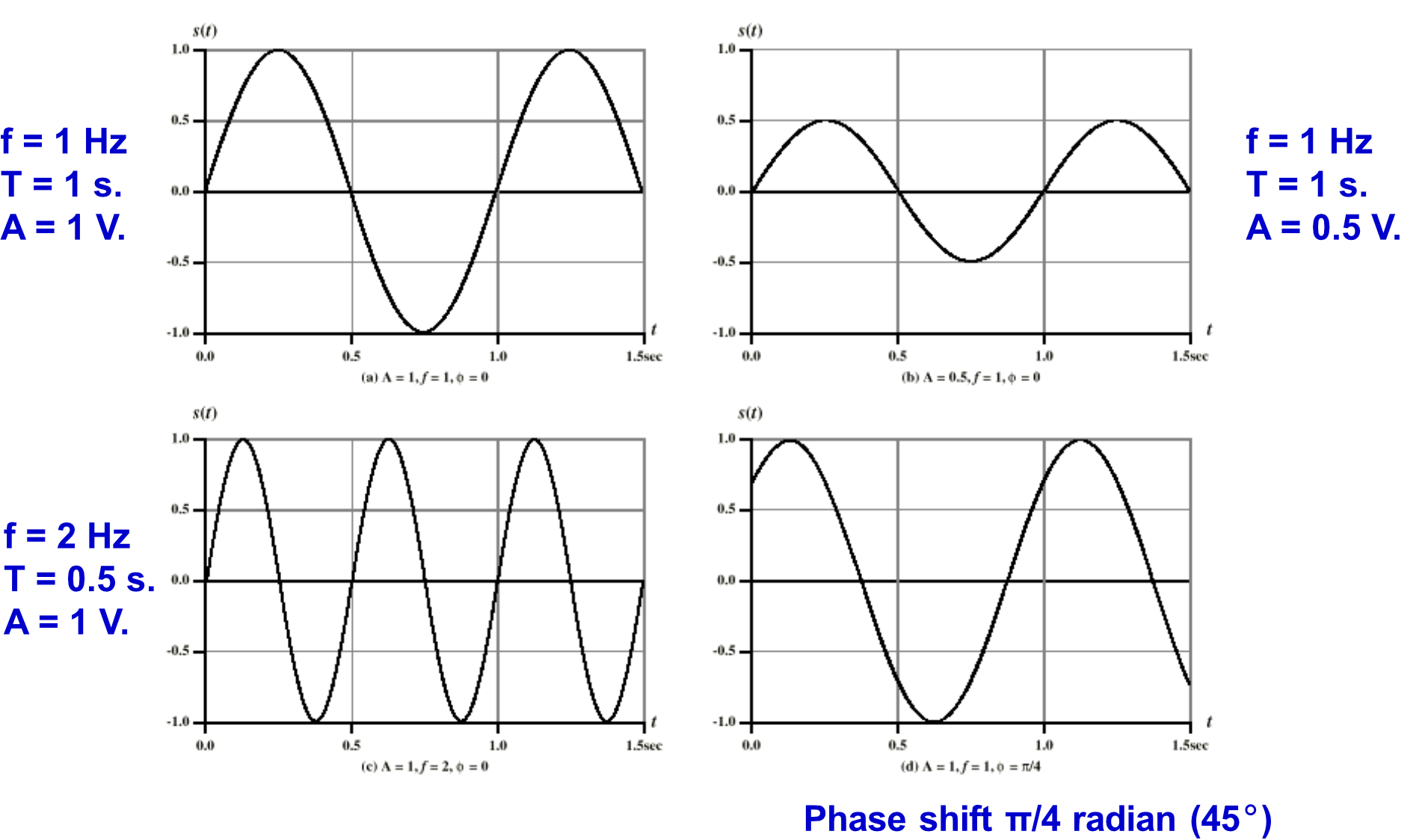
Sine Wave Formula
Wavelength ()
- Distance occupied by one cycle
- Between two points of corresponding phase in consecutive cycles
- Formula:
- When (speed of light):
- m/s (speed of light in free space)
Frequency Domain Concepts
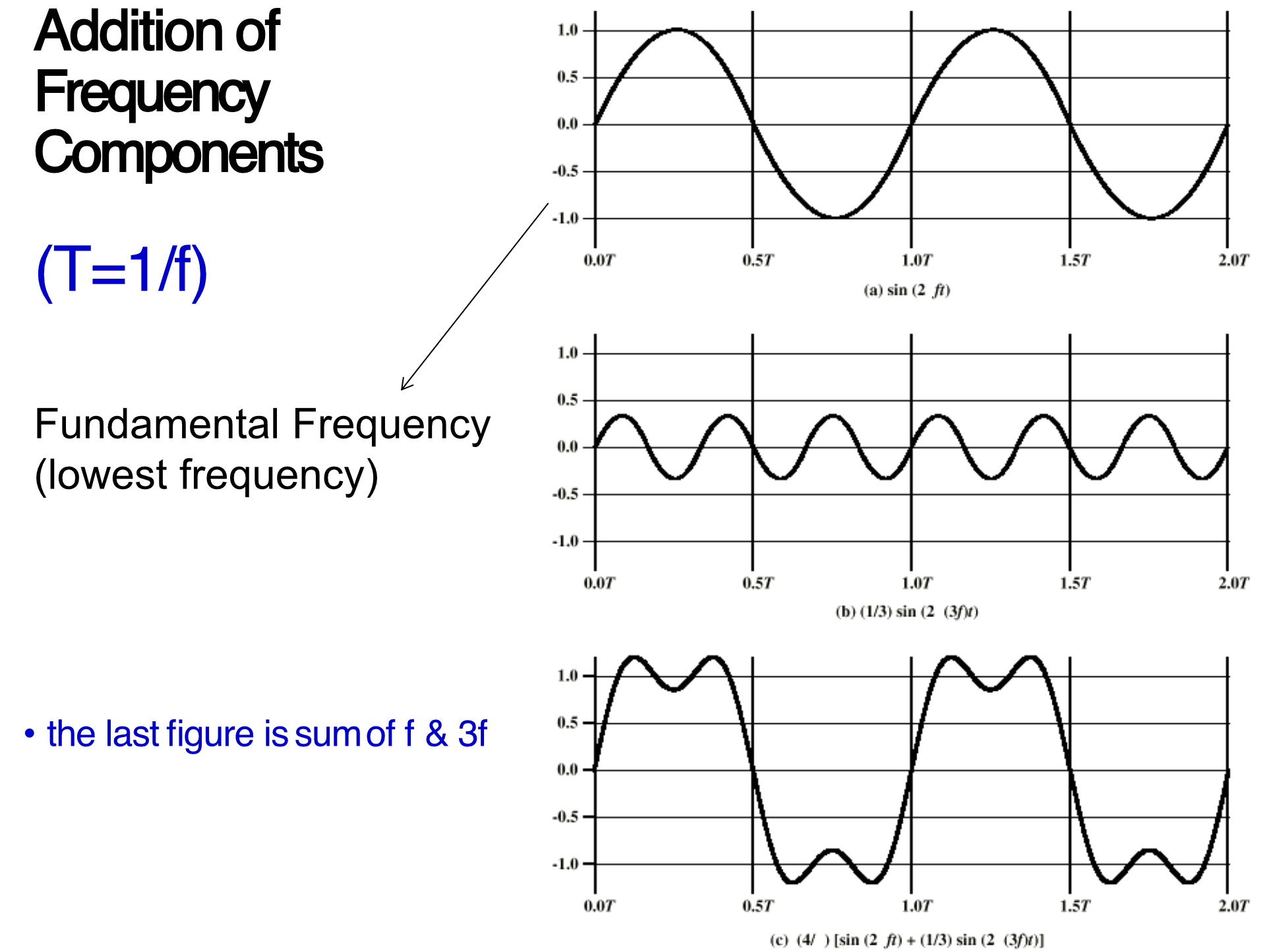
- Signals are made up of many frequencies
- Components are sine waves
- Fundamental Frequency: Lowest frequency component
- DC Component: Component of zero frequency (direct current)
Spectrum and Bandwidth
Definitions
- Spectrum: Range of frequencies contained in signal
- Absolute bandwidth: Width of spectrum ()
- Effective bandwidth: Narrow band of frequencies containing most energy
- ถ้าพูดถึง Bandwidth เฉย ๆ ก็จะหมายถึง Effective bandwidth เนี่ยแหละนะ
Bandwidth Characteristics
-
For digital devices: Expressed in bits per second (bps) or bytes per second (Bps)
-
For analog devices: Expressed in cycles per second or Hertz (Hz)
-
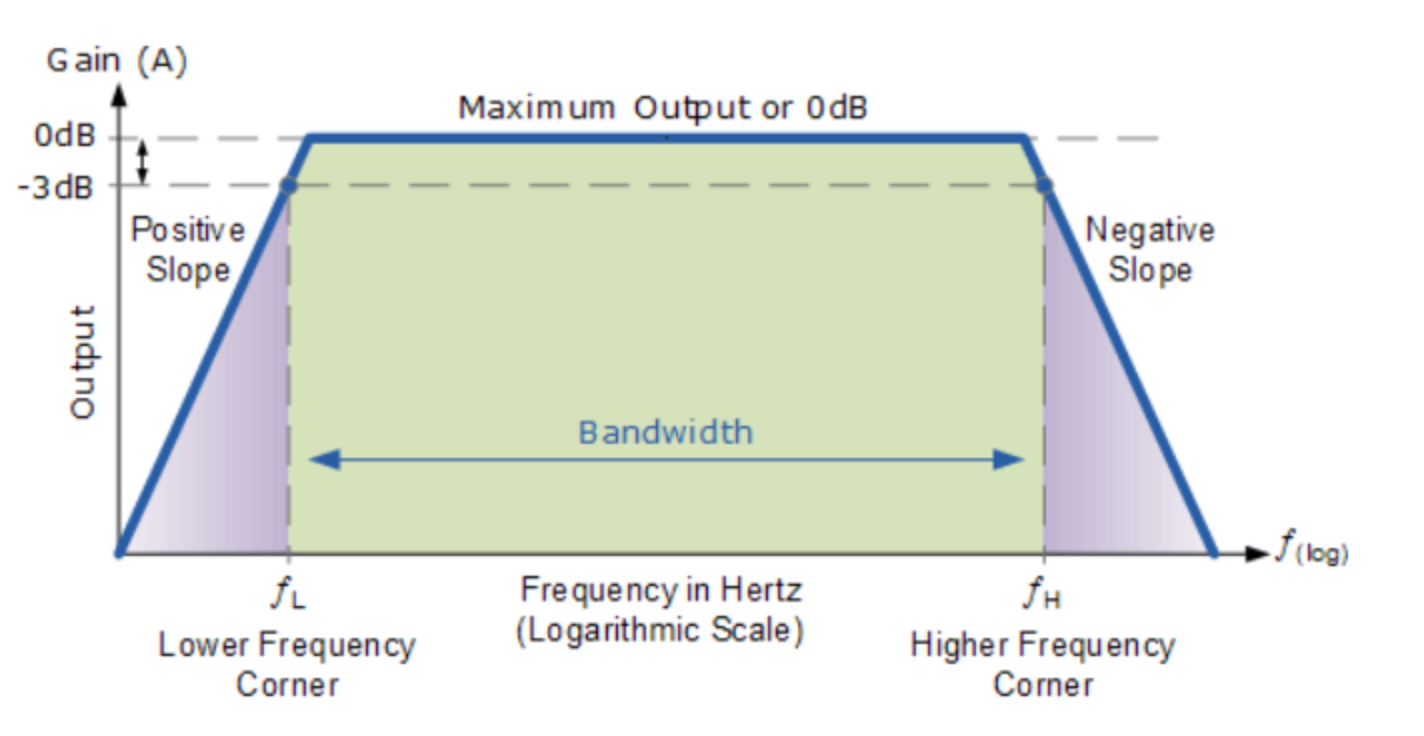
Range: From lowest frequency (fL) to highest frequency (fH)
-
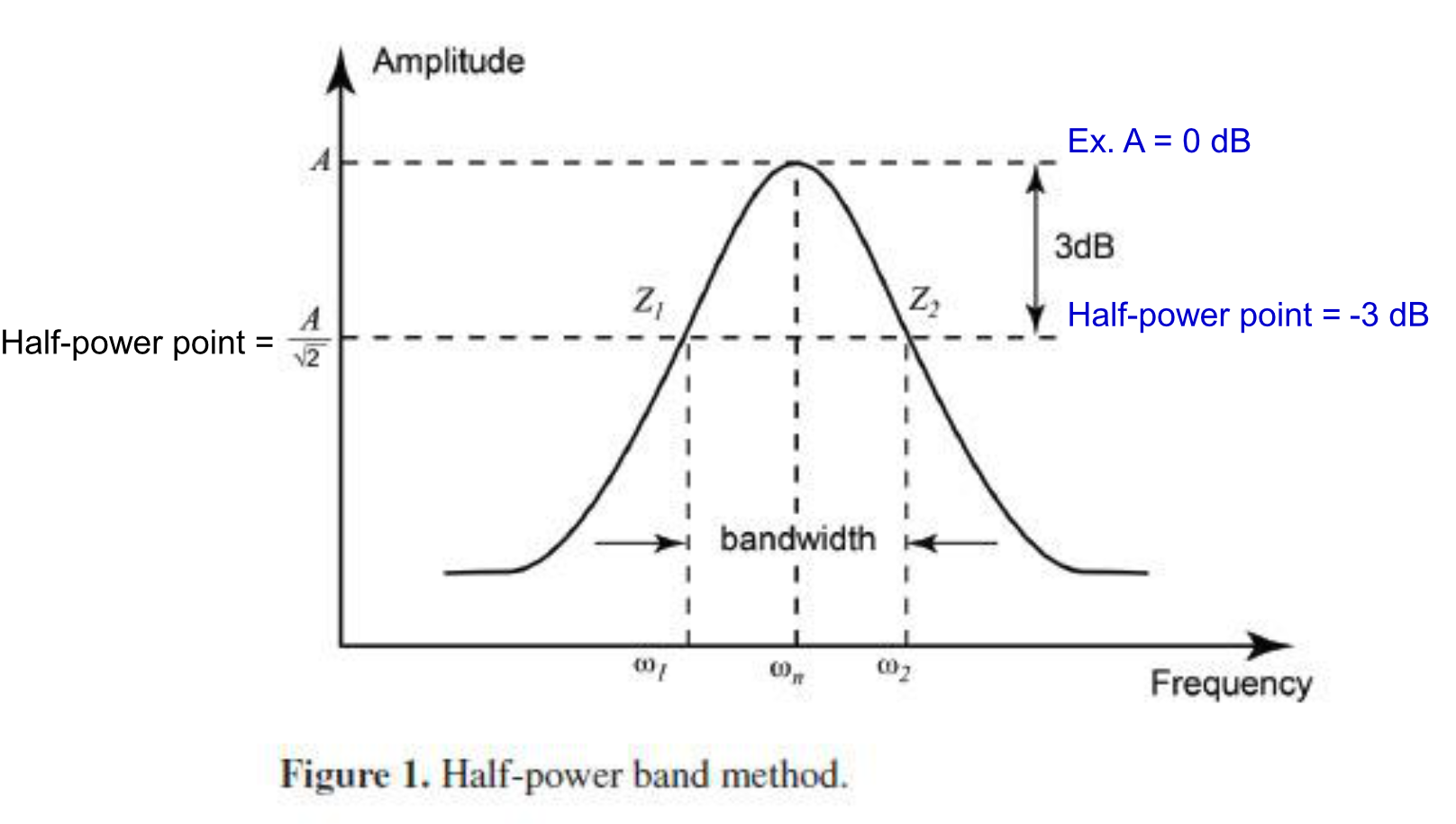
Half-power point: -3dB point where output power is half of maximum 0dB value
-
Bandwidth is the range of frequencies within a given band, in particular that used for transmitting a signal.
-
Graphical representations of frequency response curves are called Bode Plots
-
The -3dB point is also know as the “half-power” points since the output power at this corner frequencies will be half that of its maximum 0dB value as shown.
Data Rate (Data Transfer Rate)
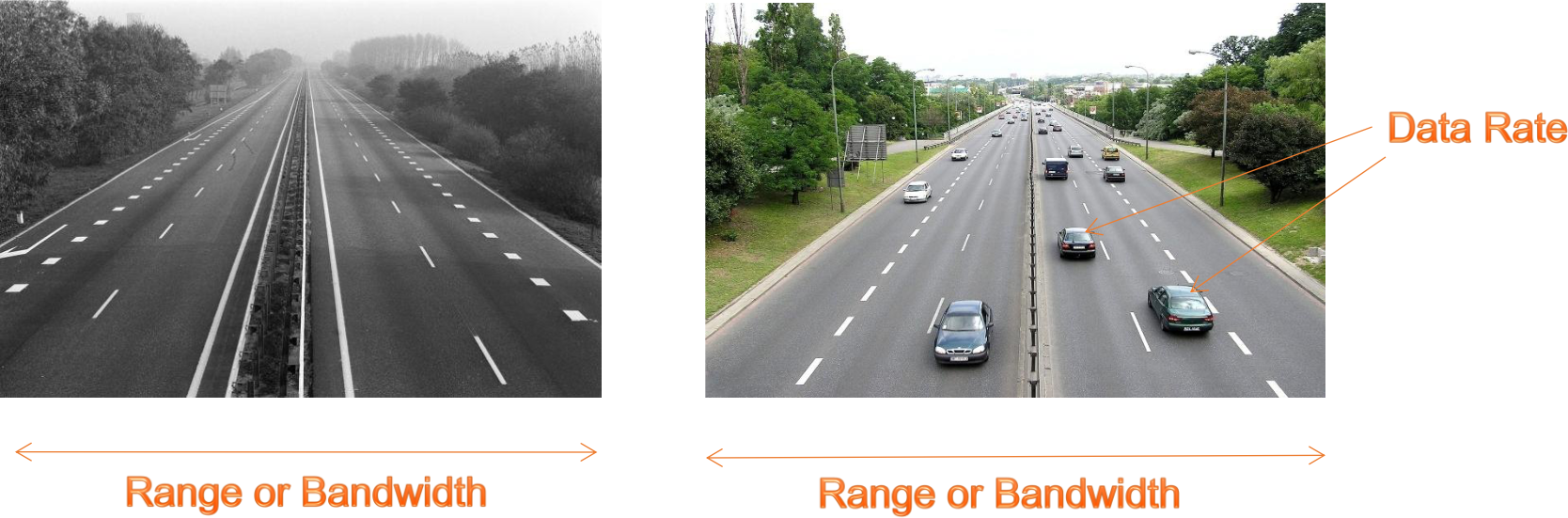
- Definition: Amount of data being transferred through a connection (medium) per second
- Limitation: Cannot be higher than the bandwidth of the connection
- Measurement: Bits per second (bps), also called bit rate
- Relationship: Higher data rate requires greater effective bandwidth
- ลองดูว่า relationship ขาดหายอะไรมั้ย
- The higher the data rate of a signal, the greater is its required effective bandwidth.
Signal Types
Audio Signals
- Frequency range: 20 to 20,000 Hz (human hearing limits)
- Voice channel standard: 300 to 3400 Hz
- Conversion: Easily converted to electromagnetic signals
- Representation: Varying volume to varying voltage
Digital Data
- Generated by computers
- Has two DC components
- Bandwidth depends on data rate
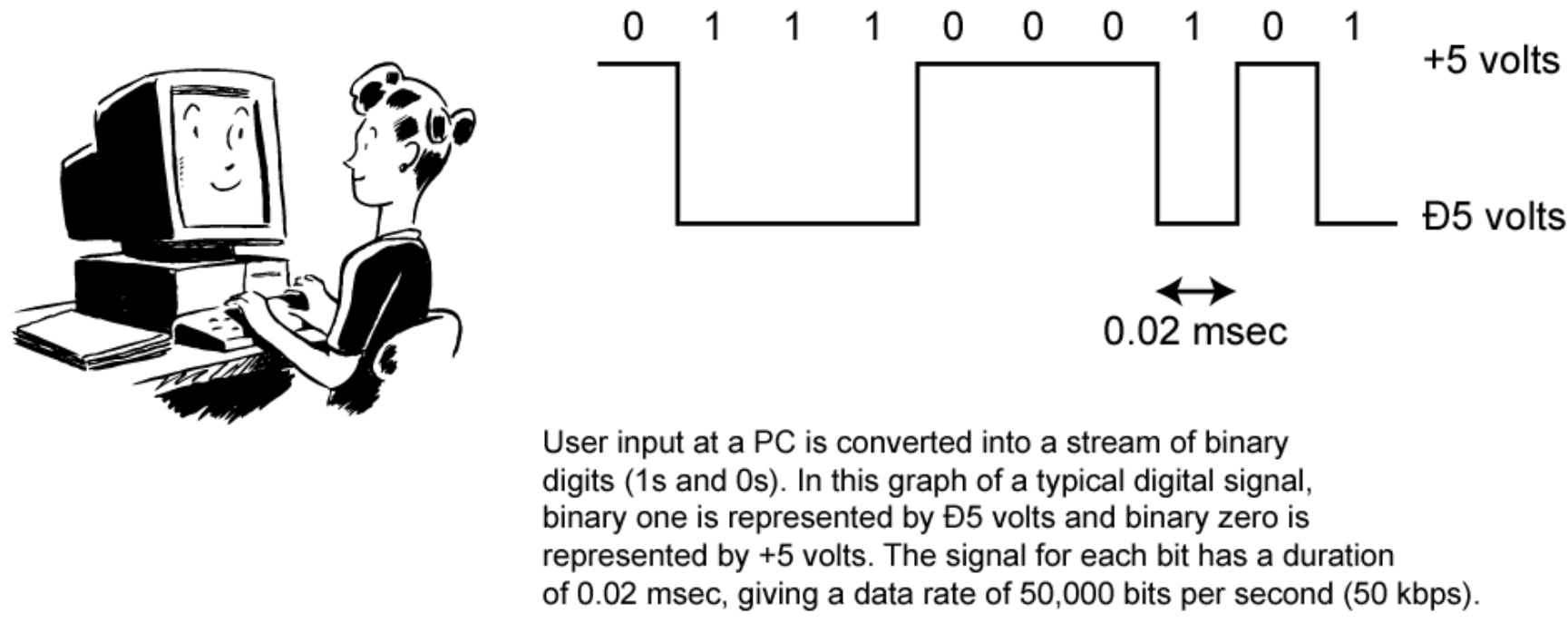
- ใช้ 0.02 msec to transmit one bit, is called ”Bit Duration”
- สามารถเอาไปคำนวณได้
Digital vs Analog Signals
Analog Signals
Digital Signals
Advantages of Digital Signals
- Generally cheaper than analog signaling
- Easier to implement
- Less susceptible to noise interference
- More preferred choice
Disadvantages of Digital Signals
- Greater attenuation (gradual loss in intensity through medium)
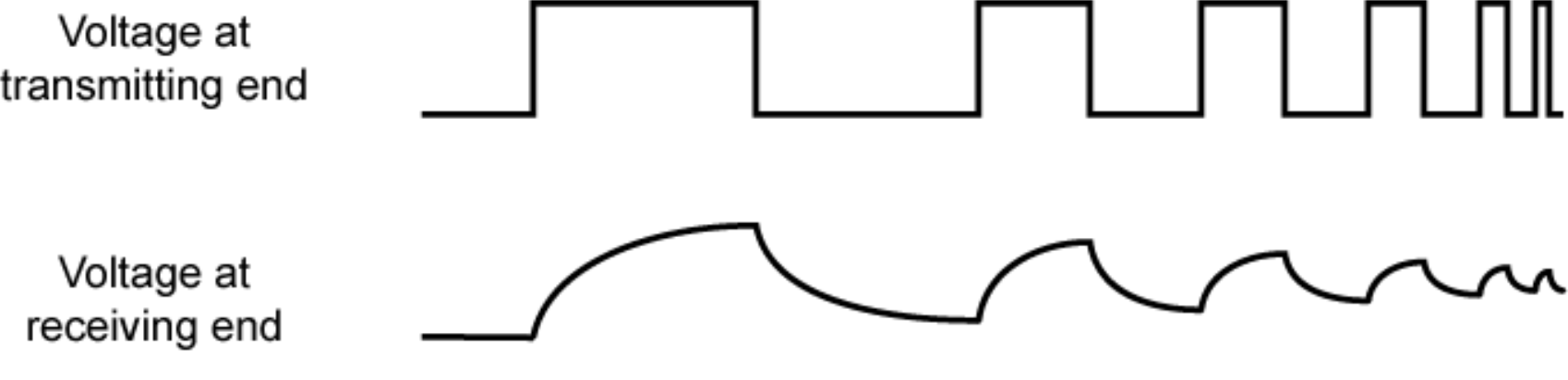
Transmission Impairments
Overview
- Signal received (ตรงปลายสาย - at the end) may differ from signal transmitted
- Effects:
- Analog: degradation of signal quality
- Digital: bit errors
Three Main Impairments
1. Attenuation
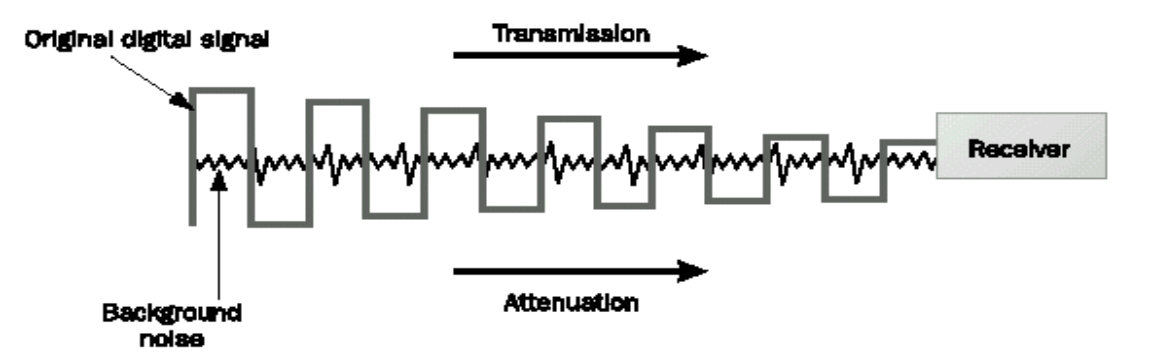
- Definition: Reduction in signal strength over distance
- Requirements for received signal:
- Strong enough to be detected
- Sufficiently higher than noise for error-free reception
- Solutions: Use amplifiers (for analog)/repeaters (for digital)
- Frequency dependency: Increases with frequency
- Equalization: Use loading coils or amplifiers
2. Delay Distortion
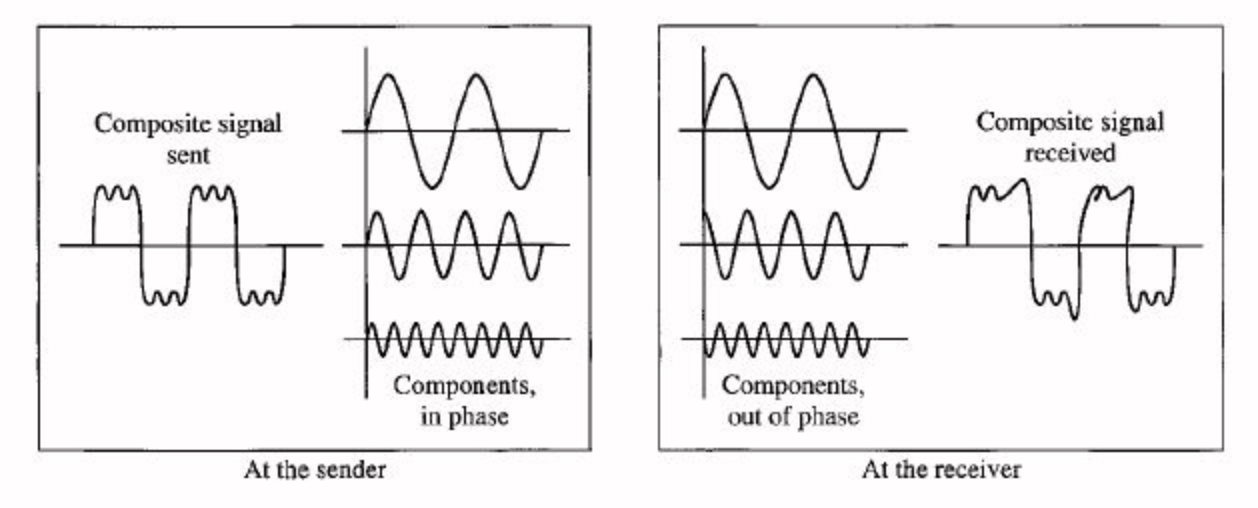
- Occurrence: Only in guided media
- Cause: Signal velocity and frequency variations
- Effect: Different frequency components arrive at different times
- Critical for: Digital data (causes inter-symbol interference)
3. Noise
Types of noise:
Thermal Noise
- Due to thermal agitation of electrons
- Uniformly distributed
- Also called white noise
Intermodulation Noise
- Signals that are sum and difference of original frequencies sharing a medium
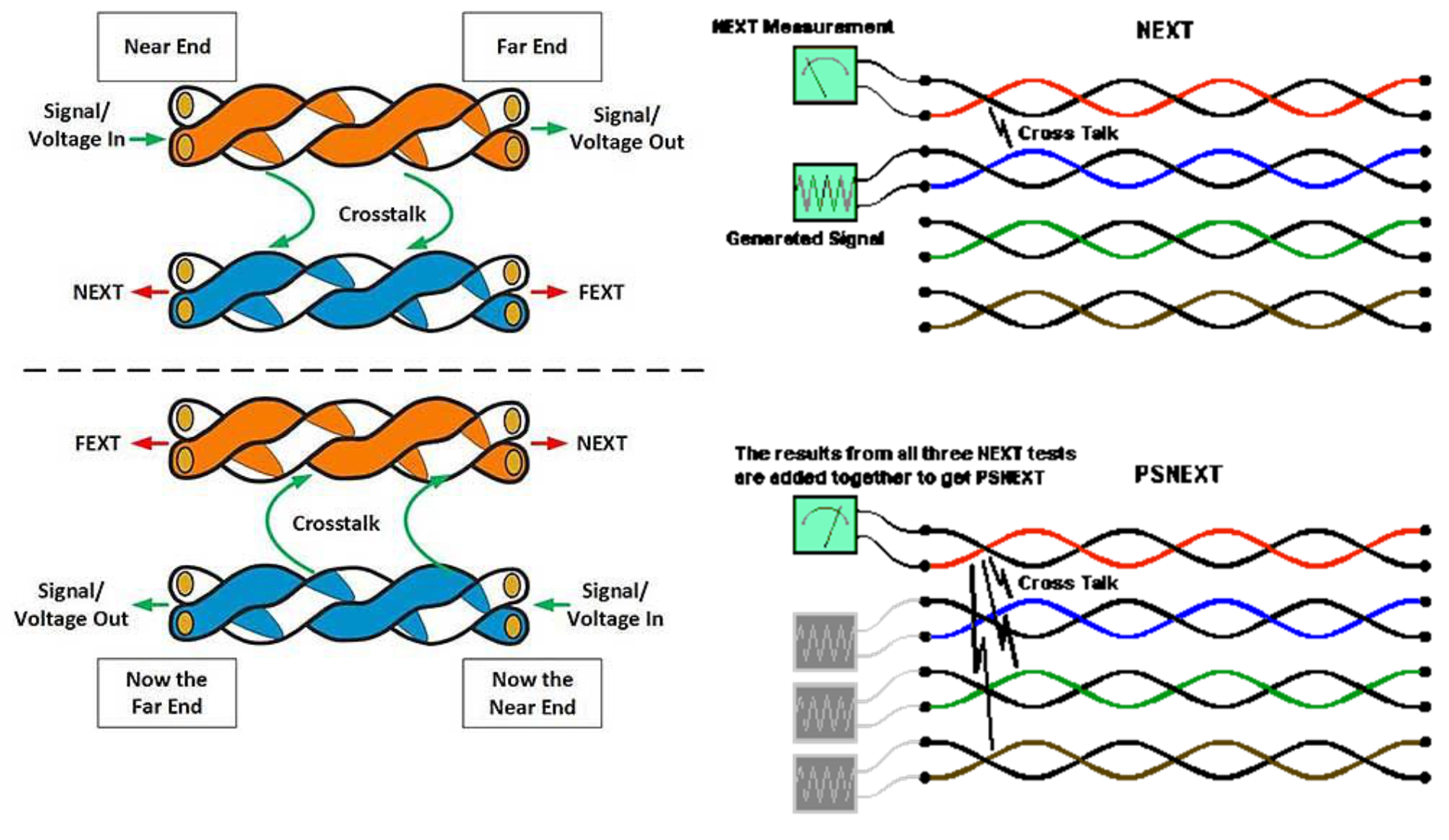
Crosstalk
- Signal from one line picked up by another line
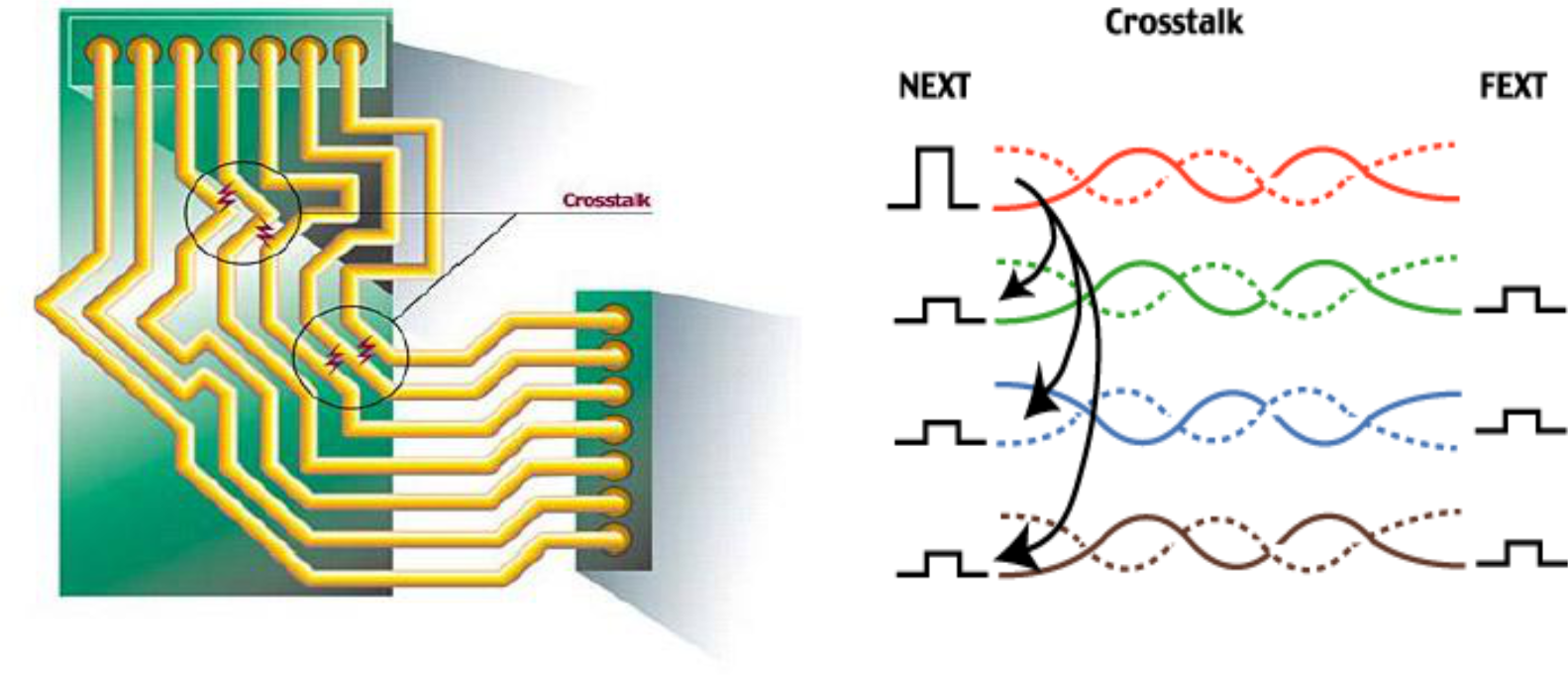
- Near End Crosstalk (NEXT): Interference measured at same end as transmitter
- Power Sum NEXT (PSNEXT): NEXT including all adjacent pairs
- Far End Crosstalk (FEXT): Interference measured at opposite end
- Equal Level FEXT (ELEFEXT): FEXT with attenuation compensation
- Power Sum FEXT (PSFEXT): Sum of all interference signals
Impulse Noise
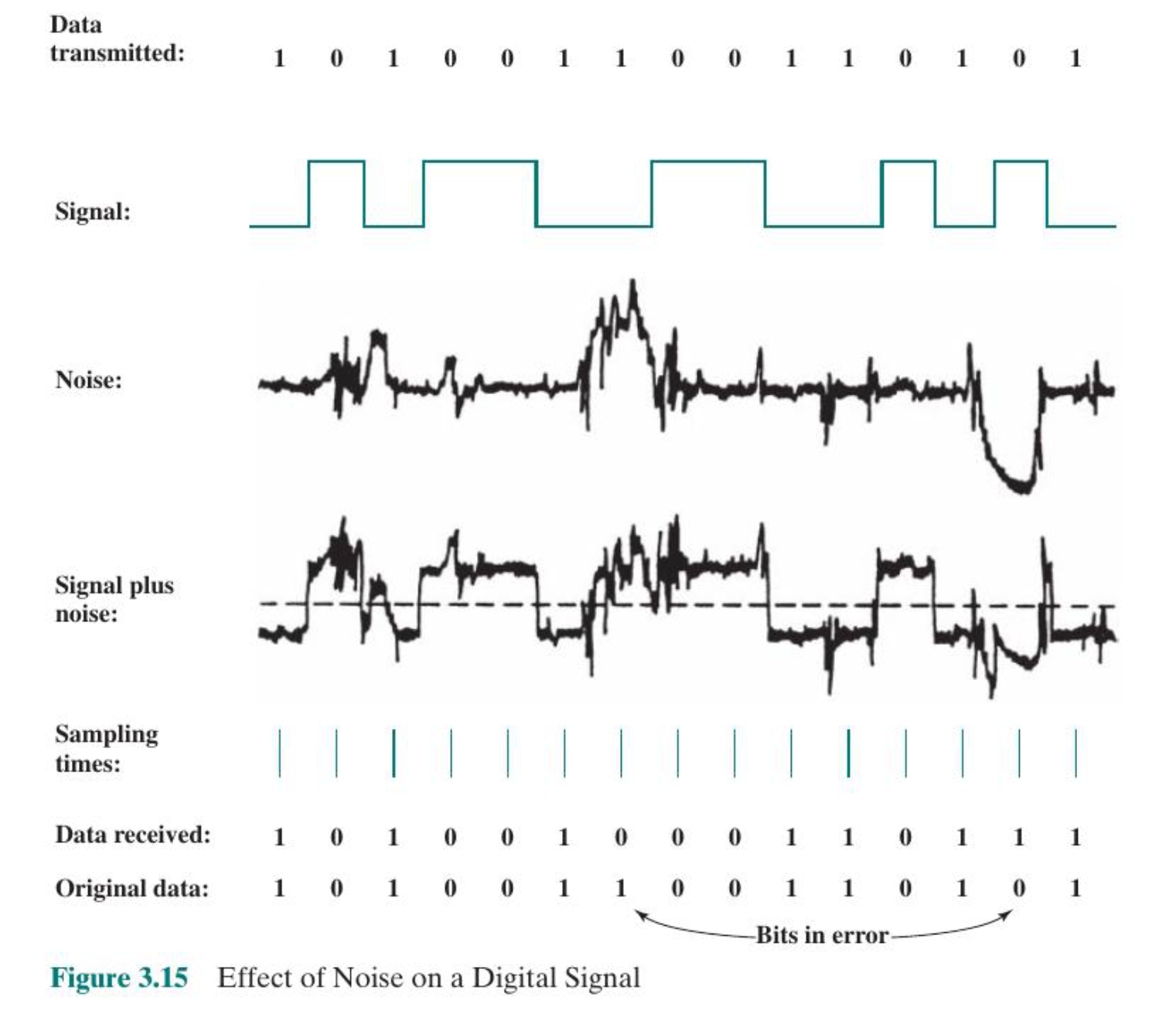
- Irregular pulses or spikes
- External electromagnetic interference
- Short duration, high amplitude
- Minor annoyance for analog signals
- Major source of error in digital data
Channel Capacity
Definition
- Maximum possible data rate on communication channel
Factors Affecting Capacity
- Data rate: In bits per second
- Bandwidth: In cycles per second or Hertz
- Noise: On communication link (if we’re taking it in consideration)
- Error rate: Of corrupted bits
- Physical limitations
Types of Channels
- Noiseless Channel: Nyquist Bit Rate
- Noisy Channel: Shannon Capacity
Nyquist Theorem
A method to find maximum data rate (with fixed bandwidth) - เราจึงต้อง increase signal level
Definition
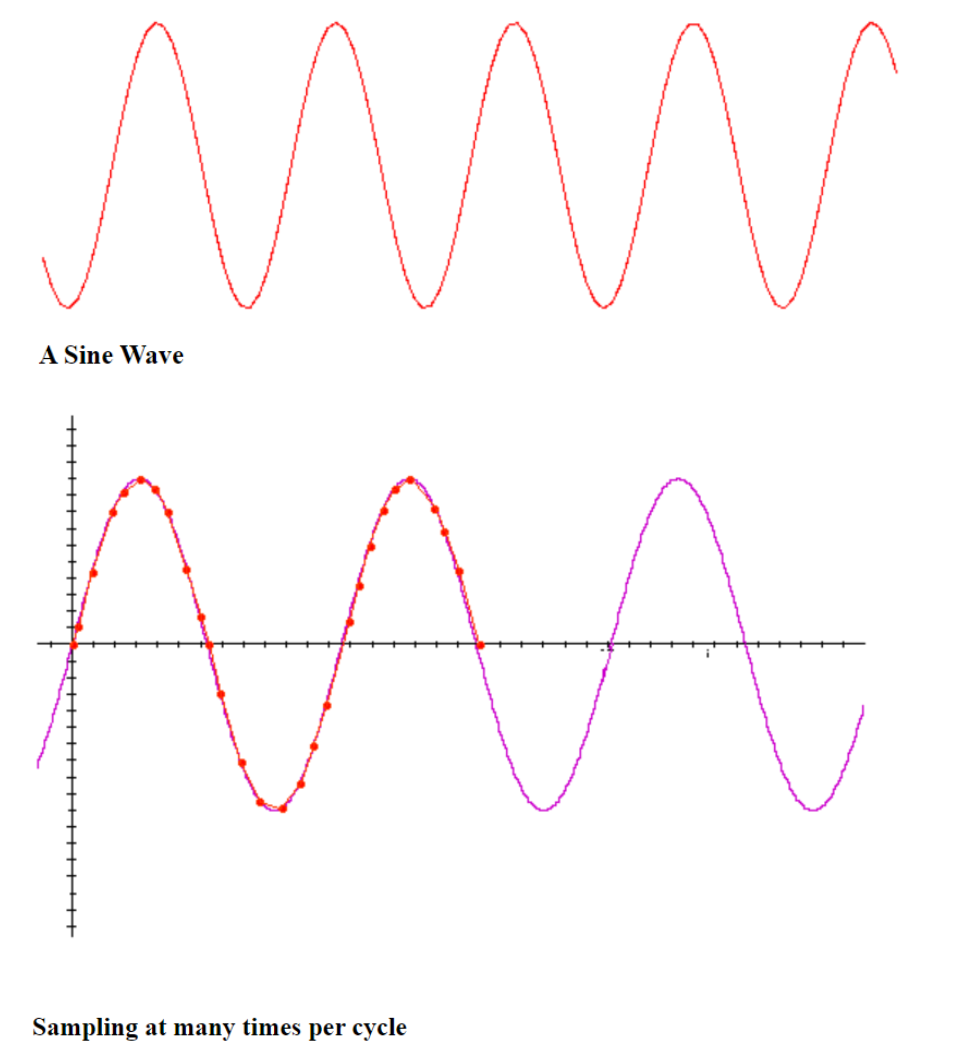
- Principle for digitization of analog signals
- Specifies sampling rate for faithful reproduction
- Key principle: Highest frequency component determines bandwidth
Nyquist Bandwidth
- Formula:
- Where:
- = bandwidth
- = signal levels
- For binary signals: bps needs bandwidth Hz
- Trade-off: Increase rate by increasing signal levels at cost of receiver complexity
Signal Levels Example
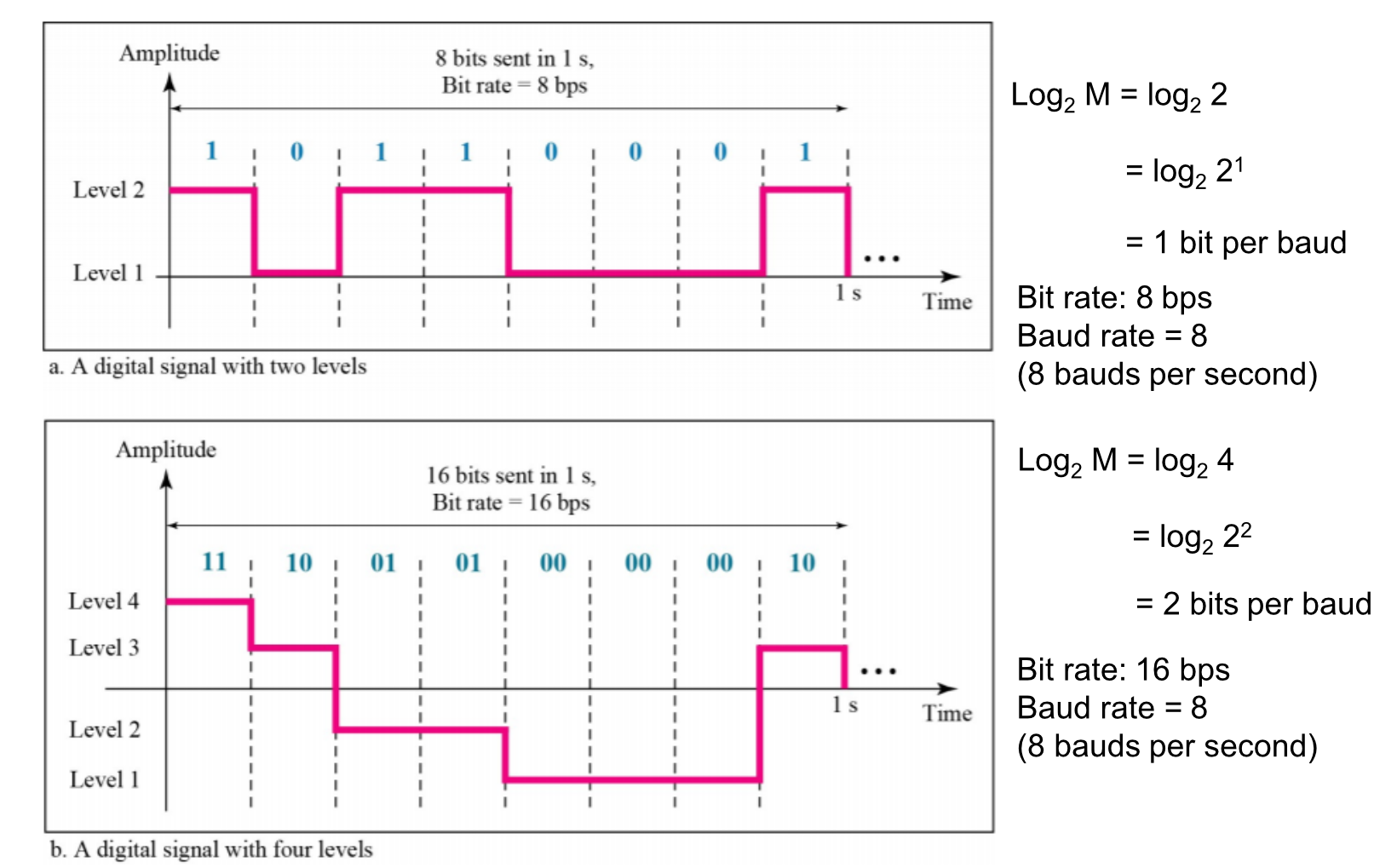
- M = 2 (binary): 1 bit per baud
- M = 4: 2 bits per baud
- Formula application: determines bits per symbol
Example Calculation
- Voice channel bandwidth: 3100 Hz
- Nyquist capacity: bps
- With M = 8: bps
Shannon Capacity Formula
Relationship
- Considers data rate, noise, and error rate
- Higher data rates mean shorter bit duration
- Noise bursts affect more bits at higher rates
- Higher rates with given noise level = higher errors
Formula
Where:
- SNR = Signal Power / Noise Power
- C: Theoretical maximum capacity
- Practical rates: Lower than theoretical maximum
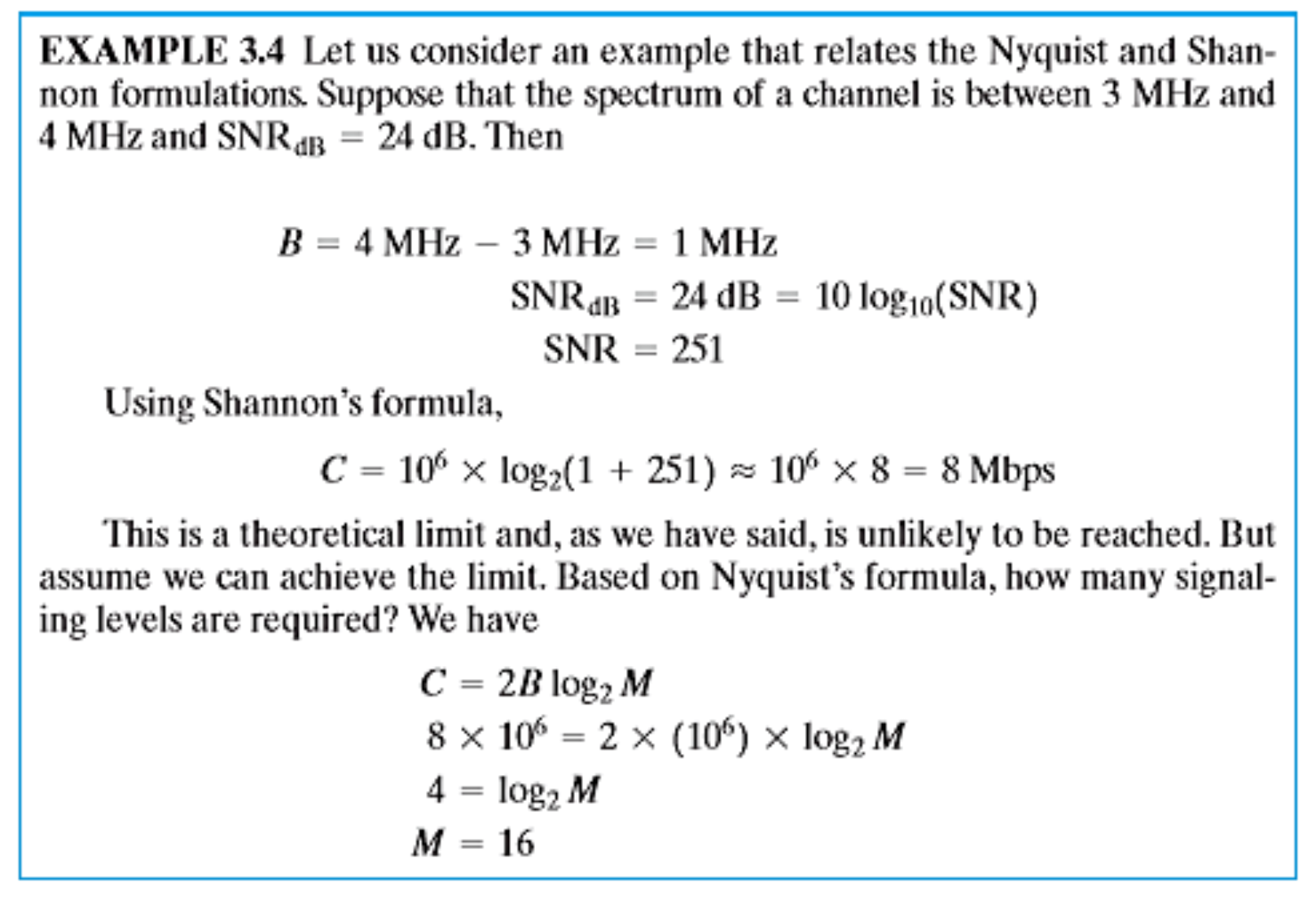
Example
- หา Bandwidth ก่อน ก็คือ high frequency - lower frequency
Summary
Key Topics Covered
- Data transmission issues
- Frequency, spectrum & bandwidth concepts
- Analog vs digital signals comparison
- Types and effects of transmission impairments
- Channel capacity calculations
- Nyquist and Shannon theorems