Database Milestones
จะพยายามมา Update เรื่อย ๆ ว่าเราทำได้ครบหรือยังนะะ!! 55555
Database Analysis and Design
- Requirement Analysis
- Conceptual Design (ER Diagram) - milestone 1
Database Implementation
- Relational Schema Design
- Database Development
- SQL Query - milestone 2
Database Administration
- Database Maintenance, Backup and Recovery
- DBMS Monitoring
- Database Optimization and Finetuning
- Database Server Performance and Monitoring - milestone 3
Lecture Outline
Today, you will learn:
- The difference between data and information
- What a database is and why they are valuable assets for decision making
- The importance of database design
- How modern databases evolved from file systems
- About flaws in file system data management
- The main components of the database system
- The main functions of a database management system (DBMS)
Why Do We Need to Learn This Course?
Why Data Is So Important?
If you have a lot of data:

- How to store it efficiently?
- How to use it wisely?
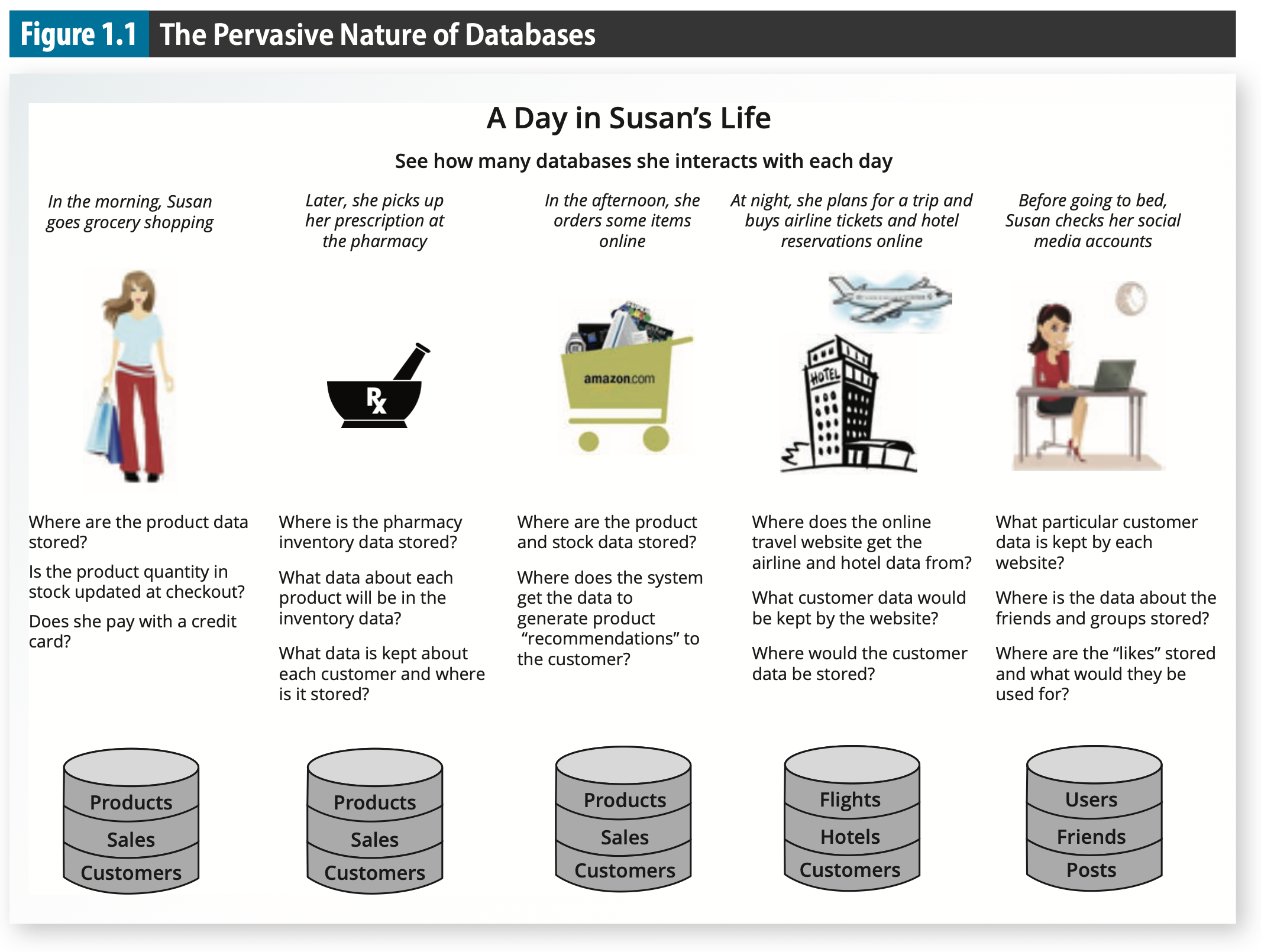
- นั่นแหละจากชีวิตของ Susan ก็บอกแล้วว่า Database อยู่รอบตัวเราจริง ๆ นะ
Why Databases?
- Databases solve many problems encountered in data management
- Used in almost all modern settings involving data management, for example:
- Business
- Research
- Administration, etc.
- Important to understand how databases work and interact with other applications
Key Benefits (SSS)
- Structure
- Storage
- Security
Data vs. Information
Data
- Raw facts
- Raw data - Not yet been processed to reveal the meaning
- Building blocks of information
- Data management:
- Generation, storage, and retrieval of data
Information
- Produced by processing data
- Require context to reveal the meaning of data
- Enables knowledge creation
- Should be accurate, relevant, and timely to enable good decision making
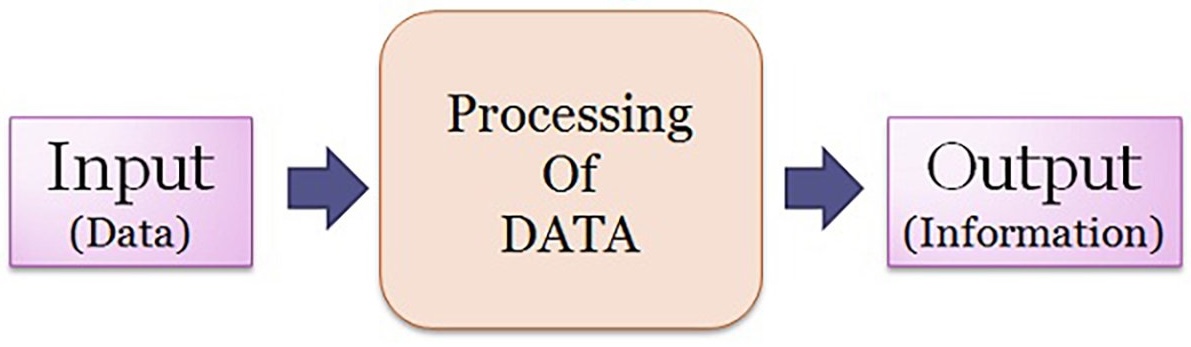
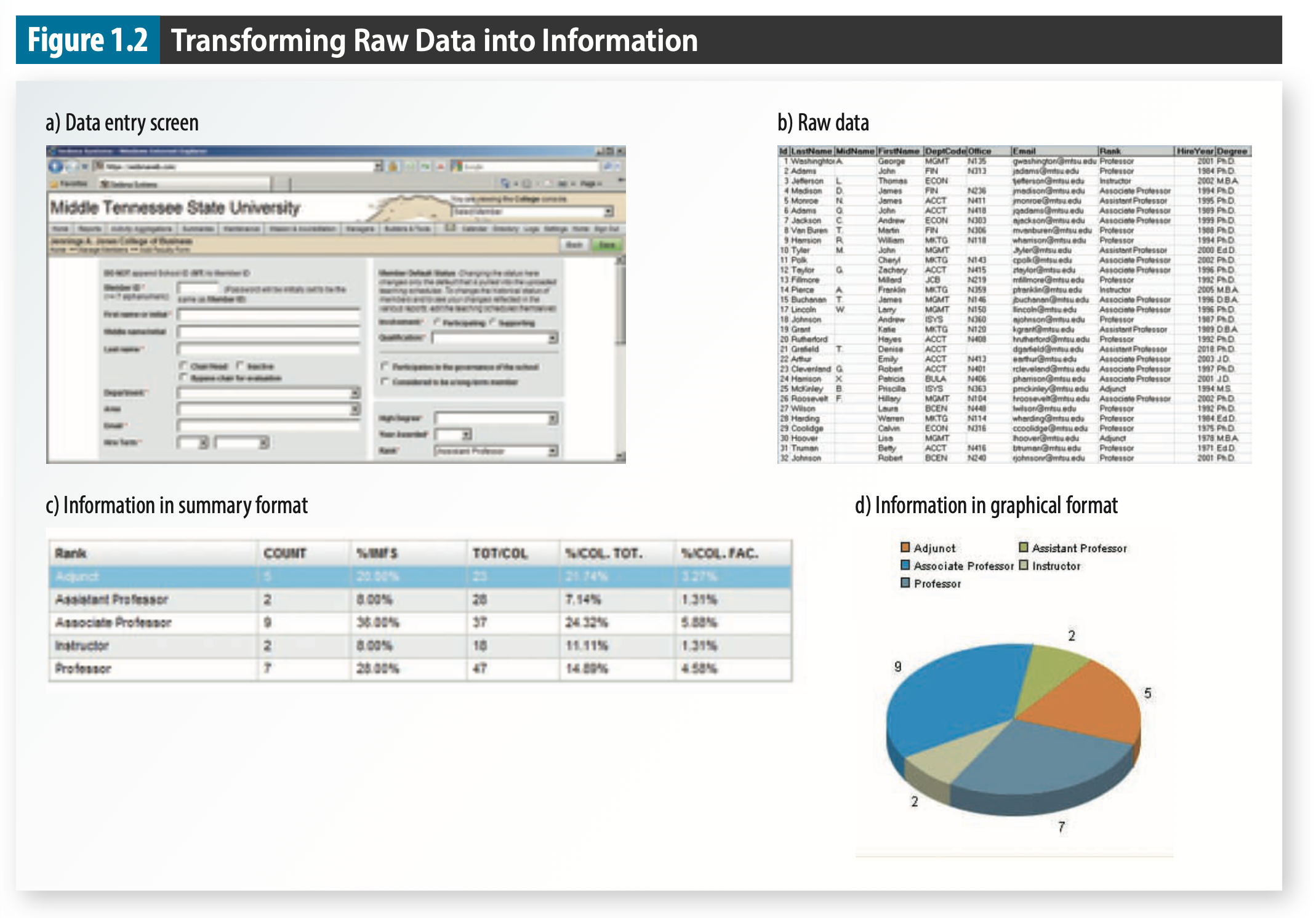
Progression of DATA
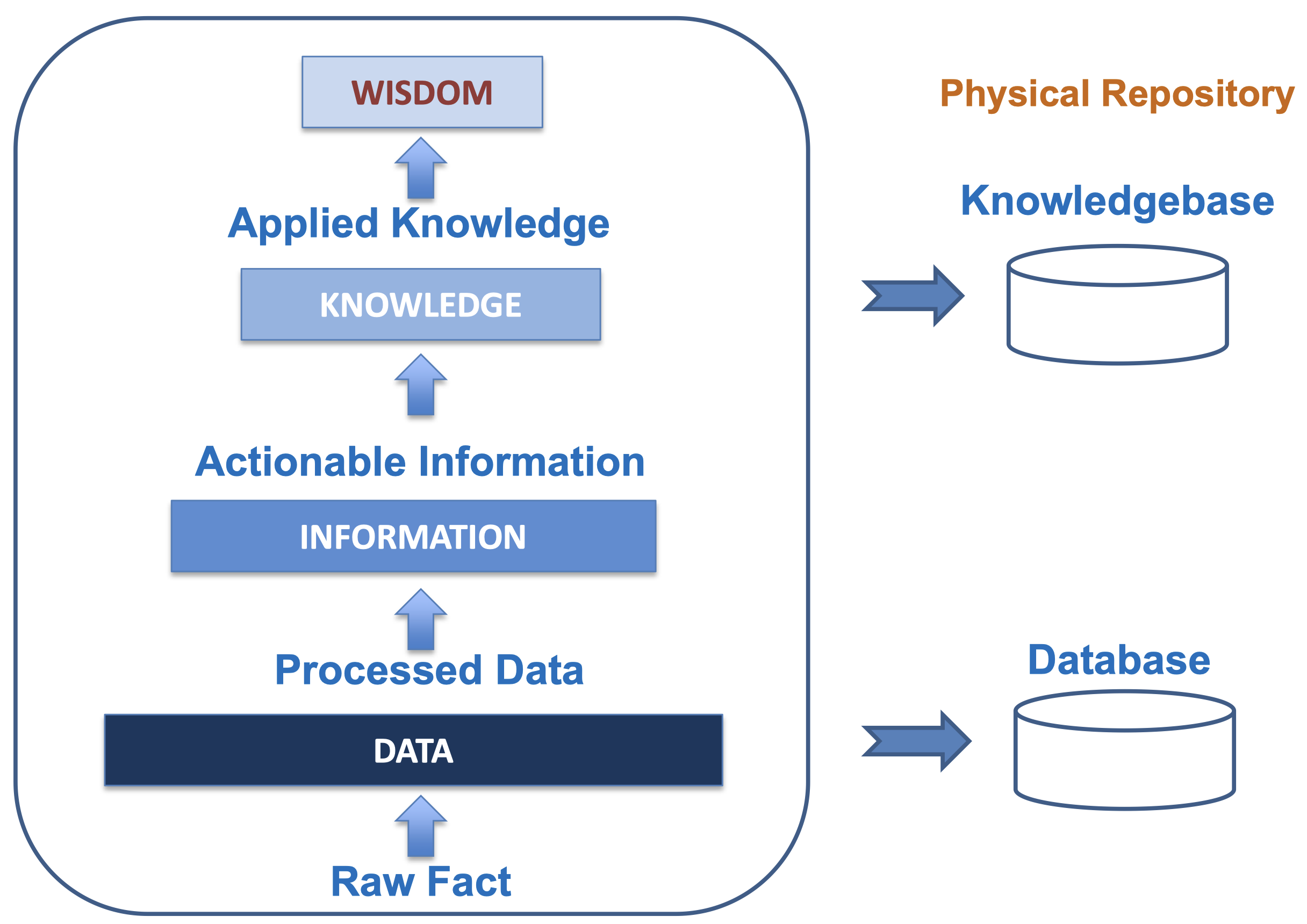
Principle Concept for Database Analysis, Design, and Implementation
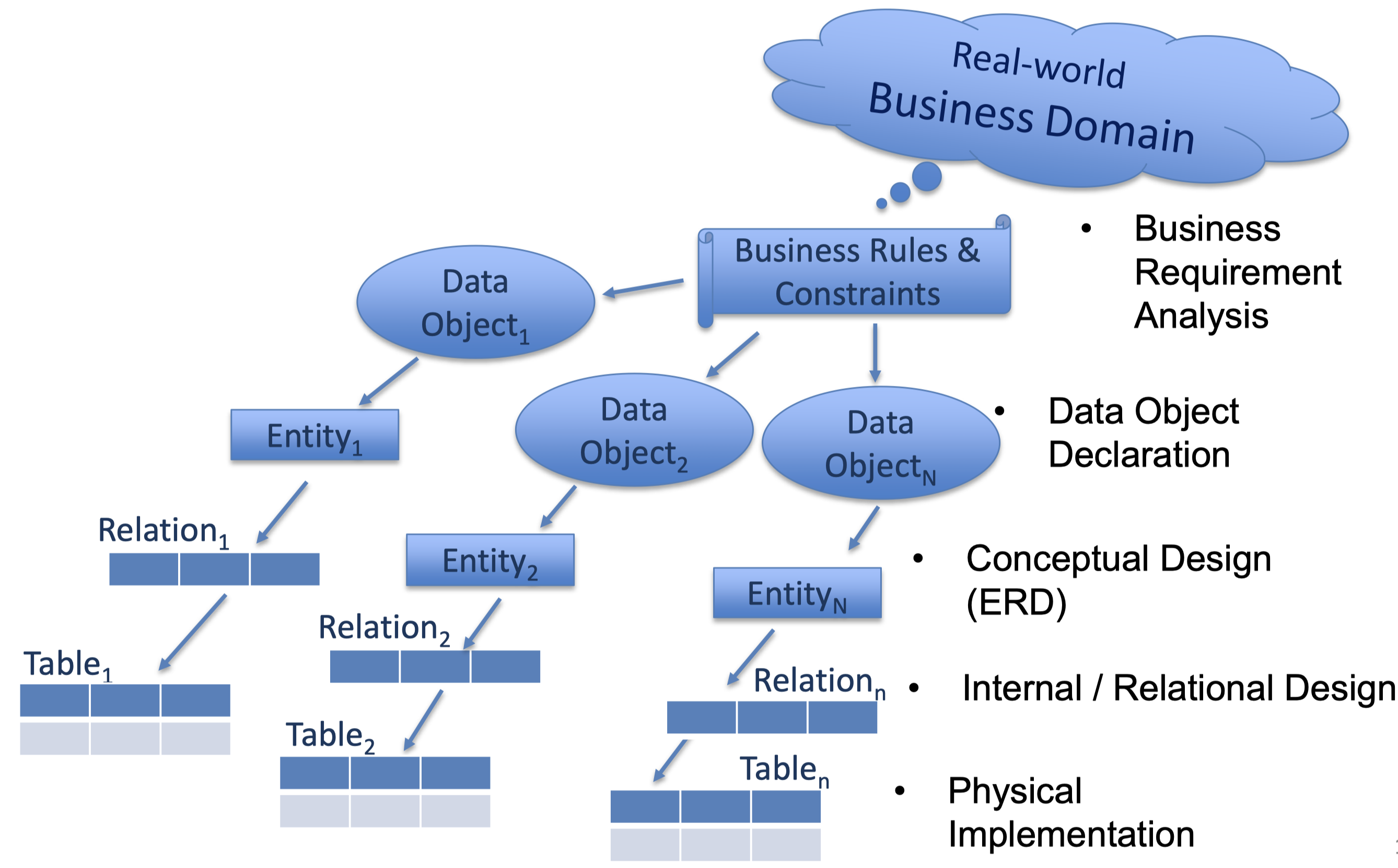
Database Development Roles and Processes
Database Analysis
- Business Domain Understanding
- Business Requirements Analysis
- Domain Data Object Declaration
- Role: DB Analyst
- Output: Data Object
Database Design
- Conceptual Design (ERD)
- Relational Schema Mapping
- Role: DB Designer
- Output: Entity → Relation
Database Implementation
- SQL Development (DDL, DML, QL)
- Database Sub-Language Integration
- Role: DB Developer
- Output: Table → Physical File
Nature of Data Object in Database
Data Schema (Metadata)
- Skeleton or structure of data
- Properties or Characteristics of data
- Defined as Attribute of data
- Example:
Student_Name,Student_ID,Gender - Definition: Data Definition or METADATA
Data Instance
- Raw fact or Raw data
- Structural or Un-structural data
- Defined as Data Record
- Example: Mr.Somboon, 6288000, Male
- Definition: Data Instance or Data Record
Glossary: MetaData is data about data defined the database structure (or database schema).
Master vs Transactional Data Object
- Master data object: Refers to the data obtained from the main data objects
- Examples: student, customer, product, or department
- Transactional data object: Relates to the transactions produced from business functions (or processes) and included data that is captured
- Examples: enrollment, order, payment, or reservation
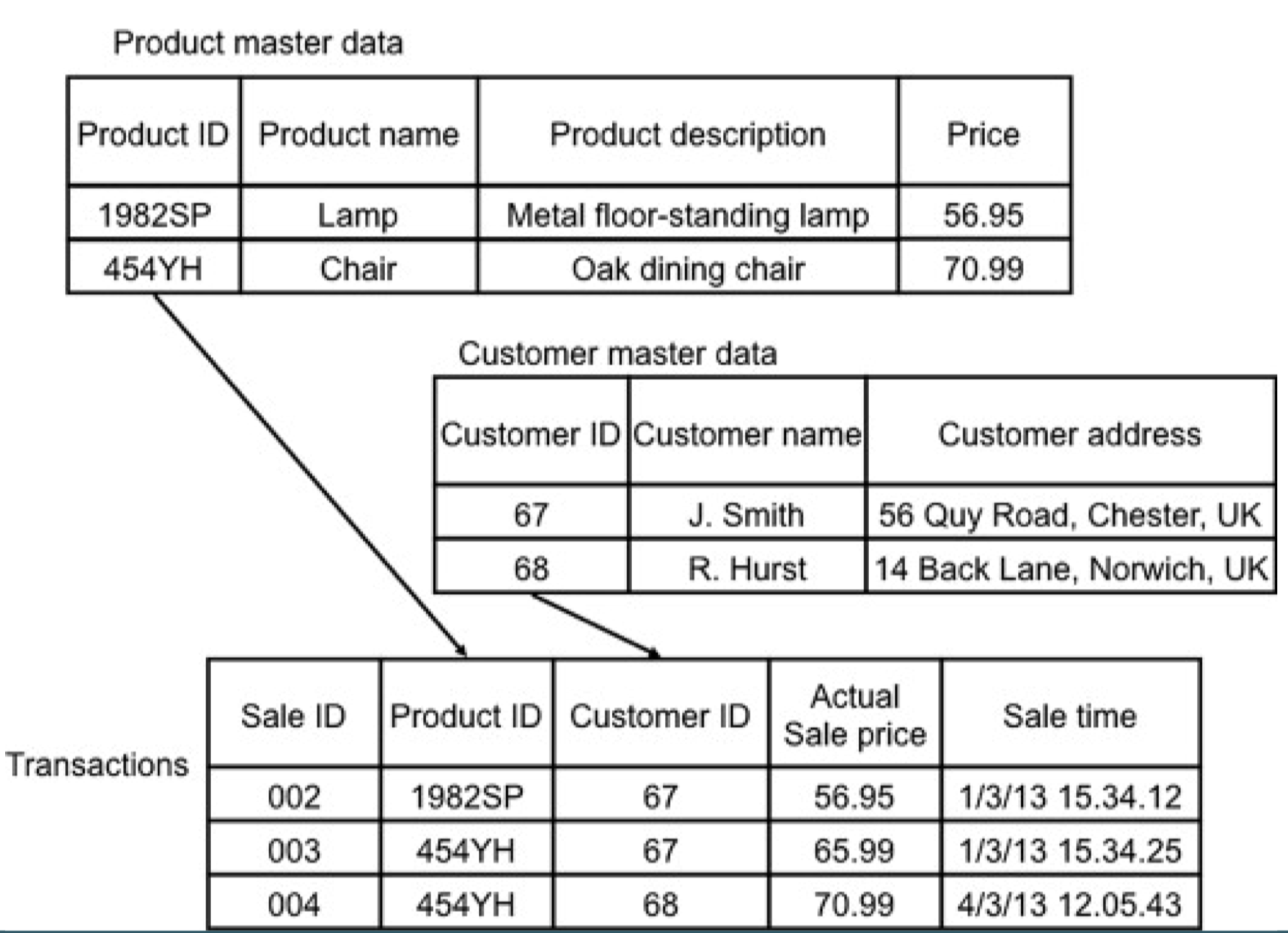
Database Design Issues
Evolution of File System Data Processing
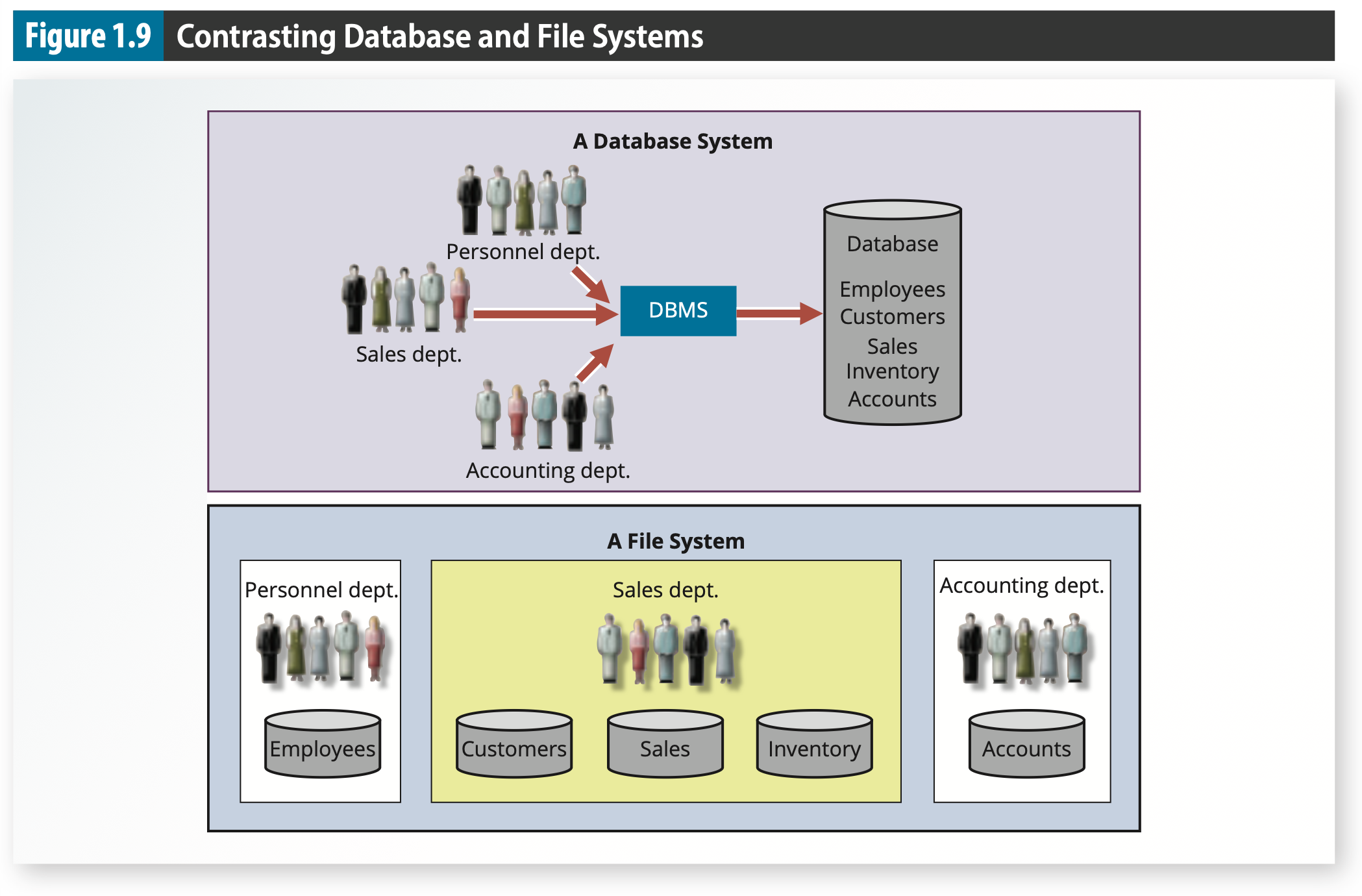
Reasons for studying file systems:
- Understanding file system's problems helps to avoid problems occurring in DBMS
- Knowing the complexity of file system helps to design DBMS
- Knowing the file system is useful for converting file system into DBMS
Problems with File System Data Processing
Summary of file system's limitations:
- Data retrieval task requires extensive programming
- Ad hoc queries are impossible
- System administration (create and maintaining number of files) is complex and difficult
- Lack of security and data sharing features
- Difficult to make changes to existing structures
Glossary: Ad Hoc Query needs when questions arise and are not be able to be solved with predetermined or predefined datasets. — อันนี้ยังอยู่ใน File system นะ มันทำไม่ได้
Data Redundancy
- File system structure makes it difficult to combine data from multiple sources
- Vulnerable to security breaches
- Organizational structure promotes storage of same data in different locations
- Islands of information
- Data stored in different locations is unlikely to be updated consistently
- Data inconsistency: different and conflicting versions of same data occur at different places
- Data anomalies: abnormalities when all changes in redundant data are not made correctly:
- Update anomalies
- Insertion anomalies
- Deletion anomalies
Definition: Data redundancy: same data stored unnecessarily in different places.
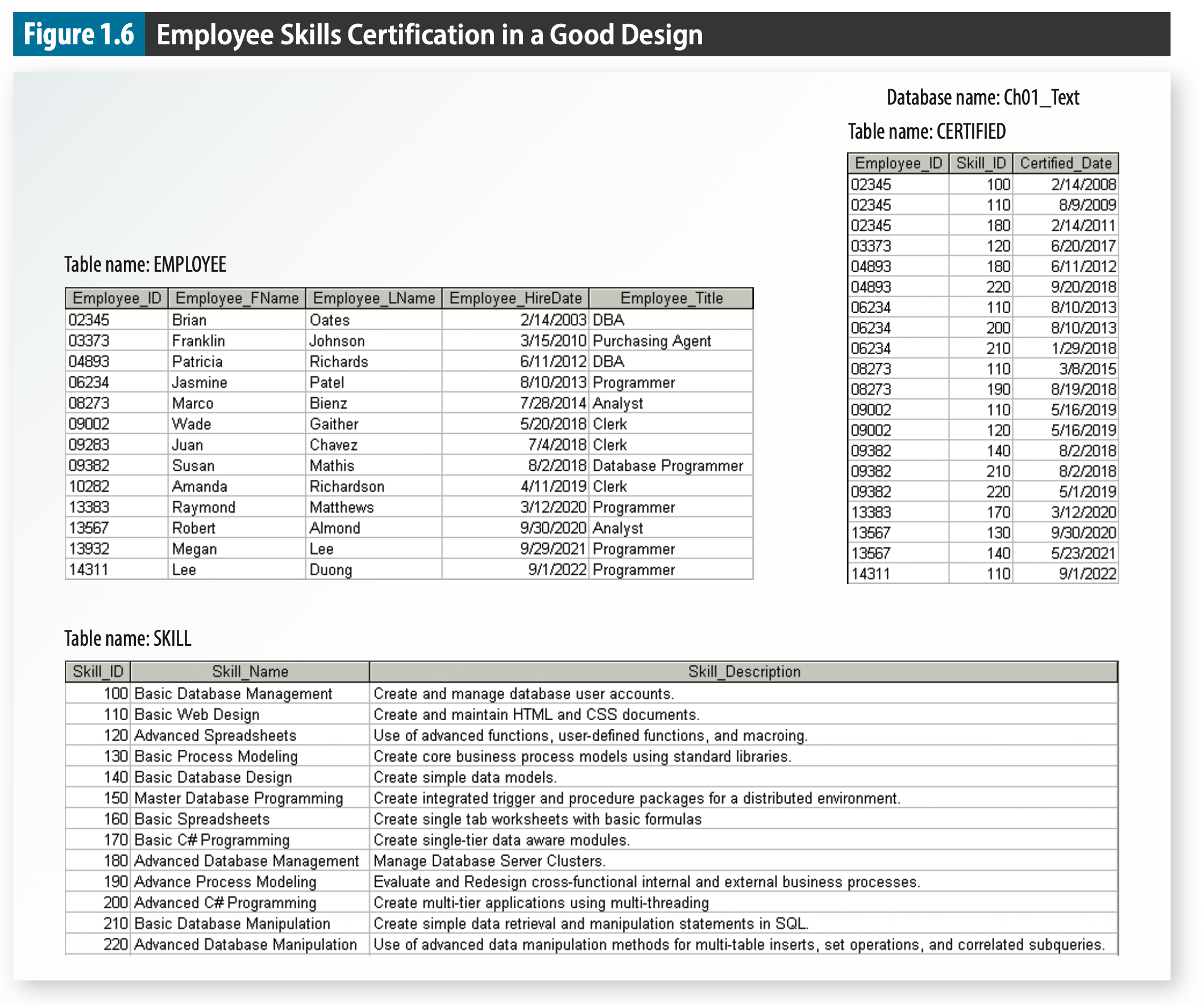
Database Design is Important
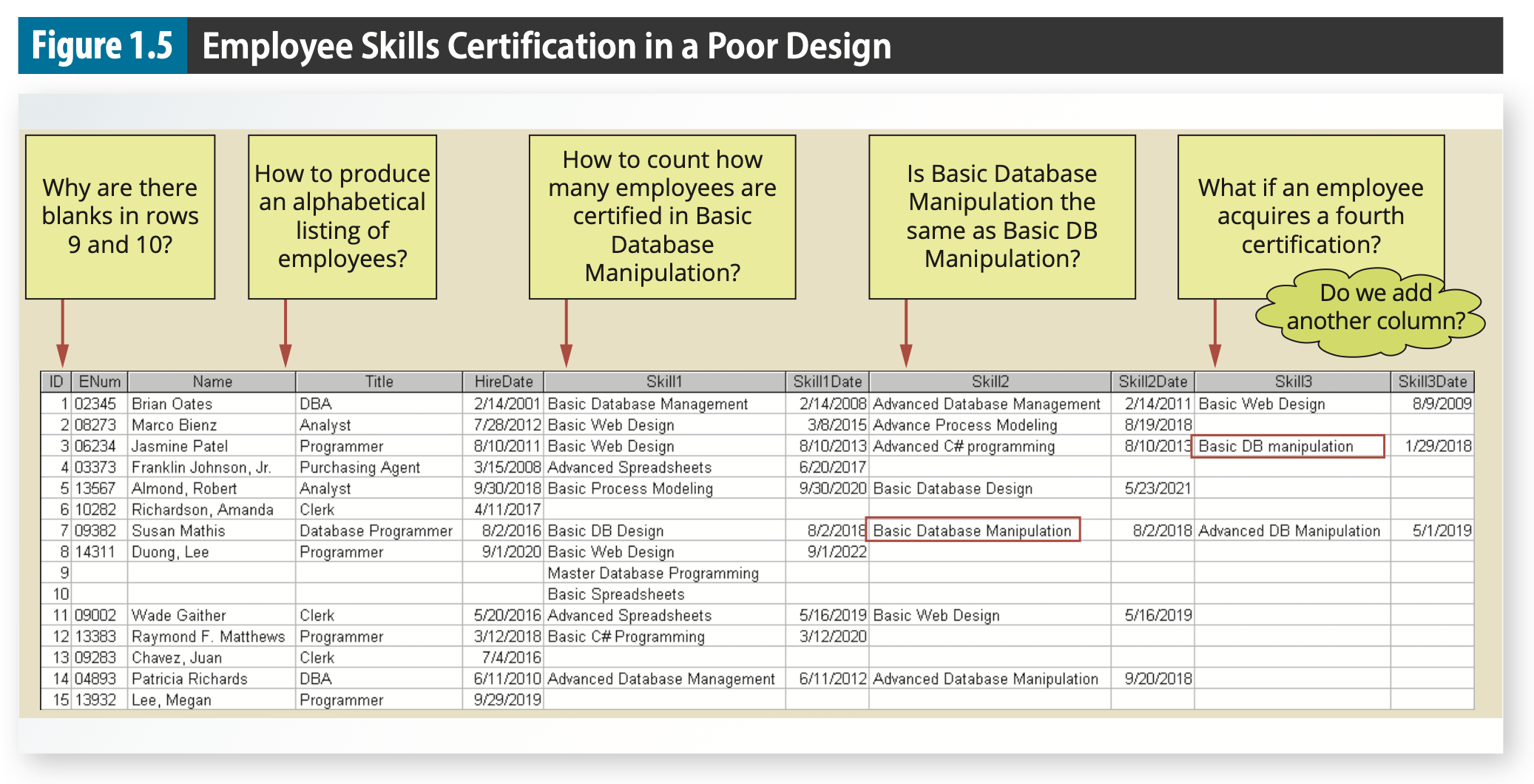
Better Design?
Database Management System (DBMS)
Database
- Shared, integrated computer structure that stores a collection of:
- End-user data: raw facts of interest to end user
- Metadata: data about data
- Provides description of data characteristics and relationships in data
Database Management System (DBMS)
- Collection of programs to:
- Manage the database structure
- Store the actual data in the database
- Secure and control access to database
Roles and Advantages of the DBMS
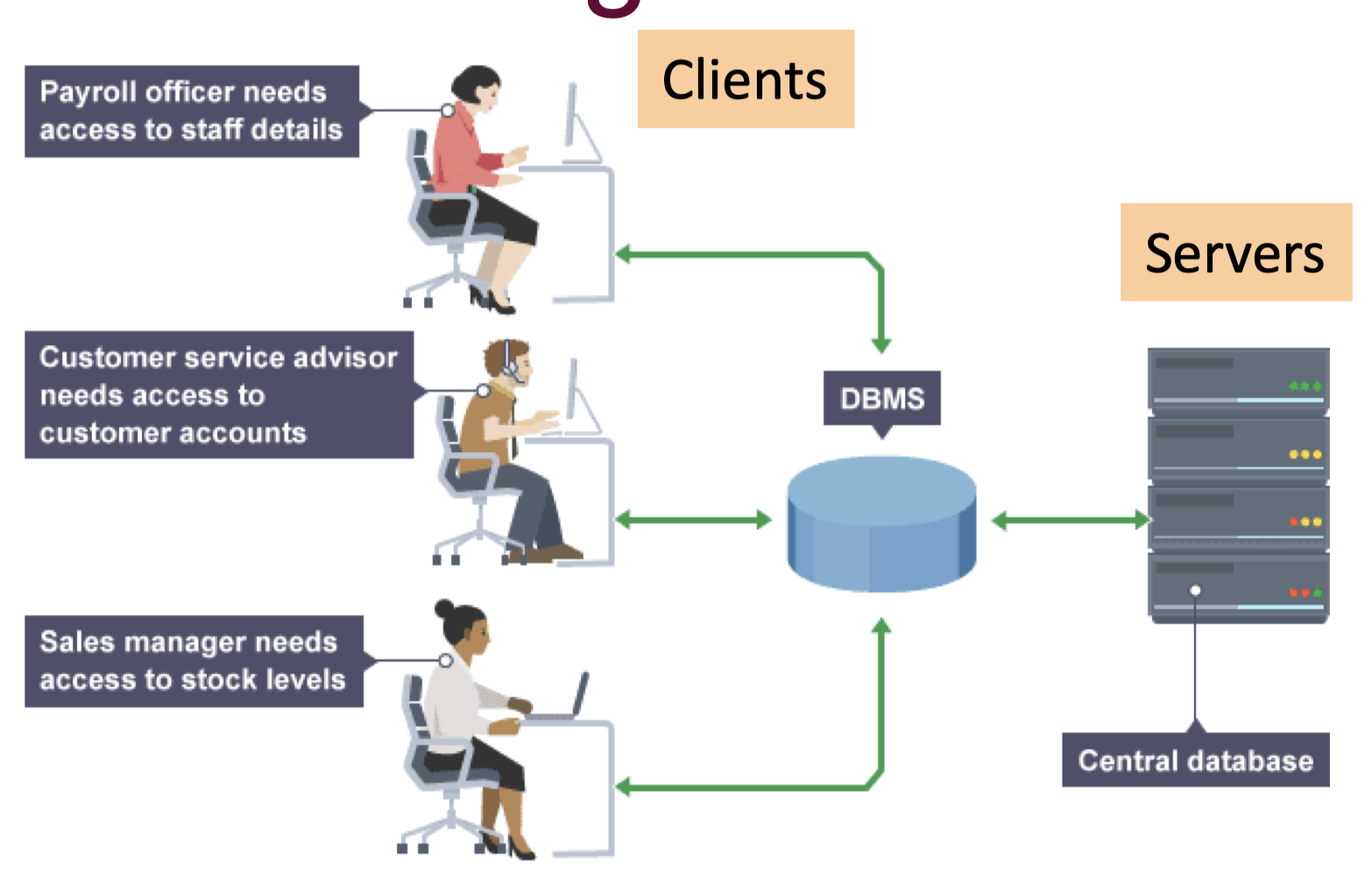
- DBMS is the intermediary between the user and the database:
- Database structure stored as file collection
- Can only access files through the DBMS
- DBMS enables data to be shared
- DBMS integrates many users' views of the data
The Database System Environment
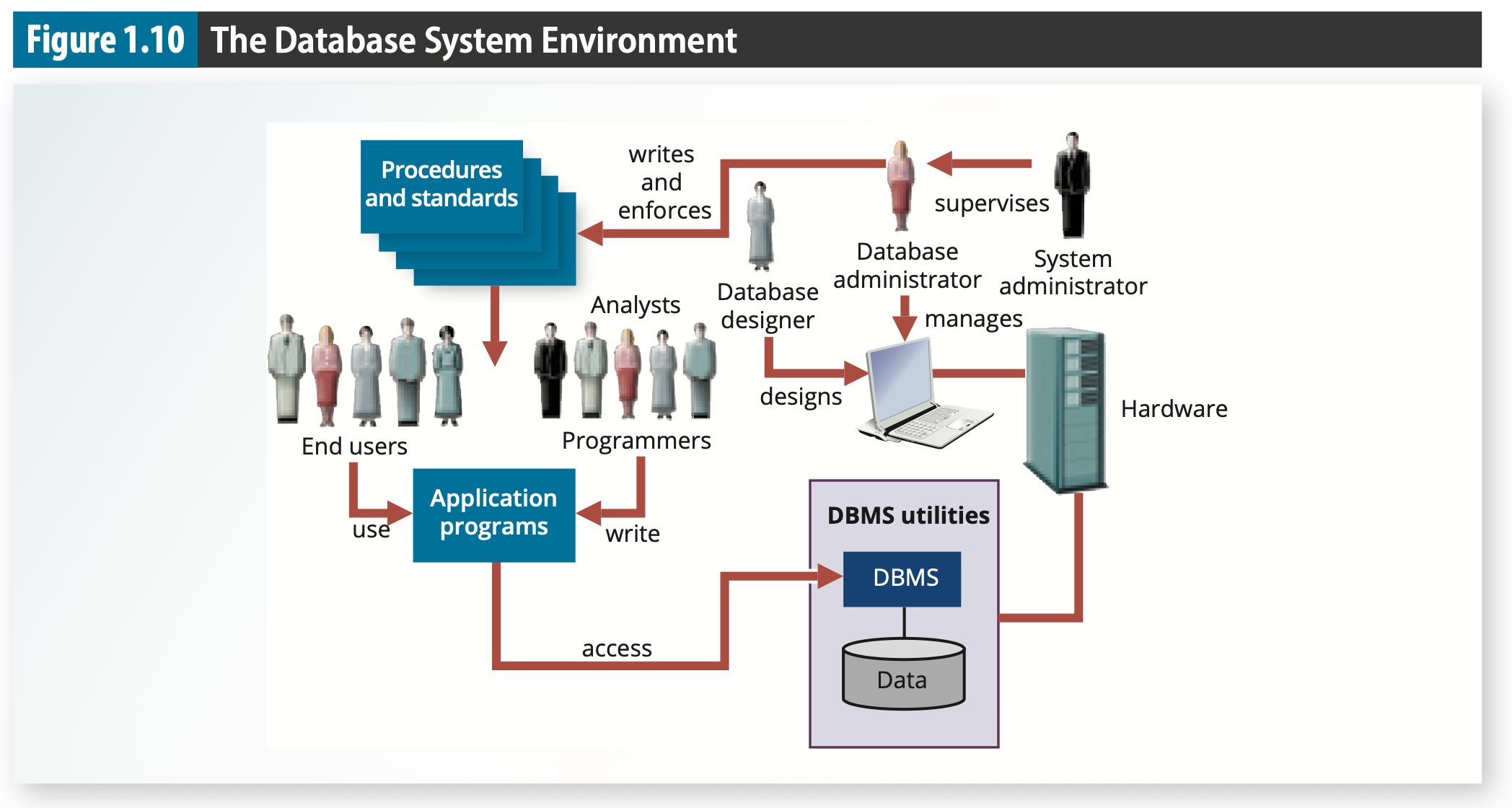
Five parts of a database system:
Data
- The collection of facts stored in the database
Business Logic or Procedures
- Instructions and rules that govern the design and use of the database system
Peopleware
- System and database administrators
- Database designers
- Systems analysts and programmers
- End users
Software
- Operating system software
- DBMS software
- Application programs and utility software
Hardware
Definition: Database system: defines and regulates the collection, storage, management, use of data
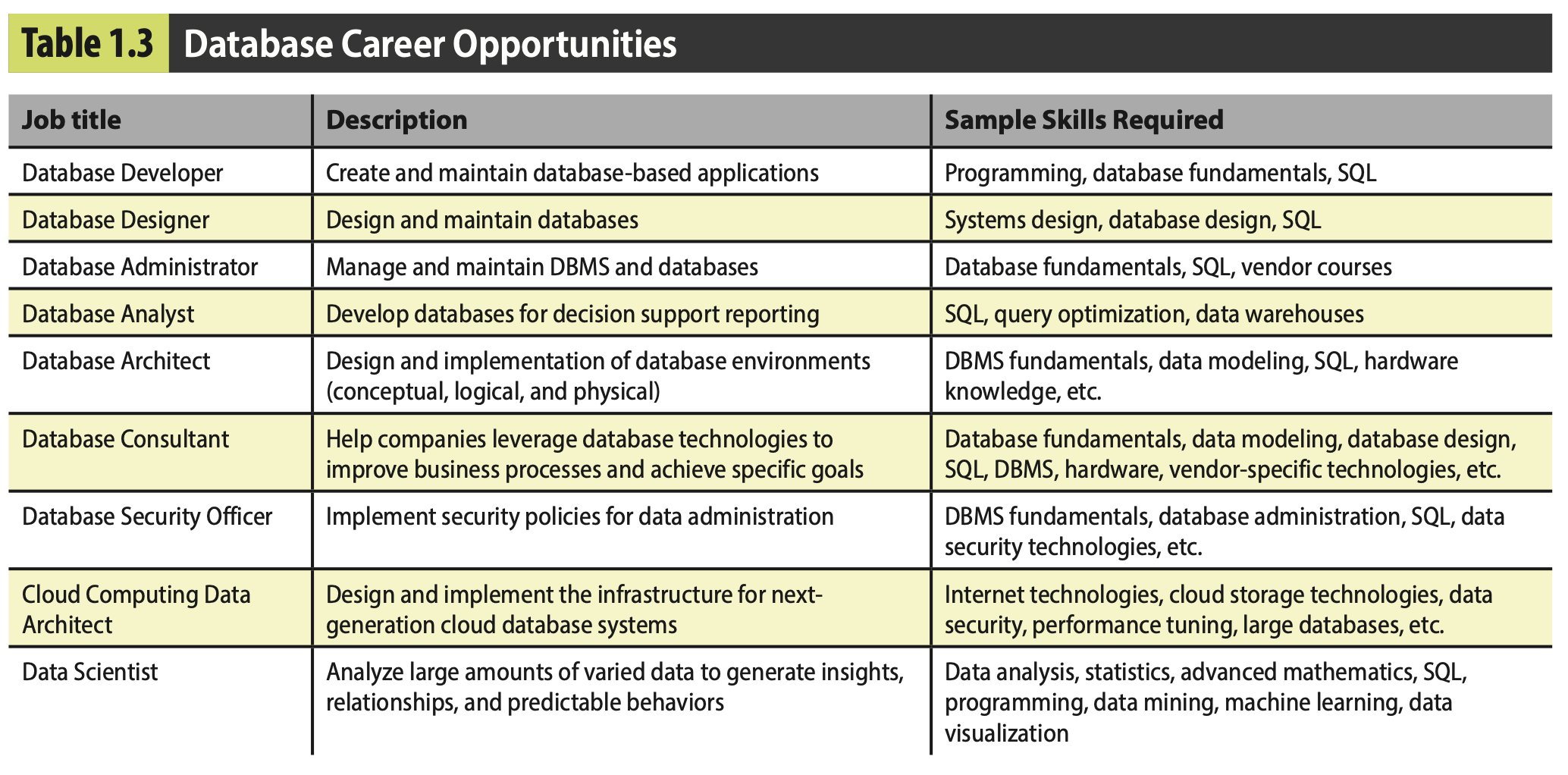
Database Career Opportunities