- จะ make big investment ต้องมี decision ????
- Capital Budgeting usually involve in the big amount of money
- And it’s long term: 10 years, 5 years
- เกี่ยวกับประกันสังคมมั้ยวะ ที่ มธ
Capital Investment Decisions
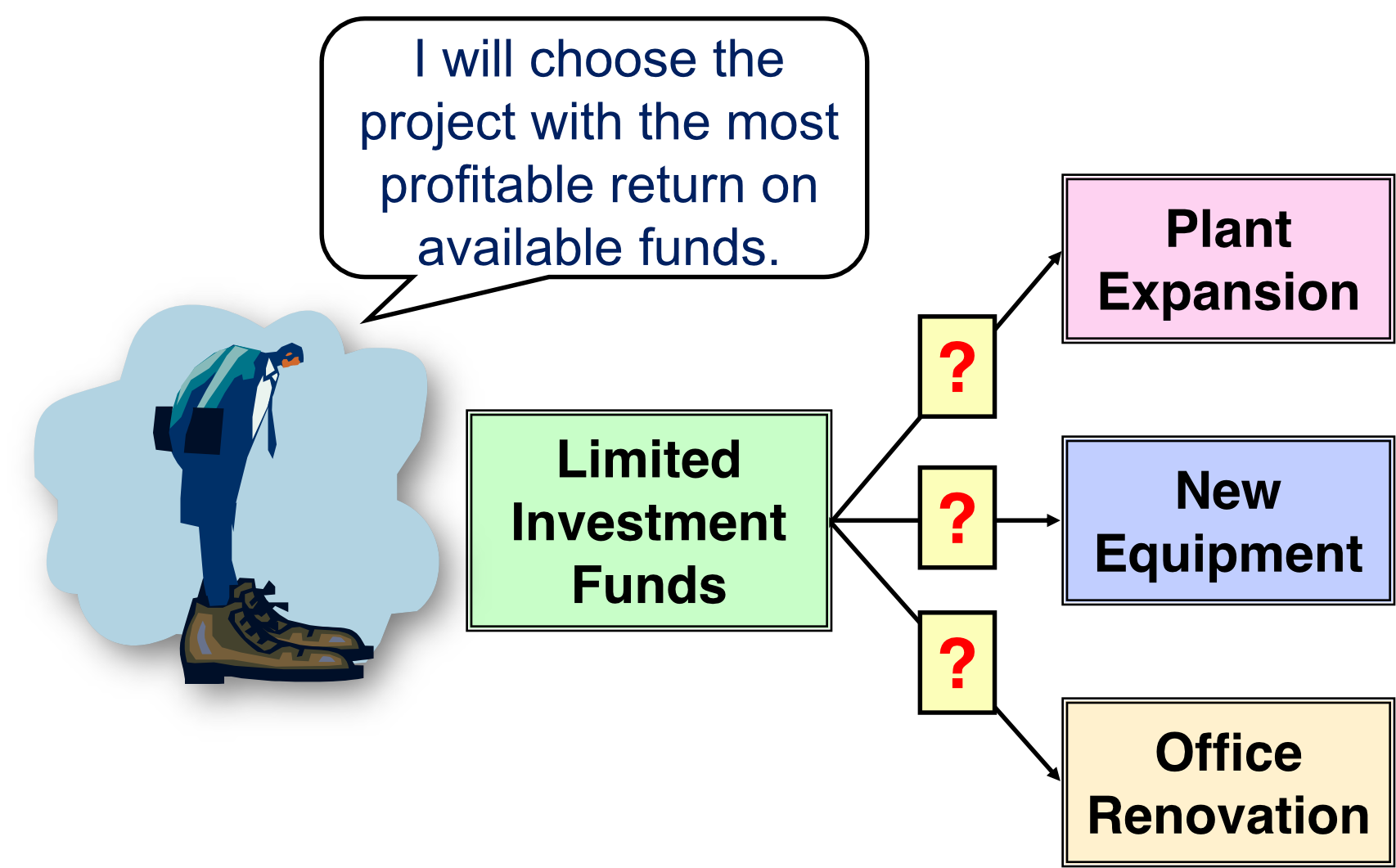
What is Capital Budgeting?
Capital budgeting is the process of analyzing alternative long-term investments and deciding which assets to acquire or sell.
Key Characteristics of Capital Investment Decisions:
- Outcome is uncertain - You don't know for sure if the investment will pay off
- Investment involves a long-term commitment - These decisions affect the business for years
- Large amounts of money are usually involved - Significant financial resources at stake
- Decision may be difficult or impossible to reverse - Once committed, it's hard to undo
Analogy: Think of it like choosing which gaming PC to buy for your esports team. You're committing a lot of money upfront, you'll use it for years, and once you buy it, you can't easily return it. You need to carefully evaluate if the performance gains justify the cost.
Financial and Non-financial Considerations
Capital investment decisions aren't just about money - they also involve qualitative factors:
| Investment Proposal | Nonfinancial Considerations |
|---|---|
| Pollution control system | Environmental concerns, Corporate image |
| New factory lighting | Better working conditions, Product quality |
| Employee health club | Employee morale, Healthier employees |
| Employee child care facility | Accommodate working parents, Enhance scheduling flexibility |
Analogy: When your university decides to upgrade computer labs, they consider not just the cost, but also student satisfaction, learning outcomes, and attracting prospective students.
Cash Flows in Capital Budgeting
Typical Cash Outflows (Money Going Out):
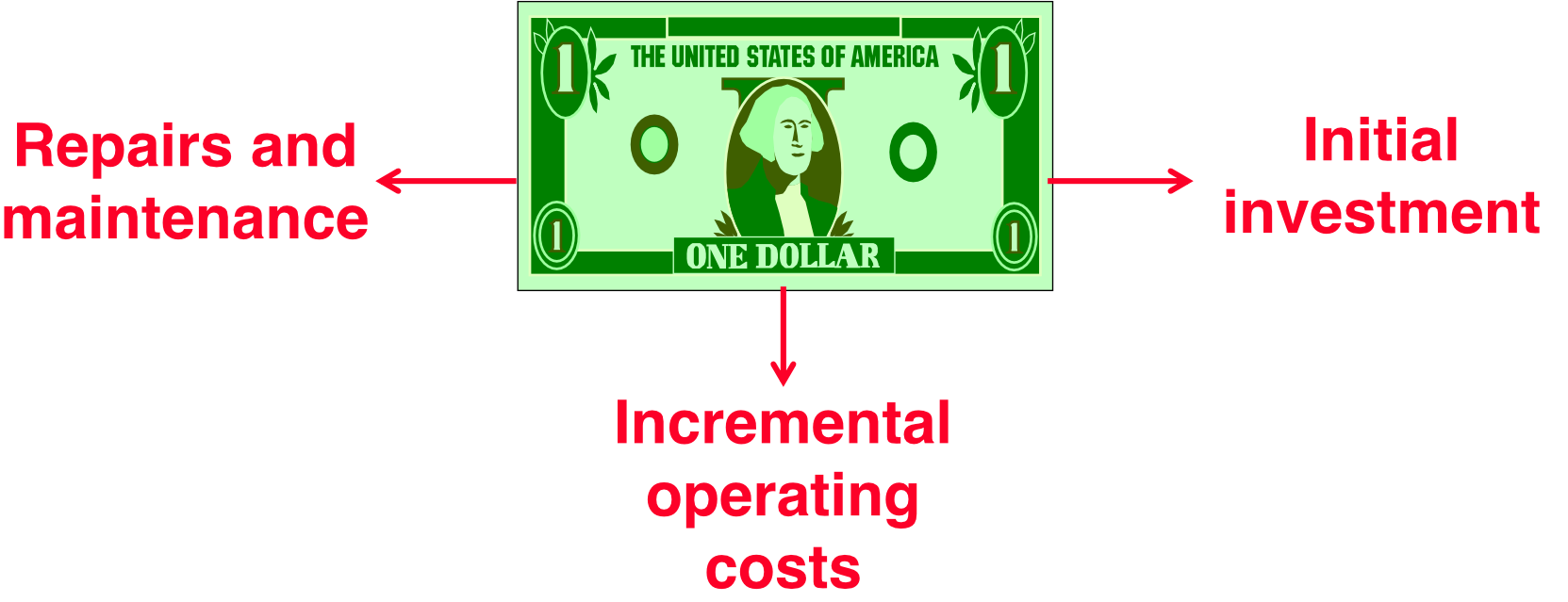
- Initial investment - The upfront cost to acquire the asset
- Incremental operating costs - Additional ongoing expenses
- Repairs and maintenance - Costs to keep the asset working
Typical Cash Inflows (Money Coming In):
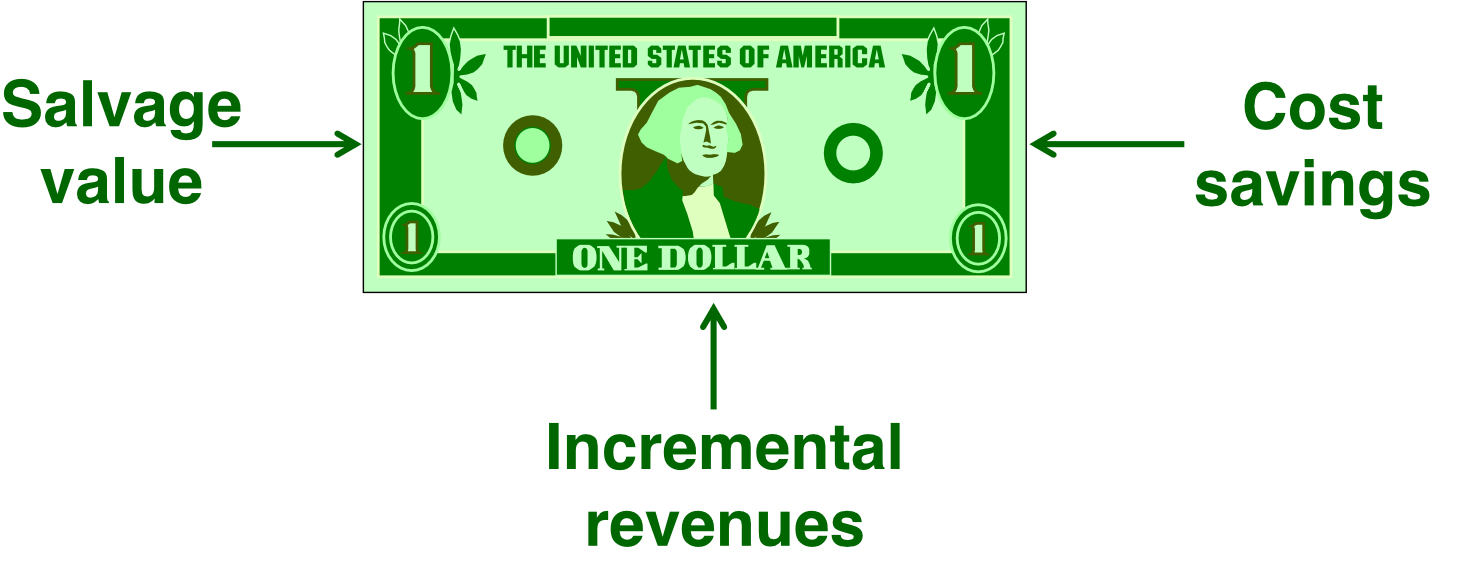
- Incremental revenues - Additional sales generated by the investment
- Cost savings - Reduction in existing expenses
- Salvage value (มูลค่าทราบ) - Money received when you sell the asset at the end of its life
Analogy: If you buy a 3D printer for your dorm:
- Outflows: Purchase price, electricity costs, filament materials
- Inflows: Money from printing things for friends, time saved not going to print shops, selling it when you graduate
Example: Stars' Stadium Vending Machines
Given Information:
Initial Investment: $75,000 for vending machines with a 5-year life
Annual Income Statement:
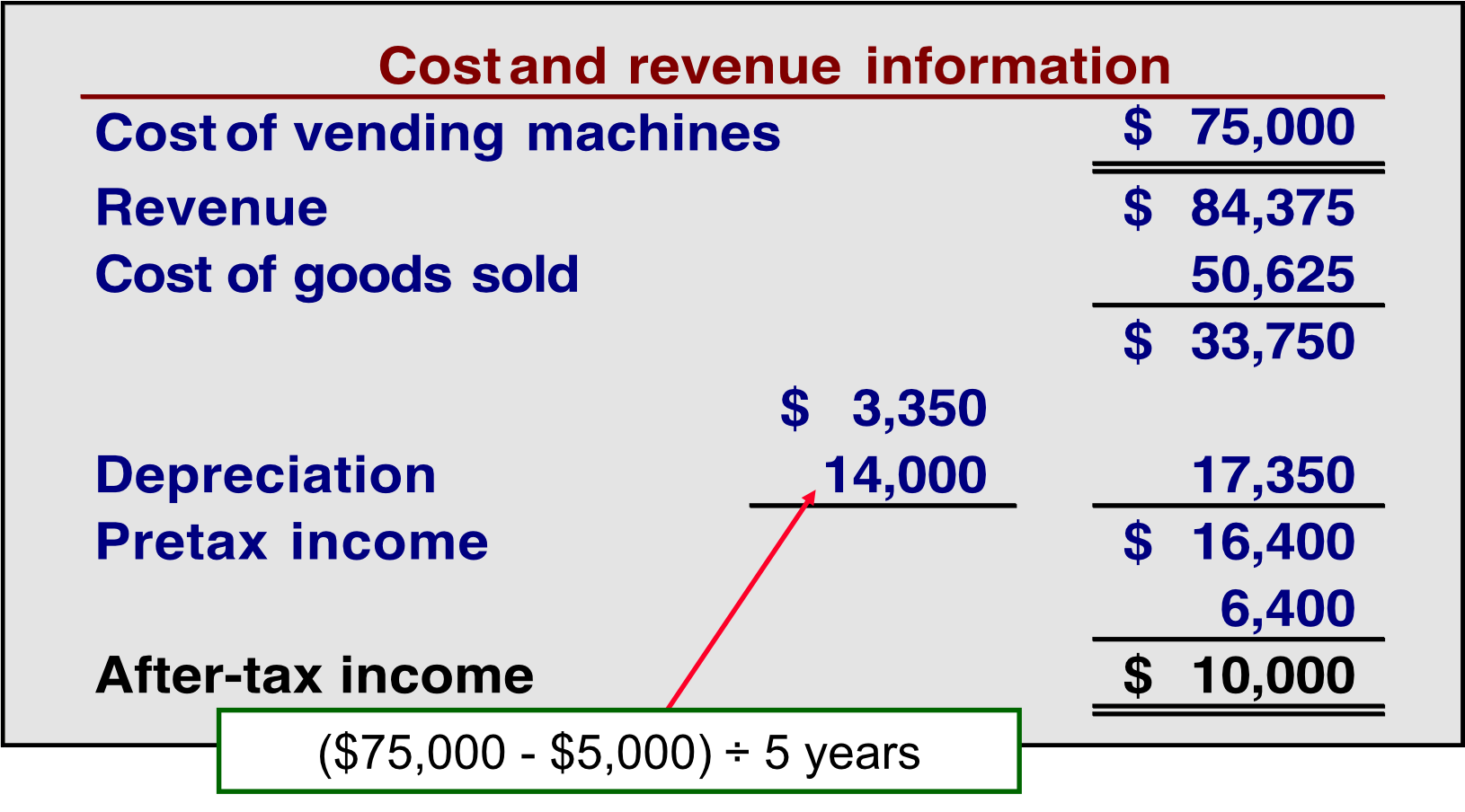
Important Note: Depreciation = \frac{\75,000 - $5,000}{5 \text{ years}} = $14,000$ per year
วิธีการคิดก็ต้องเริ่มด้วย (ราคาต้น - มูลค่าตอนนี้)/ระยะเวลาที่ใช้ → ถือว่าเป็น Cost of investment
Converting Net Income to Cash Flow
Why Cash Flow Matters
Most capital budgeting techniques use annual net cash flow, NOT net income.
Key Insight: Depreciation is NOT a cash outflow - it's just an accounting entry.
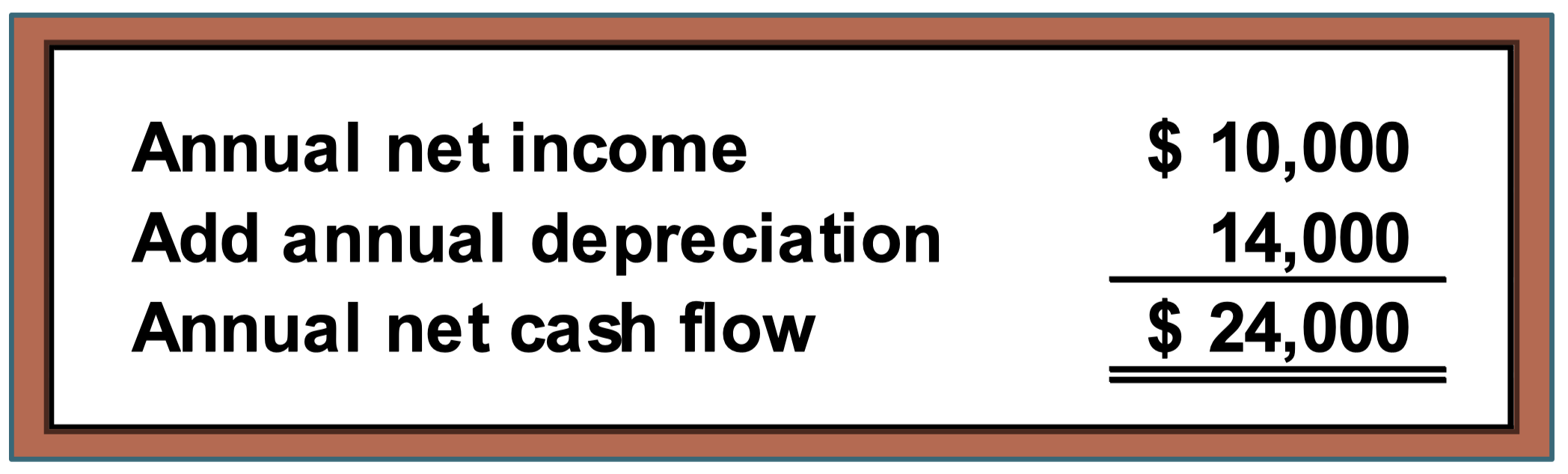
Conversion Formula:
For our example:
- Annual net income = $10,000
- Add annual depreciation = $14,000
- Annual net cash flow = $24,000
Analogy: Depreciation is like your laptop losing value over time. You don't actually pay money each year for depreciation - it's just a way accountants recognize that your asset is worth less. When calculating actual cash, you ignore depreciation since no cash actually left your pocket.
Method 1: Payback Period
THE SHORTER PERIOD, THE BETTER!
Definition
The payback period is the time expected to recover the initial investment amount.
Formula:
Example Calculation:
Interpretation: It takes 3.125 years to get your initial $75,000 back.
ก็คำนวณดูสิ ปี อันนี้คือ หวังว่าจะได้เงินคืน ในแค่ 3 ปีเอง แต่อายุของ Vending machine อาจจะอยู่ได้ 5 ปี - ส่วนใหญ่ก็จะ prefer SHORTER payback period เนี่ยแหละ!!
Decision Rule:
- Managers prefer projects with SHORTER payback periods
- Faster payback = lower risk
Limitations of Payback Period
Major Problems:
- Ignores the time value of money
- 1 in the future (due to interest/inflation)
- Payback period treats all dollars equally regardless of when received
- Ignores cash flows after the payback period
- A project might generate huge profits after payback, but this method ignores them
Example Demonstrating the Problem:
Consider two projects, each costing $6,000 with a 5-year life:
| Year | Project One Net Cash Inflows | Project Two Net Cash Inflows |
|---|---|---|
| 1 | $2,000 | $1,000 |
| 2 | $2,000 | $1,000 |
| 3 | $2,000 | $1,000 |
| 4 | $2,000 | $1,000 |
| 5 | $2,000 | $1,000,000 |
| Project One Payback: \frac{\6,000}{$2,000} = 3$ years |
Project Two Payback: \frac{\6,000}{$1,000} = 6$ years (never recovered within 5-year life)
Question: Would you invest in Project One just because it has a shorter payback period?
Answer: NO! Project Two generates $1,000,000 in year 5, making it far more profitable overall. Payback period misses this!
Analogy: Imagine two YouTube channels. Channel A gets monetized quickly but earns little long-term. Channel B takes longer to monetize but eventually goes viral and earns millions. Payback period would tell you to pick Channel A, which is clearly wrong!
Method 2: Return on Average Investment (ROI)
THE HIGHER ROI, THE BETTER!
Definition
ROI focuses on annual income (not cash flows) and compares it to the average investment.
Formula:
Example Calculation:
Average Investment:
ROI:
Interpretation: The investment generates a 25% return based on average investment.
- #FinalExam ให้ตอบเป็น percent ไม่ใช่ 0.25 ไรงี้นะะ
Limitations of ROI
Major Problems:
- Income may vary from year to year
- Using average income can be misleading if some years are much better/worse
- Time value of money is ignored
- Like payback period, treats all dollars equally regardless of timing
Analogy: ROI is like calculating your GPA by averaging all your grades. It gives you a general sense of performance, but doesn't tell you if you're improving, declining, or when you performed best. Also doesn't account for the fact that later courses might be more important for your career.
Method 3: Net Present Value (NPV)
- อีกชื่อคือ Discounting Future Cash Flows
- Now let’s look at a capital budgeting model that considers the time value of cash flows
The Best Method
NPV is the most sophisticated method because it considers the time value of money.
Definition
NPV is a comparison of the present value of cash inflows with the present value of cash outflows.
Analogy: Money is like pizza - fresh pizza today is worth more than the promise of pizza next week. NPV converts all future cash flows into "today's dollars" so you can make fair comparisons.
Steps to Calculate NPV
Step 1: Choose a discount rate
- This is the minimum required rate of return
- Also called the "hurdle rate" or "cost of capital"
- Represents what you could earn on alternative investments
Step 2: Calculate the present value of cash inflows
- Convert all future cash coming IN to today's value
- Use present value tables or formulas
Step 3: Calculate the present value of cash outflows
- Convert all future cash going OUT to today's value
- Initial investment is already in today's dollars (PV factor = 1.000)
Step 4: Calculate NPV
- Subtract PV of outflows from PV of inflows
Practice Problem: Savak Company
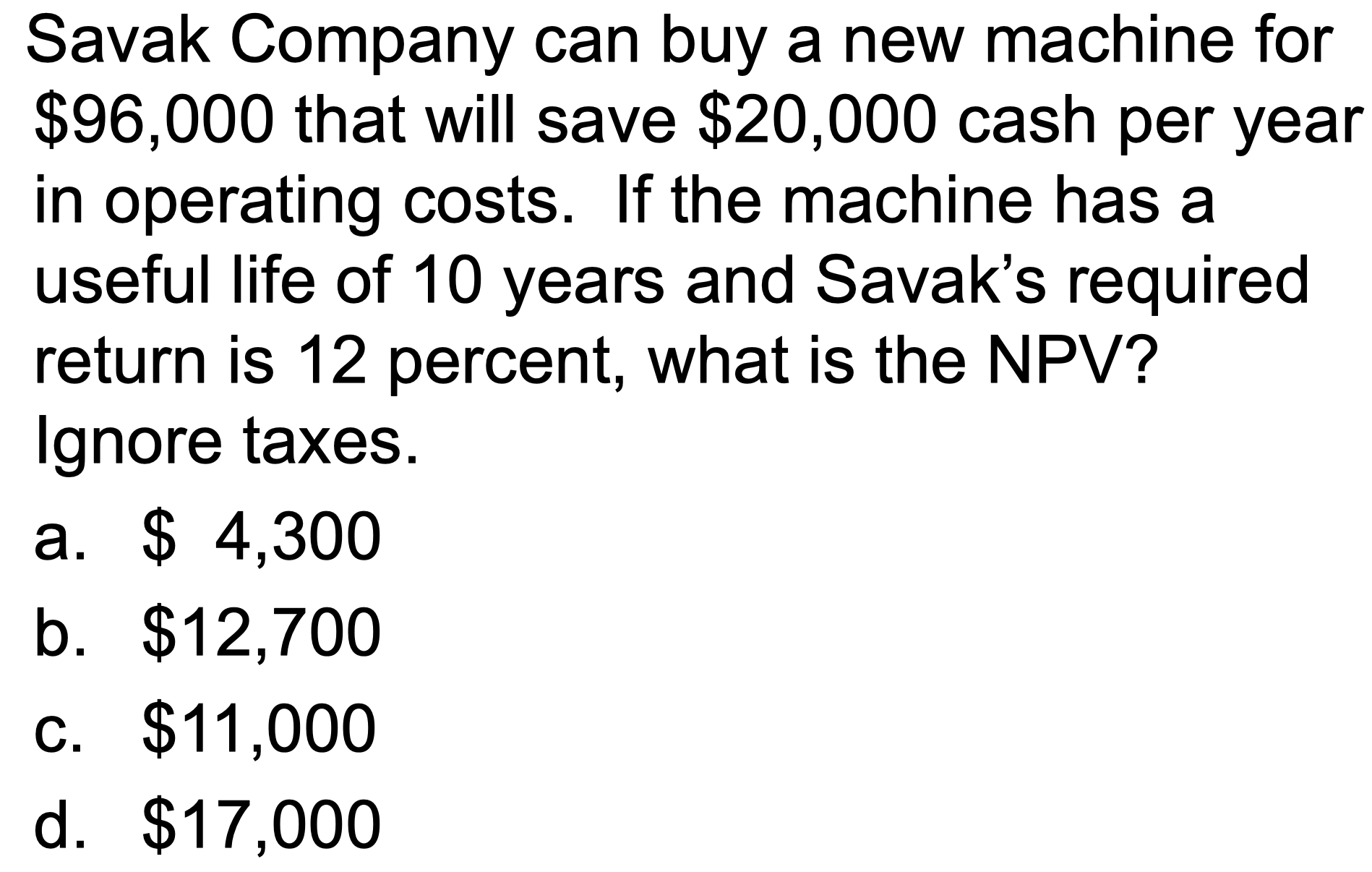
Scenario:
- Machine cost: $96,000
- Annual cash savings: $20,000
- Useful life: 10 years
- Required return: 12%
- Ignore taxes
Question: What is the NPV?
Solution:
Using the present value of an annuity table (look up 10 years at 12%):
- PV factor = 5.650
PV of inflows:
NPV calculation:
What if required return was 15% instead?
Using PV factor for 10 years at 15% = 5.019:
Note: NPV is smaller with a higher interest rate!
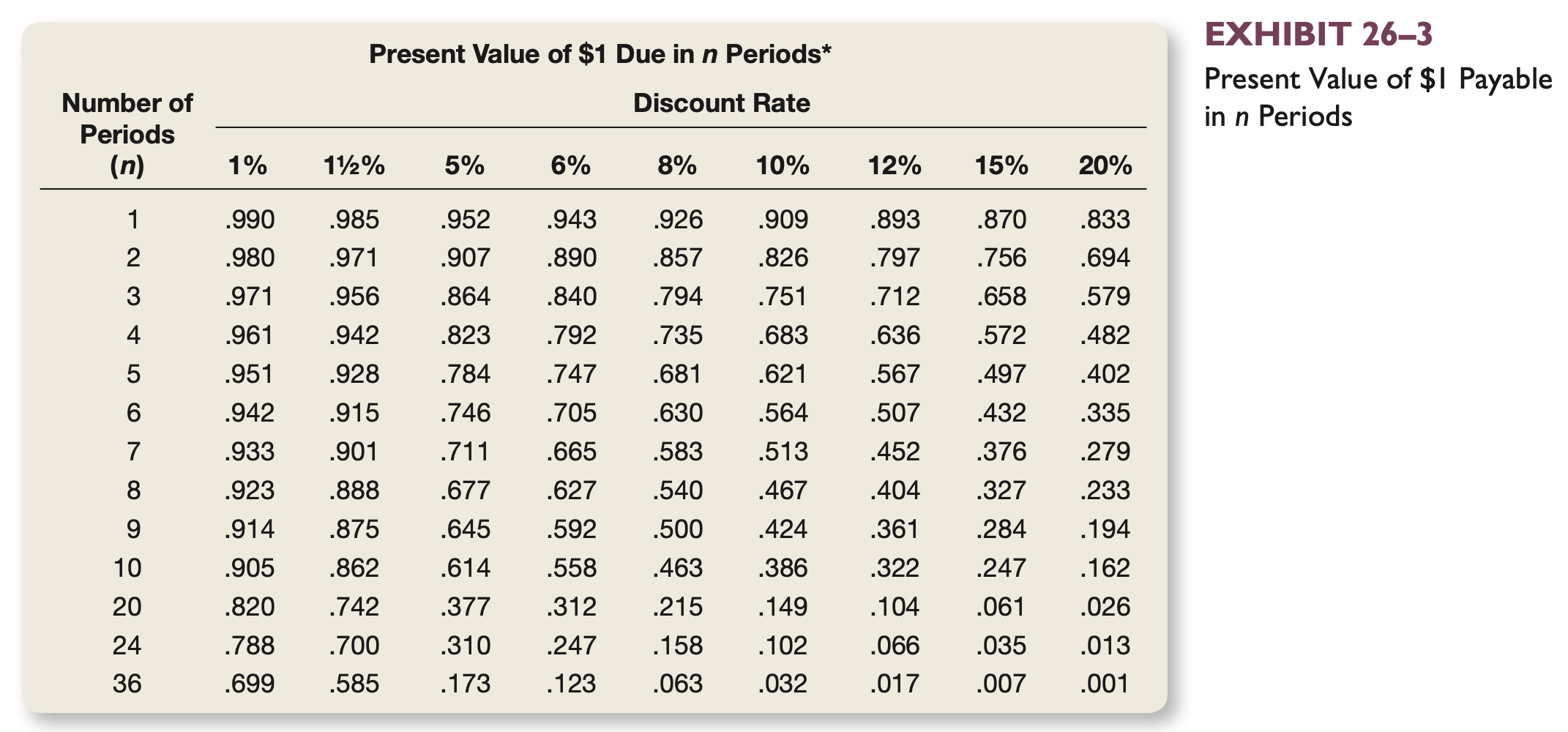
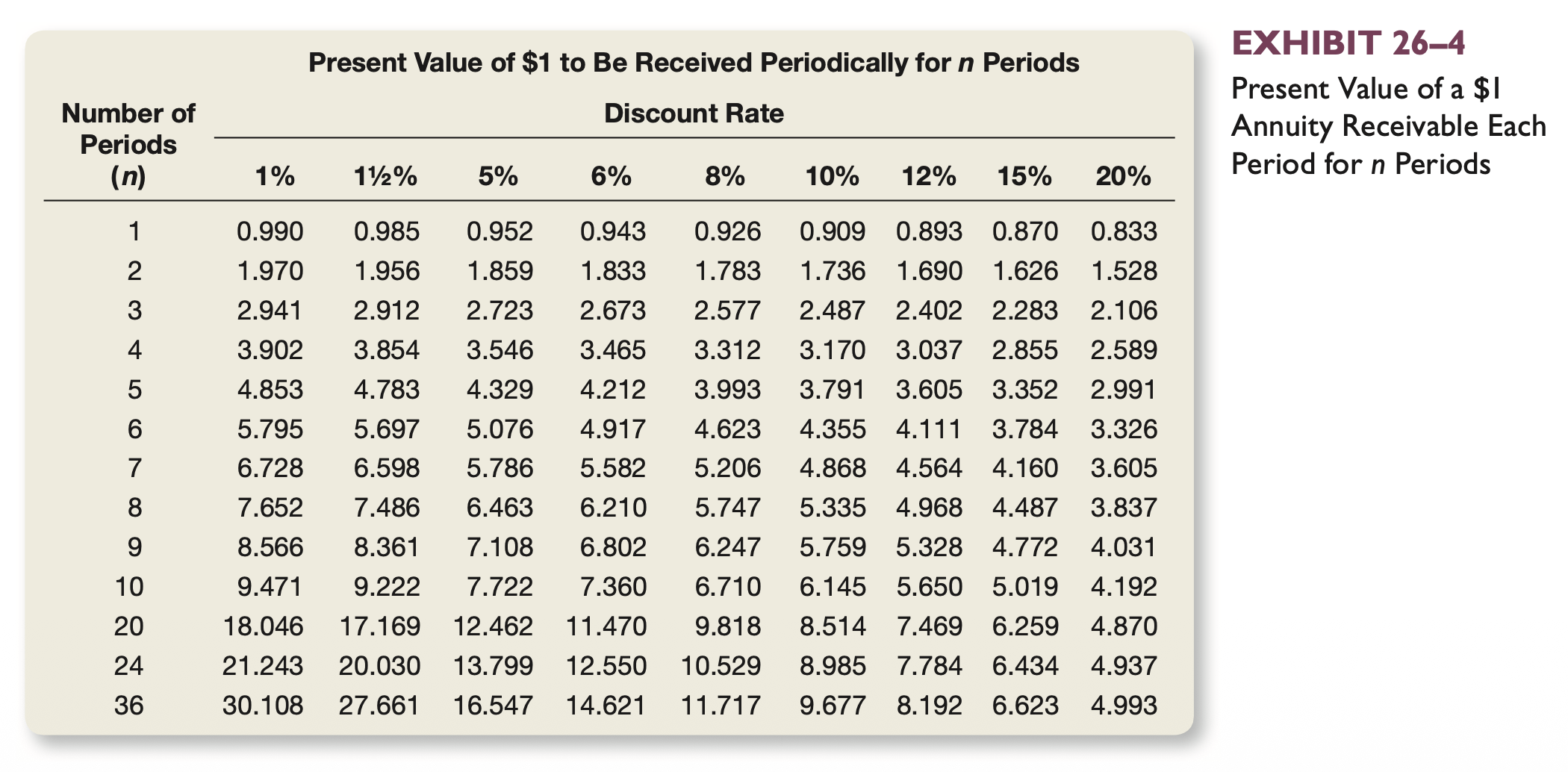
อันไหนใช้ตอนไหน เขียนด้วย!!!
คำนวณถึงพวกเงินเฟ้อด้วย สุดท้ายก็ต้องอยากได้ + เยอะ ๆ มาถึงตอนนี้ (5 ปีผ่านไป) ยังเป็นบวกอยู่ (เทียบกับเงินเฟ้ออะไรแล้ว
Why? Higher interest rates mean future money is "discounted" more heavily. The same $20,000 five years from now is worth less today if interest rates are higher.
Stars' Stadium NPV Analysis
Given:
- Initial investment: $75,000
- Annual cash inflow: $24,000 for 5 years
- Salvage value: $5,000 at end of year 5
- Discount rate: 15%
NPV Calculation Table:
| Item | Year(s) | Cash Flow | PV Factor | Present Value |
|---|---|---|---|---|
| Vending machines | Now | $(75,000) | 1.000 | $(75,000) |
| Annual inflow | 1-5 | $24,000 | 3.352 | $80,448 |
| Salvage | 5 | $5,000 | 0.497 | $2,485 |
| NPV | Now | $7,933 | ||
| ![[Screenshot 2026-01-27 at 10.02.53 AM.png | center | 500]] | ||
| Calculations: |
- Annual inflows: 80,448 (using PV of annuity table for 5 years at 15%)
- Salvage: 2,485 (using PV of $1 table for 5 years at 15%)
- NPV = 2,485 - 7,933
Interpretation: Since NPV is positive ($7,933), the actual rate of return is GREATER than the 15% required return.
NPV Decision Rules
| If NPV is... | Then the Project is... | Explanation |
|---|---|---|
| Positive | Acceptable | Promises a return GREATER than the required rate of return |
| Zero | Acceptable | Promises a return EQUAL to the required rate of return |
| Negative | Not Acceptable | Promises a return LESS than the required rate of return |
Analogy:
- Positive NPV = Like finding a $100 bill on the ground - free money!
- Zero NPV = Breaking even - you get exactly what you expected
- Negative NPV = Like paying 100 - you lose money
Capital Budget Audit
What is it?
A capital budget audit is a follow-up after a project has been approved to see whether expected results are actually realized.
Why do it?
- Verify that projections were accurate
- Learn from mistakes for future decisions
- Hold managers accountable for their estimates
- Identify problems early so corrective action can be taken
Analogy: Like reviewing your performance in a game after it's over. You check if your strategy worked, what you predicted correctly, and what you got wrong. This helps you make better decisions in future games.
Summary Comparison of Methods
| Method | Considers Time Value? | Considers All Cash Flows? | Best Use Case |
|---|---|---|---|
| Payback Period | ❌ No | ❌ No (ignores post-payback) | Quick screening, liquidity concerns |
| ROI | ❌ No | ✅ Yes (uses income) | Simple comparison, preliminary analysis |
| NPV | ✅ Yes | ✅ Yes | Most accurate, recommended for important decisions |
Key Takeaways
- Always use cash flows, not accounting income (except for ROI method)
- Depreciation is NOT a cash outflow - add it back to net income
- Time value of money matters - a dollar today ≠ a dollar tomorrow
- NPV is the most reliable method because it accounts for time value
- Positive NPV = Good investment (return exceeds required rate)
- Consider both financial and non-financial factors in real decisions
Formulas Summary
Payback Period:
Cash Flow Conversion:
ROI: