Learning Objectives
- Describe the strategic planning process
- Conduct a SWOT analysis
- Explain how tools can support strategic planning
- Explain the concept of a business case
- Summarize the six main reasons for systems requests
- Describe the two factors affecting systems projects
- Explain how systems requests are processed
- Explain how systems request feasibility is assessed
- Explain how systems requests are prioritized
- Conduct a preliminary investigation
- Registrar system for Thammasat Univeristy, we have use over 20 years, and we just updated last year.
System requests ตรงนี้หมายความว่า?
คำขออย่างเป็นทางการให้พัฒนา ปรับปรุง หรือแก้ไขระบบสารสนเทศ (Information System)
ที่ถูกเสนอโดยคนในองค์กร เช่น ผู้ใช้ระบบ ผู้จัดการ หรือฝ่ายธุรกิจ
มีปัญหา / โอกาส / ไอเดีย → เลยขอให้ IT ทำระบบอะไรบางอย่างให้
Strategic Planning
มองไปเลย 5-10 ปีข้างหน้า บริษัทอยากจะไปอยู่ตรงไหน
Overview
- Definition: Process of identifying long-term organizational goals, strategies, and resources
- Starts with a mission statement
- Reflects the vision, purpose, and values
- Critical success factor: high-priority objective
กระบวนการกำหนด เป้าหมายระยะยาวขององค์กร, วิธีการไปให้ถึงเป้าหมายนั้น (strategy) และการจัดสรร ทรัพยากร (resources) ให้เหมาะสม
การวางแผนเชิงกลยุทธ์ เริ่มต้นจาก Mission Statement มันก็คือคำประกาศที่บอกว่า: องค์กรมี เป้าหมายอะไร ทำเพื่อใคร ยึดถือคุณค่า (values) อะไร โดยมันถือว่าเป็น CSF เลย (ถ้าไม่ทำสิ่งนี้ → องค์กร ล้มเหลว)
SWOT Analysis
- SWOT: Strengths, Weaknesses, Opportunities, and Threats
- Examines three types of resources:
- Technical resources
- Human resources
- Financial resources
SWOT Analysis Components
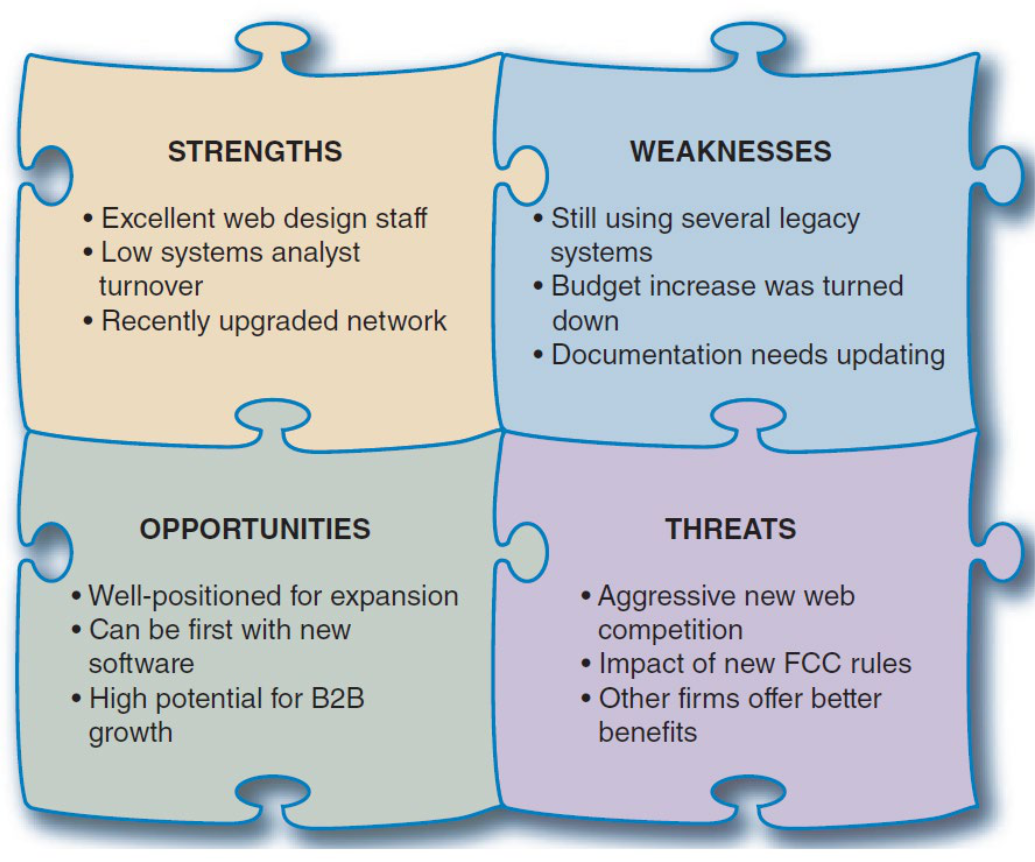
Strengths (Internal, Positive)
- Excellent web design staff
- Low systems analyst turnover
- Recently upgraded network
Weaknesses (Internal, Negative)
- Still using several legacy systems
- Budget increase was turned down
- Documentation needs updating
Opportunities (External, Positive)
- Well-positioned for expansion
- Can be first with new software
- High potential for B2B growth
Threats (External, Negative)
- Aggressive new web competition
- Impact of new FCC rules
- Other firms offer better benefits
Analogy: Think of SWOT analysis like doing a health checkup for your company. Strengths and Weaknesses are like your current health status (internal factors you can control), while Opportunities and Threats are like external factors such as the environment or community health trends (external factors you must adapt to).
SWOT Analysis - Specific Asset Example (Company Patent)
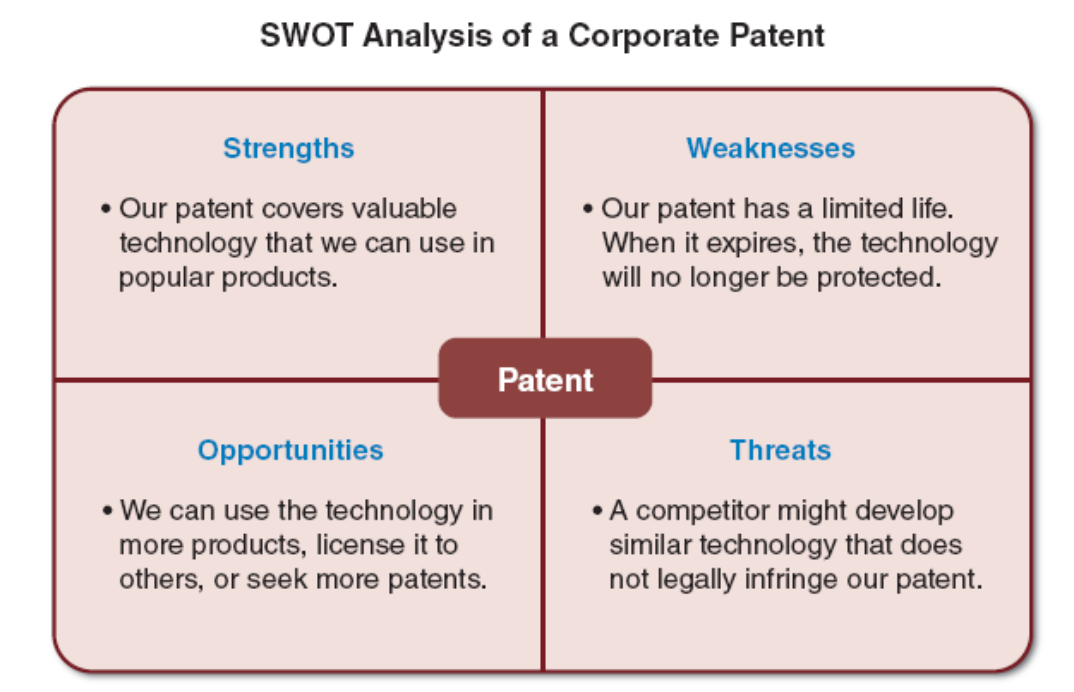
Strengths
- Our patent covers valuable technology that we can use in popular products
Weaknesses
- Our patent has a limited life. When it expires, the technology will no longer be protected
Opportunities
- We can use the technology in more products, license it to others, or seek more patents
Threats
- A competitor might develop similar technology that does not legally infringe our patent
The Role of the IT Department
Careful Project Planning Requirements:
- Supports overall business strategy and operational needs
- โรงพยาบาลต้องการลดเวลารอผู้ป่วย → IT ควรทำระบบจัดการคิว / เตียง ไม่ใช่แอปสวย ๆ ที่ไม่ช่วยงานจริง
- Scope is well-defined and clearly stated
- Scope (ขอบเขตโครงการ) ต้อง: ระบุชัดว่า ทำอะไร และ ไม่ทำอะไร (ไม่ใช้ก็ งานบาน (scope creep)
- Goals are realistic, and tied to specific:
- Statements
- Assumptions
- Constraints
- Factors
- Other inputs
Strategic Planning Tools
Various approaches and tools are available:
- Microsoft Word and Excel
- CASE tools (Computer-Aided Software Engineering)
- Mind maps
- Balanced scorecards
- Gap analysis
Analogy: Strategic planning tools are like different types of maps for a road trip. Word/Excel are basic road maps, CASE tools are GPS systems, mind maps are visual route planners, balanced scorecards are performance dashboards, and gap analysis shows the difference between where you are and where you want to be.
The Business Case
มีไอเดียก็ไม่ได้แปลว่าจะเดินไปหาหัวหน้าได้, บอกว่าขอเงินร้อยล้านหน่อย, แบบนั้นมันก็ไม่ได้ง่ายขนาดนั้นในชีวิตจริงอ่ะ. ดังนั้นมันไอเดียเหล่านี้ต้องถูกแปลงเป็น business case ก่อน
Definition
- Justification for a proposal
- Should be comprehensive and easy to understand
- Describes the project clearly
- Provides justification to proceed
- Estimates financial impact
Key Questions Answered
- Why are we doing this project?
- How much will it cost and how long will it take?
- Are there any risks involved?
- How will we measure success?
- What alternatives exist?
Analogy: A business case is like a detailed proposal you'd make to your parents for a major purchase (like a car). You'd explain why you need it, how much it costs, what risks are involved, how you'll know it's working out, and what other options you considered.
Systems Requests
Overview
- Starting point for most information systems projects
- Formal way of asking for IT support
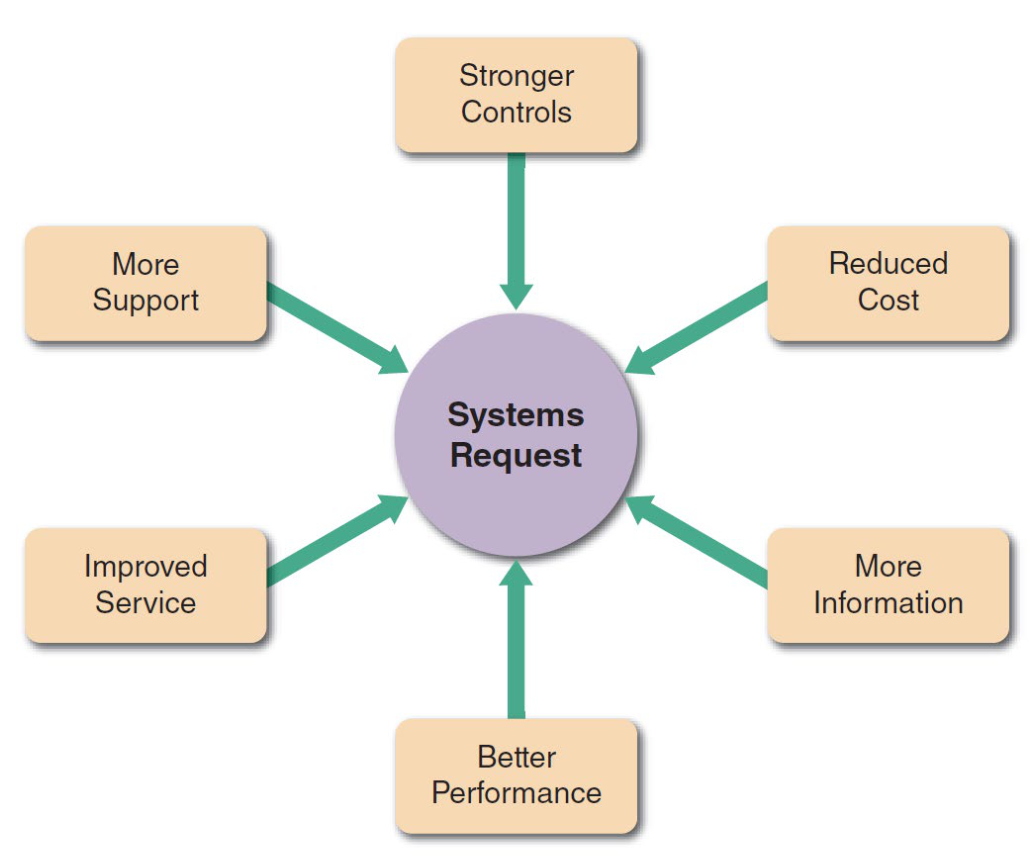
Six Main Reasons for Systems Requests
Many reasons why we need the new system
- Stronger Controls
- Better security and monitoring
- Reduced Cost
- Lower operational expenses
- More Information
- Better data for decision-making
- Better Performance
- Improved efficiency and speed
- Improved Service
- Enhanced customer/user experience
- More Support
- Support for new products and services
Analogy: Systems requests are like filling out a formal request form at school for new equipment or facilities. You need to justify why the request is necessary and how it will benefit the organization.
Factors Affecting Systems Projects
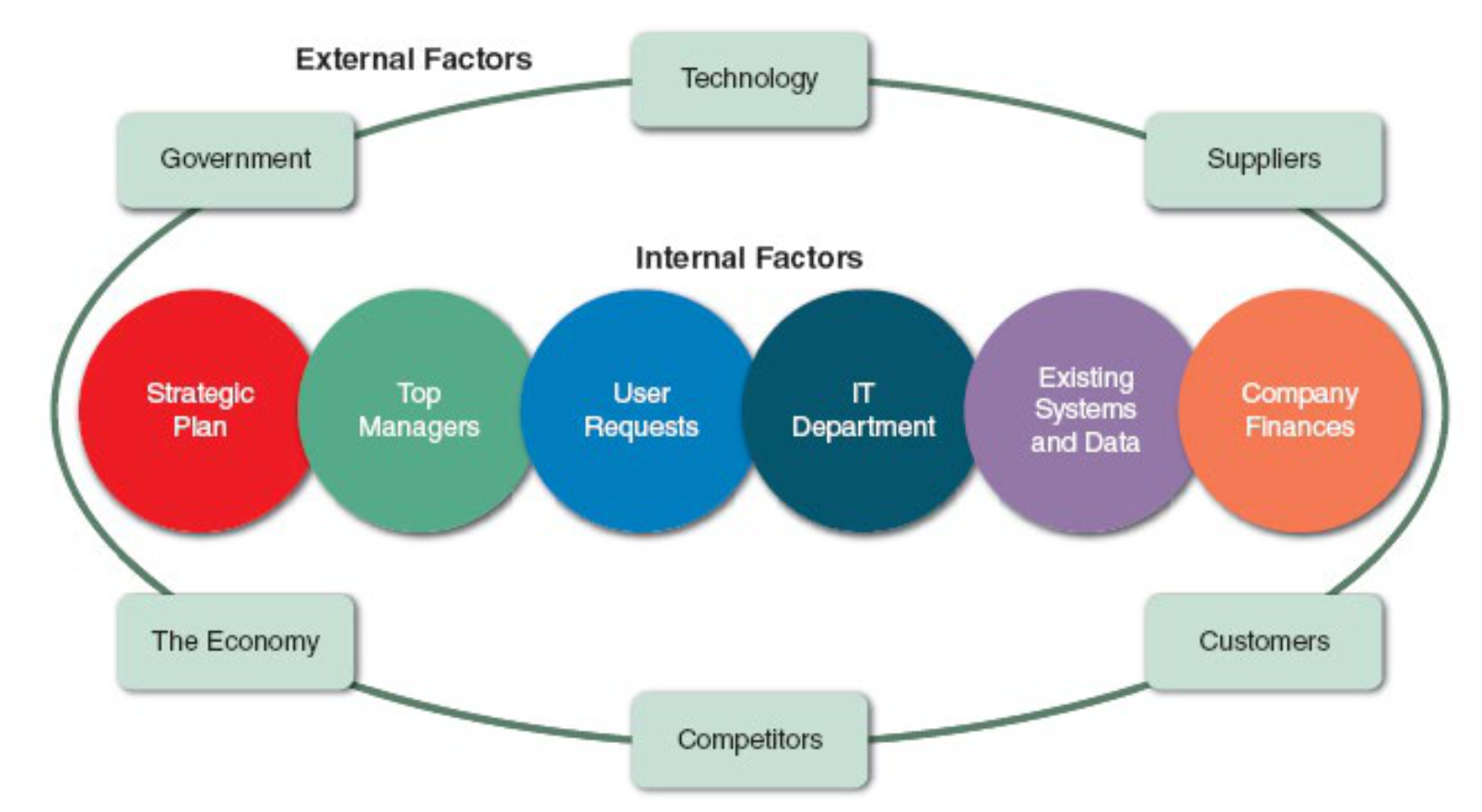
Internal Factors
- Strategic Plan
- Organization's long-term goals and direction
- Top Managers
- Executive support and priorities
- User Requests
- End-user needs and demands
- IT Department
- Technical capabilities and resources
- Existing Systems and Data
- Current infrastructure and information
- Company Finances
- Budget availability and financial health
- If you have no money, IT have to develop themselves, sometimes impossible!
External Factors
- Government
- Regulations and compliance requirements
- Technology
- New technologies and innovations
- Suppliers
- Vendor capabilities and reliability
- Customers
- Customer demands and expectations
- Competitors
- Competitive pressure and market position
- The Economy
- Economic conditions and trends
Analogy: Internal factors are like things within your household that affect family decisions (budget, family members' needs, existing furniture). External factors are like neighborhood conditions, local laws, and market prices that you can't control but must respond to.
Processing Systems Requests
Systems Review Committee
- Also called computer resources committee
- Evaluates systems requests
Systems Request Forms
Purpose:
- Streamline the request process
- Ensure consistency
- Make requests easy to understand
- Include clear instructions
- Indicate required supporting documents
- Can be submitted electronically
Example Systems Request Form Components
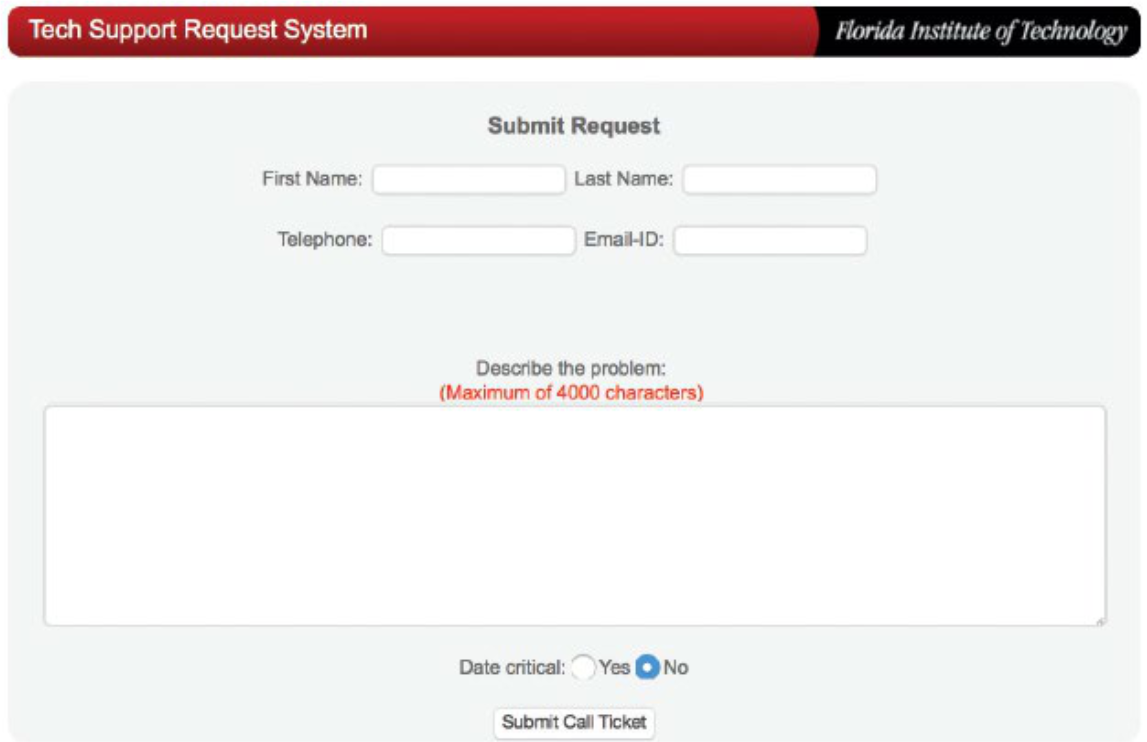
- First Name
- Last Name
- Telephone
- Email-ID
- Description of the problem (Maximum of 4000 characters)
- Date critical: Yes/No
- Submit Call Ticket button
Systems Request Tools
- Used to help manage workflow
Systems Review Committee
Advantages:
- Broader viewpoint enables effective priority establishment
- One person's bias is less likely to affect decisions
Disadvantages:
- Action on requests must wait until committee meets
- Members might favor projects requested by their own departments
Assessing Request Feasibility
Overview
- Feasibility studies can be simple or exhaustive
- Effort required depends on nature of request
Initial Fact-Finding Activities
- Studying organizational charts
- Performing interviews
- Reviewing current documentation
- Observing operations
- Surveying users
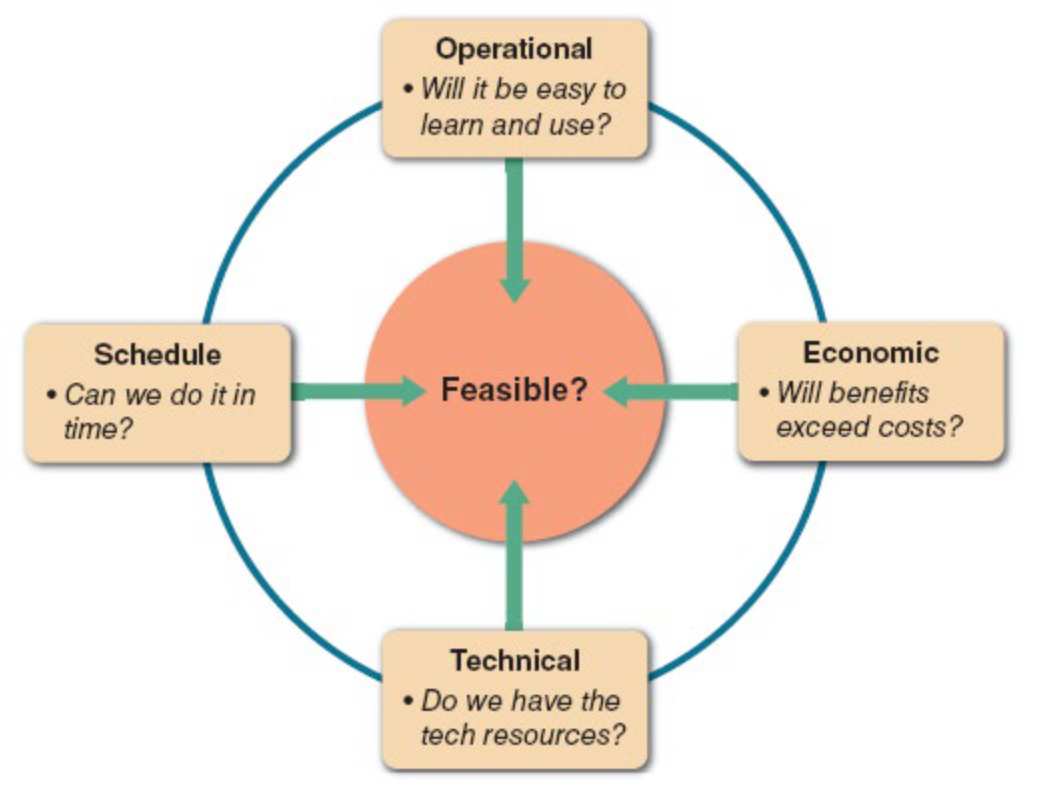
Four Types of Feasibility
1. Operational Feasibility
สร้างเสร็จแล้วมีคนใช้มั้ย?
Question: Will it be easy to learn and use?
- Determines if proposed system will be used effectively after development
- Can be affected by organizational culture
- Cannot be accurately measured but requires careful study
Key Questions:
- Is the project supported by management and users?
- Will the new system result in a workforce reduction?
- Do legal or ethical issues need to be considered?
Analogy: Like asking if a new smartphone app will actually be used by your grandparents. It doesn't matter how powerful it is if it's too complicated for the intended users.
2. Technical Feasibility
Question: Do we have the tech resources?
- Evaluates technical resources required to develop and operate the system
Key Questions:
- Does the company have the necessary hardware, software, and network resources?
- Does the company have the required technical expertise?
- Does the proposed platform have sufficient capacity for future needs?
- Will a prototype be required?
Analogy: Like checking if you have the right tools and skills before starting a DIY home improvement project. Do you have the drill, the know-how, and enough materials for future expansions?
3. Economic Feasibility
Question: Will benefits exceed costs?
- Determines if projected benefits outweigh Total Cost of Ownership (TCO)
TCO Components:
- People (IT staff and users)
- Hardware and equipment
- Software
- Formal and informal training
- Licenses and fees
- Consulting expenses and facility costs
- Estimated cost of NOT developing or postponing (เหมือนต้นทุนค่าเสียโอกาสเหมือนกันป้ะ)
Types of Costs and Benefits:
| Type | Definition | Examples |
|---|---|---|
| Tangible Costs | Measured in dollars | Hardware, software, salaries |
| Intangible Costs | Cannot be measured in dollars but affect performance | Employee morale, customer satisfaction |
| Tangible Benefits | Measured in dollars | Decreased expenses, increased revenue |
| Intangible Benefits | Cannot be measured in dollars | Better customer service, improved decision-making |
Analogy: Like deciding whether to buy a more expensive, fuel-efficient car. You calculate the purchase price (tangible cost), fuel savings (tangible benefit), but also consider comfort and reliability (intangible benefits).
4. Schedule Feasibility
Question: Can we do it in time?
- Determines if project can be implemented in an acceptable time frame
- Issue: Interaction between time and costs
Key Questions:
- Can the company or IT team control factors affecting schedule feasibility?
- Has management established a firm timetable?
- What conditions must be satisfied?
- Will an accelerated schedule pose any risks?
- Will project management techniques be available?
Analogy: Like planning a wedding. You need to consider if you can get everything done by the date, what happens if you rush things, and whether you have the tools to keep everything on track.
Setting Priorities
ในบริษัทใหญ่ ๆ มันก็จะมี project แบบนี้เข้ามาเยอะใช่ไหม? แล้วก็ project ที่ผ่านเหมือนกันก็เยอะเหมือนกันแล้วจะจัดความสำคัญได้ยังไง, เพราะว่าเงินมันมีจำกัดเนอะ? อาฮะ ก็ต้องเลือกอย่างใดอย่างหนึ่ง จัดความสำคัญ prioritize
Dynamic Priorities
- Changes can cause request priorities to change
- Priorities must be reassessed regularly
Factors That Affect Priority
Business Impact:
- Will the proposed system reduce costs?
- Will the system increase revenue?
- Will the systems project result in more information or produce better results?
- Will the system serve customers better?
- Will the system serve the organization better?
Implementation Feasibility:
- Can the project be implemented in a reasonable time period?
- Are the necessary financial, human, and technical resources available?
Project Classification
Discretionary Projects
- Projects where management has a choice in implementing them
- Can be prioritized based on strategic value
Nondiscretionary Projects
- No choice - must be implemented → ยังไงก็ต้องทำ
- Many are predictable:
- Annual updates to payroll
- Tax percentage changes
- Quarterly regulatory changes
Analogy: Discretionary projects are like choosing to renovate your kitchen (nice to have), while nondiscretionary projects are like fixing a leaking roof (mu st be done to prevent damage).
The Preliminary Investigation
อันนี้คือ project เราผ่าน priority มาแล้วเนอะ แล้วก็มาอันอยู่อันดับต้นๆ ละ ผ่านทุกด่านมาแล้ว แต่ว่ายังต้องทำ preliminary investigation อีกด่านนึง (สืบสวน) - เหมือนส่งหน่วยสอดแนมไปก่อน ให้รู้ว่าเราเข้าใจปัญหาจริง ๆ
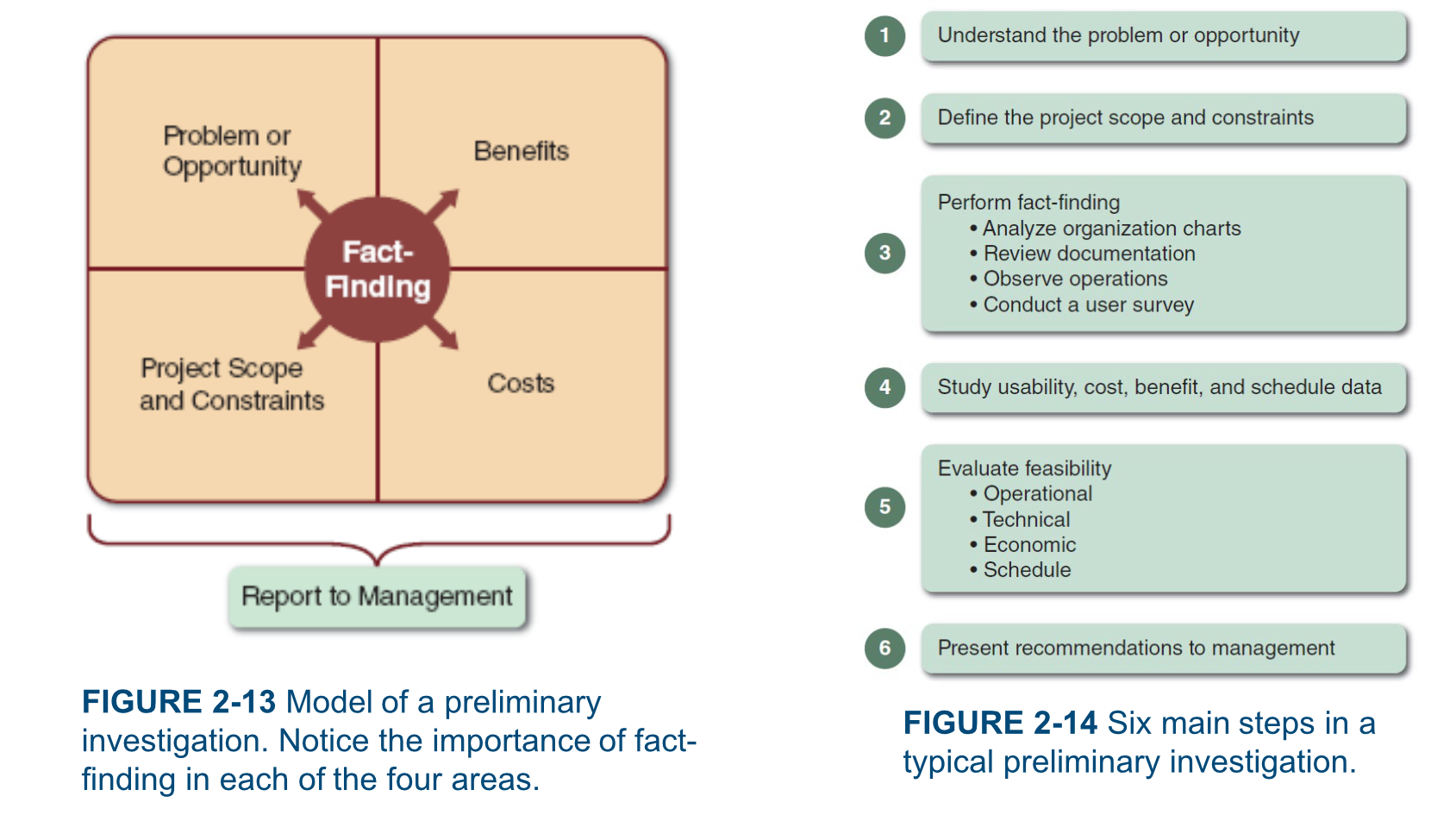
Overview
- Initial investigation to understand the project
- Determines if project should proceed to detailed analysis
Planning the Preliminary Investigation
Initial Meeting:
- Meet with key managers, users, and IT staff to:
- Describe the project
- Explain responsibilities
- Answer questions
- Invite comments
Focus:
- Emphasize improvements and enhancements
- Not just problems
Six Main Steps
Step 1: Understand the Problem or Opportunity
- Develop a business profile
- Describes current business processes and functions
- Understand how modifications will affect:
- Business operations
- Other information systems
- Identify involved:
- Departments
- Users
- Business processes
- Consider using a fishbone diagram (cause-and-effect analysis)
Analogy: Like a doctor's initial consultation - gather symptoms, understand the patient's lifestyle, and identify how different body systems interact before diagnosing.
Step 2: Define the Project Scope and Constraints
Project Scope:
- Define specific boundaries or extent of the project
- Create a list with sections:
- Must do (essential requirements)
- Should do (important but not critical)
- Could do (nice to have)
- Won't do (explicitly out of scope)
Avoid Project Creep:
- Uncontrolled expansion of project scope
- Can derail timelines and budgets
ขีดเส้นให้ชัดตั้งแต่แรกว่าโปรเจคนี้เราจะทำถึงไหน ไม่ใช่ว่าอยู่ ๆ มีคนมาขอฟีเจอร์เพิ่มนู่นนี่นั่นก็จะให้ได้หมด (ตัดไฟแต่ต้นลม)
Identify Constraints:
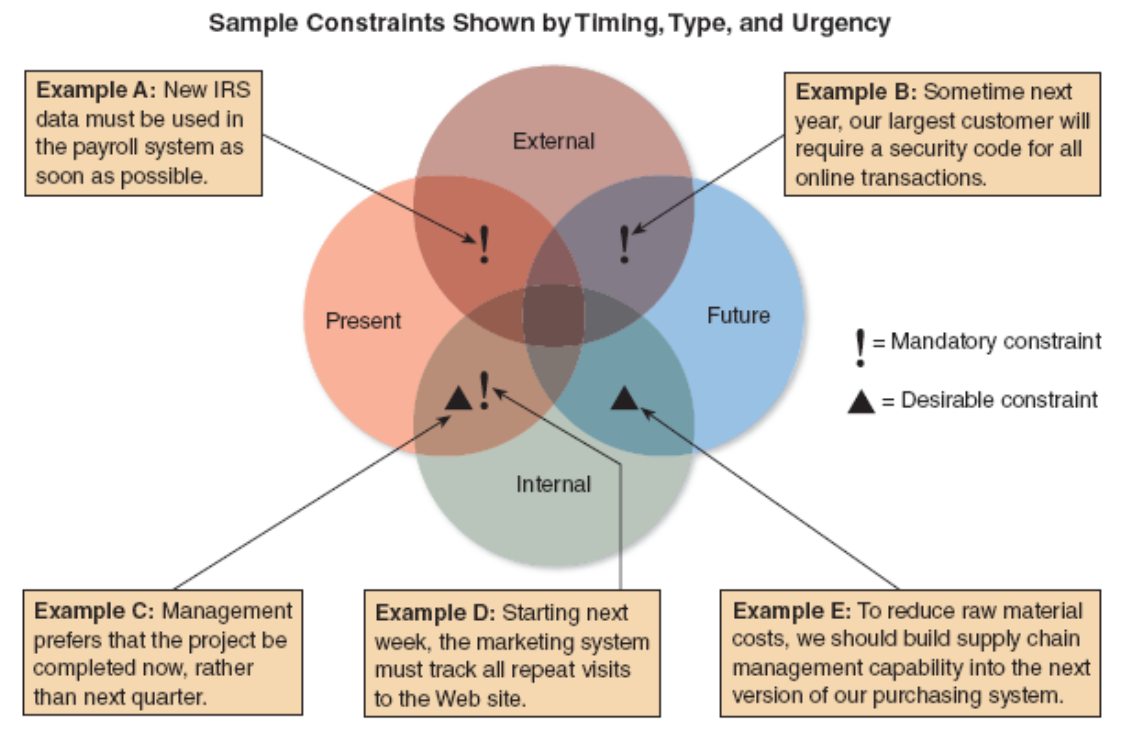
Example Constraints:
- Example A (External, Present, Mandatory): New IRS data must be used in payroll system as soon as possible
- Example B (External, Future, Mandatory): Sometime next year, our largest customer will require a security code for all online transactions
- Example C (Internal, Present, Desirable): Management prefers that the project be completed now, rather than next quarter
- Example D (Internal, Present, Mandatory): Starting next week, the marketing system must track all repeat visits to the Web site
- Example E (Internal, Future, Desirable): To reduce raw material costs, we should build supply chain management capability into the next version of our purchasing system
Analogy: Defining scope is like planning a road trip. You decide which cities are must-see (must do), which would be nice to visit (should do/could do), and which are too far out of the way (won't do). Constraints are like your budget, vacation days, and car capacity.
Step 3: Perform Fact-Finding
Activities:
- Gather data about project:
- Usability
- Costs
- Benefits
- Schedules
Methods:
- Analyze organization charts
- Conduct interviews
- Review documentation
- Observe operations
- Conduct user surveys
- Analyze the data
Analogy: Like investigative journalism - you interview people, review documents, observe what's happening, and survey opinions to get the full story.
Step 4: Analyze Project Usability, Cost, Benefit, and Schedule Data
Key Questions:
- What information must be obtained, and how will it be gathered and analyzed?
- Who will conduct the interviews? How many people will be interviewed?
- Will a survey be conducted? Who will be involved? How much time will it take to tabulate the results?
- How much will it cost to analyze the information and prepare a report with findings and recommendations?
Step 5: Evaluate Feasibility
Assess all four types:
- Operational feasibility
- Technical feasibility
- Economic feasibility
- Schedule feasibility
Step 6: Present Recommendations to Management
Summarize findings and provide recommendations
Preliminary Investigation Report Format
Report Structure
- Introduction
- Background and context
- Systems Request Summary
- Overview of the request
- Findings
- Results of the investigation
- Recommendations
- Proposed course of action
- Project Roles
- Key stakeholders and responsibilities
- Time and Cost Estimates
- Projected timeline and budget
- Expected Benefits
- Anticipated outcomes
- Appendix
- Supporting documentation
WE stop here, as a system analysis แล้วให้คนใหญ่คนโตไปตัดสินใจว่าจะทำมั้ยน้อ
Analogy: The report is like a business proposal for a startup. You explain the problem (introduction), what was requested (summary), what you discovered (findings), what you think should be done (recommendations), who will do it (roles), how much and how long (estimates), and why it's worth it (benefits).
Summary
Systems Planning
- First phase of the Systems Development Life Cycle (SDLC)
Business Case
- The reason for a proposed system
- Describes the project clearly
- Provides justification to proceed
- Estimates project's financial impact
Systems Projects
Initiated to:
- Improve performance
- Provide more information
- Reduce costs
- Strengthen controls
- Provide better service
Affected by:
- Various internal factors
- Various external factors
Preliminary Investigation Process
- Understand the problem or opportunity
- Define the project scope and constraints
- Perform fact-finding
- Analyze project usability, cost, benefit, and schedule data
- Evaluate feasibility
- Prepare a report to management
Key Takeaways
- Strategic planning begins with understanding organizational goals through mission statements and SWOT analysis
- Business cases justify projects by clearly describing benefits, costs, and alternatives
- Systems requests must be carefully evaluated for operational, technical, economic, and schedule feasibility
- Project priorities change dynamically based on business needs and available resources
- The preliminary investigation is a structured process that determines whether to proceed with detailed system analysis
- Proper documentation and communication with stakeholders are critical throughout the process