- อันนี้สำหรับ Big company
- Income Statement
- Statement of Retained Earnings
- The Balance Sheet
1. Preparing Financial Statements
Public Companies Overview
- Publicly owned companies = Companies with shares listed on a stock exchange (like Apple, Microsoft on NASDAQ)
- These companies must release information:
- Annual reports (once per year)
- Quarterly reports (every 3 months)
- This information goes to:
- Stockholders (people who own shares)
- The general public
Analogy: Think of it like open-source software documentation - public companies must share their "source code" (financial data) with everyone, not keep it private.
What's in an Annual Report?
The annual report includes:
- Comparative financial statements (comparing this year vs last year)
- Information about the company's:
- Financial position (how much money/assets they have)
- Business operations (what they actually do)
- Income statement
- Future prospects (plans and predictions)
- Cash flow (เดี๋ยวได้เรียนต่อไป)
Audit Requirement
- IMPORTANT: Financial statements in annual reports must be audited by certified public accountants (CPAs)
- ผู้ตรวจสอบบัญชีอนุญาต
Analogy: This is like having your code reviewed by independent security experts before deployment - it ensures accuracy and trustworthiness.
2. JJ's Lawn Care Service - Example
Adjusted Trial Balance (May 31, 2025)
This is like a "checkpoint" that lists all accounts before creating financial statements.
| Account | Debit ($) | Credit ($) |
|---|---|---|
| A - Cash | 3,925 | |
| A - Accounts receivable | 75 | |
| A - Tools & equipment | 2,650 | |
| A - Accumulated depreciation: tools & equipment | 50 | |
| A - Truck | 15,000 | |
| A - Accumulated depreciation: truck | 250 | |
| L - Notes payable | 13,000 | |
| L - Accounts payable | 150 | |
| O - Capital stock | 8,000 | |
| O - Dividends | 200 | |
| Revenue - Sales revenue | 750 | |
| Expenses - Gasoline expense | 50 | |
| Expenses - Depreciation expense: tools & equipment | 50 | |
| Expenses - Depreciation expense: truck | 250 | |
| Total | 22,200 | 22,200 |
Key Terms Explained:
- Accounts receivable = Money customers owe you (like pending payments)
- Accumulated depreciation = How much value equipment has lost over time (like hardware getting old)
- Notes payable = Long-term loans (like a car loan)
- Accounts payable = Money you owe suppliers (like bills you haven't paid yet)
- Capital stock = Money invested by owners
- Dividends = Payments to owners (like profit sharing)
- (Giving back to stockholders: เงินปันผล)
Analogy: The trial balance is like checking that your commits match between local and remote repositories - debits and credits must equal.
3. The Income Statement
Purpose
Shows if the company made money or lost money during a period (like a profit/loss scoreboard).
JJ's Lawn Care Service Income Statement
For the month ended May 31, 2025
เอาไว้ฝั่งซ้ายขวาให้ถูกต้อง (ถ้าเป็น Total ใหญ่ ๆ ให้ไว้ขวา ถ้าเป็น Detail ของต่าง ๆ ให้ไว้ซ้าย)
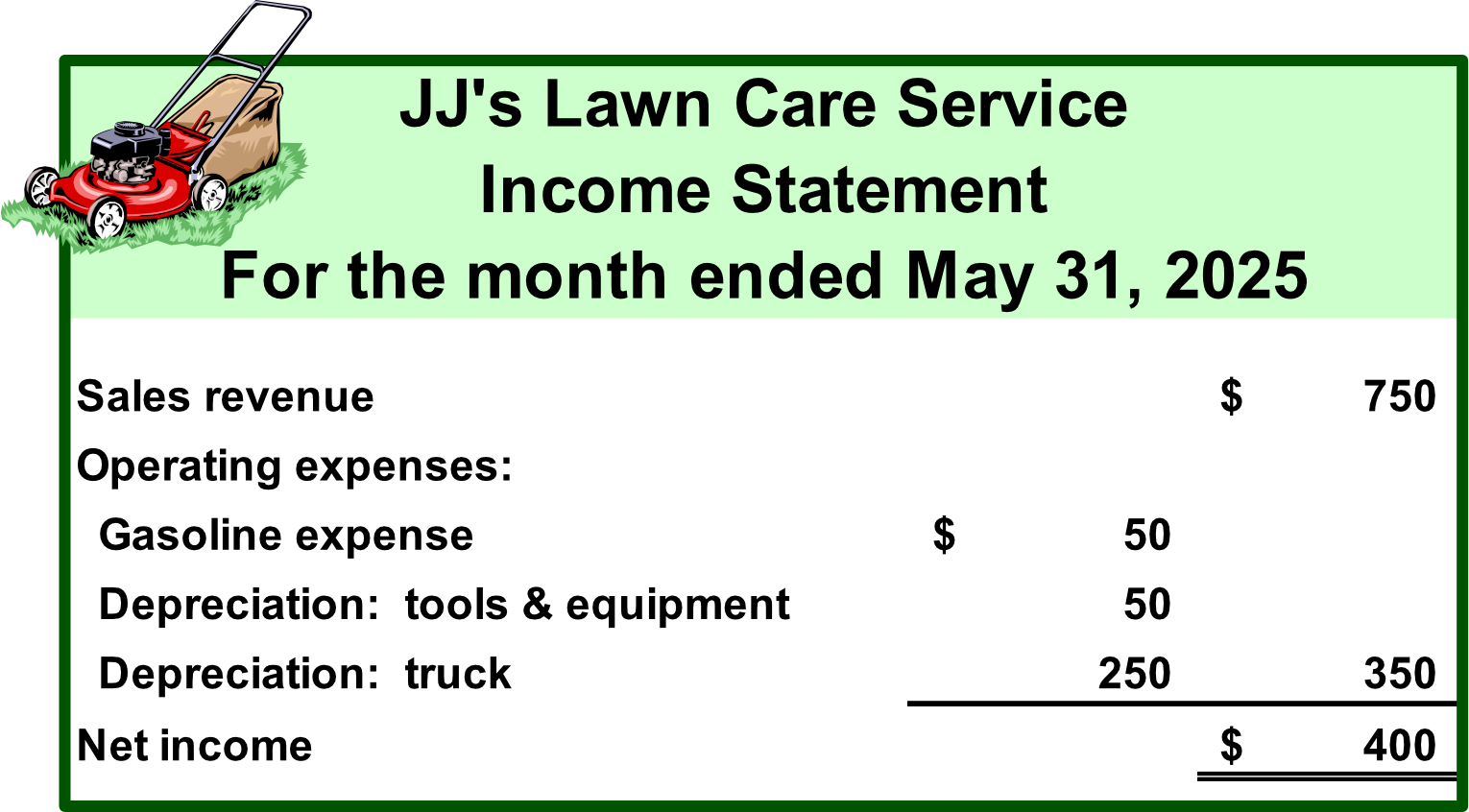
| Item | Amount ($) |
|---|---|
| Sales revenue | 750 |
| Operating expenses: | |
| - Gasoline expense | -50 |
| - Depreciation: tools & equipment | -50 |
| - Depreciation: truck | -250 |
| Total operating expenses | (350) |
| Net income | 400 |
Formula:
In this case:
Analogy: This is like tracking your app's performance - Revenue is like total users, Expenses are server costs and development time, and Net Income is your actual success metric.
Important Note: Net income also appears on the Statement of Retained Earnings.
4. The Statement of Retained Earnings
งบกำไรสะสม จะเป็น +, - ก็ได้ถูกมะ ตามชื่อเลย กำไรสะสมเรื่อย ๆ (นักลงทุนก็อยากจะลงทุนกับ company ที่มันเป็นบวก)
Purpose
Shows how the company's accumulated profits changed during the period.
What Changes Retained Earnings?
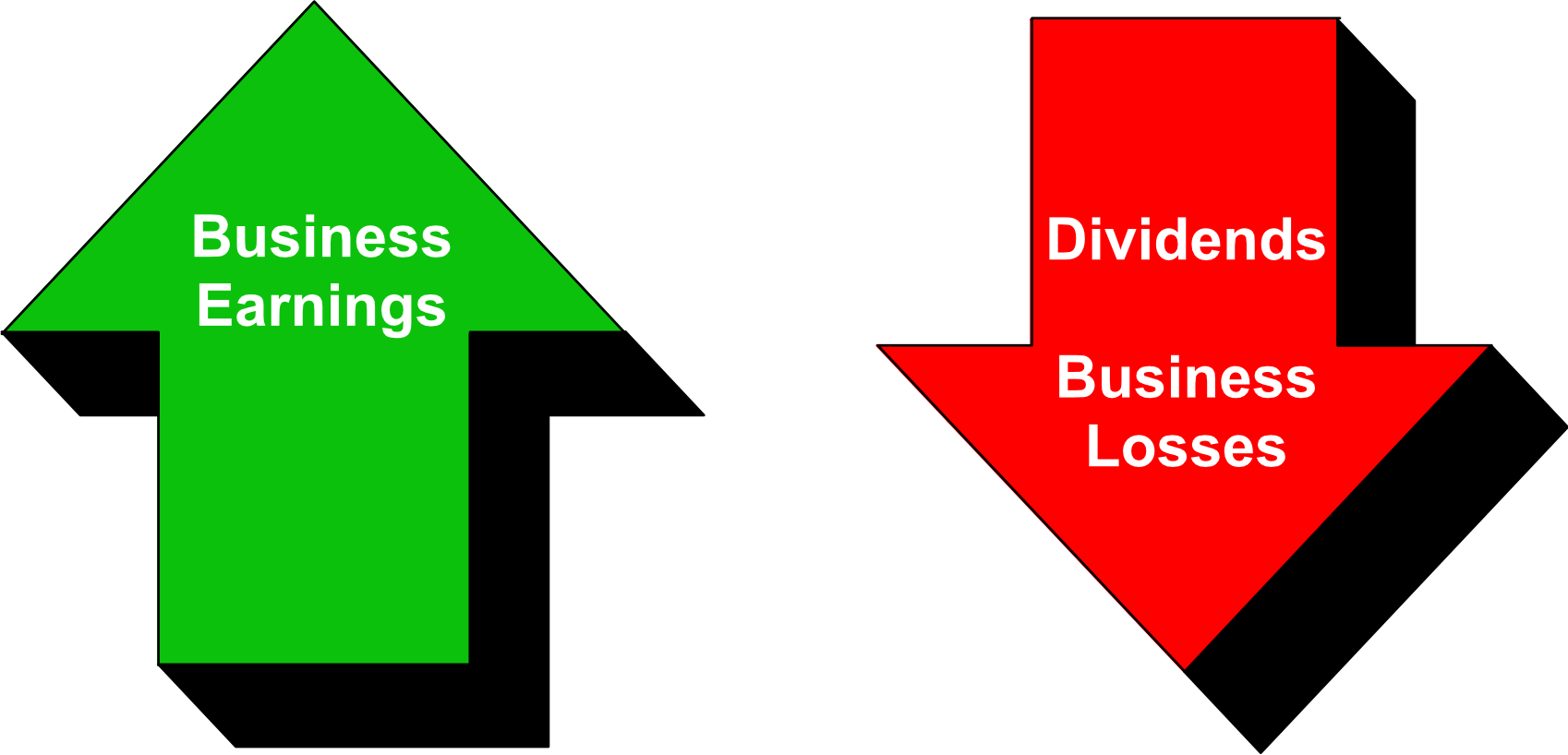
Increases (↑):
- Business Earnings (Net Income)
Decreases (↓):
- Dividends (payments to owners)
- Business Losses (negative net income)
Analogy: Think of Retained Earnings as your savings account. Net income adds to it, dividends take money out.
JJ's Lawn Care Service Statement of Retained Earnings
For the Month Ended May 31, 2025
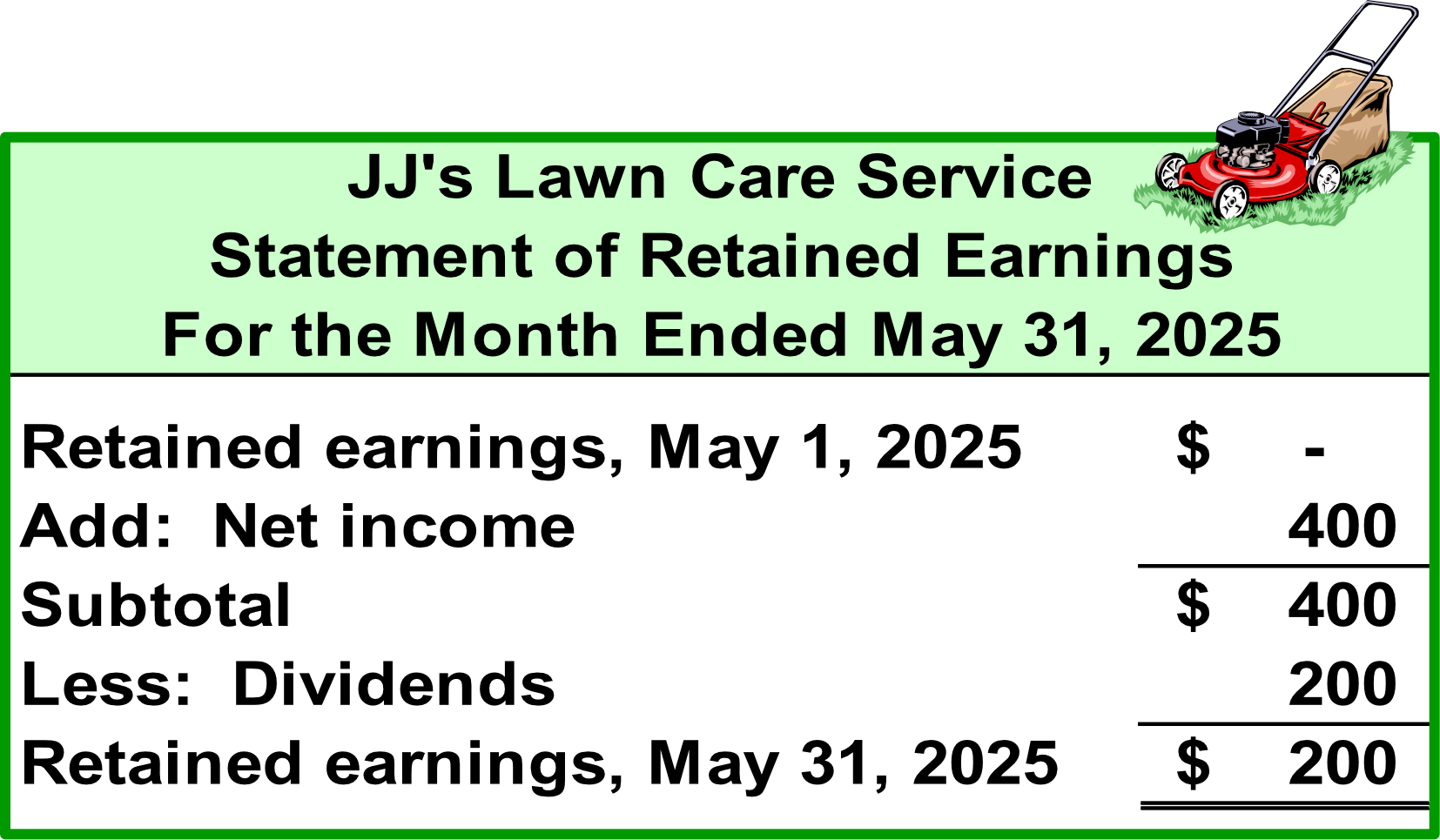
ถ้าไม่มี Retained earnings (= 0) แปลว่า ร้านนี้พึ่งมาเริ่มทำ หรือว่าเป็น new shop, new company
| Item | Amount ($) |
|---|---|
| Retained earnings, May 1, 2025 | 0 |
| Add: Net income | 400 |
| Subtotal | 400 |
| Less: Dividends | (200) |
| Retained earnings, May 31, 2025 | 200 |
Formula:
In this case:
5. The Balance Sheet
Purpose
Shows what the company owns (assets), owes (liabilities), and the owners' stake (equity) at a specific point in time.
The Accounting Equation
Analogy: This is like a snapshot of your computer's resources at a specific moment - RAM (assets), processes using resources (liabilities), and available free resources (equity).
JJ's Lawn Care Service Balance Sheet
May 31, 2025
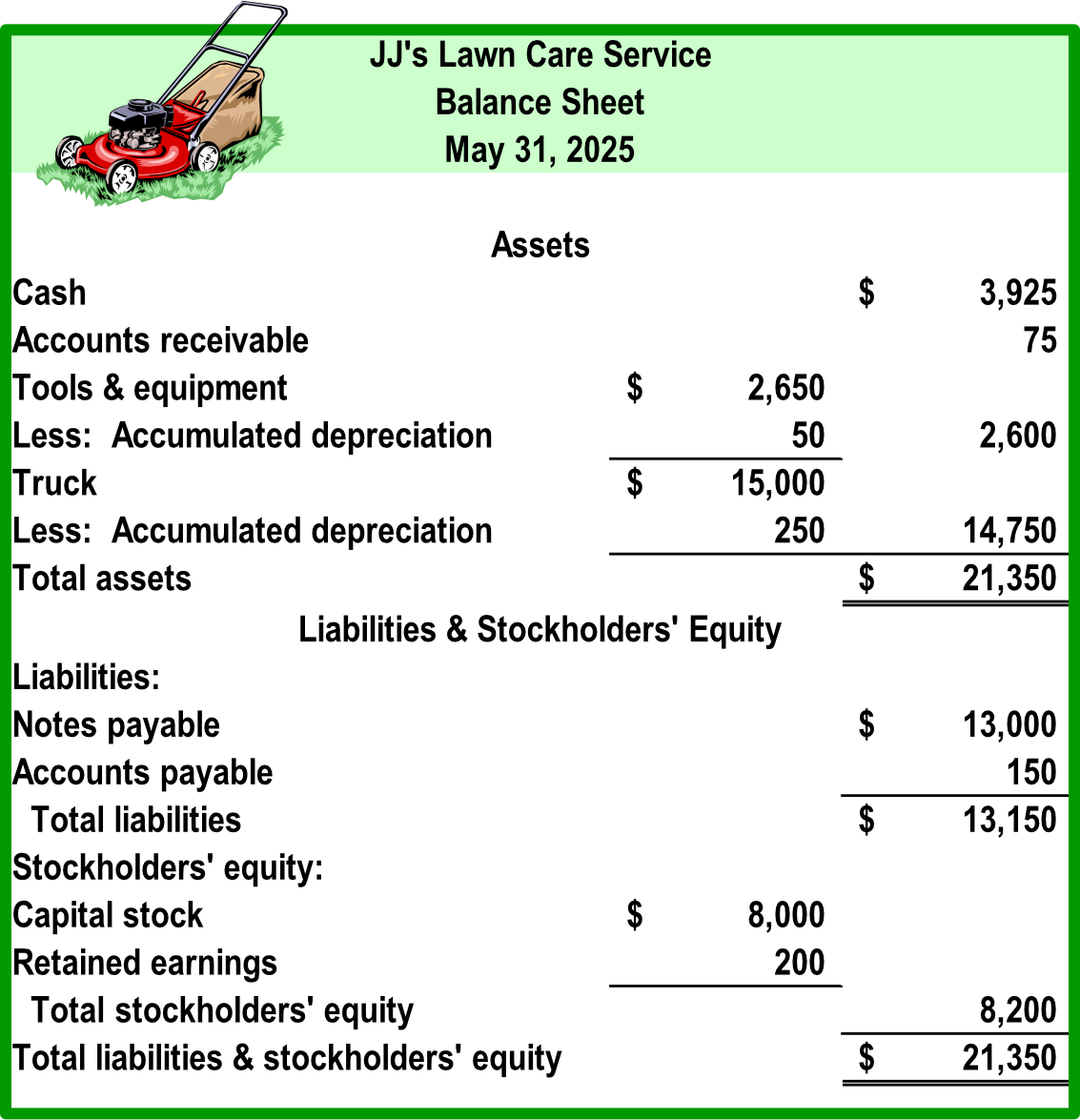
Assets
| Item | Amount ($) |
|---|---|
| Cash | 3,925 |
| Accounts receivable | 75 |
| Tools & equipment | 2,650 |
| Less: Accumulated depreciation (ค่าเสื่อมราคาสะสม) | (50) |
| Net Tools & equipment | 2,600 |
| Truck | 15,000 |
| Less: Accumulated depreciation | (250) |
| Net Truck | 14,750 |
| Total assets | 21,350 |
Liabilities & Stockholders' Equity
Liabilities:
| Item | Amount ($) |
|---|---|
| Notes payable | 13,000 |
| Accounts payable | 150 |
| Total liabilities | 13,150 |
Stockholders' Equity:
| Item | Amount ($) |
|---|---|
| Capital stock (ตรงนี้ย้ำ) | 8,000 |
| Retained earnings (ตรงนี้ย้ำ - ต้องเป็น end earning ที่ได้จากตาราง) | 200 |
| Total stockholders' equity | 8,200 |
| Total liabilities & stockholders' equity | 21,350 |
| Verification: | |
Analogy: Assets are like your codebase and infrastructure, Liabilities are technical debt and obligations, Equity is the net value you've built.
6. Relationships Among Financial Statements
How the Statements Connect
Income Statement
    ↓ (Net Income flows to...)
Statement of Retained Earnings
    ↓ (Ending Retained Earnings flows to...)
Balance Sheet (Stockholders' Equity section)
The Flow:
- Income Statement calculates Net Income ($400)
- Net Income flows to Statement of Retained Earnings
- Ending Retained Earnings ($200) flows to Balance Sheet
- Retained Earnings is part of Stockholders' Equity on the Balance Sheet
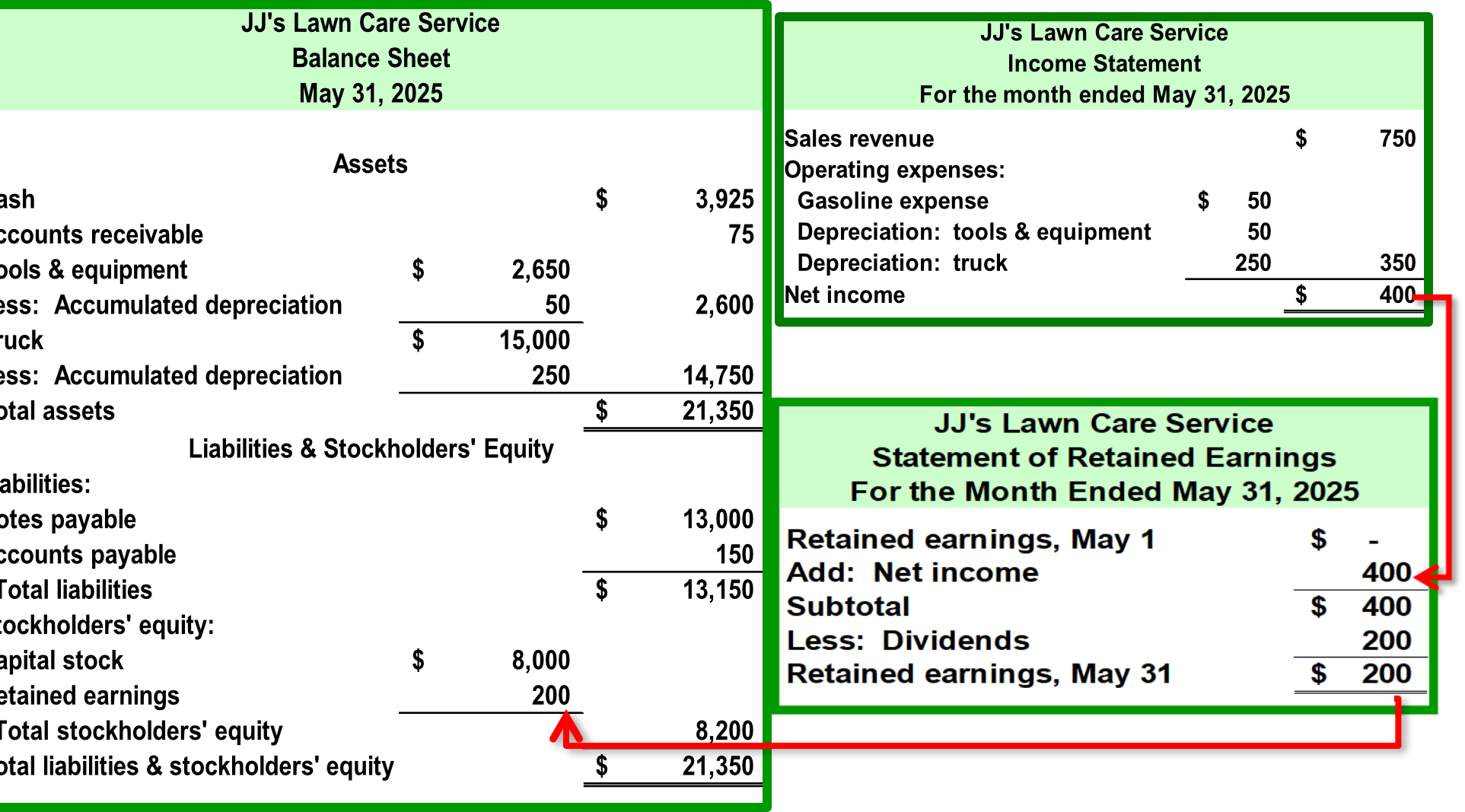
Visual Connection
- Income Statement → Produces Net Income = $400
- Statement of Retained Earnings → Uses Net Income → Produces Ending Retained Earnings = $200
- Balance Sheet → Uses Retained Earnings in the Equity section
7. Notes to Financial Statements
ข้างหลังเราอาจจะเขียน Notes ไว้ attach ได้ ใส่พวก description
Purpose
Provide additional details and context that aren't in the main statements.
Examples of Items Disclosed in Notes:
- Lawsuits pending - Legal issues that might cost money
- Scheduled plant closings - Future shutdowns that will affect operations
- Governmental investigations - Regulatory issues
- Significant events occurring after the balance sheet date - Important things that happened after the reporting period
- Specific customers that account for a large portion of revenue - Revenue concentration risk
- Unusual transactions and related party transactions - Special deals or transactions with related companies/people
- Earthquake, Tsunami
Analogy: Notes are like README files or documentation comments - they provide context and warnings that the raw numbers don't show.
Why Important?
- Numbers alone don't tell the full story
- Helps users understand risks and special situations
- Required by accounting standards for transparency
8. Preparing Financial Statements for Different Time Periods
Frequency of Financial Statements
Companies prepare financial statements at various intervals:
- Monthly - Internal management use
- Quarterly - Required for public companies (every 3 months)
- Annually - Full year results (most comprehensive)
Timeline Visualization
Jan 1 ────────────────────────────────────────── Dec 31
       |    |    |    |    |    |    |    |    |
     Monthly statements (prepared each month)

       |         |         |         |
     Quarterly statements (Q1, Q2, Q3, Q4)

       |                                    |
            Annual statement (full year)
Interim Financial Statements
- Definition: Financial statements covering periods less than a full year
- Examples: Monthly and Quarterly statements
- Purpose:
- Help management make timely decisions
- Keep investors informed throughout the year
- Spot problems early before they become major issues
Analogy: Like running unit tests continuously vs. only testing at release - frequent statements help catch issues early.
Key Points
- Quarterly reports are required for publicly traded companies
- Annual reports are the most detailed and must be audited
- Monthly statements are often for internal use only
Summary of Key Formulas
Income Statement
Statement of Retained Earnings
Balance Sheet
Book Value of Assets
Quick Reference: Financial Statement Purposes
| Statement | What It Shows | Time Frame |
|---|---|---|
| Income Statement | Profitability (Did we make money?) | Period of time (e.g., "For the month ended...") |
| Statement of Retained Earnings | Changes in accumulated profits | Period of time |
| Balance Sheet | Financial position (What we own vs owe) | Specific date (e.g., "As of May 31...") |
Important Concepts for Computer Engineering Students
1. Depreciation
- What: Spreading the cost of equipment over its useful life
- Why: A $15,000 truck doesn't lose all its value immediately
- Computer Analogy: Like amortizing the cost of servers over 3-5 years instead of expensing it all at once
2. Accrual Accounting
- Revenue is recorded when earned (not when cash received)
- Expenses are recorded when incurred (not when cash paid)
- Computer Analogy: Like async programming - you record the promise of payment, not wait for the actual transfer
3. Double-Entry Bookkeeping
- Every transaction affects at least 2 accounts
- Debits must equal Credits (like the trial balance showing 22,200)
- Computer Analogy: Like database transactions that maintain ACID properties - the system must stay balanced
Study Tips
- Remember the flow: Income Statement → Statement of Retained Earnings → Balance Sheet
- The accounting equation must always balance: Assets = Liabilities + Equity
- Different statements serve different purposes:
- Income Statement = Performance over time
- Balance Sheet = Snapshot at a moment
- Net Income is the key connector between statements