- One of the main (important) statements as well.
- #FinalExam จะออกแค่ Statement of Cash Flows เฉย ๆ ไม่ออก Cash Budgets เด้อ
- Statement of Cash Flows: 3 main sections
- Operating activities
- Investing activities
- Financing activities
Purpose of the Statement
Main Function:
- Provides information about the cash receipts and cash payments of a business entity during the accounting period
- Accounting period: สามารถเป็นได้ทั้ง 1 month, 3 months, 6 months, 1 year!
- Cash receipts ต้อง มากกว่า Cash payments เพื่อไม่ให้ go bankrupt!
Think of it like your bank account statement - it shows you exactly where money came in and where it went out, but for a whole company
Helps investors answer key questions:
- Ability to generate positive cash flows
- Ability to meet its obligations and to pay dividends
- Reasons for difference between net income and net cash flows from operating activities
- Need for external financing - ไปกู้ไรงี้
- Investing and financing transactions for the period
- If the company have excess cash ก็ invest something สิ
Statement of Cash Flows Format
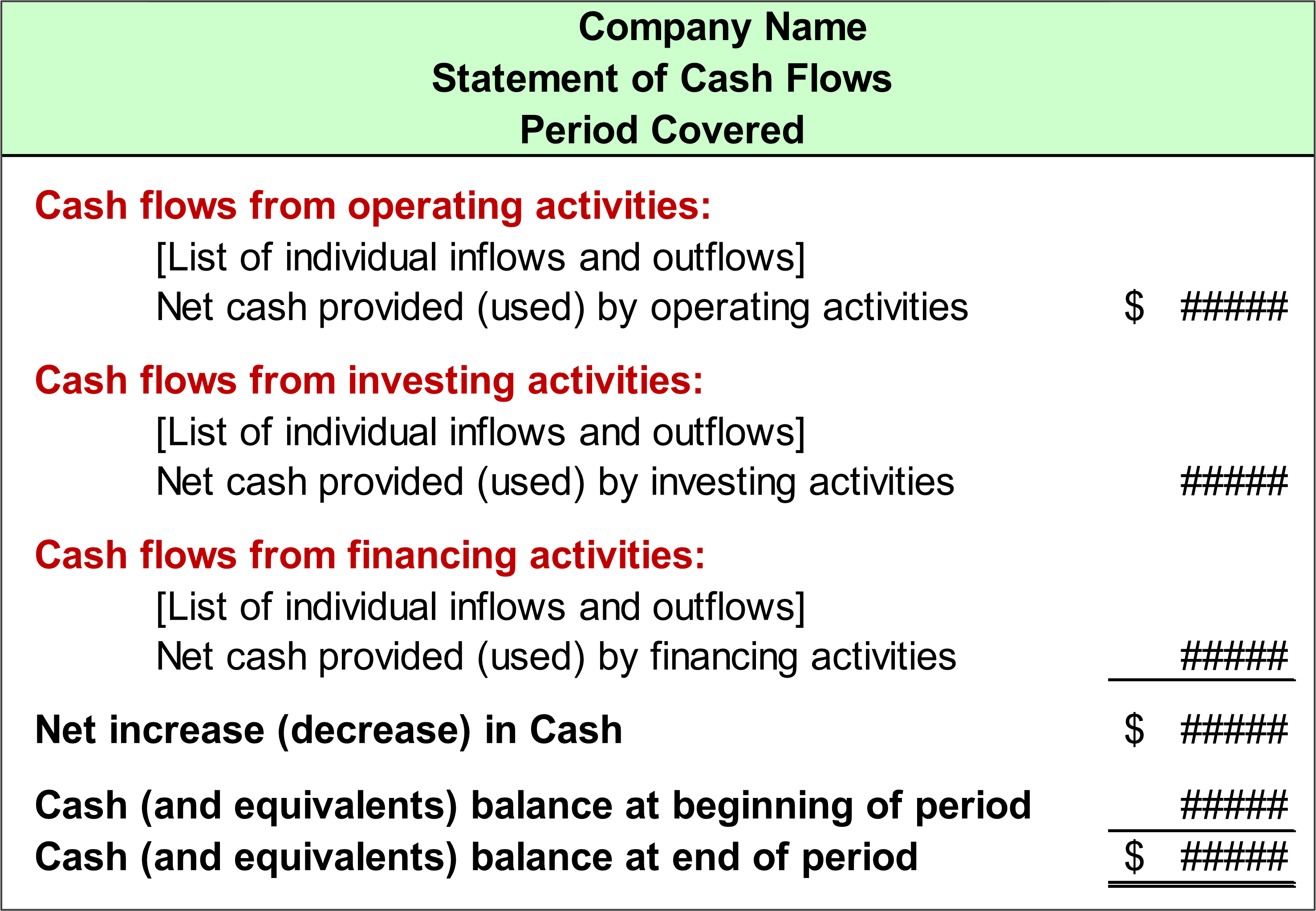
#MidtermExam ก็ให้เขียน Format เป็นแบบนี้นะ
ถ้าเป็น Negative sign ให้ใส่ () ด้วย สำคัญมาก
Classification of Cash Flows
The Statement of Cash Flows must include three sections:
- Cash Flows from Operating Activities
- Cash Flows from Investing Activities
- Cash Flows from Financing Activities
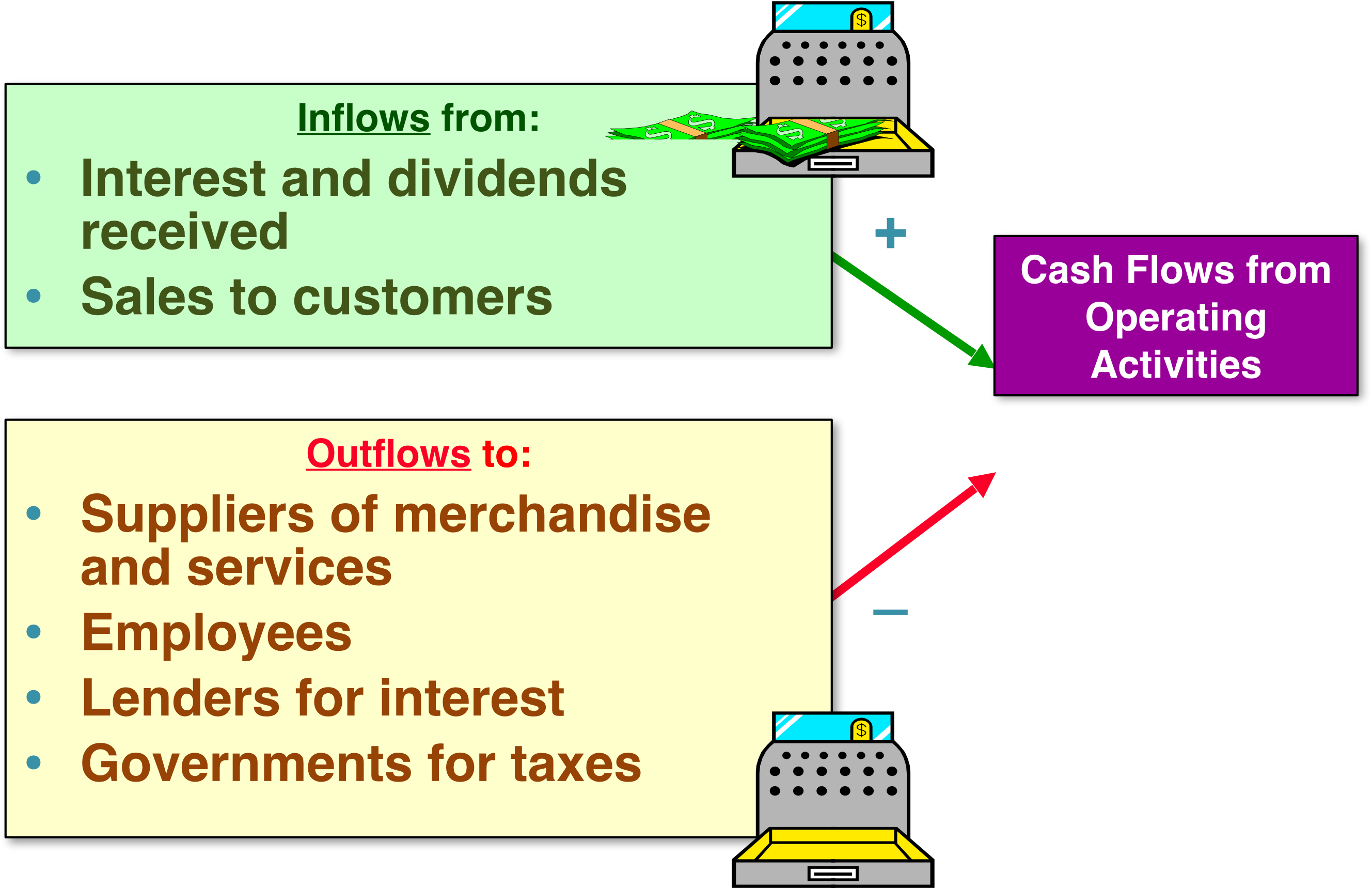
1. Operating Activities
- Operating Activities come from income statement (emphasis only cash)
- So it should be
- Cash revenue should be more than cash expenses (for the good company)
This is like your day-to-day business operations - selling products, paying employees, buying inventory
Inflows (+):
- Interest and dividends received
- Sales to customers
Outflows (-):
- Suppliers of merchandise and services
- Employees (wages/salaries) ที่ต้องจ่ายพนักงานอะเนอะ
- Lenders for interest
- Governments for taxes
2. Investing Activities
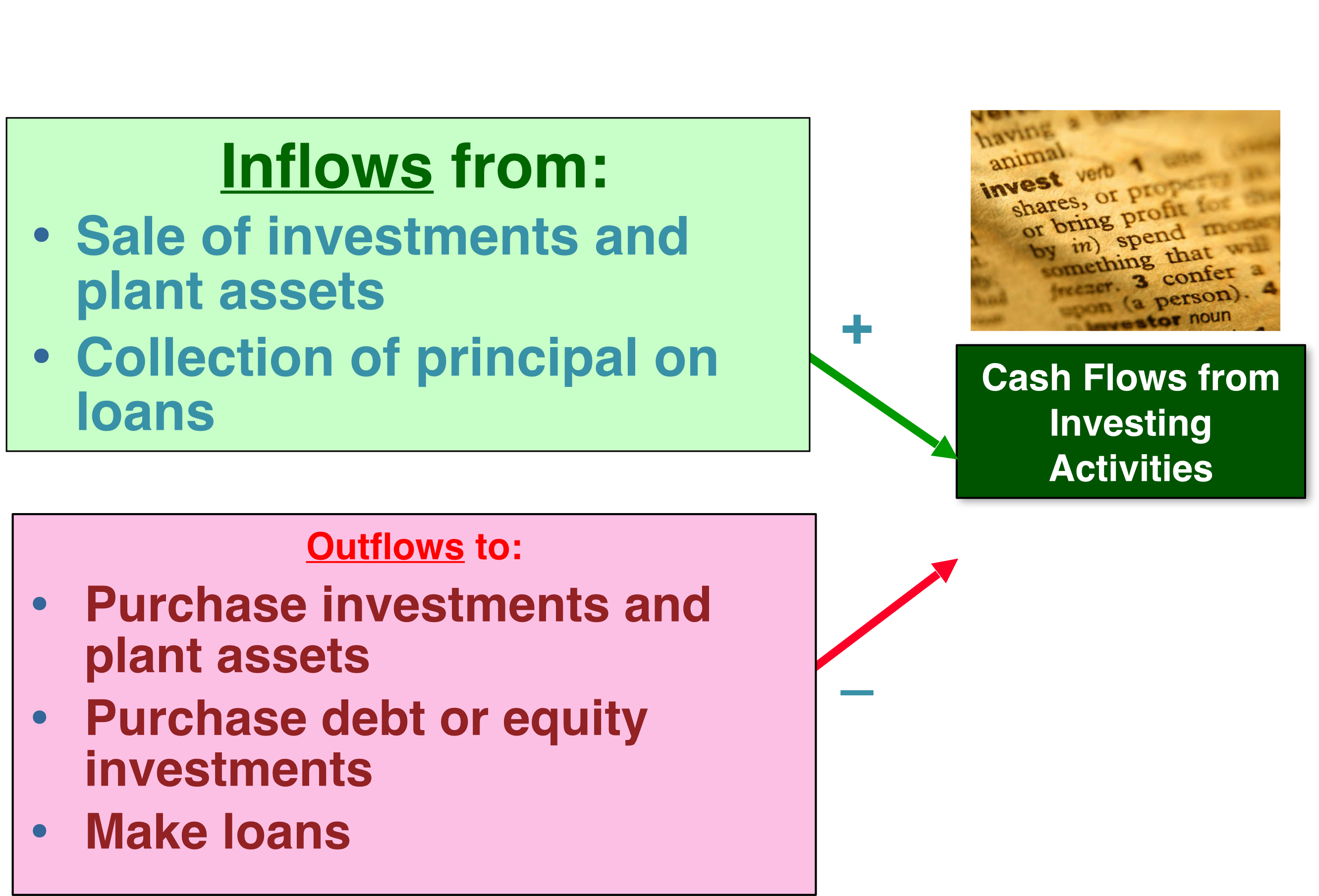
- Investing Activities come from Balance Sheet & Assets
Think of this as buying/selling long-term assets - like when you buy a new computer or sell your old car, but for companies
Inflows (+):
- Sale of investments and plant assets
- Collection of principal on loans
Outflows (-):
- Purchase investments and plant assets
- Purchase debt ==(bond = หุ้นกู้)== or equity investments
- Make loans
จะเป็น Equity investments ได้ = main stockholder of the company ต้องถือหุ้นของบริษัทถึง 20% นะ
ไม่ใช่ว่าลงทุนเยอะแล้วจะดีนะ ก็ถือเป็น Decision ของ company ที่ไม่ risky เกินไป
3. Financing Activities
- Financing Activities come from Balance Sheet (the right handside: )
This is about getting money from investors/lenders or paying them back - like taking out a loan or paying dividends to shareholders
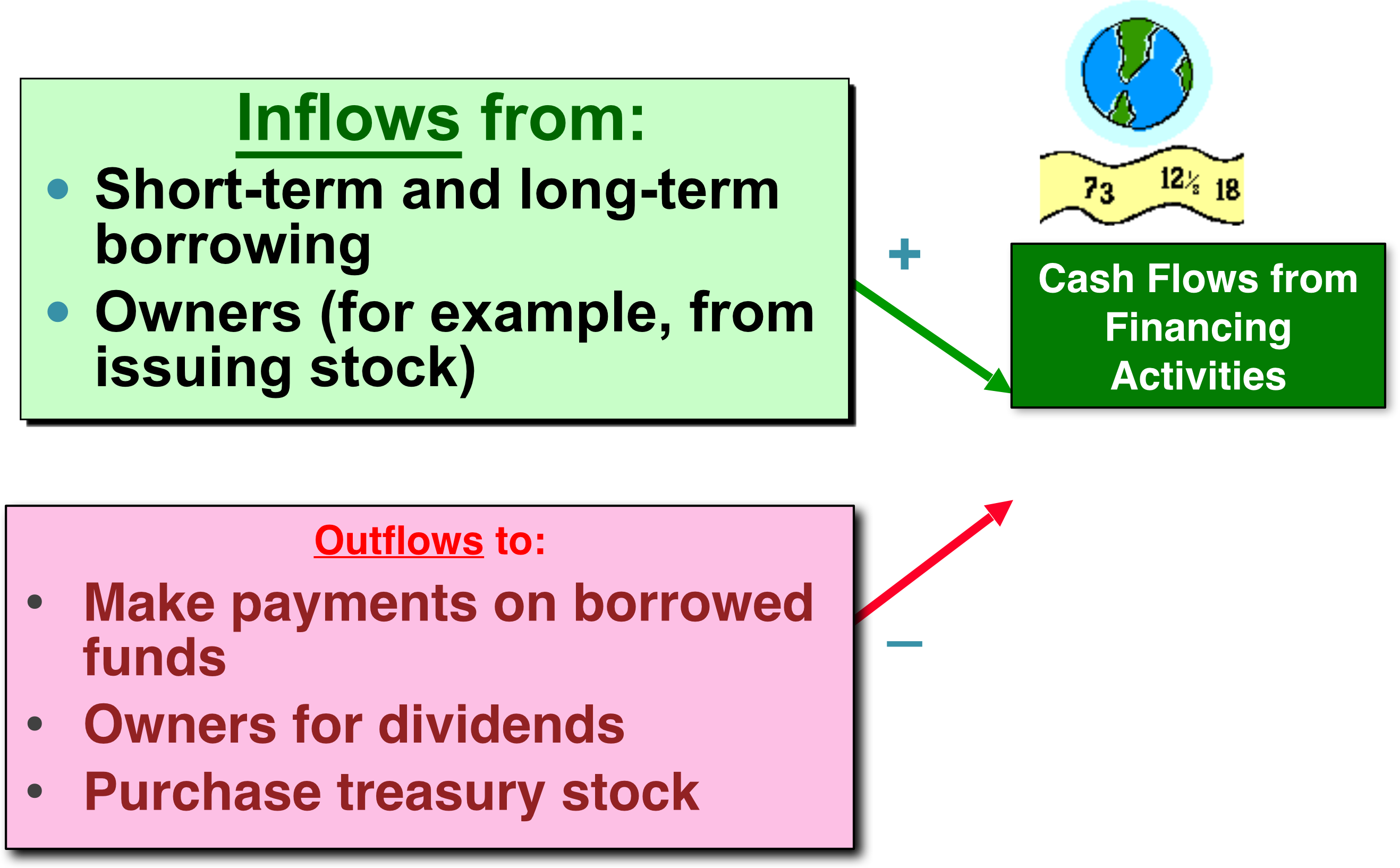
Inflows (+):
- Short-term and long-term borrowing
- Short-term = less than or equal to 1 year
- We can borrow money from the bank
- Owners (for example, from issuing stock)
- If we can’t borrow from the bank, the company can ask owner to invest more!
- It’s called “Issuing stock” (sell the stock to the stockholders)
Outflows (-):
- Make payments on borrowed funds
- Owners for dividends (เงินปันผล)
- Purchase treasury stock
- The company purchase its own stock back (หุ้นในคลัง)
- Ex: Starbucks would like to purchase treasury stock, because Starbucks wants to give bonus (as a stock) to their employee.
Cash and Cash Equivalents
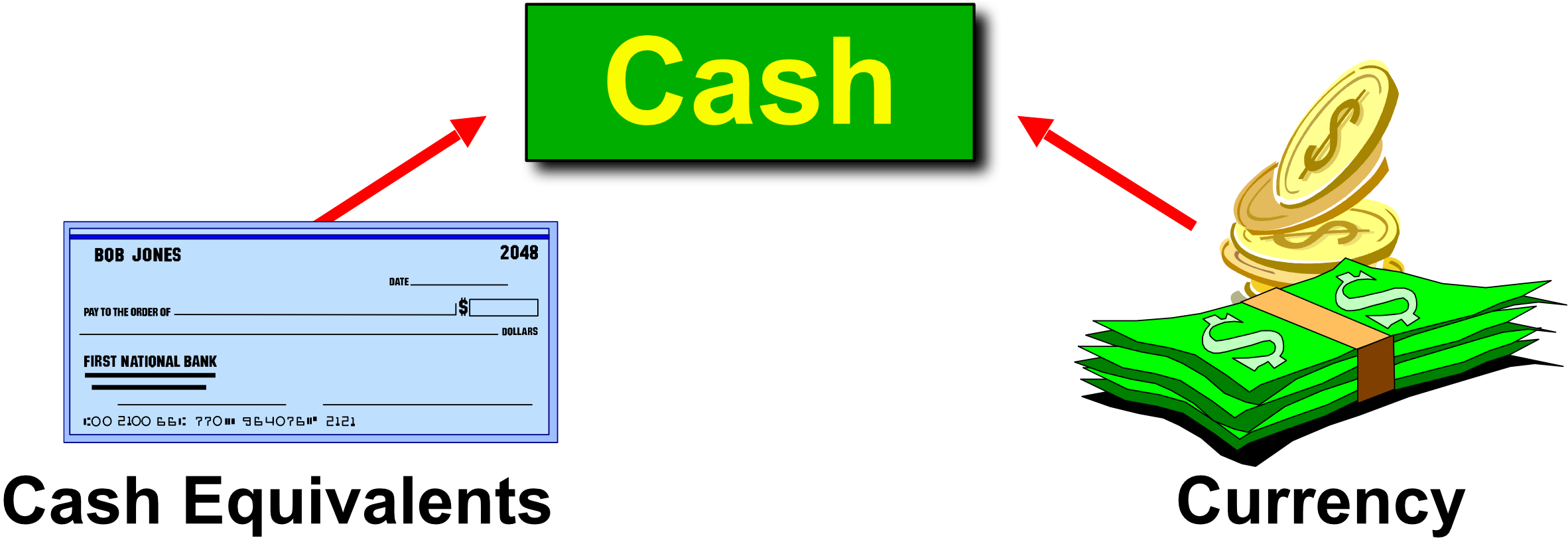
What counts as "Cash"?
- Currency (physical money)
- Cash Equivalents (like checks, money in bank accounts)
Cash equivalents are things that can be turned into cash almost immediately - like a check you can deposit right away
Example: Martin Co. Statement of Cash Flows
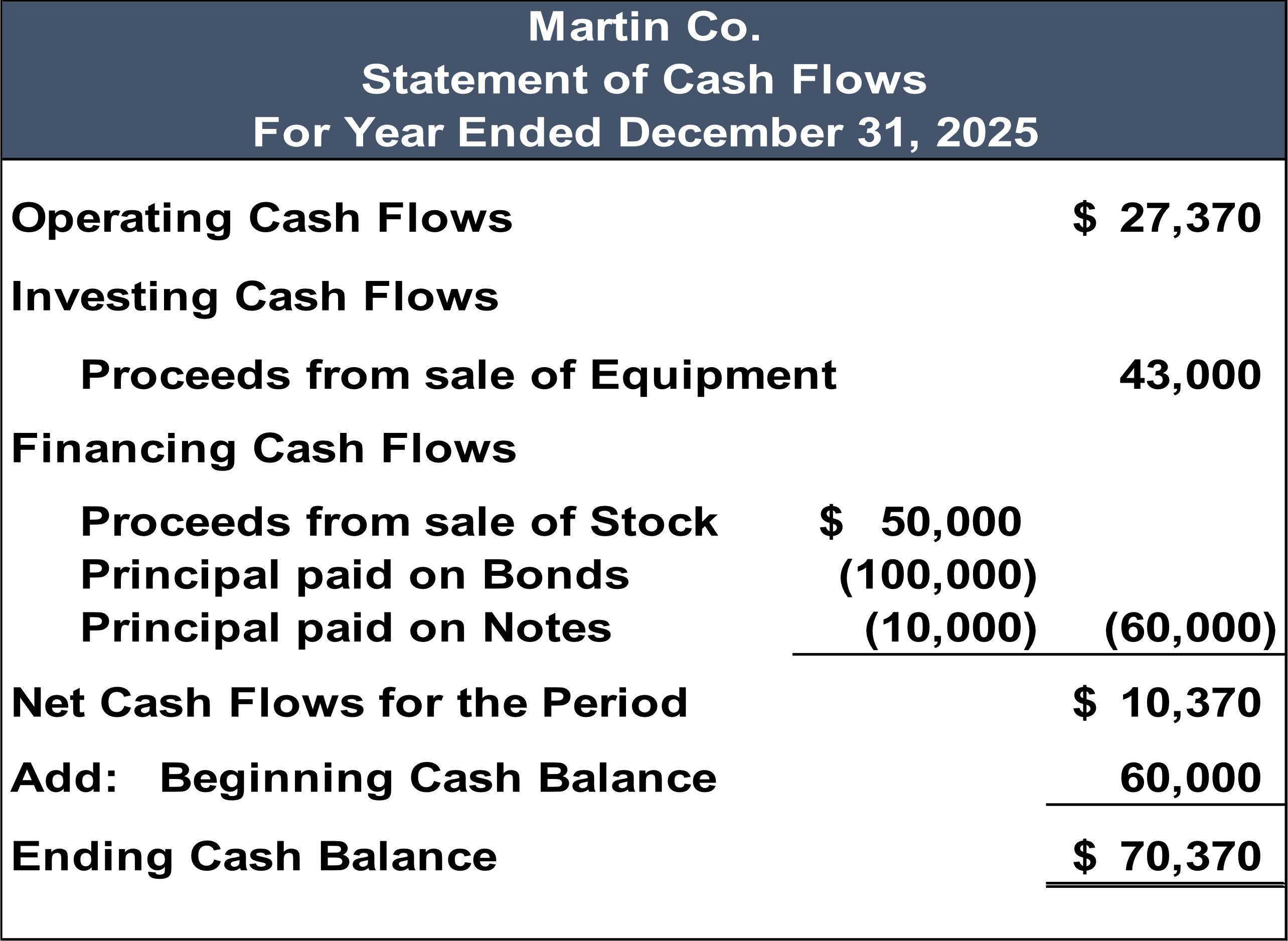
- ย้ำอีกรอบ Operating Cash Flows (ยิ่งบวก ยิ่งเยอะ ยิ่งดี)
- Investing Cash Flows ก็ขึ้นอยู่แต่ละ Company ที่ไม่ทำให้ Company risky ก็พอ
Managing Cash Flows
Purpose of Cash Budgets
Cash Budgets are used by management to plan and forecast future cash flows.
Like creating a personal budget for your monthly expenses, but for a company's cash
Statement of Cash Flows คือเรา prepare for the past, แต่ Cash budgets คือเรา prepare, plan ไว้สำหรับอนาคต (not exact) — If our performance is better than our plan (cash budgets) it’s good! (ALL GOOD)
A Cash Budget can be used to:
- Force management to coordinate activities
- Provide managers with advance notice of available resources
- Provide targets useful in evaluating performance
- Provide advance warnings of potential cash shortages
Strategies to Manage Cash Flows:
- Increase collection of accounts receivables
- Keep inventory low
- ถ้าของมันขายไม่ดี ก็อย่าเอามา stock ไว้เยอะ คงคลัง ขายไม่ออก พังเถอะ
- Delay payment of liabilities
- Plan timing of major expenditures
- Invest idle cash
It's like managing your personal finances - collect money owed to you quickly, don't buy too much stuff you don't need, pay bills strategically (but on time!), and invest extra money instead of letting it sit idle
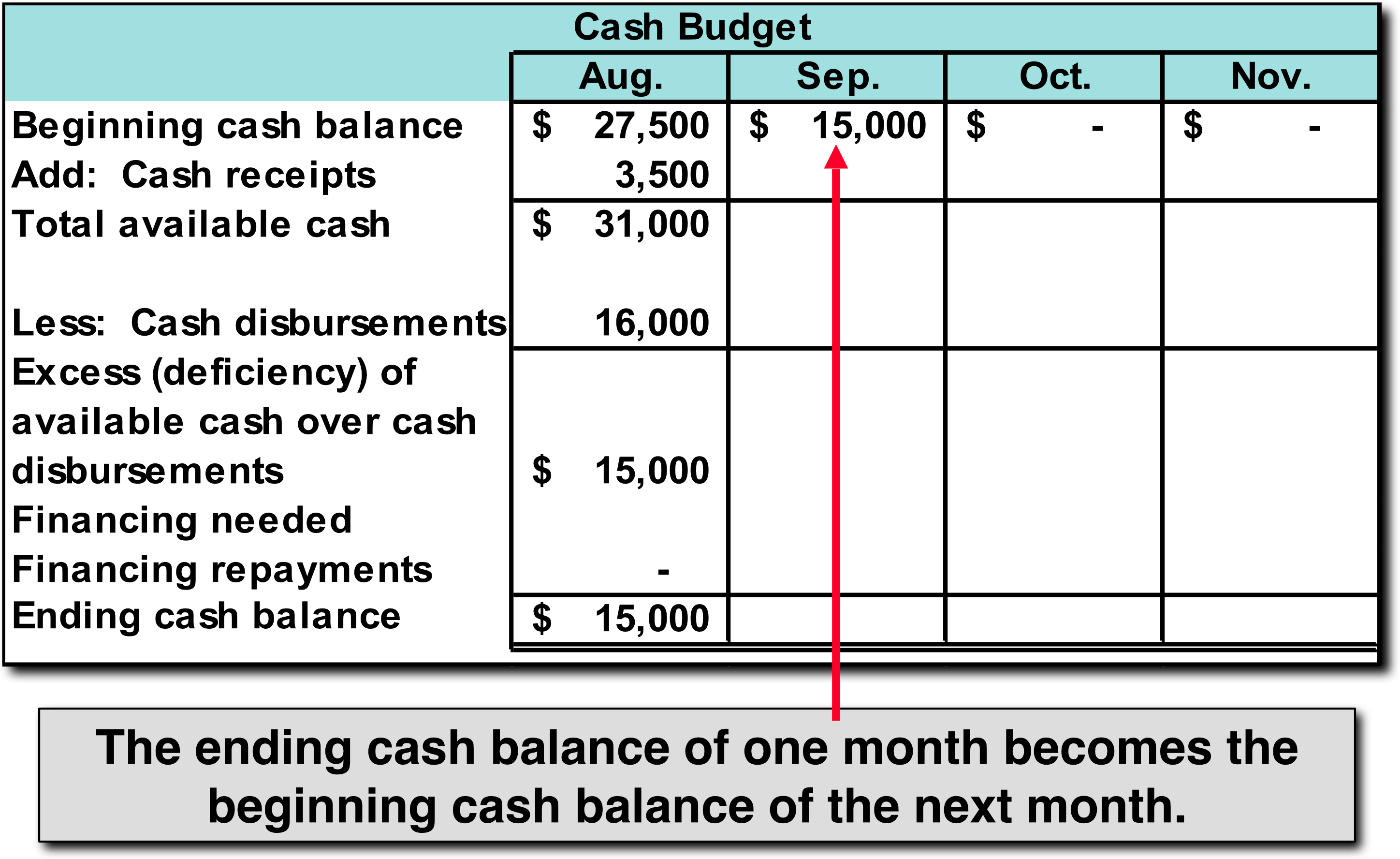
Using a Spreadsheet for Cash Budget
Basic Structure
| Cash Budget | Aug. | Sep. | Oct. | Nov. |
|---|---|---|---|---|
| Beginning cash balance | $27,500 | $15,000 | - | - |
| Add: Cash receipts | 3,500 | |||
| Total available cash | $31,000 | |||
| Less: Cash disbursements (การจ่ายเงินทั่วไป) | 16,000 | |||
| Excess (deficiency) of available cash over cash disbursements | $15,000 | |||
| Financing needed | ||||
| Financing repayments | - | |||
| Ending cash balance | $15,000 |
Important Note: The ending cash balance of one month becomes the beginning cash balance of the next month.
It's like a domino effect - whatever cash you have left at the end of this month is what you start with next month
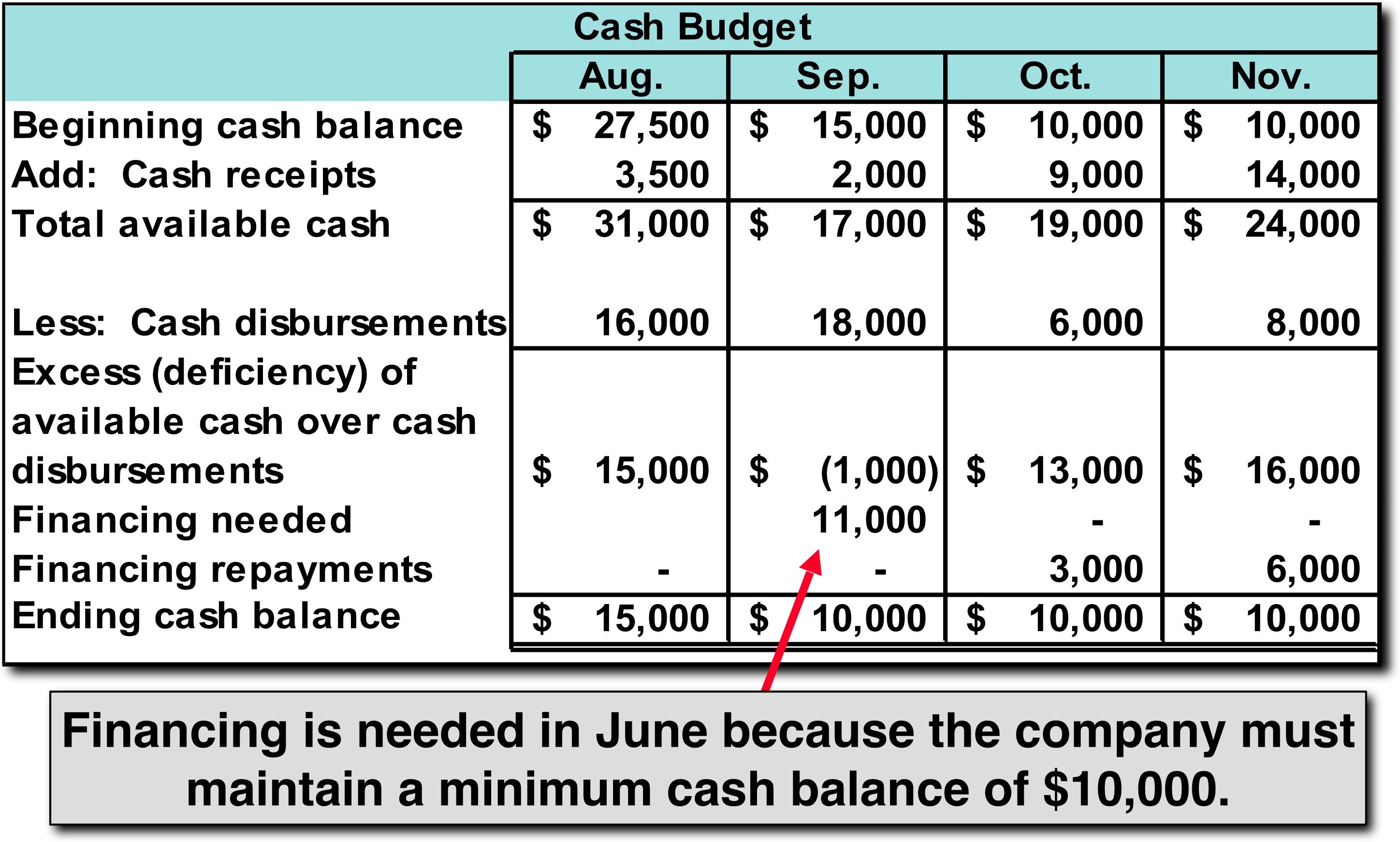
Complete Cash Budget Example
| Cash Budget | Aug. | Sep. | Oct. | Nov. |
|---|---|---|---|---|
| Beginning cash balance | $27,500 | $15,000 | $10,000 | $10,000 |
| Add: Cash receipts | 3,500 | 2,000 | 9,000 | 14,000 |
| Total available cash | $31,000 | $17,000 | $19,000 | $24,000 |
| Less: Cash disbursements | 16,000 | 18,000 | 6,000 | 8,000 |
| Excess (deficiency) of available cash over cash disbursements | $15,000 | $(1,000) | $13,000 | $16,000 |
| Financing needed | - | 11,000 | - | - |
| Financing repayments | - | - | 3,000 | 6,000 |
| Ending cash balance | $15,000 | $10,000 | $10,000 | $10,000 |
Key Insight: Financing is needed in September because the company must maintain a minimum cash balance of $10,000.
In September, they'd have a 11,000 to maintain the $10,000 minimum balance
Cash Budget Characteristics
Key Points:
- Forecasts cash inflows, outflows, and ending cash balances
- Used to plan loans needed or funds available to invest
- Can be daily, weekly, or monthly forecasts
- Monthly for annual planning
- Daily for actual cash management
Companies use different time frames depending on their needs - like checking your bank account daily vs. making a monthly budget
Case Study: SKI's Cash Budget
Net Cash Inflows (January and February)
| January | February | |
|---|---|---|
| Collections (+, Inflows) | $67,651.95 | $62,755.40 |
| Purchases | 44,603.75 | 36,472.65 |
| Wages | 6,690.56 | 5,470.90 |
| Rent | 2,500.00 | 2,500.00 |
| Total payments | $53,794.31 | $44,443.55 |
| Net cash flows | $13,857.64 | $18,311.85 |
Complete SKI Cash Budget
| January | February | |
|---|---|---|
| Cash at start if no borrowing | $3,000.00 | $16,857.64 |
| Net cash flows | 13,857.64 | 18,311.85 |
| Cumulative cash | 16,857.64 | 35,169.49 |
| Less: Target cash | 1,500.00 | 1,500.00 |
| Surplus (excess cash) | $15,357.64 | $33,669.49 |
Incorporating Bad Debts
How could bad debts be worked into the cash budget?
- Collections would be reduced by the amount of the bad debt losses
- For example: If the firm had 3% bad debt losses, collections would total only 97% of sales
- Lower collections would lead to higher borrowing requirements
Bad debts are like when friends owe you money but never pay you back - you have to plan for not getting some of the money you're owed
Formula for collections with bad debts:
Example: If Sales = $100,000 and Bad Debt = 3%
Analyzing SKI's Forecasted Cash Budget
Analysis Results:
- Cash holdings will exceed the target balance for each month
- Cash budget indicates the company is holding too much cash
Why might SKI want to maintain a relatively high amount of cash?
Possible Reasons:
- If sales turn out to be considerably less than expected, SKI could face a cash shortfall
- A company may choose to hold large amounts of cash if it does not have much faith in its sales forecast, or if it is very conservative
- The cash may be used, in part, to fund future investments
It's like keeping extra emergency money in your savings account - you might not earn much interest, but you feel safer having it available just in case
Key Formulas Summary
Net Cash Flow
Ending Cash Balance
Cash Surplus/Deficiency
Important Reminders
- Operating activities = day-to-day business operations
- Investing activities = buying/selling long-term assets
- Financing activities = getting money from or paying back investors/lenders
- Cash budget = planning tool to avoid running out of money
- Target cash balance = minimum cash the company wants to keep on hand