A computer system consists of hardware and software (and data).
They work together to run the computer.
The operating system is the most important software in the computer system. It is the part that manages all of the hardware and all of the other software.
To be specific, the operating system software controls every file, every device, every section of main memory, and every moment of processing time. It controls who (software) can use the system and how.
In short, the operating system is the chief executive officer (CEO) of the computer system.
Well-known examples are those used in computers: Windows, Linux, Unix, macOS.
Other types of modern computer systems also need OSs, too, such as embedded system, IoT, Robotics, etc.
Major Components of the Operating System
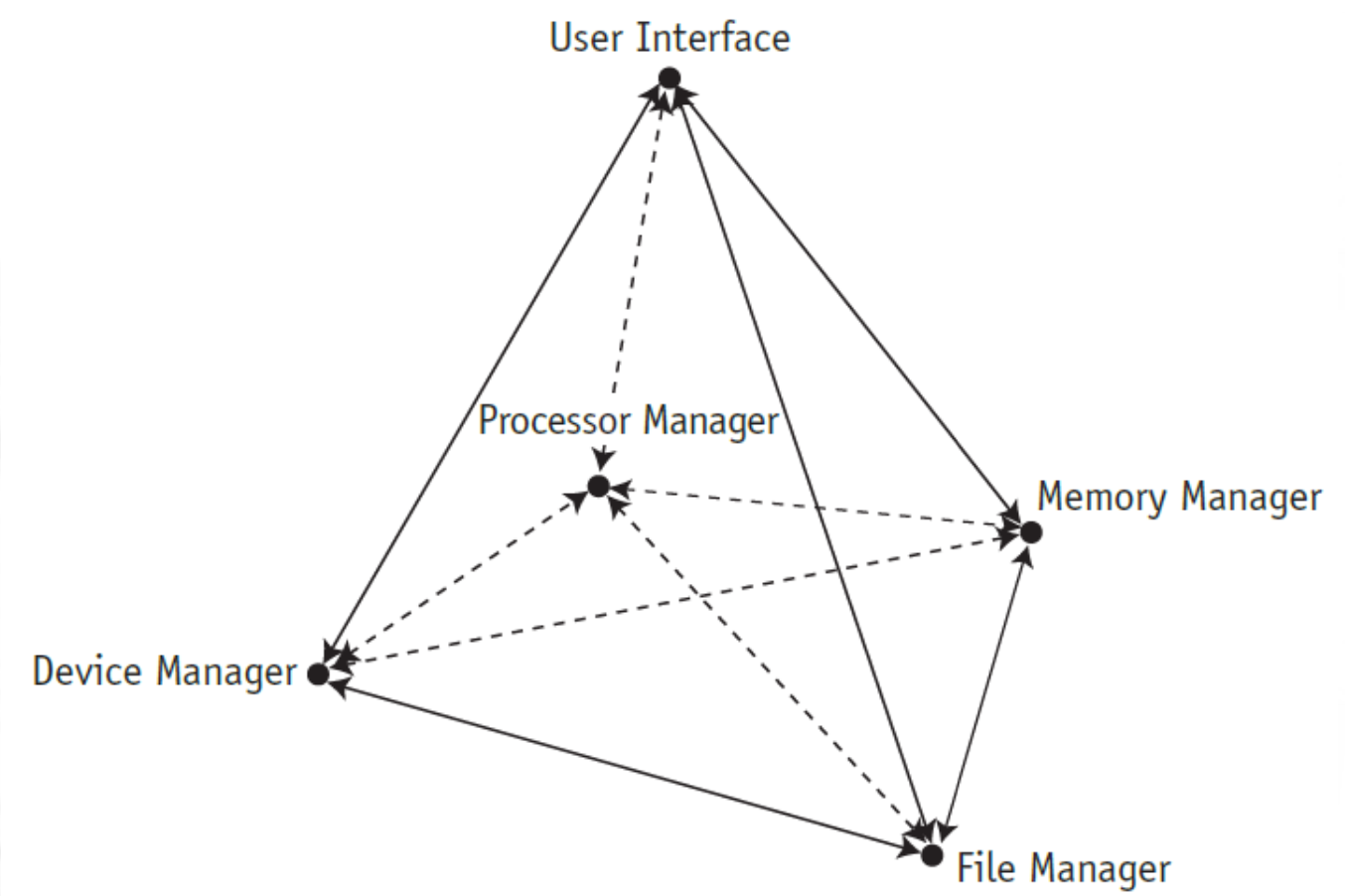
The pyramid below is an abstract representation of the operating system in its simplest form, and demonstrates how its major components typically work together.
At the base of the pyramid are the four essential managers of every major operating system: Memory Manager, Processor Manager, Device Manager, and File Manager. These managers, and their interactions, are discussed in detail in Lecture 1 through 10. Each manager works closely with the other managers as each one performs its unique role.
At the top of the pyramid is the User Interface, which allows the user to issue commands to the operating system.