Connections between Law & Technology
-
Generic Laws vs. Specific Laws (as discussed).
- Generic Laws: Fundamental legal principles applicable across various domains.
- Specific Laws: Address issues directly related to technology.
-
Connections between law and technology are not just about laws that are related to technology.
-
It should reflect a broader framework which includes the aspect about technology related to law as well.
-
-
ถ้าไม่มีการ Update กฎหมายเรื่อย ๆ มันก็จะล้าหลัง แล้วไม่ Suit กับปัจจุบัน (ในยุคของ Internet) → ก็เลยต้องมี Speficic law มาให้มันครอบคลุม new legal concerns ต่าง ๆ
The Poverty of Law & Technology
- Technology is changing rapidly. → usually leads to legal issues, concerns or questions.
- Books or research articles that talks about these topic is usually written by lawyers. (แล้วใครจะเป็นคนเชื่อมกฎหมายพวกนี้กับ Technology? = ทุกคนไง!)
- Cultural anxieties surrounding certain technologies can be seen as being channelled into the legal domain i.e. gaps within jurisdictions.
What Makes Technology-related Law?
Society, Culture, Technology:
They are all related in a real-world practice (with soft boundaries = no clear boundaries).
- These components can influence law development process.
- Laws are in charge and can be applied to relevant aspects.
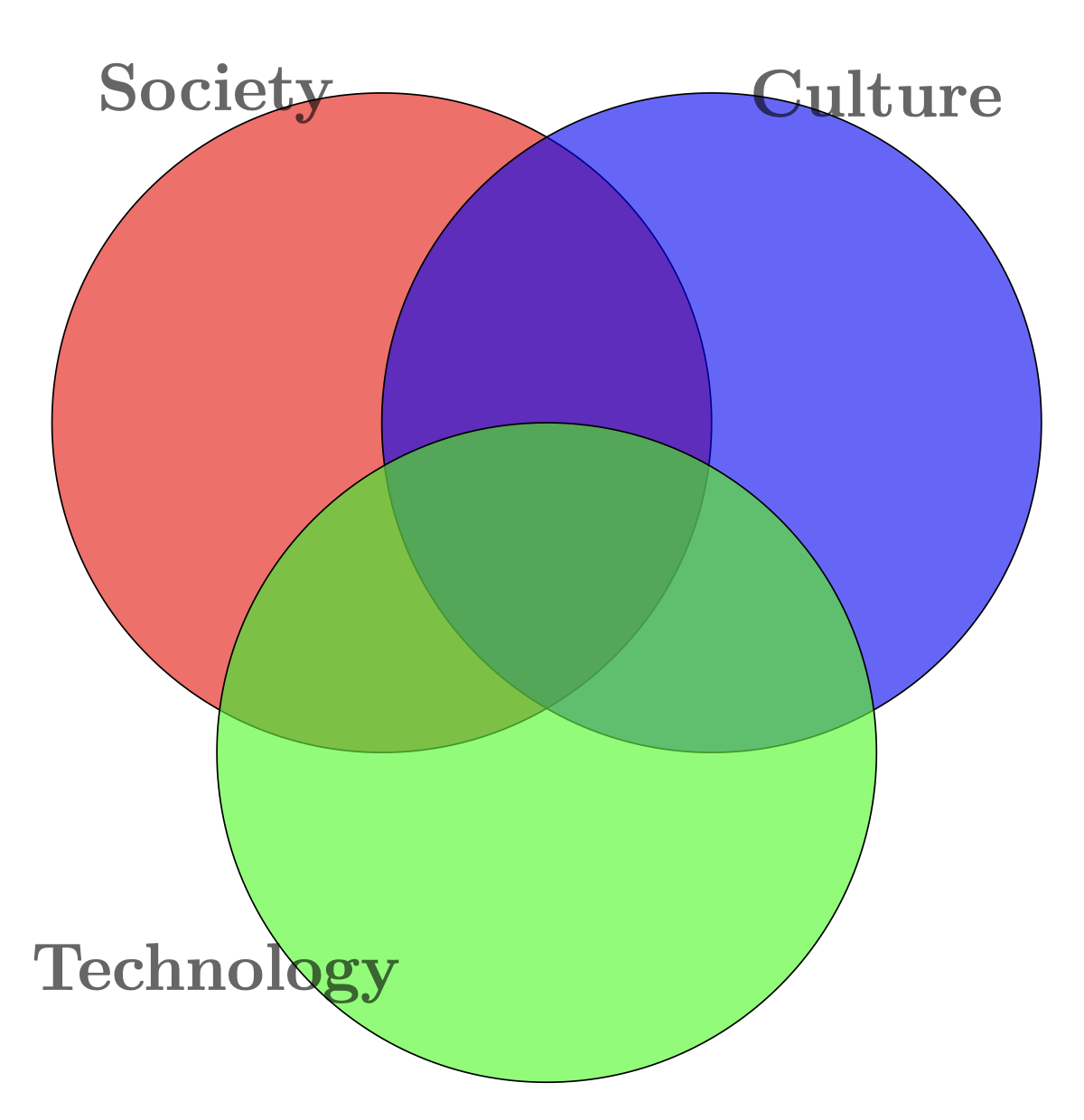
- The society gather people together, when people linving together this will create culture
Laws for Governing Relevant Topics
Some technology-related topics are to be regulated or prohibited by law in order to bring about peace and good morals. For example,
- Cyber law: considered the growth of ICT and also projected an ICT future whose legality needed thinking about in the then present.
- ต้องมี Law มา Support this kind of activity เช่น Email
- Click on internet ก็สามารถทำไปสู่ Cyber crime ได้เช่นกัน เช่นไป Post อะไรไปเรื่อยบน Social Media แล้ว Offend certain person — สามารถนำไปสู่ความเกลียดชังได้
- Deepfake คนอื่น เช่น Mimick voice, spread disinformation, face swapping, facial manipulation (Phishing)
- Intellectual property (IP): The IP right over computer programs.
- Not just IP address but A LOT! เช่น Copyright, Code ของเรางี้
- Cloning: The possible future human cloning for therapies and reproduction.
- Scope ของ Course นี้ก็ไม่ได้หยุดอยู่แค่ Technology ยังพูดถึง Advancement in Science เช่นการ Cloning
- อย่างใน Twins ในระดับ Gene ยังแตกต่างกัน — แต่ถ้าเป็น Human Cloning มันก็จะ chaos 🧍♂️🧍♂️🧍♂️🧍♂️🧍♂️
- ถ้ากลับไปดูกฎหมาย Lecture 2 - Introduction to Law (Section 15) ก็บอกว่าต้อง “เด็กออกมาจากท้องแม่อย่างสมบูรณ์” แล้ว Cloning???
Broad Definitions
According to Cockfield (2004):
- LAW: All government institutions that strive to regulate individual or business conduct, including court decisions, legislation, administrative rulings and government policies.
- TECHNOLOGY: Human modification of the environment for a useful purpose.
- In the context of technology, "useful" refers to having a practical or beneficial application. It implies that technological modifications to the environment are made with the intention of serving a specific, advantageous purpose for human needs or desires.
Need Looking Around in Different Angles
- There has yet to be a strong interdisciplinary tradition of law and technology.
- It is also important to gain better understandings of the relationship between law and technology and their social impacts.
- Example of related disciplines:
- Criminology
- Technology studies
- Science fiction criticism
- Social research
The Needs of Special Laws
- Traditional legal analysis is incomplete when it fails to consider policy within a broader context of technological changes.
- → กฎหมายแบบเดิมมันก็ไม่โอเคแล้วอะ เมื่อไม่ได้พิจารณาในบริบทที่กว้างขึ้นของการเปลี่ยนแปลงทางเทคโนโลยีในทุก ๆ วัน
- Legislation of special laws are needed. New law need to be developed
Use of Computer in Law (ในกฎหมายมีการใช้คอมพิวเตอร์ยังไงบ้าง)
- Administrative System: using basic programs to assist law office works. e.g.
- Word processing: generate and edit documents.
- Spreadsheet: record and compute accounting and billing information.
- Database: store and track case files.
- Text Retrieval System (Search): using computer system to search for specific texts (messages, words, characters).
Very often, the law areas involve working with lots of text data. Searching from database are therefore a useful shortcut in finding related document or contents. e.g.- Law Codes
- Supreme Court Judgements
- Case files
Text retrieval system utilizes the mathematical concepts of “set theory”. - Union (), Intersection (), Difference (), Complement (, )
How can this be applied to law? — ใช้ในกฎหมายยังไงอะ งง?!? ก็เช่น Kill with intention จะออกมาเป็น Diagram ยังไง ก็เป็น Intersection ระหว่าง Kill & Intention
- Imitation and Modeling (เลียนแบบ & Model):
- Computer Simulation in Legal Education and Trial
- Imitation: real-world target situation
- Modelling:
- Static structure (คงที่)
- Animated behavior (ขยับได้)
- Mimic speed bullet เป็นต้น — จะได้รู้ว่า What had happened in the crime scene?
- Physical modelling
- Mathematical modelling
- Logical modelling
- Descriptive modelling: dramatic simulations, games, computer simulations
- Forensic Science: e.g.
- DNA testing 🧬
- Material evidence in crime scene. 🩸
- Forensics: Airport Security Detection of
- Weapons
- Narcotic substances
- Other illegal items
- Forensic medicine: e.g.
- Toxic, cause of death.
- Medicine (incompetence of person.), Physics (traffic offence), GPS (land measurement), AI, Statictics, etc.
Law vs. Ethics
- Ethics define good practice that people in the same society or a specific profession should follow.
- Differences from Law:
- Intrinsic thought of people that reflect people mind. ex. Doctor is meant to help people
- Unofficial regulations — ไม่มีกฎบังคับตายตัว
- No legal enforcement. — ไม่มีกฎหมายบังคับ
- Social sanction is the result of ethical breach (as opposed to legal sanctions). — การลงโทษทางสังคม
- แต่บางครั้ง Ethics ก็สามารถทำให้เกิด Law ในอนาคตได้เช่นกัน
- In summary, ethics guides good practices based on intrinsic values and differs from law in its informal, non-legally binding nature, relying on social rather than legal sanctions for enforcement.
- Differences from Law:
Legal Maxim
An eye for an eye, and a tooth for a tooth
Originated in the ancient Mesopotamian Empire during Hammurabi’s rule in the 18th century BC.