Introduction to Intellectual Property Rights
- Recall: Structure of Civil Law Code
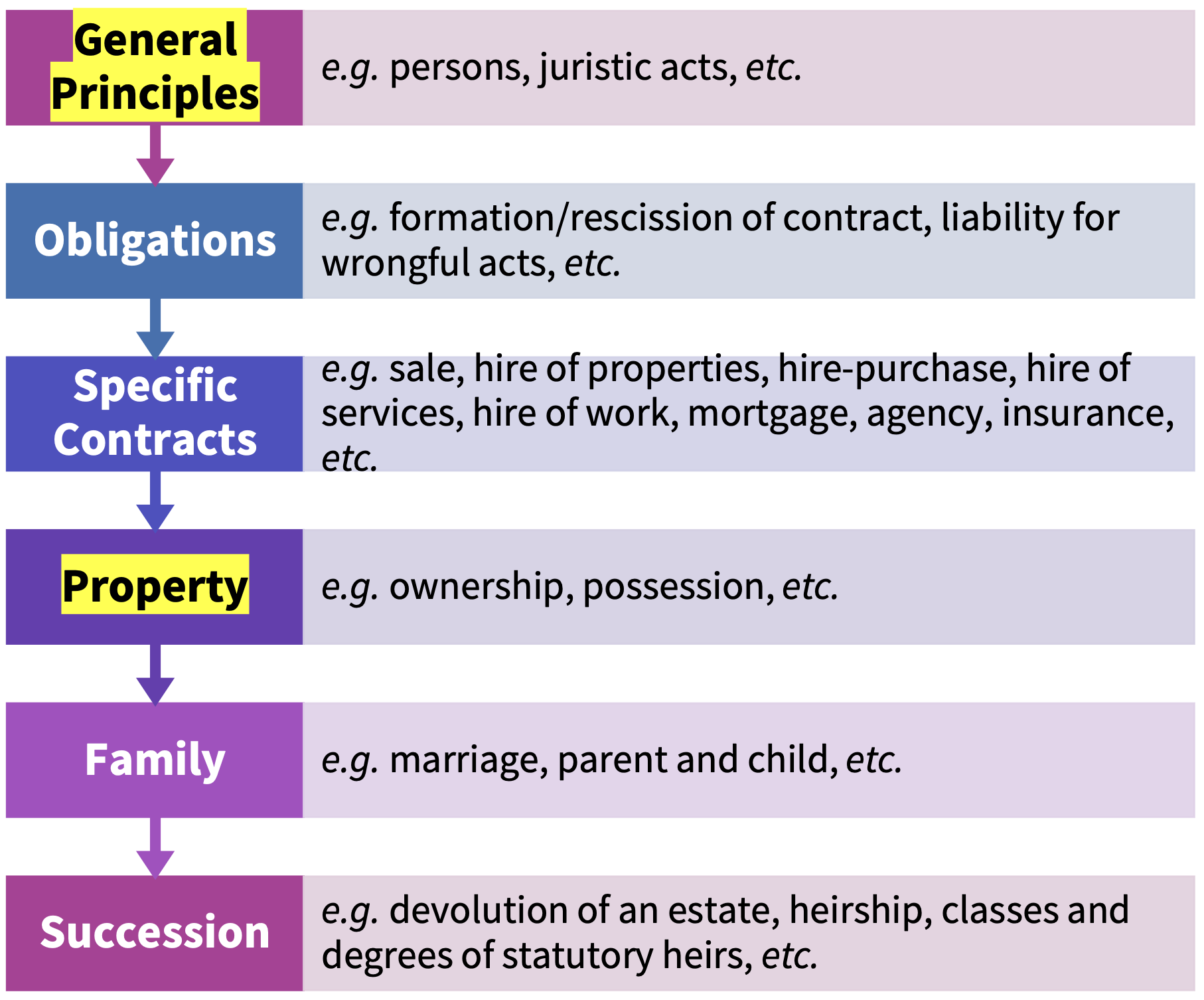
Property
The Civil and Commercial Law Code of Thailand #LawCode
Section 137: Things are corporeal objects.
มาตรา 137: ทรัพย์ หมายความว่า วัตถุมีรูปร่าง
- Corporeal objects (ซึ่งจับต้องได้)
- refers to a tangible and physical object,
- has got shape (dimension), tangible, touchable, requires space.
- something that has a material existence and requires space.
- refers to a tangible and physical object,
- Incorporeal objects
- refer to things that lack a physical substance, such as rights, intellectual property, or legal interests.
The Civil and Commercial Law Code of Thailand #LawCode
Section 138: Property includes things as well as incorporeal objects, susceptible of having a value and of being appropriated.
- Being appropriated = can be owned by a person
มาตรา 138: ทรัพย์สิน หมายความรวมทั้งทรัพย์และวัตถุไม่มีรูปร่าง ซึ่งอาจมีราคาและอาจถือเอาได้
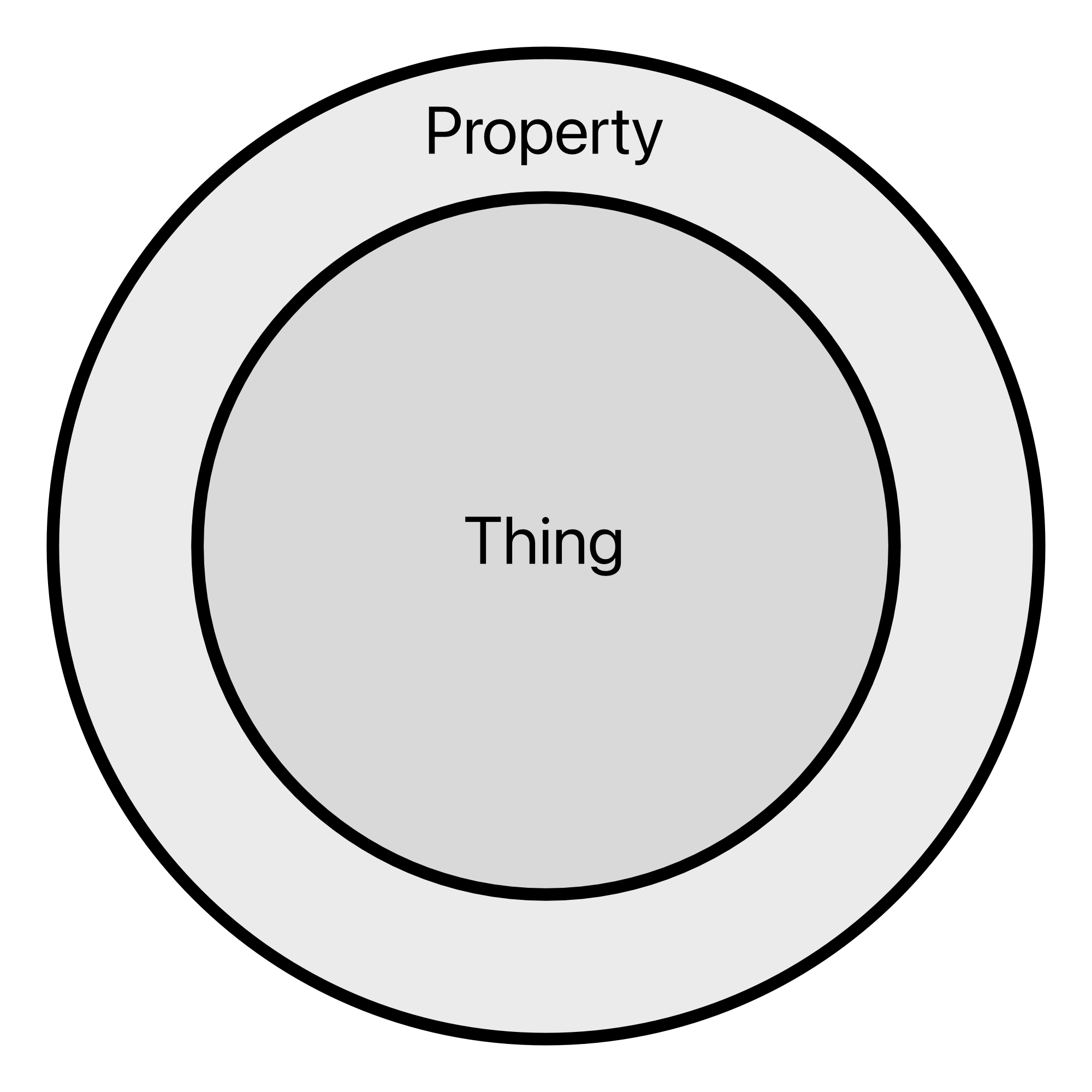
- เคยได้ยินคำว่า Property จากที่ดิน ถือว่าเป็น Immovable property
Human can’t be owned; can’t decide specific values-
- Property and not thing →
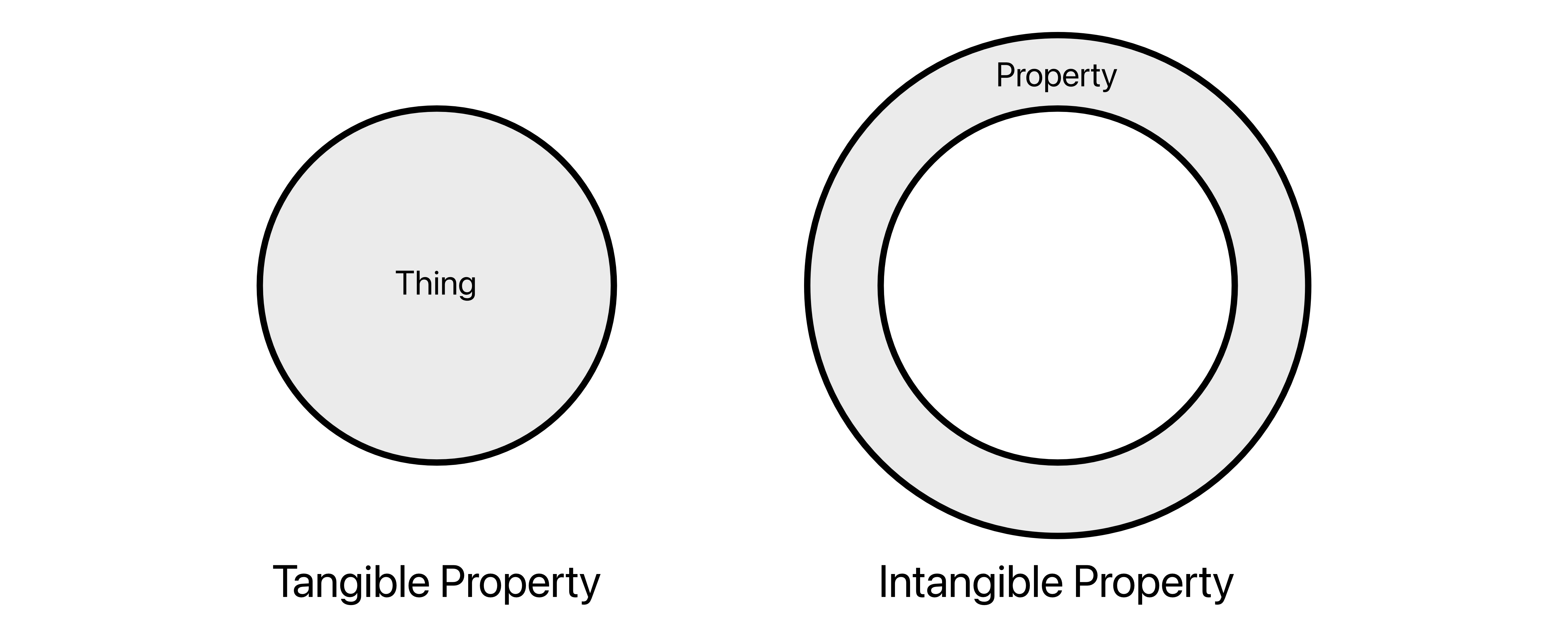
Tangible vs Intangible Property
-
Tangible Property: refers to physical assets that have a material existence and can be touched, seen, and measured.
- Examples include real estate, vehicles, machinery, and personal belongings.
-
Intangible Property: on the other hand, refers to assets that lack a physical form.
- These assets are conceptual and often represent rights, interests, or intellectual creations.
- Examples include patents, trademarks, copyrights, and financial assets like stocks and bonds, WiFi ด้วยย
What is Intellectual Property?
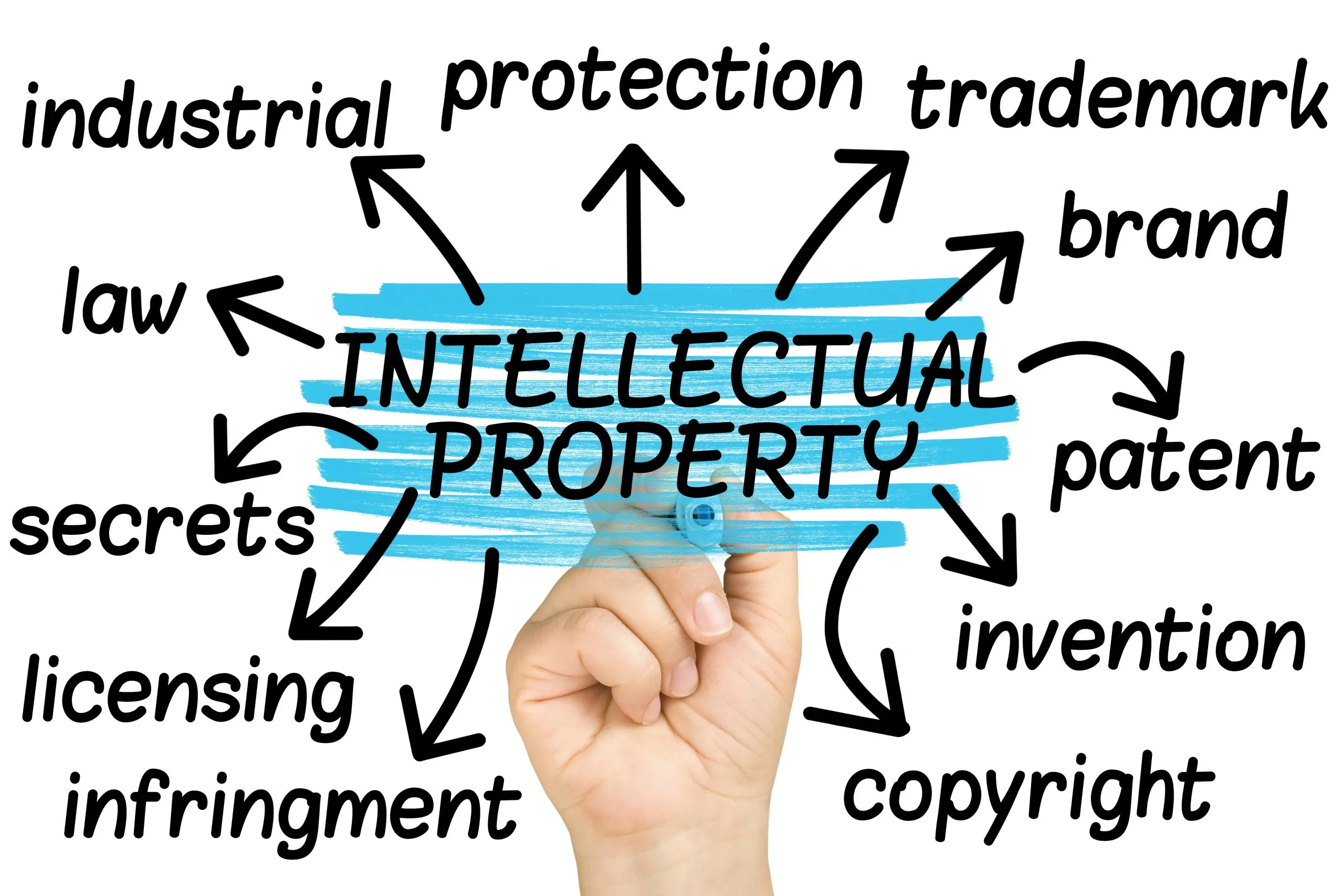
- Intellectual Property (IP) rights are the collective name given to a suite of legal protection.
- They seek to protect the creator, author, or inventor of an intangible creation.
- Hence, intellectual property is a type of intangible property.
- In Thailand, we do not directly apply what stated about property in the civil law code to intellectual property cases.
- Instead, we use specific laws that cover regulations about:
- Copyright
- Patent
- Trademark
- Instead, we use specific laws that cover regulations about:
Intellectual Property Rights
- There are many theories regarding the development and role of intellectual property rights in modern society.
- The most common theme revolves around the protection of the incentive-innovation-reward cycle.
- Encouraging innovations and creations that benefit society as a whole is a key aspect, with the principle that the creator should be rewarded for their contribution.
However, as intellectual property is intangible, it would be easy for a free-rider to replicate the valuable creation of the original author/inventor without rewarding him or her for their creativity.
พอมันเป็นอะไรที่จับต้องไม่ได้อะ ก็ถูกลอกได้ง่าย เป็นเรื่อง Idea อะไรประมาณนี้
Intellectual Property Rights & Digitization
By law development, digitized Intellectual property (IP) can be used as Intellectual property (IP)
- เขียนไม่ครบ ไปดูใน Slide เพิ่ม
Copyright
Definitions
- According to the Thai Copyright Act B.E. 2537 (1994):
- the Act Amending Thai Copyright Act (No.2) B.E. 2558
- the Act Amending Thai Copyright Act (No.3) B.E. 2558
- the Act Amending Thai Copyright Act (No.4) B.E. 2561
- and the Act Amending Thai Copyright Act (No.5) B.E. 2565
- Copyright = the exclusive right (5 rights) to perform any act according to the Copyright Act with respect to the work created by the author.
- The owner of copyright has exclusive rights**
- including reproduction
- adaptation
- broadcasting to the public, and more.
- etc.
- Author: Refers to a person creating any work recognized as a copyright work under the Copyright Act.
- Examples include songwriters, authors, programmers, architects, etc.
Definitions of Copyrightable Works - Thai Copyright Act
According to the Thai Copyright Act B.E. 2537 (1994):
- ”Literary Work”
- Any kind of literary work such as books, pamphlets, writings, printed matter, lectures, sermons, addresses, speeches, and
- shall includes computer program
- Computer Program:
- Instructions, a sequence of coded instructions, or anything used with a computer to make it perform functions or achieve a certain result, irrespective of the computer language used.
- no matter what kind of computer language is used
- Computer program is also a type of ‘literary work’
- Musical Work:
- A work regarding a song composed for playing or singing whether it has a melody and lyrics, or only a melody, and shall include musical notes and musical diagrams which have already been arranged and harmonised.
- ถ้าเป็นแค่ Lyrics จะถือว่าเป็นแค่ Literary Work ไม่ถือว่าเป็น Musical Work ลักษณะจะคล้าย ๆ Poem
- Audiovisual Work:
- A work consisting of a series of images recorded on any medium, replayable using a suitable device. It includes accompanying sounds, if any.
Copyrightable works
Thai Copyright Act B.E. 2537 (1994) #LawCode
Section 6: (Paragraph 1) Copyright subsists, in accordance with this Act, in works of authorship, namely, literary works, dramatic works, artistic works, musical works, audiovisual works, cinematographic works, sound recordings, broadcasts or any other work in the literary, scientific or artistic field, regardless of the method or form in which such works are expressed.
(Paragraph 2) In no case does copyright protection extend to ideas or procedures, processes or systems, or methods of use or operation, or concepts, principles, discoveries, or scientific or mathematical theories.
มาตรา 6: (วรรค 1) งานอันมีลิขสิทธิ์ตามพระราชบัญญัตินี้ ได้แก่งานสร้างสรรค์ประเภทวรรณกรรม
นาฏกรรม ศิลปกรรม ดนตรีกรรม โสตทัศนวัสดุ ภาพยนตร์ สิ่งบันทึกเสียง งานแพร่เสียงแพร่ภาพ หรืองานอื่นใดในแผนกวรรณคดี แผนกวิทยาศาสตร์ หรือแผนกศิลปะ ของผู้สร้างสรรค์ไม่ว่างานดังกล่าวจะแสดงออกโดยวิธีหรือรูปแบบอย่างใด
(วรรค 2) การคุ้มครองลิขสิทธิ์ไม่คลุมถึงความคิด หรือขั้นตอน กรรมวิธีหรือระบบ หรือวิธีใช้หรือทำงาน
หรือแนวความคิด หลักการ การค้นพบ หรือทฤษฎีทางวิทยาศาสตร์ หรือคณิตศาสตร์
However, it's important to note that copyright protection does not extend to ideas, procedures, processes, systems, methods of use or operation, or concepts, principles, discoveries, or scientific or mathematical theories.
We can purchase a CD (copy of the song), but that doesn't mean we own intellectual property copyrights; these are separate. We only own the CD as a physical object.
Non-copyrightable works
Thai Copyright Act B.E. 2537 (1994) #LawCode
Section 7: The following shall not be considered as copyright works according to this Act:
- News of the day and facts, having the character of mere information, which are not works in the literary, scientific, or artistic field;
- The constitution and legislation;
- Regulations, rules, notifications, orders, elucidations, and official correspondence of the Ministries, Bureaus, Departments, or any other governmental or local agency;
- Judgments, orders, judicial decisions, and official reports;
- Translations and compilations of subsection (1) to subsection (4) which are commissioned by Ministries, Bureaus, Departments, or any other governmental or local agency.
มาตรา 7: สิ่งต่อไปนี้ไม่ถือว่าเป็นงานอันมีลิขสิทธิ์ตามพระราชบัญญัตินี้
- ข่าวประจำวัน และข้อเท็จจริงต่าง ๆ ที่มีลักษณะเป็นเพียงข่าวสารอันมิใช่งานในแผนกวรรณคดี แผนกวิทยาศาสตร์ หรือแผนกศิลปะ
- รัฐธรรมนูญ และกฎหมาย
- ระเบียบ ข้อบังคับ ประกาศ คำสั่ง คำชี้แจง และหนังสือโต้ตอบของกระทรวง ทบวง กรม หรือหน่วยงานอื่นใดของรัฐหรือของท้องถิ่น
- คำพิพากษา คำสั่ง คำวินิจฉัย และรายงานของทางราชการ
- คำแปลและการรวบรวมสิ่งต่าง ๆ ตาม (1) ถึง (4) ที่กระทรวง ทบวง กรม หรือหน่วยงานอื่นใดของรัฐหรือของท้องถิ่นจัดทำขึ้น
Acquisition of Copyright (การได้มาซึ่งลิขสิทธิ์)
Copyright is automatically obtained without registration through:
- Expression of ideas (through some medium)
- Demonstrated originality (presentation of personal ideas)
- Display of creativity (utilization of skills) + Patient
- No registration process is required; copyright is acquired upon expressing the idea.
Copyright is acquired automatically straight after the expression of idea (No registration process)
- Defined by WIPO (World Intellectual Property Organization)
It's crucial to note that mere discussion of an idea isn't copyrightable until it's actually produced.
- ถ้าเรารู้ว่ามีคนก้อป Idea เราจริง ๆ ก็สามารถฟ้องได้เลยจริง ๆ นะ แต่ในเรื่องที่ว่าศาลจะเชื่อเราได้ไง อันนั้นก็เป็นเรื่องของการสืบพยานแล้ว
Copyright Protection Rights
Thai Copyright Act B.E. 2537 (1994) #LawCode
Section 15: (Paragraph 1) Subject to Section 9 section 10 and section 14, the copyright owner shall have the exclusive rights of:
- reproduction and adaptation;
- Communication to the public;
- rental of the original or the copies of a computer program, an audiovisual work, a cinematographic work and a sound recording;
- Giving benefits accruing from copyright to other persons;
- Licensing the exclusive rights as mentioned in (1), (2) or (3) to other persons with or without conditions, provided that such conditions shall not be prescribed in such a way which unfairly restricts competition.
(Paragraph 2) Whether or not the conditions as mentioned in (5) in the first paragraph constitute an unfair restriction on competition shall be determined in accordance with the rules, methods and conditions set forth in the Ministerial Regulations.
มาตรา 15: ภายใต้บังคับมาตรา ๙ มาตรา ๑๐ และมาตรา ๑๔ เจ้าของลิขสิทธิ์ย่อมมีสิทธิแต่ผู้เดียวดังต่อไปนี้
- ทำซ้ำหรือดัดแปลง
- เผยแพร่ต่อสาธารณชน
- ให้เช่าต้นฉบับหรือสำเนางานโปรแกรมคอมพิวเตอร์ โสตทัศนวัสดุ ภาพยนตร์และสิ่งบันทึกเสียง
- ให้ประโยชน์อันเกิดจากลิขสิทธิ์แก่ผู้อื่น
- อนุญาตให้ผู้อื่นใช้สิทธิตาม (๑) (๒) หรือ (๓) โดยจะกำหนดเงื่อนไขอย่างใดหรือไม่ก็ได้ แต่เงื่อนไขดังกล่าวจะกำหนดในลักษณะที่เป็นการจำกัดการแข่งขันโดยไม่เป็นธรรมไม่ได้
การพิจารณาว่าเงื่อนไขตามวรรคหนึ่ง (๕) จะเป็นการจำกัดการแข่งขันโดยไม่เป็นธรรม หรือไม่ให้เป็นไปตามหลักเกณฑ์ วิธีการและเงื่อนไขที่กำหนดในกฎกระทรวง
Copyright Assignment
- Copyright is assignable (can transfer to another person)
Thai Copyright Act B.E. 2537 (1994) #LawCode
Section 17: (Paragraph 1) Copyright is assignable.
(Paragraph 2) The copyright owner may assign his copyright, in whole or in part, to another person and may assign his copyright for a limited period of time or for the entire term of copyright protection.
(Paragraph 3) The assignment of copyright mentioned in the second paragraph, which is not by inheritance, shall be made in writing and signed by the assignor and the assignee. If the duration of the assignment is not specified in the assignment contract, the assignment shall be deemed to last for ten years.
มาตรา 17: (วรรค 1) ลิขสิทธิ์นั้นย่อมโอนให้แก่กันได้
(วรรค 2) เจ้าของลิขสิทธิ์อาจโอนลิขสิทธิ์ของตนทั้งหมดหรือแต่บางส่วนให้แก่บุคคลอื่นได้ และจะโอนให้โดยมีกำหนดเวลาหรือตลอดอายุแห่งการคุ้มครองลิขสิทธิ์ก็ได้
(วรรค 3) การโอนลิขสิทธิ์ตามวรรคสองซึ่งมิใช่ทางมรดกต้องทำเป็นหนังสือลงลายมือชื่อผู้โอน
และผู้รับโอน ถ้าไม่ได้กำหนดระยะเวลาไว้ในสัญญาโอน ให้ถือว่าเป็นการโอนมีกำหนดระยะเวลาสิบปี
- Assignment of copyright by Inheritance is automatic
- If the duration of the assignment is not specified in the assignment contract, the assignment shall be deemed to last for ten years.
Normally last for 50 years for most copyrightable works, after that it becomes a public domain (others can freely use)
- เช่น Classical Music ใครก็สามารถเล่นเพลง Mozart ได้
Infringement of Copyright: Computer Program
Thai Copyright Act B.E. 2537 (1994) #LawCode
Section 30: Any act against a computer program copyrighted under this Act, carried out without the license of the copyright owner according to section 15(5), shall be deemed an infringement of copyright provided that such act is any of the following:
- reproduction or adaptation;
- communication to the public;
- rental of the original or the copies of the said work.
มาตรา 30: การกระทำอย่างใดอย่างหนึ่งแก่โปรแกรมคอมพิวเตอร์อันมีลิขสิทธิ์ตามพระราชบัญญัตินี้โดยไม่ได้รับอนุญาตตามมาตรา 15 (วรรค 5) ให้ถือว่าเป็นการละเมิดลิขสิทธิ์ ถ้าได้กระทำดังต่อไปนี้
- ทำซ้ำหรือดัดแปลง
- เผยแพร่ต่อสาธารณชน
- ให้เช่าต้นฉบับหรือสำเนางานดังกล่าว
Exception to Infringement of Copyright
- Any act against a copyright work of another person under this Act shall not be deemed an infringement of copyright.
Thai Copyright Act B.E. 2537 (1994) #LawCode
Section 32: Any act against a copyright work of another person under this Act, which does not conflict with a normal exploitation of the copyright work by the copyright owner and does not unreasonably prejudice the legitimate interests of the author, shall not be deemed an infringement of copyright.
Subject to the provision in the first paragraph, any act against a copyright work referred to in the first paragraph shall be deemed an infringement of copyright provided that such act is any of the following:
- Research or study of the work provided that such act is not for profit.
- Use for personal benefit or for the benefit of the user and his family members or close relatives.
- Criticism, review, or recommendation of the work, accompanied by an acknowledgment of the ownership of copyright in such work.
- News reporting through mass communication, accompanied by an acknowledgment of the ownership of copyright in such work.
- Reproduction, adaptation, exhibition, or presentation for the benefit of judicial proceedings or proceedings by authorized officials, or reporting the result of such proceedings.
- Reproduction, adaptation, exhibition, or presentation by a teacher for the benefit of his teaching provided that such act is not for profit.
- Reproduction, adaptation of part of the work or abridgment or making a summary by a teacher or an educational institution for distributing or selling to students in class or in an educational institution provided that such act is not for profit.
- Use of the work as part of questions and answers in an examination.
มาตรา 32: การกระทำแก่งานอันมีลิขสิทธิ์ของบุคคลอื่นตามพระราชบัญญัตินี้ หากไม่ขัดต่อการแสวงหาประโยชน์จากงานอันมีลิขสิทธิ์ตามปกติของเจ้าของลิขสิทธิ์และไม่กระทบกระเทือนถึงสิทธิอันชอบด้วยกฎหมายของเจ้าของลิขสิทธิ์เกินสมควร มิให้ถือว่าเป็นการละเมิดลิขสิทธิ์
ภายใต้บังคับบทบัญญัติในวรรคหนึ่ง การกระทำอย่างใดอย่างหนึ่งแก่งานอันมีลิขสิทธิ์ตาม
วรรคหนึ่ง มิให้ถือว่าเป็นการละเมิดลิขสิทธิ์ ถ้าได้กระทำดังต่อไปนี้
- วิจัยหรือศึกษางานนั้น อันมิใช่การกระทำเพื่อหากำไร
- ใช้เพื่อประโยชน์ของตนเอง หรือเพื่อประโยชน์ของตนเองและบุคคลอื่นในครอบครัวหรือ ญาติสนิท
- ติชม วิจารณ์ หรือแนะนำผลงานโดยมีการรับรู้ถึงความเป็นเจ้าของลิขสิทธิ์ในงานนั้น
- เสนอรายงานข่าวทางสื่อสารมวลชนโดยมีการรับรู้ถึงความเป็นเจ้าของลิขสิทธิ์ในงานนั้น
- ทำซ้ำ ดัดแปลง นำออกแสดง หรือทำให้ปรากฏ เพื่อประโยชน์ในการพิจารณาของศาล หรือเจ้าพนักงานซึ่งมีอำนาจตามกฎหมาย หรือในการรายงานผลการพิจารณาดังกล่าว
- ทำซ้ำ ดัดแปลง นำออกแสดง หรือทำให้ปรากฏโดยผู้สอน เพื่อประโยชน์ในการสอนของตน อันมิใช่การกระทำเพื่อหากำไร
- ทำซ้ำ ดัดแปลงบางส่วนของงาน หรือตัดทอนหรือทำบทสรุปโดยผู้สอนหรือสถาบันศึกษาเพื่อแจกจ่ายหรือจำหน่ายแก่ผู้เรียนในชั้นเรียนหรือในสถาบันศึกษา ทั้งนี้ ต้องไม่เป็นการกระทำเพื่อหากำไร
- นำงานนั้นมาใช้เป็นส่วนหนึ่งในการถามและตอบในการสอบ
^TCA32
Exception to Infringement of Copyright of Computer Program
- จะคล้ายกับ Section 32 มาก ๆ แต่อันนี้จะพูดถึง Computer Program โดยตรง
- ข้อนี้จำให้ได้ สำคัญมาก
Thai Copyright Act B.E. 2537 (1994) #LawCode
Section 35: An act against a computer program copyrighted under this Act shall not be deemed an infringement of copyright in the following cases provided that the purposes of such act are not for profit and the first paragraph of section 32 is complied with:
- Research or study of the computer program.
- Use for the benefit of the owner of the copy of the computer program.
- Criticism, review, or recommendation of the work, accompanied by an acknowledgment of the ownership of copyright in such computer program.
- News reporting through mass communication, accompanied by an acknowledgment of the ownership of copyright in such computer program.
- Making copies of a computer program in a reasonable quantity by a person who has lawfully bought or obtained the computer program from another person for the benefit of keeping them for maintenance or prevention of loss. (เจ๋งมากก!)
- Reproduction, adaptation, exhibition, or presentation for the benefit of judicial proceedings or proceedings by authorized officials, or reporting the result of such proceedings.
- Use of the computer program as part of questions and answers in an examination.
- Making an adaptation of a computer program in the case where it is necessary for use.
- Making copies of a computer program to preserve them for reference or research for the public interest.
มาตรา 35: การกระทำแก่โปรแกรมคอมพิวเตอร์อันมีลิขสิทธิ์ตามพระราชบัญญัตินี้ มิให้
ถือว่าเป็นการละเมิดลิขสิทธิ์ หากไม่มีวัตถุประสงค์เพื่อหากำไร และได้ปฏิบัติตามมาตรา ๓๒ วรรคหนึ่ง
ในกรณีดังต่อไปนี้
- วิจัยหรือศึกษาโปรแกรมคอมพิวเตอร์นั้น
- ใช้เพื่อประโยชน์ของเจ้าของสำเนาโปรแกรมคอมพิวเตอร์นั้น
- ติชม วิจารณ์ หรือแนะนำผลงานโดยมีการรับรู้ถึงความเป็นเจ้าของลิขสิทธิ์ในโปรแกรมคอมพิวเตอร์นั้น
- เสนอรายงานข่าวทางสื่อสารมวลชนโดยมีการรับรู้ถึงความเป็นเจ้าของลิขสิทธิ์ในโปรแกรมคอมพิวเตอร์นั้น
- ทำสำเนาโปรแกรมคอมพิวเตอร์ในจำนวนที่สมควรโดยบุคคลผู้ซึ่งได้ซื้อหรือได้รับโปรแกรมนั้นมาจากบุคคลอื่นโดยถูกต้อง เพื่อเก็บไว้ใช้ประโยชน์ในการบำรุงรักษาหรือป้องกันการสูญหาย
- ทำซ้ำ ดัดแปลง นำออกแสดง หรือทำให้ปรากฏเพื่อประโยชน์ในการพิจารณาของศาลหรือเจ้าพนักงานซึ่งมีอำนาจตามกฎหมาย หรือในการรายงานผลการพิจารณาดังกล่าว
- นำโปรแกรมคอมพิวเตอร์นั้นมาใช้เป็นส่วนหนึ่งในการถามและตอบในการสอบ
- ดัดแปลงโปรแกรมคอมพิวเตอร์ในกรณีที่จำเป็นแก่การใช้
- จัดทำสำเนาโปรแกรมคอมพิวเตอร์เพื่อเก็บรักษาไว้สำหรับการอ้างอิง หรือค้นคว้าเพื่อประโยชน์ของสาธารณชน
^TCA35
- ==Important!!!!!!!!!== #FinalExam เวลาเจอในข้อสอบที่ต้อง Analyse ให้ทำงี้
- Read the case study carefully
- Whether a work is copyrightable?
- If copyrightable, mention which type of copyrightable work it is.
- Who is the owner of the copyrighted work?
- What are the exclusive right(s) of the copyright owner which could be subject to infringement (given the case study)?
- Discuss whether there is an act of copyright infringement in Section 32 (General Case) or Section 35 (Computer Program)
- If so, does it satisfy any of the exceptions. → NO INFRINGEMENT
- If no, then it is a case of copyright infringement!
- Whether a work is copyrightable?
- Read the case study carefully
Patents
A patent is a legal document granted by a government authority, such as a national patent office, that gives the holder exclusive rights to an invention.
- The patent provides the inventor with the right to prevent others from making, using, selling, or importing the patented invention without permission for a specified period, typically 20 years from the filing date.
What are Patents?
According to the Thai Patent Act B.E. 2522 (1979):
- Patent: A document issued to grant protection for an invention or a design, as specified in the Thai Patent Act.
- Invention: An innovation or creation leading to the new development of a product or a process. It also includes any act that enhances a product or a process.
- Process: A method, procedure, or process involved in producing, preserving, improving, or developing the quality of a product, including the use of such process.
- Design: The form or composition of lines or colors of a product, giving it a distinctive characteristic that can serve as a pattern for industrial products, including handicrafts.
In essence, a patent is a form of intellectual property protection that encourages innovation by providing inventors with a period of exclusivity for their inventions in exchange for disclosing the details of the invention to the public. The specific requirements and regulations surrounding patents may vary by country.
Invention Eligible for a Patent Application:
Thai Patent Act B.E. 2522 (1979) #LawCode
Section 5: Subject to section 9, an invention eligible for a patent application shall consist of the following characteristics:
- the invention is new;
- the invention involves an inventive step and;
- the invention is industrially applicable.
มาตรา 5: ภายใต้บังคับมาตรา 9 การประดิษฐ์ที่ขอรับสิทธิบัตรได้ต้องประกอบด้วยลักษณะดังต่อไปนี้
- เป็นการประดิษฐ์ขึ้นใหม่
- เป็นการประดิษฐ์ที่มีขั้นการประดิษฐ์สูงขึ้น และ
- เป็นการประดิษฐ์ที่สามารถประยุกต์ในทางอุตสาหกรรม
- Novelty: The invention is entirely new.
- Inventive Step: It involves a significant and innovative development.
- Industrial Applicability: The invention has practical utility in an industrial context.
Exclusion of Patent Protection:
- พวกนี้คือจดสิทธิบัตรไม่ได้นะ!
- It’s not new things that people invent
Thai Patent Act B.E. 2522 (1979) #LawCode
Section 9: The following inventions shall be excluded from patent protection under this Act:
- natural micro-organisms and any component of micro-organisms, plants or extracts from animals or plants;
- scientific and mathematical methods and theories;
- Data systems for an operation of a computer (computer programs)
- methods of diagnosis, treatment or cure of human diseases or animal diseases;
- Inventions contrary to public order, good morals, health or welfare.
มาตรา 9: การประดิษฐ์ดังต่อไปนี้ไม่ได้รับความคุ้มครองตามพระราชบัญญัติ
- จุลชีพและส่วนประกอบส่วนใดส่วนหนึ่งของจุลชีพที่มีอยู่ตามธรรมชาติสัตว์ พืช หรือสารสกัดจากสัตว์หรือพืช
- กฎเกณฑ์และทฤษฎีทางวิทยาศาสตร์และคณิตศาสตร์
- ระบบข้อมูลสำหรับการทำงานของเครื่องคอมพิวเตอร์
- วิธีการวินิจฉัย บำบัด หรือรักษาโรคมนุษย์ หรือสัตว์
- การประดิษฐ์ที่ขัดต่อความสงบเรียบร้อย หรือศีลธรรมอันดี อนามัยหรือสวัสดิภาพของประชาชน
Trademark
- According to the Thai Trademark Act B.E. 2534
- and the Act Amending Thai Trademark Act (No.2) B.E. 2543
- and the Act Amending Thai Trademark Act (No.3) B.E. 2559
- Trademark: A mark used or proposed for ==use on goods to distinguish them== from goods under another person's trademark.
- Mark: Includes photographs, drawings, devices, brands, names, words, messages, letters, numbers, signatures, combinations of colors, shapes, configurations, sounds, or any combination thereof.

Thai Trademark Characteristics:
For a trademark to be registrable, it must:
- Be Distinctive:
- Examples include words unrelated to the goods' character or quality./ geographical name → จะเป็นการ Overclaim ได้ เช่นในกรณี ผงวิเศษ ผงพิเศษ
- Signatures of the applicant or predecessors.
- Invented devices.
- Not be Prohibited:
- Should not violate provisions in the Act.
- Not be the Same or Similar:
- Cannot be identical or similar to a trademark already registered by another person.
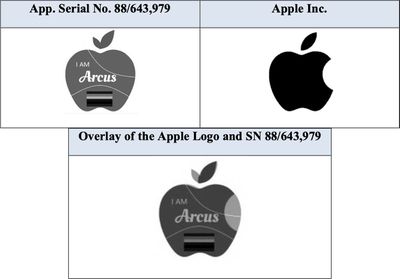
- Cannot be identical or similar to a trademark already registered by another person.