What is Critical Thinking?
Definition and Etymology
- Critical comes from Greek word "kritikos" meaning "to judge or decide"
- Critical Thinking: A collection of skills we use every day that are necessary for our intellectual & personal development
- Requires knowing how to think rather than what to think
- Logic: The study of methods & principles used to distinguish good arguments from poor arguments
- Opinion: A belief based on personal feelings rather than on reasons or fact
Critical Thinking in Everyday Life
- Opinions are not always reasonable and can be correct or wrong regardless of how sincerely held
- Critical thinkers must provide logical support for beliefs
- Uninformed opinions can lead to poor decisions
- Example: Patients demanding antibiotics for viral infections leading to drug-resistant bacteria
Historical Context: Authority and Obedience
Adolf Eichmann Trial (1960)
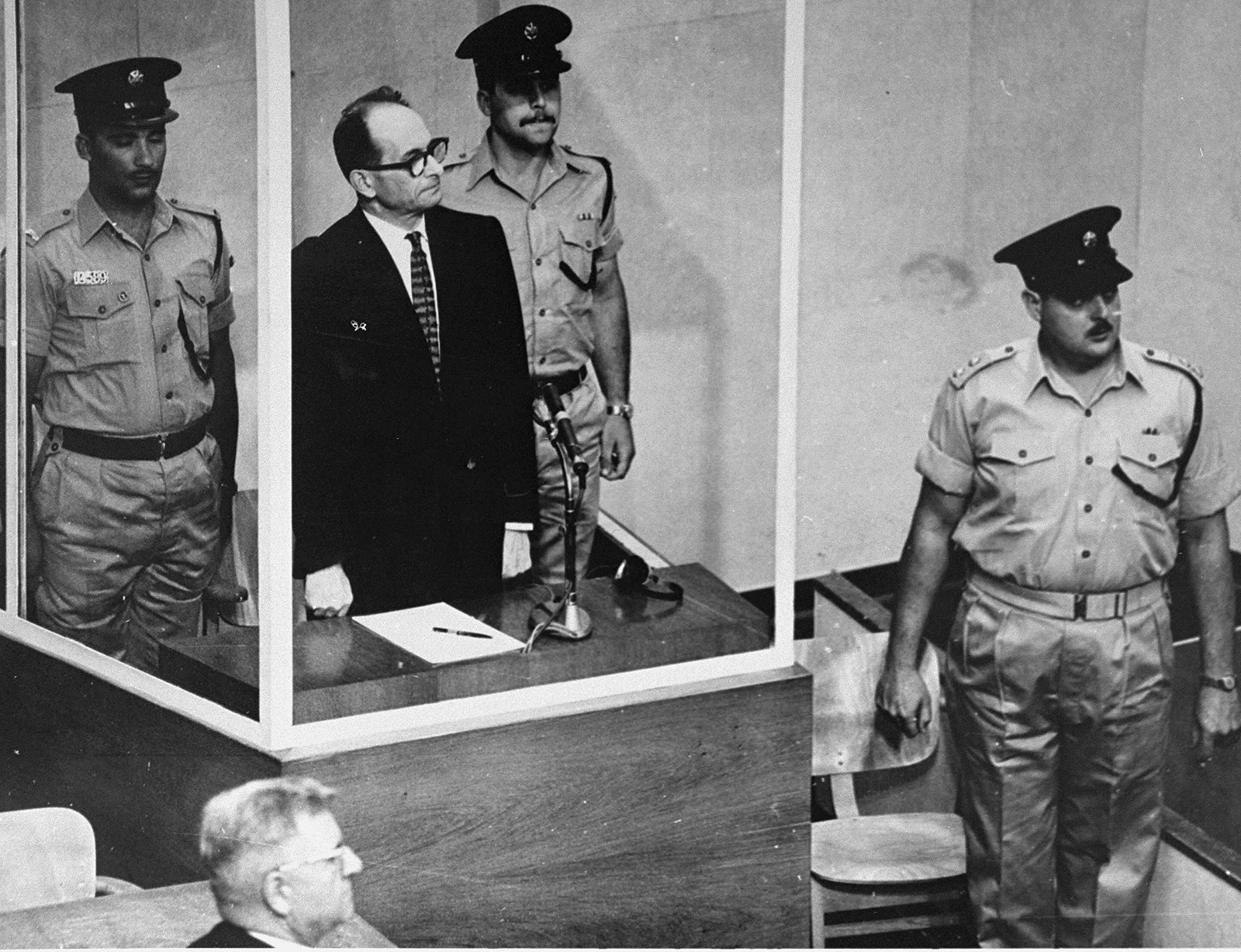
- Nazi war criminal tried for crimes against humanity
- Claimed he was following superior orders when ordering deaths of millions of Jews
- Court found him guilty and sentenced him to death despite claims of following authority
Milgram Experiment (1960-1963)
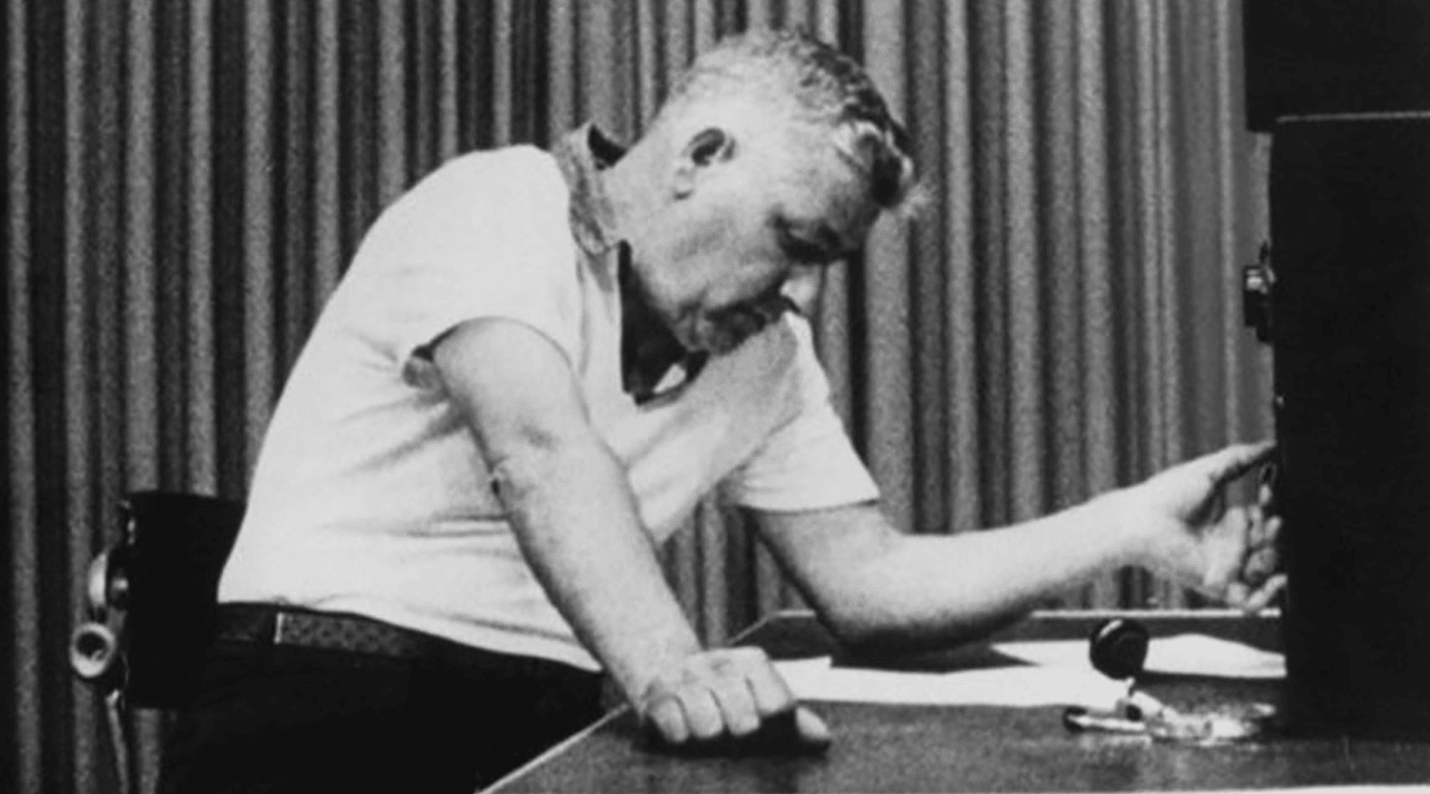
- Purpose: Study cruelty and inhumane acts from WWII
- Setup: Volunteers told to give electric shocks for learning mistakes
- Results:
- All volunteers gave 300v punishments
- 65% went all the way to 450v because authority figure encouraged continuation
- Key Question: "How far would ordinary citizens go to obey an authority figure?"
Stanford Prison Experiment (1971)
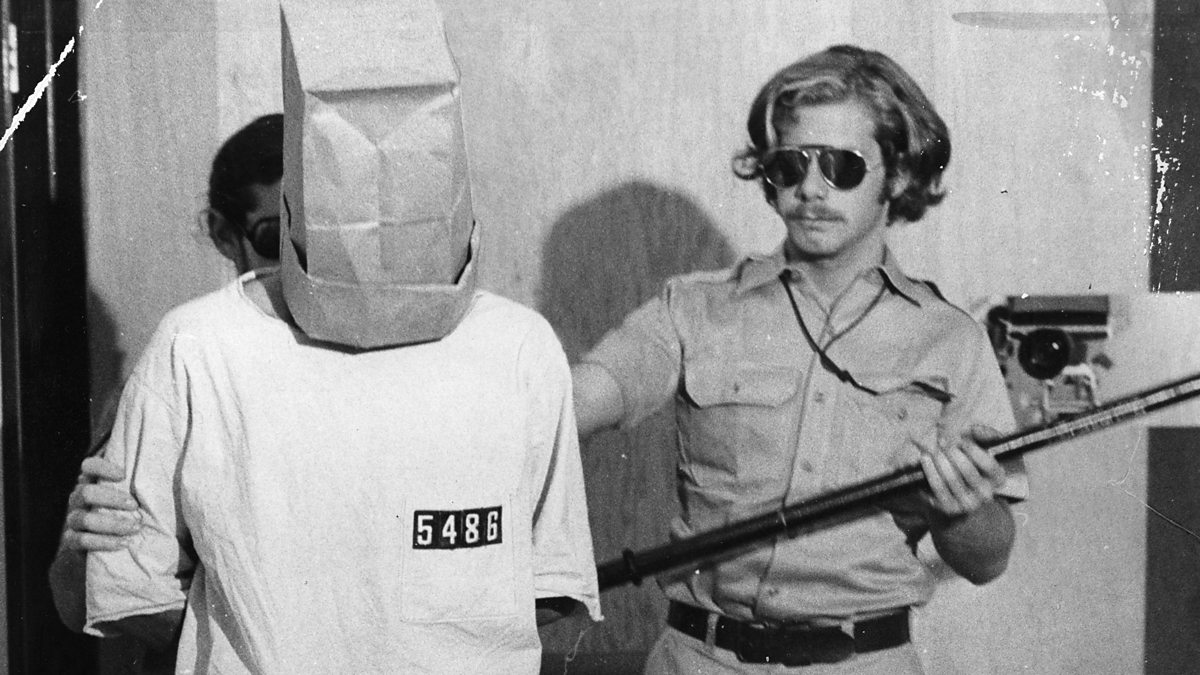
- Purpose: Study effect of power differences in prison settings
- Setup: Random assignment of prisoner/guard roles with costume identity removal
- Results:
- Guards became cruel, especially when unmonitored
- Prisoners were asked to clean toilets with bare hands
- Prisoners suffered emotional, physical, and sexual abuse
- Experiment went out of control
Key Lesson
Many people will follow harmful orders if they come from authority figures
Factors Affecting Critical Thinking Ability
- Cognitive development stage
- Good analytical skills
- Communication & research skills
- Open-mindedness
- Flexibility
- Creativity
Cognitive Development in College Students (Perry's Model)
- Educator William Perry’s (1913-1998) study proposed 9 stages but later researchers simplified them into 3 stages.
Stage 1: Dualism
- Thinks in black and white: right or wrong
- Relies on authority figures for answers
- Struggles with grey areas or controversy
- Prone to confirmation bias (seeking evidence that supports views while dismissing contradicting evidence)
Stage 2: Relativism
- Believes truth is relative; everyone has their own opinion
- Thinks all opinions are equally valid
- Avoids judging others' views
- Gets stuck when choices conflict
- Expects authority figures to support their views
Stage 3: Commitment
- Realizes some opinions are stronger than others
- Knows that experts can be wrong
- Accepts that life has uncertainty
- Makes thoughtful decisions in unclear situations
- Open to change when new evidence appears
8 Characteristics of a Good Critical Thinker
1. Analytical Skills
- Analyze and provide support to your own beliefs
2. Effective Communication
- Awareness of communication style, cultural variations, and gender differences
3. Research & Inquiry Skills
- Understanding and resolving issues require research skills
- Asking the right questions
4. Flexibility & Tolerance for Ambiguity
- Ability to evaluate conflicting views
- Decision-making despite uncertainty requires short and long-term goals
- Critical thinkers adapt to changes
5. Open-Minded Skepticism
- Balance of doubt and belief
- Uses Method of Doubt (What if the idea is wrong?) and Method of Belief (What if the idea is right?)
- Overcoming personal prejudices and biases
6. Creative Problem-Solving
- View problems from multiple perspectives
- Use imagination to see possibilities and potential future problems
- Develop contingency plans
7. Attention, Mindfulness, & Curiosity
- Similar to Buddhist "beginner's mind" (wisdom that seeks wisdom)
- Don't reject conflicting views without sound reason
- Practice mindfulness and openness to what's happening
8. Collaborative Learning
- Move beyond isolated thinking
- Develop collaborative approach through shared dialogue and community
Critical Thinking & Self-Development
Critical Thinking helps us live more thoughtful and successful lives.
Personal Growth Benefits
- Helps live more thoughtful and successful lives
- Many people feel lost because they don't reflect on life or future
- Critical thinkers take time to reflect and make better choices
- Poor thinking and false beliefs lead to sadness, anger, or low self-esteem
- Setting goals, thinking clearly, and facing problems honestly improves well-being
Socratic Wisdom
"The unexamined life is not worth living" - Socrates
Democracy Connection
- Democracy requires citizen participation in decision-making
- Citizens should learn about important issues and policies
- Experience with diverse people increases community care and democratic participation
Barriers to Critical Thinking
The Three-Tier Model of Thinking
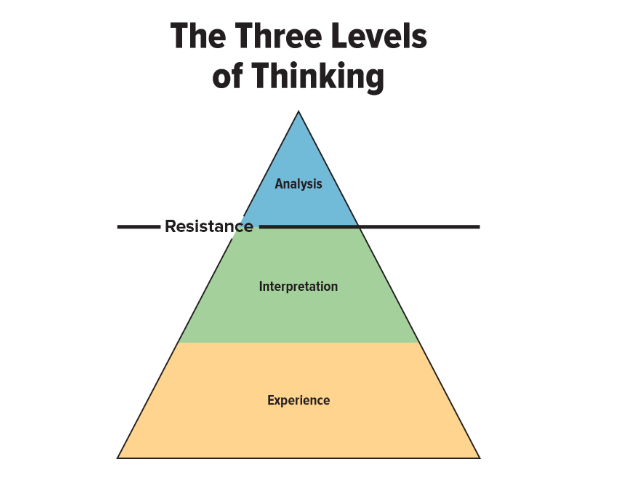
(From bottom-to-top)
1. Experience
- Foundation of critical thinking & argumentation
- Includes firsthand experience, information, or empirical facts from other sources
- Examples:
- Human cloning is illegal in the United States
- I was turned down for a job I interviewed for
2. Interpretation
- Trying to make sense of our experience
- Includes individual interpretation of collective & cultural worldviews
- May or may not be well-informed
- Examples:
- If human cloning is illegal, it must be immoral
- I didn't get the job because I didn't have the right connections
3. Resistance (Before Analysis)
- Using immature defense mechanisms that are rigid, impulsive, maladaptive, & non-analytical
- Forms of Resistance:
- Avoidance
- Conformity
- Anger
- Struggling
- Cliché
- Distraction
- FDenial
- Most people hate being proven wrong and create barriers to protect worldviews
4. Analysis
- Requires raising the level of thinking & critically examining interpretations
- Examines our experience and those of others
- Rejection of overly narrow or broad interpretations
- Most productive when done collectively
- Examples:
- Are there circumstances in which human cloning is acceptable?
- Was it my lack of connections or poor interview skills that caused me not to get the job?
Narrow-Mindedness
- Worldviews that foster narrow-mindedness block analysis of experiences and perspectives
- People resist challenges to beliefs, especially when supported by law or public opinion
Types of Narrow-Mindedness:
Absolutism
- Lacking critical thinking skills
- View that things are either right or wrong
- Expectation that authorities provide correct knowledge
Fear of Challenge
- Especially affects people with low self-esteem or egocentric personality
- Resist information & evidence that contradict beliefs
- View challenges as personal attacks
Egocentrism
- Belief that the self or individual is the center of all things
- Little regard for others' interests & thoughts
Ethnocentrism
- Belief in the inherent superiority of one's own group & culture
- Characterized by suspicion & lack of knowledge of foreign countries & cultures
- Makes judgments about other groups based on stereotypes
Anthropocentrism
- Belief that humans are the central or most significant entities of the universe
Rationalization & Doublethink
Rationalization
- Providing reasons for biased decisions
- Used to justify past actions inconsistent with personal image of being decent and rational
Doublethink
- Holding two contradictory views simultaneously and believing both to be true
- Examples:
- Believing in gender equality & believing females are better suited for childcare and patient care
- Believing in racial equality & keeping implicit racial biases
Doublethink Impact Examples
- Women working outside home still perform majority of housework and childcare
- Pay gap between women and white males persists
- Despite evidence, college students insist workplace discrimination is "a thing of the past"
Cognitive & Social Dissonance
- Cognitive Dissonance: Disorientation when new ideas conflict with worldview
- Social Dissonance: Disorientation when others' norms and behaviors conflict with our worldview
- Working/studying in diverse communities can challenge ethnocentric attitudes
- Behavior change often leads to belief change