Introduction to Second-order Circuits
- A second-order circuit is characterized by a second-order differential equation.
- It consists of resistors and the equivalent of two energy storage elements.
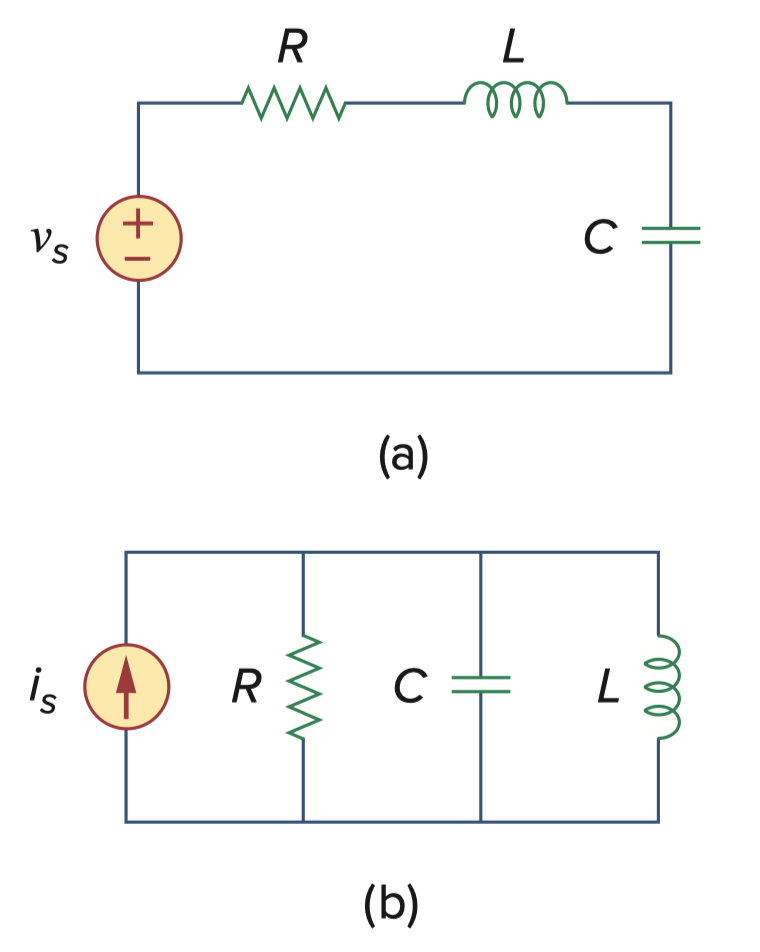
- ถ้าเป็นวงจรแบบ (a) Series RLC circuit, (b) Parallel RLC circuit มันจะเกิดความถี่ Resonant เกิดขึ้น
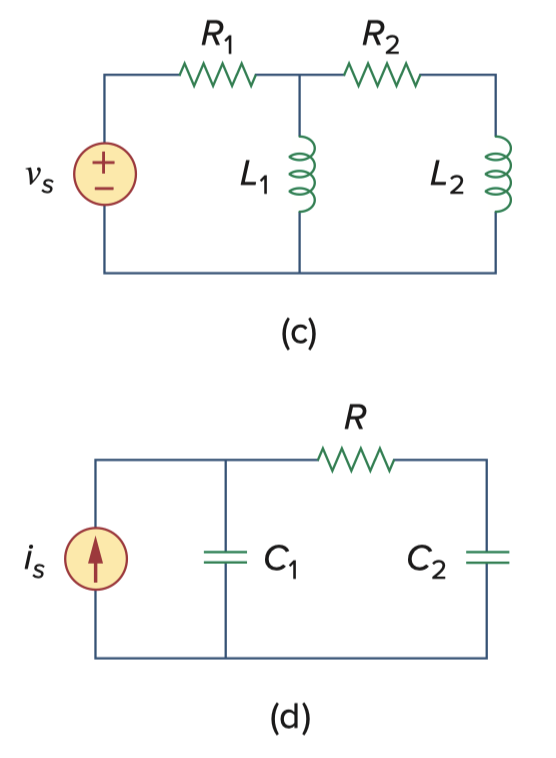
- แต่ถ้าเป็นแบบ (c) RL circuit, (d) RC circuit ก็ถือว่าเป็น Second-order เหมือน แค่จะไม่มี ความถี่ Resonant นั่นเองงงงง
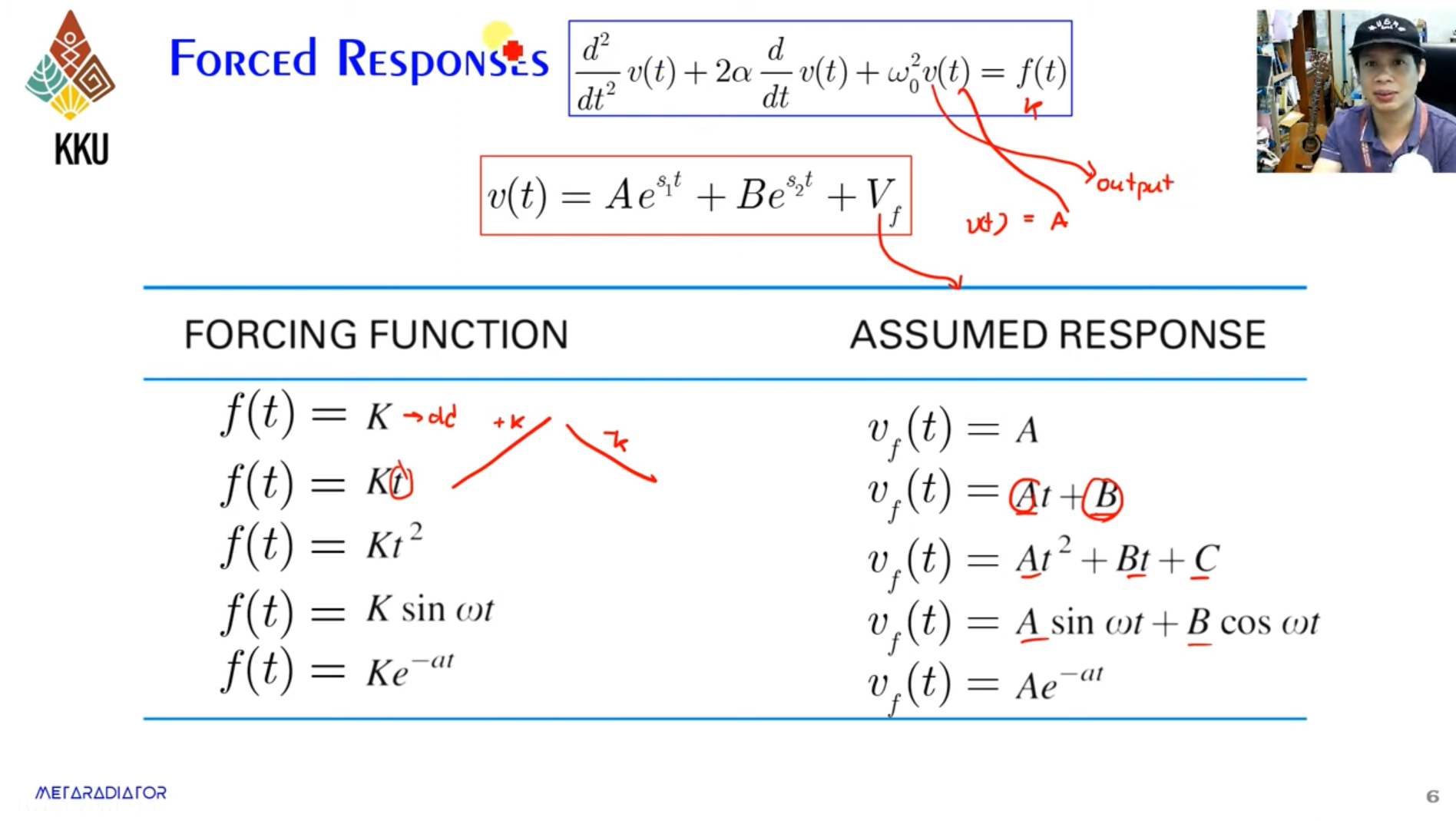
- สมการจริง ๆ ก็ยังอยู่ในรูป Natural Response + Forced Response อยู่ดี
Initial and Final Values
-
Initial values:
-
Final values:
-
2 key points to keep in mind in determining the initial conditions
- Passive sign convention
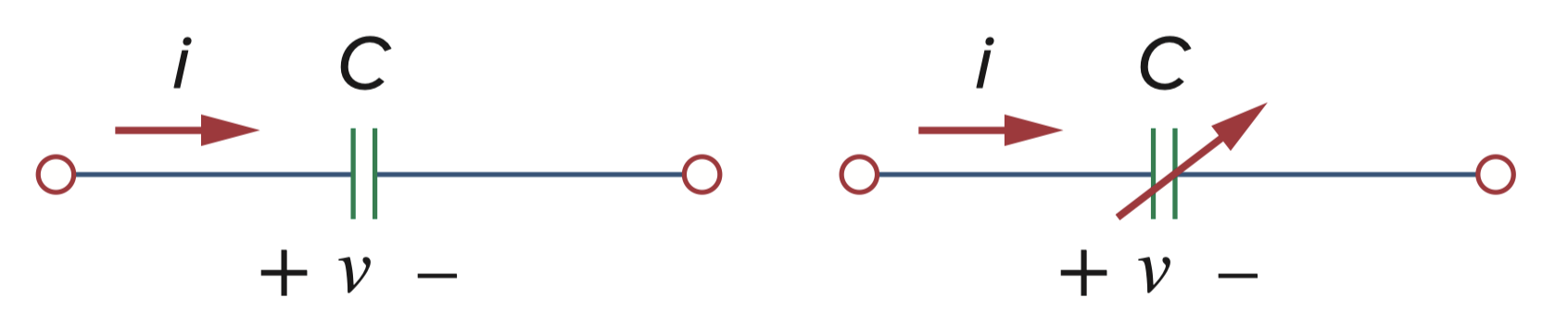
- The polarity of the voltage across the capacitor
- The direction of the current through the inductor
- กระแสไหลเข้าจะเกิดขั้วบวกเสมอ!
- เปลี่ยนแปลงทันทีไม่ได้!
- The capacitor voltage is always continuous
- The inductor current is always continuous
- Passive sign convention
-
การหา จะแปลก ๆ นิดนึงให้เอา มาช่วย (ไม่ได้แทนค่าเข้าไปตรง ๆ นะ)
- ทั้งหมดนี้จะคิดในตอนที่เป็นเวลา ตลอด (เวลาวาดรูปคือไม่ต้องมอง L, C under DC นะ!)
- บางอันอาจต้องใช้ KVL มาช่วยในการหา
Source-Free RLC
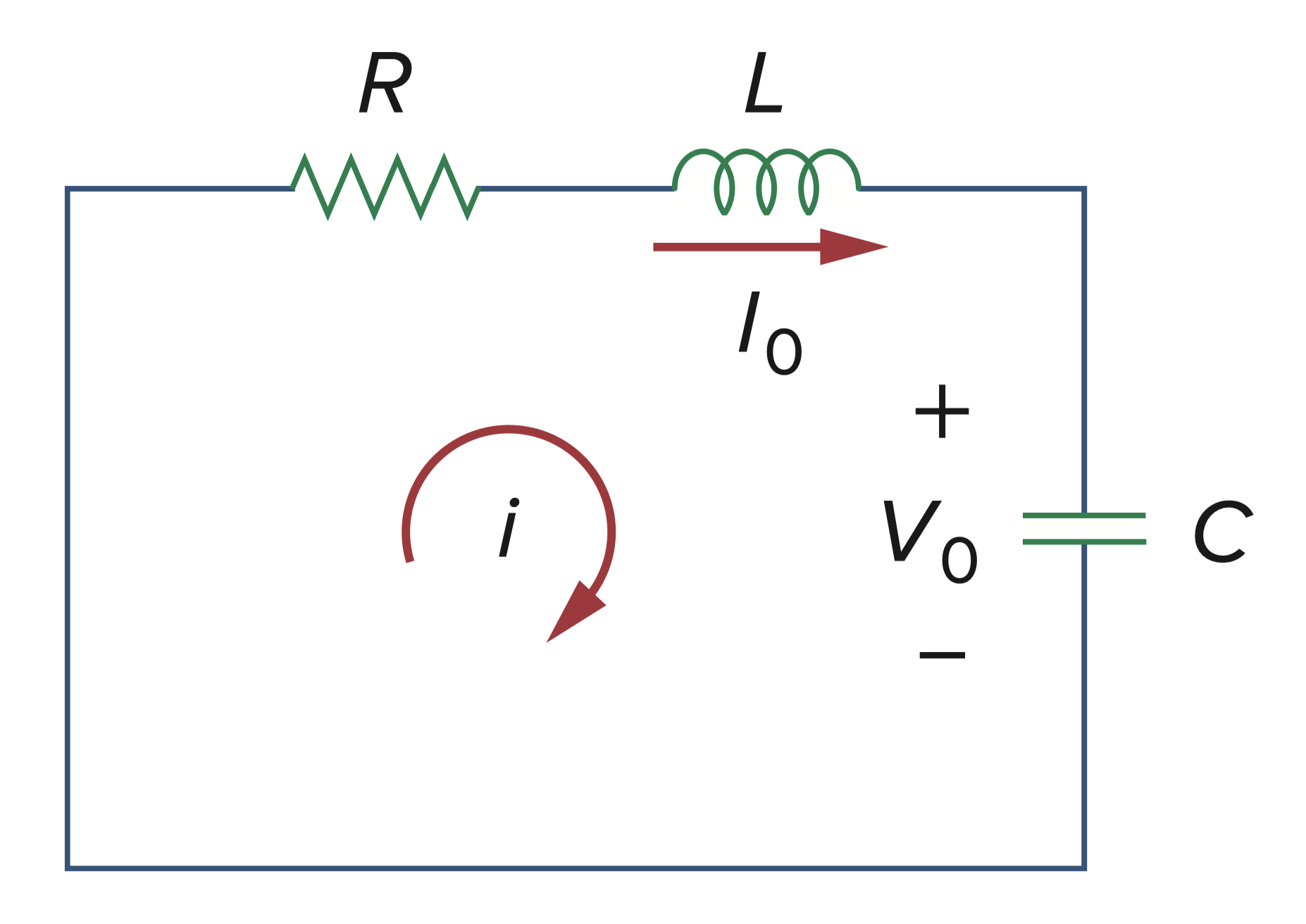
Applying KVL around the loop
To eliminate the integral, we differentiate with respect to (จะกำจัดสมการที่มันมีทั้ง Diff, Int ก็ดิฟทั้งสมการไปเลย) → Second-order Differential Equation
- จริง ๆ ความหมายของสมการนี้ก็คือ เราอยากรู้ว่า ต้องเป็นสมการอะไร ที่ทำให้ข้างบนนั้นอะ เป็น 0
Assume solution in an exponential form
Substituting
- ซึ่งเราต้องมองให้ มันก็คือ Quadratic equation นั่นเอง