Agenda
- Propositions, Premises, Conclusions, & Arguments
- Bad Diagrams
- Evaluating Clarity & Consistency of Arguments
- Constructing Arguments & Writing an Argumentative Paragraph
1. Components of an Argument
What are these terms again?
The Argument - Key Definitions
Proposition:
- A complete statement that can be true or false
- It is a statement or a claim of truth
- "It is true that..."
- A claim can also express a belief that something is not true
- "It is false that..."
Argument Components
Basic Structure:
- Proposition - The truth of this proposition is a reason to accept the conclusion
- Premise(s) - Premises give evidence for the conclusion!
- Conclusion - What the arguer wants you to believe
Testing for Conclusions:
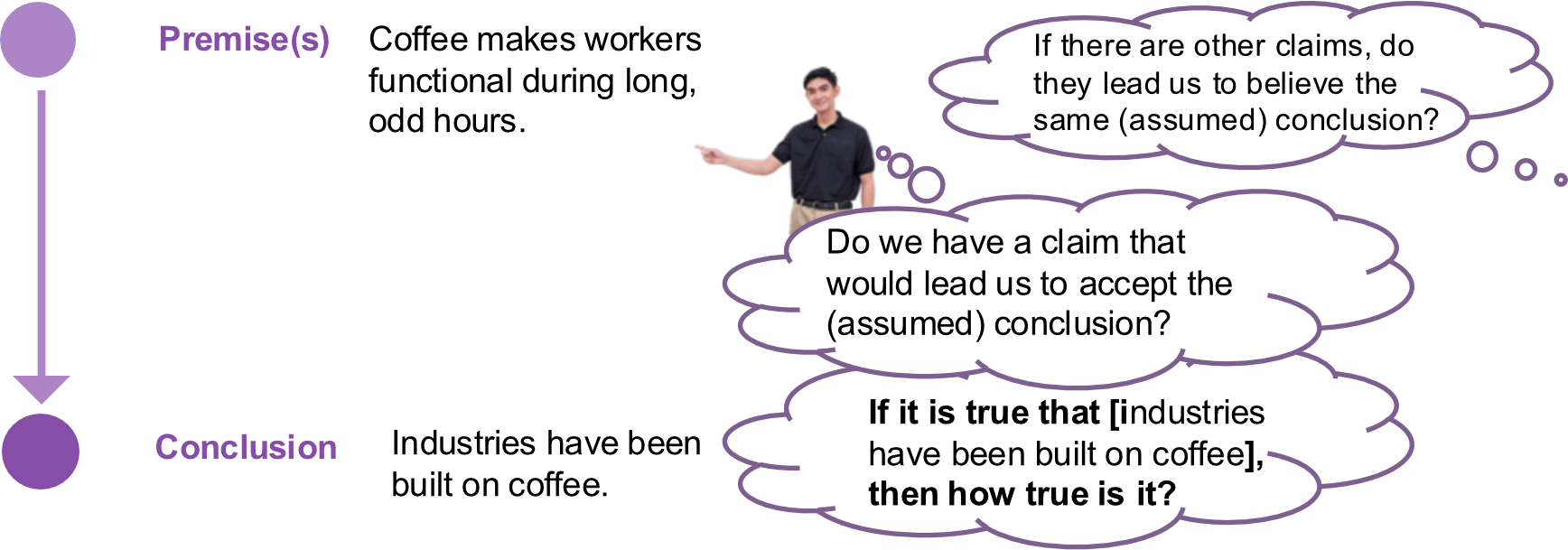
- A good way to test if the main point of the passage is the conclusion is to use the trigger: "If it is true that...then how true is it?"
Propositions & Sub-conclusions
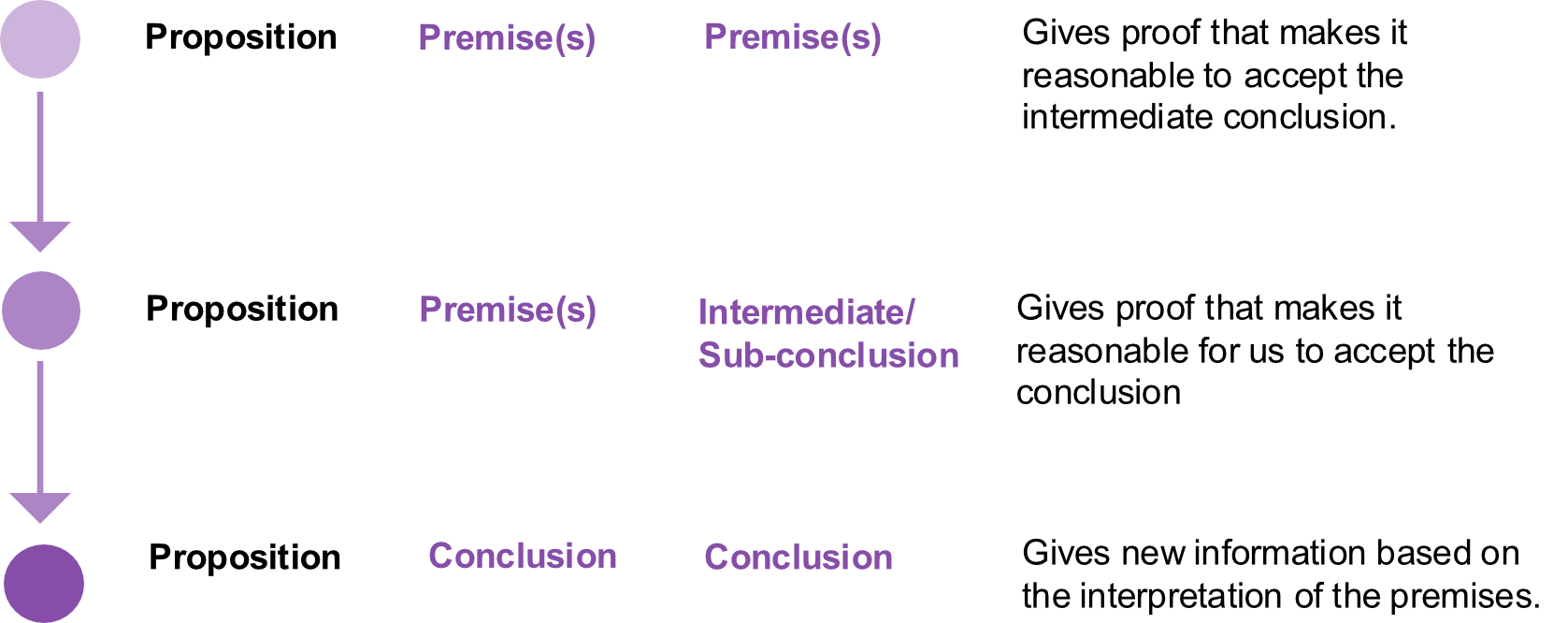
Complex Argument Structure:
- Proposition → Premise(s) → Premise(s)
- Intermediate/Sub-conclusion - Gives new information based on the interpretation of the premises
- Conclusion - Final claim the arguer wants you to accept
Function:
- Premises give proof that makes it reasonable to accept the intermediate conclusion
- Sub-conclusions give proof that makes it reasonable for us to accept the main conclusion
Example Analysis:
- Coffee makes workers functional during long, odd hours
- Industries have been built on coffee
- Companies ought to build a park celebrating coffee
Key Point: These statements are all propositions. What differentiates them is whether they give proof for the belief of another:
- If it gives proof → it is the premise
- If believing that proposition is because of another → it is "a conclusion"
- The conclusion is what the arguer wants you to believe after she has given you the whole argument
Independent & Dependent Premises
Independent Premises Example:
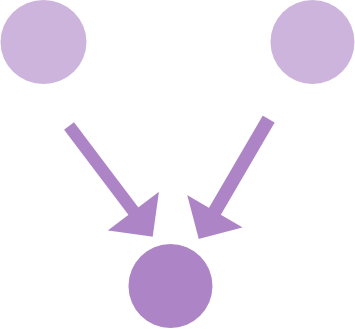
- Mr. Ronald Blanca is a successful CEO
- He fought for the rights of poor people
- Conclusion: He is an ideal civic leader
- Note: If one of these premises has been proven to be false, the other one remains as evidence
Dependent Premises Example:
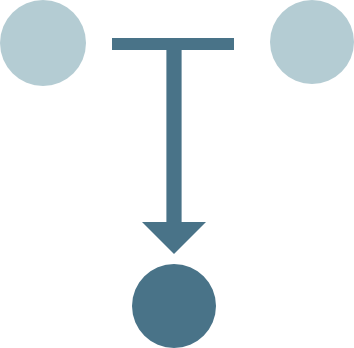
- The P2 award is given to persons whose personal efforts contributed to the development of the city
- Mr. Ronald Blanca was given the P2 award
- Conclusion: Mr. Ronald Blanca is an ideal civic leader
- Note: In dependent premises, if one of the premises has been proven to be false, the other premise cannot support the conclusion alone. In this case, there will be no premise left if one is false
The Many Names of Dependent Premises
Terminology:
- Some authors use different names for dependent premises:
- Co-dependent premises
- Linked premises
- Joint Premises (term we'll use for simplicity)
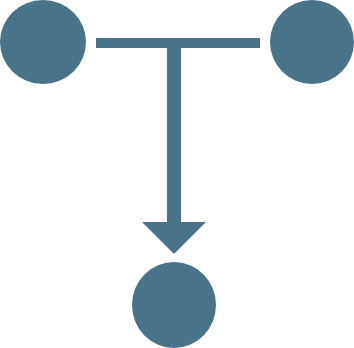
- They all mean the same thing
Closer Look at the Premises
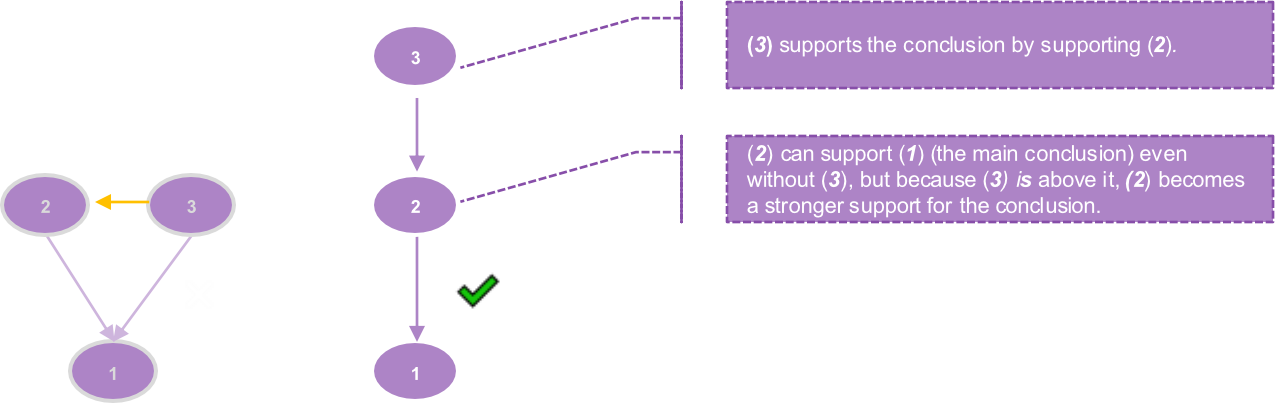
Understanding Premise Relationships:
- Remember, all premises support the main conclusion
- We might think first that each one connects directly to it
- But if premise (3) supports premise (2), then (3) should be placed above (2) - the premise it is supporting
Diagram Logic:
- (2) can support (1) (the main conclusion) even without (3)
- Because (3) is above it, (2) becomes a stronger support for the conclusion
- (3) supports the conclusion by supporting (2)
Complex Relationships:
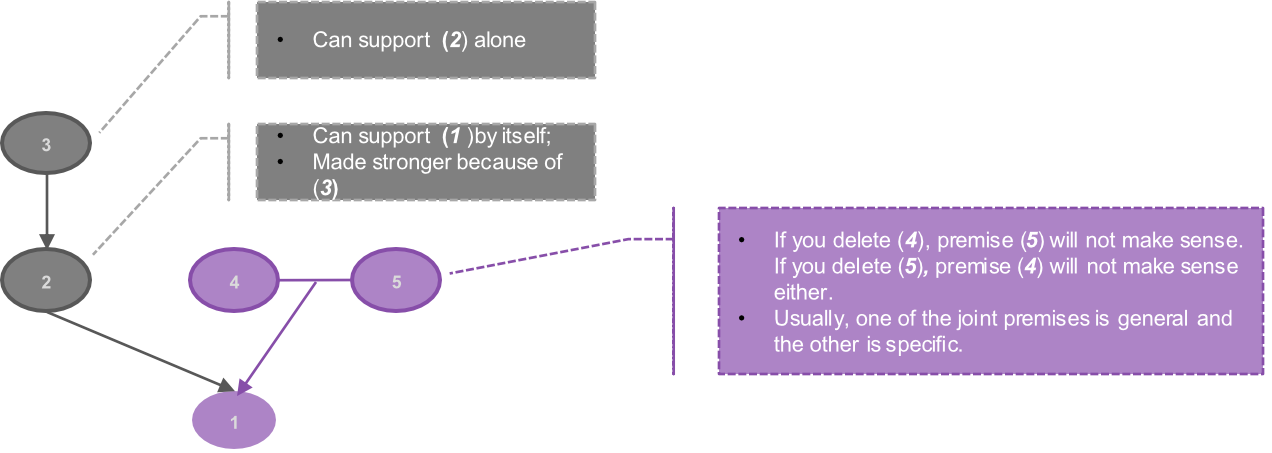
- All premises may seem to relate to each other because they support the same main conclusion
- Our focus is the flow of support or evidence
Joint Premises Characteristics:
- Joint premises are incomplete without the other incomplete premise
- Delete one incomplete premise, and the other premise cannot support the conclusion
- Independent premises can support the conclusion by themselves
- Usually, one of the joint premises is general and the other is specific
Example Analysis:
- If you delete (4), premise (5) will not make sense
- If you delete (5), premise (4) will not make sense either
- Can support (1) by itself; made stronger because of (3)
- Can support (2) alone
Arguments Can Be Complex
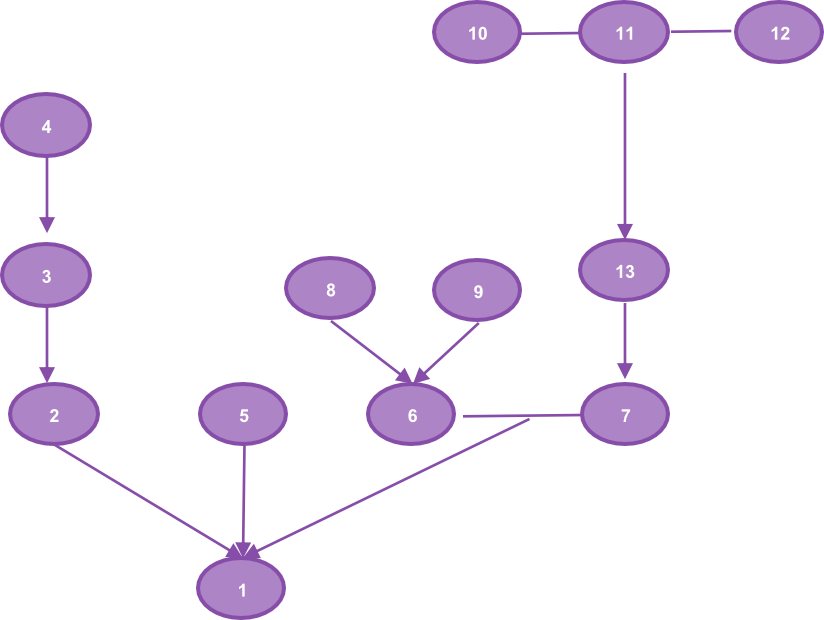
Complex Diagram Analysis Questions:
- How many propositions?
- How many conclusions?
- What happens if you delete or destroy 12 by proving it to be wrong or false?
- What happens if you delete or destroy 9?
- What do you need to do to prove that 2 is wrong or false?
Key Insight:
"When we see the structure of an argument, we begin to see clearly—not just what others think, but how we think. It's not about finding faults. It's about finding clarity. And clarity always makes space for better ideas."
2. Big Problem: Bad Argument Diagram
Why Diagrams Matter
- Diagrams are there to make things clearer
- They require that we be accurate in making them
Diagramming Steps
Step-by-Step Process:
- Place brackets [] around the propositions
- Number the propositions as they appear
- Double underline the conclusion(s). Underline premises that are relevant to the conclusion
- Write unstated propositions at the end of the passage
- Do not change the number order of the propositions
Practice Example Analysis
Original Passage:
"It doesn't make sense to request the use of the Albus room for our meeting. First, the building where the room is located closes at 4 p.m. Next, a hybrid collaboration is when in-person and online participants interact, and our meeting will have a hybrid collaboration. Unfortunately, that room does not have an internet connection that the meeting requires."
Step 1 - Bracket and Number:
- [It doesn't make sense to request the use of the Albus room for our meeting]
- [The building where the room is located closes at 4 p.m.]
- [A hybrid collaboration is when in-person and online participants interact]
- [Our meeting will have a hybrid collaboration]
- [That room does not have the internet connection that the meeting requires]

Step 2 - Identify Premises and Conclusions:
- Premises: 2, 3, 4, 5
- Main Conclusion: 1
Step 3 - Add Unstated Propositions:
6. [The meeting will start or go on after 4 PM]
Step 4 - Create Diagram:
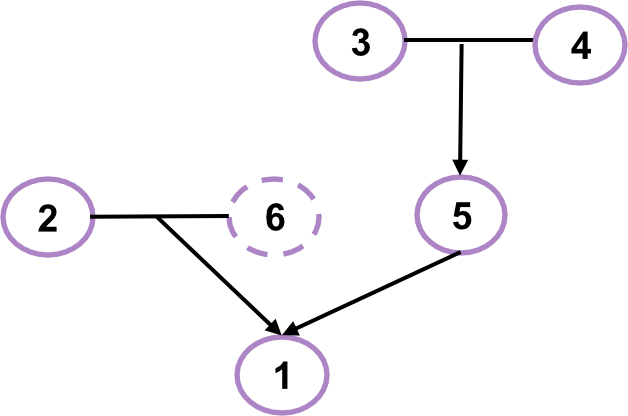
3. Evaluating Clarity & Consistency of an Argument
What makes arguments unclear? How can they be inconsistent?
Breaking Down Arguments for Better Judgment
Purpose:
- Breaking down and diagramming arguments help us judge them more easily
- When an argument is presented to us, we need to decide if we agree or disagree with them
- Is the argument persuasive enough?
Evaluating Arguments - Criteria
Five Key Criteria:
- Clarity
- Credibility
- Relevance
- Completeness
- Soundness
In this lesson, we will focus on clarity and relevance.
Clarity
Definition:
- Clarity is important in constructing a good argument
- In a good argument, the author's position, or the overall stance of the author toward an issue, is easy to see
How to Check for Clarity:
- First, check if vague or ambiguous words are causing confusion
- Example: "Social media is ruining our school."
- When we find these vague terms, we need to make them more precise
Relevance
Basic Principle:
- Premises should provide good reasons for accepting the conclusion
- This means that every premise must contribute to the acceptance of the conclusion
- A premise should lead to the acceptance of a conclusion
Flow of Support:
- Premise 3 should lead us to accept Premise 2
- Premise 2 should lead us to accept the conclusion

Relevance and Opposing Arguments
Strong Arguments Consider Opposition:
- A good argument usually considers alternative points of view, even ones that disagree
Managing Contradictions:
- State your position clearly and show how all premises support it
- Use signal words to introduce other views
- Explain why the other view is weaker
- Show why your main argument still stands
Example Comparison:
Passage A (Confusing):
"Apples are good for your teeth. Acid corrodes. Apples consist mainly of acid. Therefore, apples can't be good for your teeth."
Passage B (Clear):
"Apples are good for your teeth and have long been recommended by dentists. It may be strange since apples consist of acid and acid corrodes the teeth's enamel. However, the acid is harmless. Apples are more beneficial than snacks with refined sugar like sweets and cakes that have stronger acids."
Question: Which passage is easier to understand? ยังไงก็ต้อง Passage B อยู่แล้วมะ
Relevance versus Inconsistent Arguments
Key Principle:
- A good argument has premises that clearly support its conclusion
- Does not have premises that contradict each other or weaken the conclusion
- Addresses any possible inconsistencies
Example for Analysis:
"We are going to lose the countryside. The greenbelt on the edges of the countryside, with its woodland and greenery, may help city dwellers breathe clean air, but it is disappearing. 8 percent of the countryside has been built up. Urban areas are growing, and more buildings and structures are being built in areas that invade this greenbelt. Therefore, in a few years, the countryside will be lost forever."
Problem Analysis:
- If one premise does not strongly support the conclusion, it can weaken the argument
- Saying "8% of the countryside has been built up" does not strongly prove that "the countryside will be lost forever"
Better Phrasing:
- "Only 8% of the countryside has been built up, but 3% of that happened just last year."
- ไม่ควรขัดกันเอง → ข้อความ/เหตุผลใน premises ต้องไปในทิศทางเดียวกัน ไม่ใช่ว่าบางอันไปหนุน บางอันไปหักล้าง
- ต้องเกี่ยวข้องกับข้อสรุป → premise ต้องมีน้ำหนักหรือความเกี่ยวข้องที่ชัดเจนพอจะหนุนข้อสรุป ไม่ใช่ใส่ข้อมูลที่ดูไม่สัมพันธ์
Quick Review: Inconsistencies
Practice Examples - Which arguments are inconsistent? Which premise makes the argument inconsistent?
Example C:
"Alex is not a good CEO. He is very strict. He loses his temper easily. He takes a very long time to decide. Last year, it took him 9 weeks to decide on investing on Nue Firm which resulted in huge profits. Good CEOs should not be afraid to make quick judgments. Alex's management style will bring the company down."
Example D:
"The train is late. There must be something wrong. The train system is so efficient that running late is a rare event."
Example E:
"Bew is finally making better choices. She quit smoking. She stopped making excuses. Bew has started to prioritize work over partying."
Example F:
"Preaw is very sensible with her finances. She has kept a financial record since she started working 7 years ago. She has a budget and looks closely at her income and expenses. Last week, she finally saved something from her salary."
4. Constructing an Argumentative Paragraph
Let's build clear paragraphs that lead to a logical conclusion that others can agree
Argument, not Rhetoric
Key Points:
- A good argument is clear in its position
- It gives premises that lead to the acceptance of the conclusion
- The argument should also consider alternative or opposing perspectives
- In natural language, we do not speak in premises and conclusions only, even when we are making an argument
An Argumentative Paragraph: General Structure
Structure Outline:
- Main Conclusion
- Main Premise 1 - Strengthens the conclusion
- Main Premise 2 - Strengthens the conclusion
- Main Premise 3 - Strengthens the conclusion
- Main Premise 4 - Refutes the counterargument

Argumentative Paragraph: Sample
Analysis Questions:
- Read the sample argumentative paragraph
- What is its conclusion?
- Which premise(s) strengthen the conclusion?
- How did the arguer refute the counterargument?
Sample Argumentative Paragraph
Full Text:
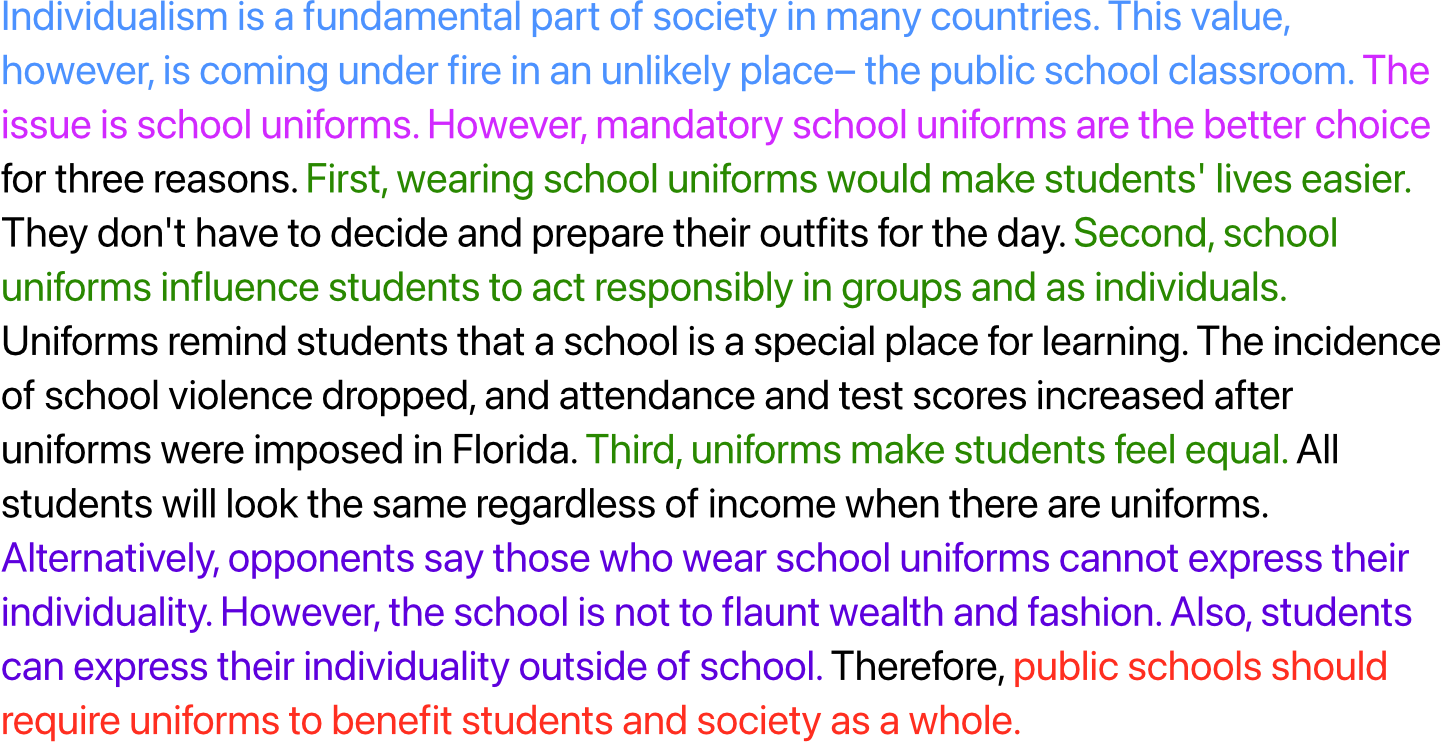
"Individualism is a fundamental part of society in many countries. This value, however, is coming under fire in an unlikely place– the public school classroom. The issue is school uniforms. However, mandatory school uniforms are the better choice for three reasons. First, wearing school uniforms would make students' lives easier. They don't have to decide and prepare their outfits for the day. Second, school uniforms influence students to act responsibly in groups and as individuals. Uniforms remind students that a school is a special place for learning. The incidence of school violence dropped, and attendance and test scores increased after uniforms were imposed in Florida. Third, uniforms make students feel equal. All students will look the same regardless of income when there are uniforms. Alternatively, opponents say those who wear school uniforms cannot express their individuality. However, the school is not to flaunt wealth and fashion. Also, students can express their individuality outside of school. Therefore, public schools should require uniforms to benefit students and society as a whole."
Color-Coded Analysis:
- Blue (Introduction/Background): Individualism context and issue setup
- Pink (Thesis): "However, mandatory school uniforms are the better choice for three reasons"
- Green (Main Premises): Three supporting reasons with evidence
- Purple (Counterargument & Refutation): Opposition view and response
- Red (Conclusion): "Therefore, public schools should require uniforms to benefit students and society as a whole"
An Argumentative Paragraph - Writing Steps
8-Step Process:
- Write the introduction that includes a hook and background information
- Write the thesis statement that clarifies your position on the issue
- Provide the main reasons
- Support your main reasons
- Cite or mention at least a counterargument
- Refute the counterargument
- Link your thesis statement to bigger issues to show why your thesis matters beyond itself
Historical Note: Aristotle in making his arguments did not only provide reasons but also refuted the opposition/alternate perspectives
Practice: Writing Your Own Argumentative Paragraph
Assignment:
- Imagine that you are concerned about the bad effects of smartphones on students
- Task 1: Brainstorm, list, (and mentally diagram) the premises and the conclusion towards your position that smartphones should be banned in schools
- Task 2: Turn what you brainstormed into a paragraph following the Aristotelian style (Provide your reasons and a refutation of the opposition before asserting your conclusion)