Graph, Vertices, and Edges
- A graph is a collection of vertices, and a collection of edges connecting pairs of vertices.
- Two kinds of graphs: directed and undirected
- Different between graph and tree: graph allow multiple parent (parent in the graph is not unique)
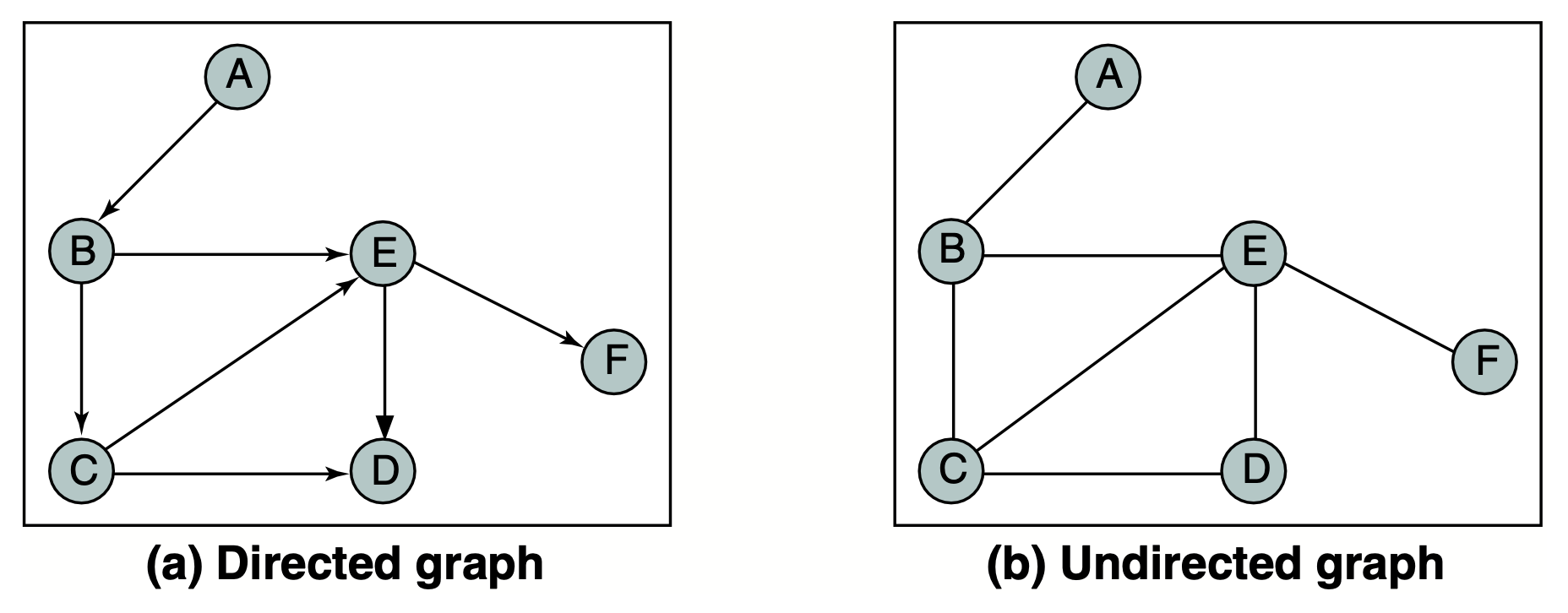
Degree, indegree, outdegree
- A degree of a vertex is the number of lines incident to it.
- The outdegree of a vertex is a digraph is the number of arcs leaving the vertex.
- The indegree of a vertex is the number of arcs entering the vertex.
- ถ้าถามแค่ว่า Degree เป็นเท่าไหร่— ให้เอา Indegree + Outdegree
A path and a cycle
- A path is a sequence of vertices and edges that starts at a vertex and ends at a vertex such that each edge is incident to it predecessor and successor vertex.
- A path from A → F = {AB, BE, BF} (not unique)
- A cycle is a path that starts from a given vertex and ends at the same vertex
Example
- A path A → B → C goes from A to C
- A path A → B → C → A makes a cycle in this graph
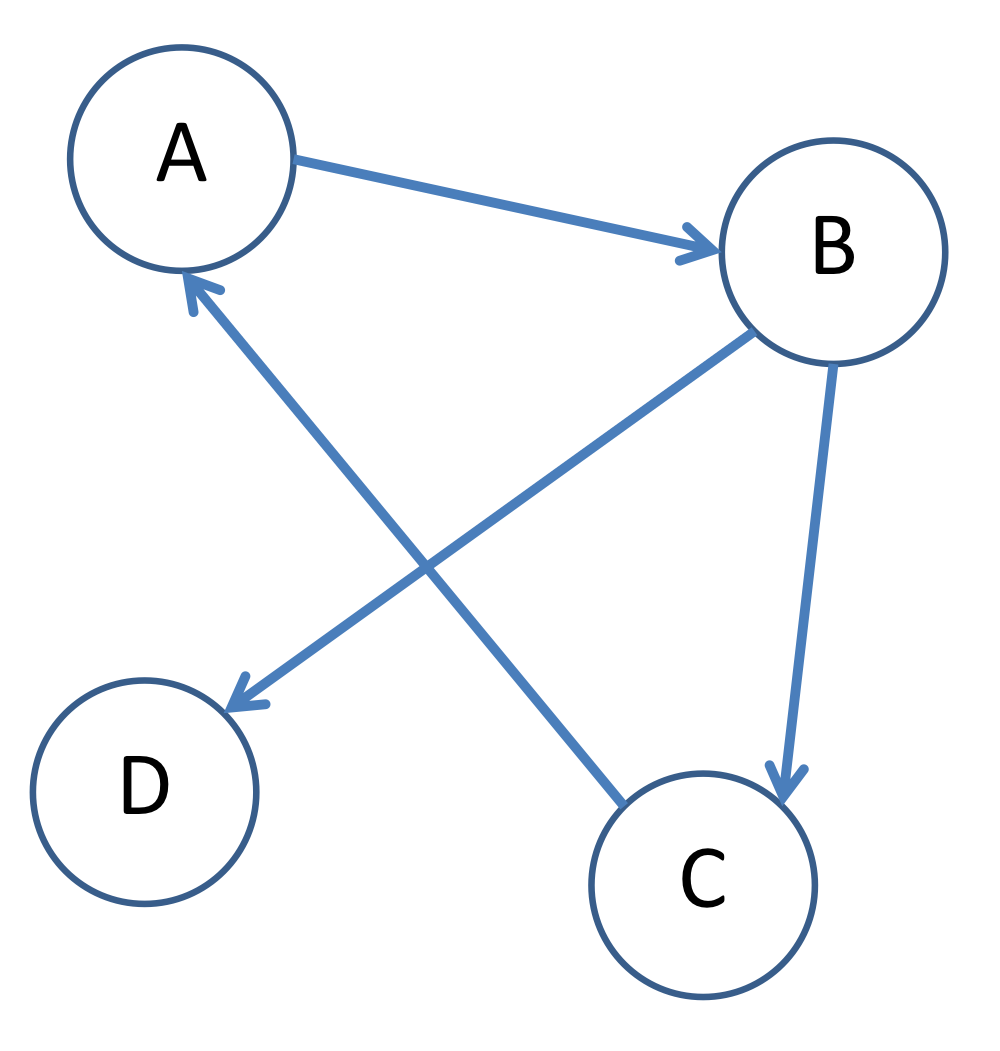
Undirected vs Directed Graphs
- Undirected graphs
- no directions on edges
- the directed edge can be used to represent a two way road
- Undirected Graph จริง ๆ แล้วมันคือ ไป-กลับ () แต่ว่าไม่เขียนแค่นั้นเอง
- Directed graphs
- edge has a direction showing what node that it comes from and what node that it goes to
- the directed edge can be used to represent a one way road
Weighted vs Unweighted Graphs
- Unweighted graph
- the edge has no weight
- the weight can be used in the applications that the weights of the edges are no important and/or the weight are equal.
- Weighted graph
- the edge has the weight
- the weight can be used in the applications of cost, distance, time, etc.
Tree vs Graph
- A tree is a graph in which each vertex has only one predecessor (parent).
- However, the graph isn’t a tree. A vertex in graph can be originated from multiple predecessors.
- ==Tree Graph— All trees are graphs but all graphs are not tree==
Graph Storage Structures
How do we make a graph?
- There are two common storage structures
- Adjacency matrix
- Adjacency list
Adjacency Matrix
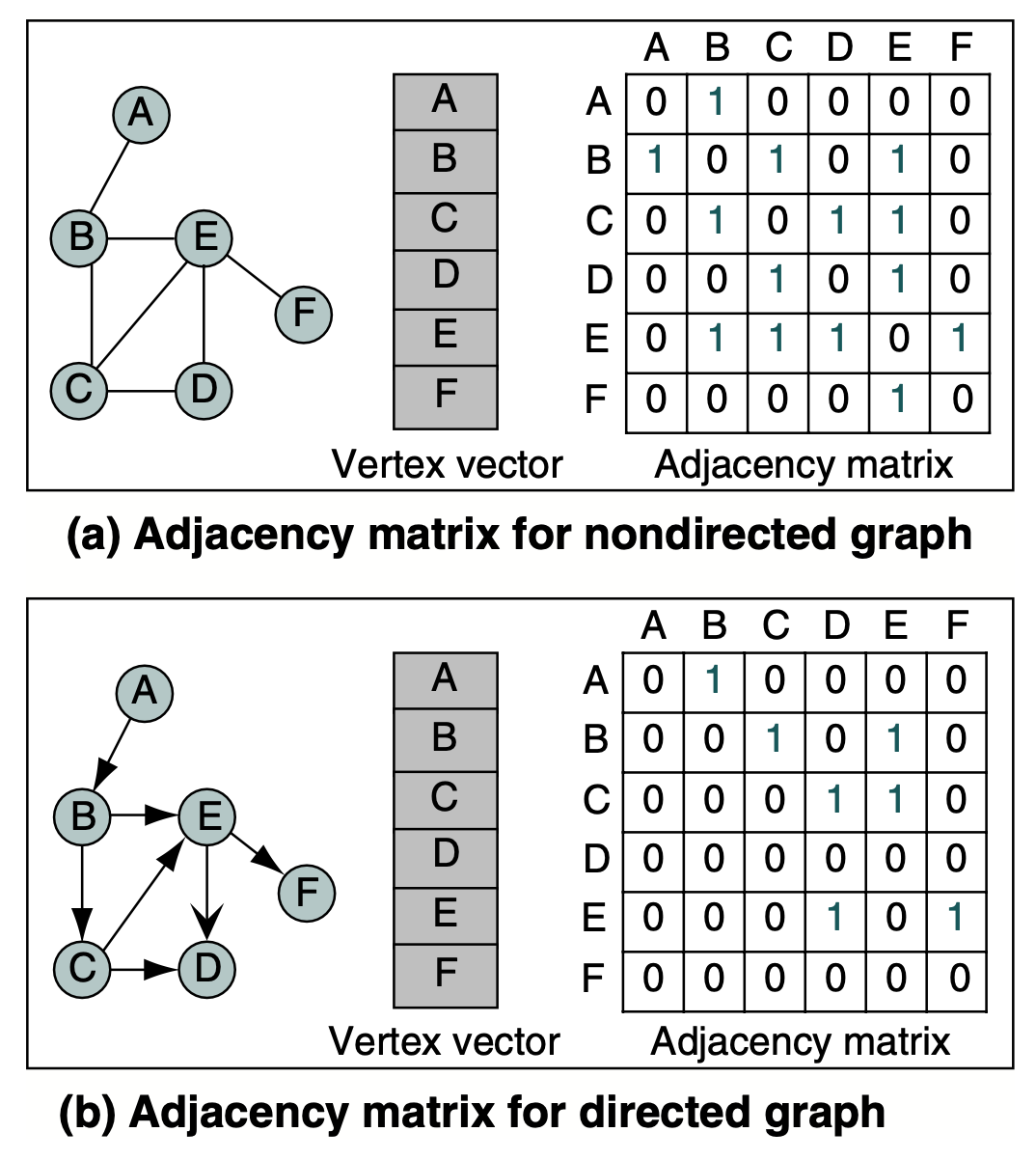
- It uses a vector or a one-dimensional array for the vertices and the matrix to store the edges.
- If two vertices are adjacent, the matrix has the value of 1. If not, it has 0.
- สำหรับ Undirected Graph มันจะ Symmetry (แปลว่าสามารถพับลงมาได้ แล้วยังเหมือนกัน)
- แต่ถ้าเป็น Directed Graph มันจะไม่มี Symmetric Characteristics นะ!
- ถ้าสมมติว่าเกิดมี Weight ขึ้นมา ก็เขียนใน Matrix เป็น Weight นั้น ๆ ได้เลย แต่อันนี้แค่ดูว่ามีเส้นเชื่อมมั้ย
Adjacency List
-
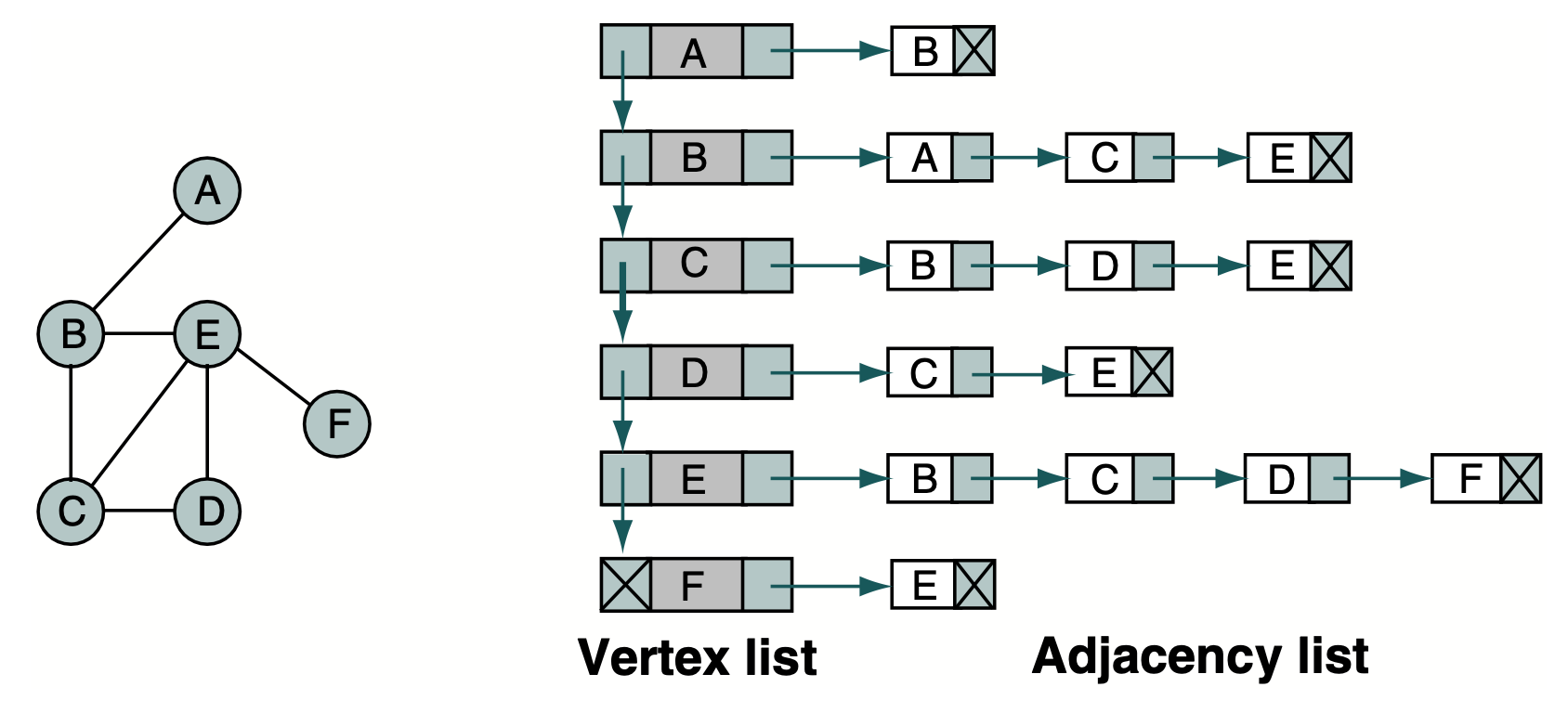
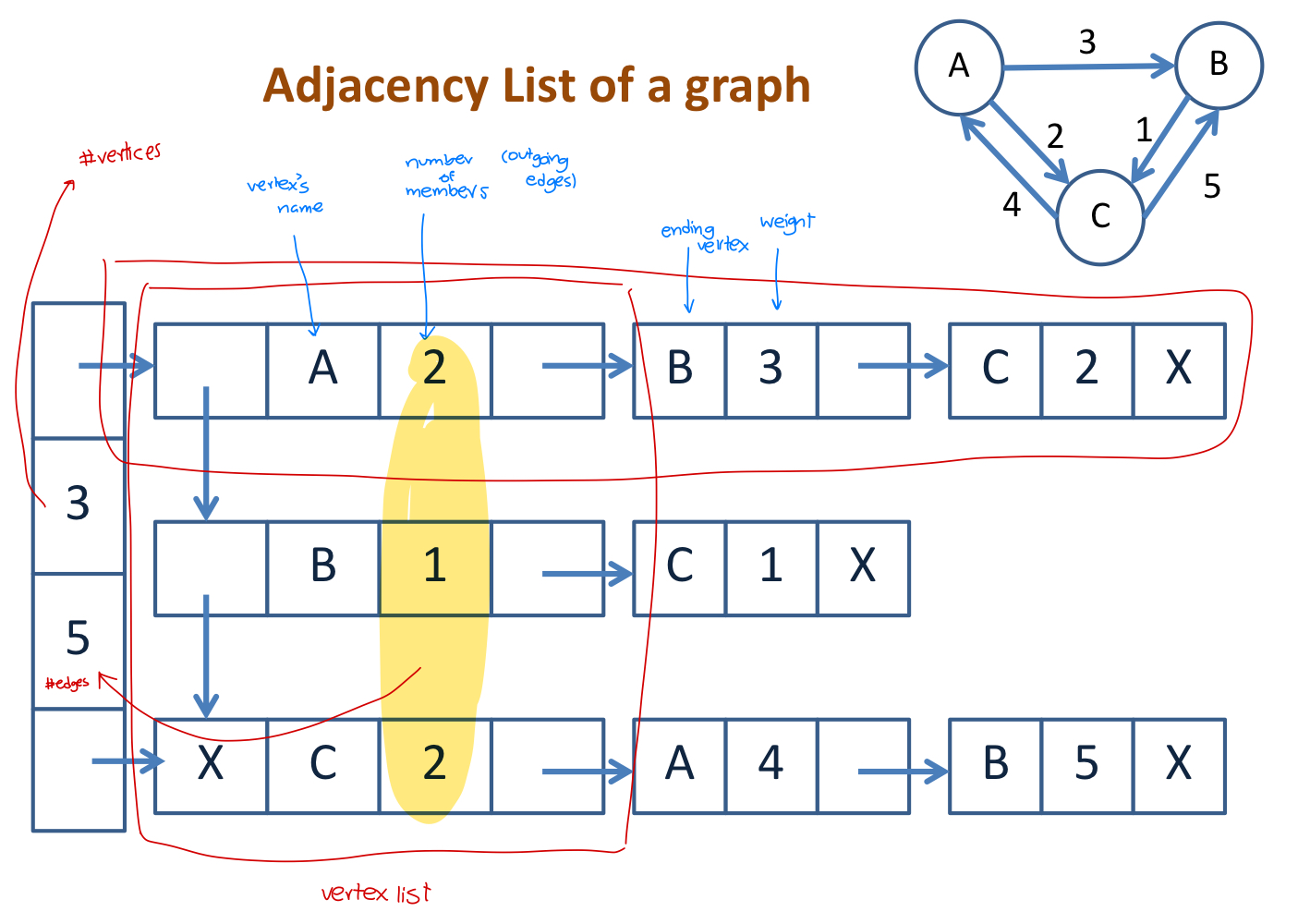
It uses a 2D ragged array to store the edges
-
A vertex list is a singly linked list of the vertices in the list to keeps the vertex entries.
-
Adjacency list is a linked list of edges from the vertex
-
To read row 2 for example, we say ‘there are edges BA, BC, BE (starting from B)’
-
จำนวน Ending Vertices (Adjacency List ในรูป) จะเท่ากับ Outdegree of the vertex in the row
Some facts about a graph
- Given a graph G with vertices and
eedges- The outgoing edges of a vertex is at most
- The total number of edges
eof graph is at most- มาจากแต่ละตัวก็มี Edges ได้ ใช่มั้ย แล้วมีทั้งหมด ตัว ดังนั้นก็
Performance Analysis of Graph’s Operations (Big-O)
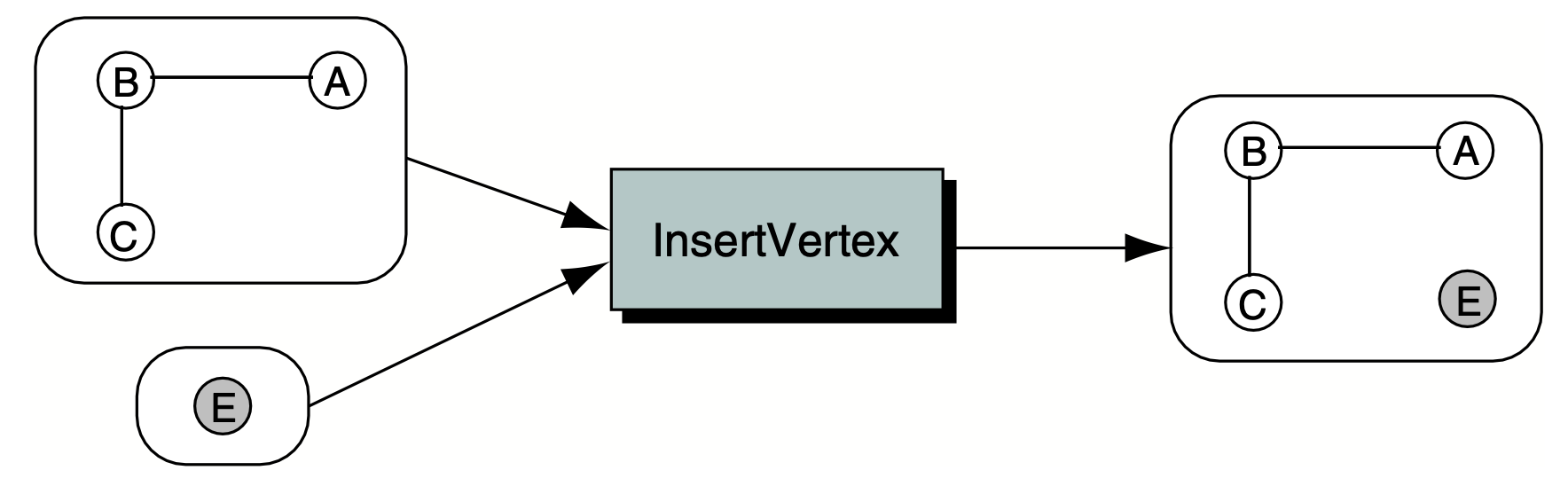
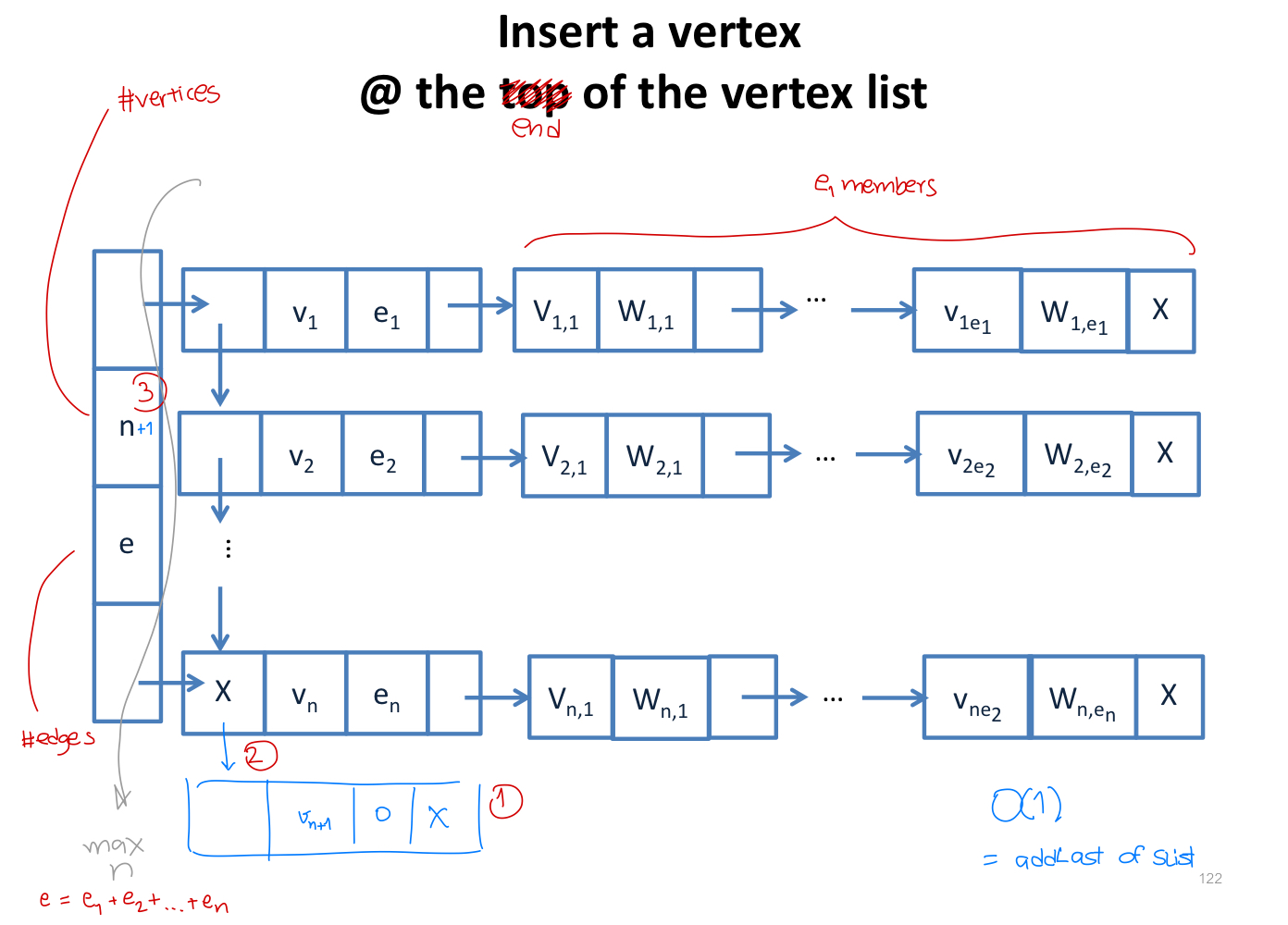
Insert a Vertex
- มีค่าเท่ากับ
addLastของ SList
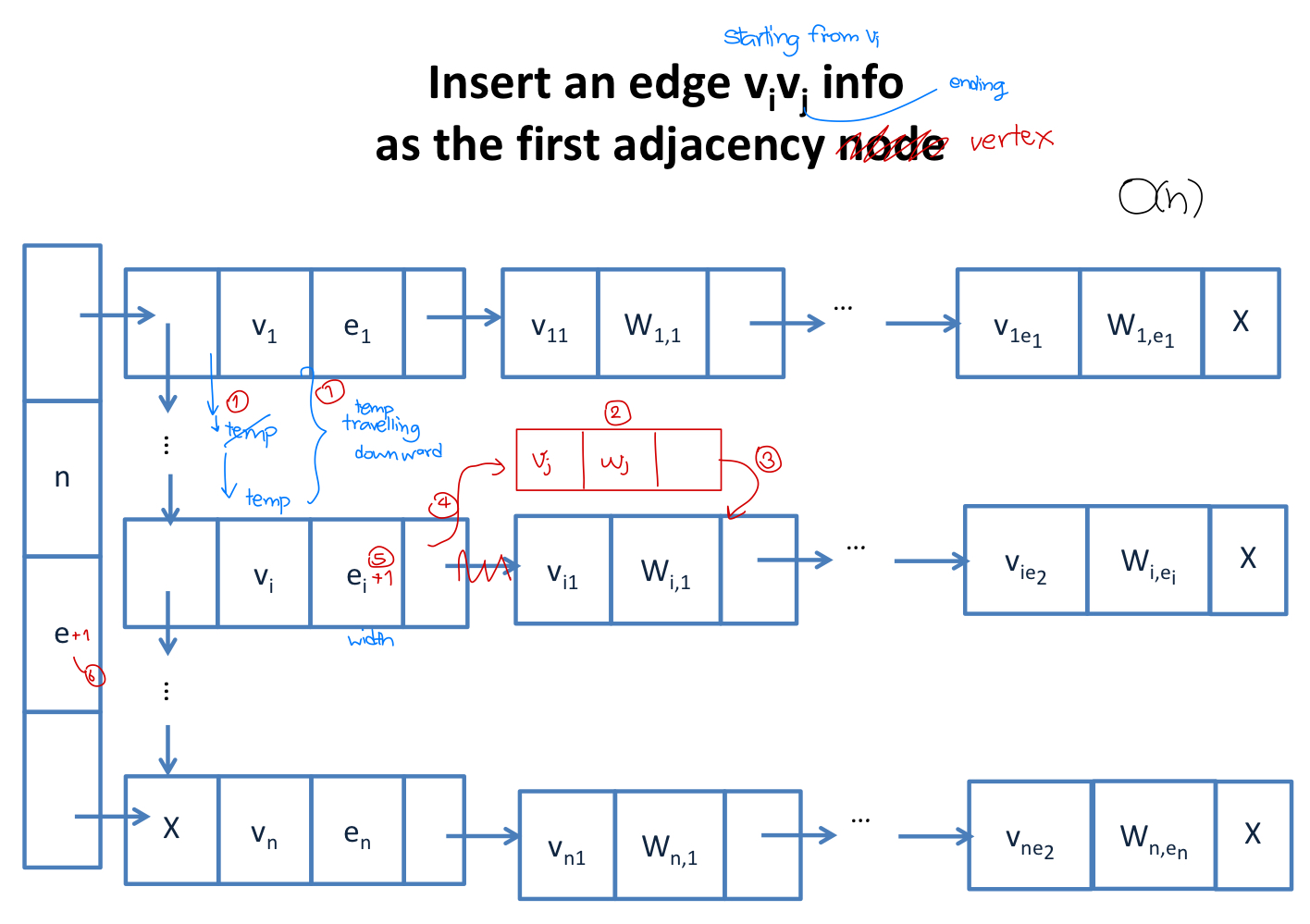
Insert an Edge
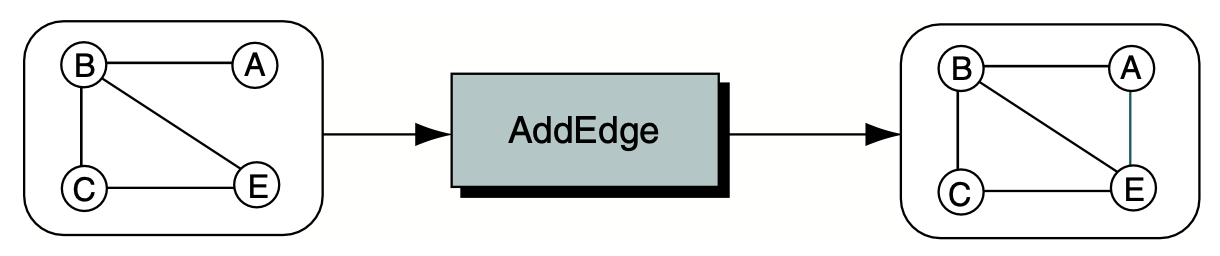
- Traversing คือ Cost มากสุด ไปถึง ดังนั้น
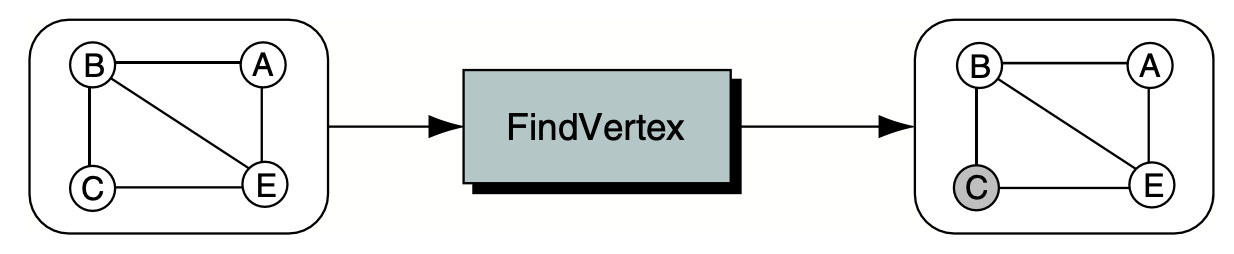
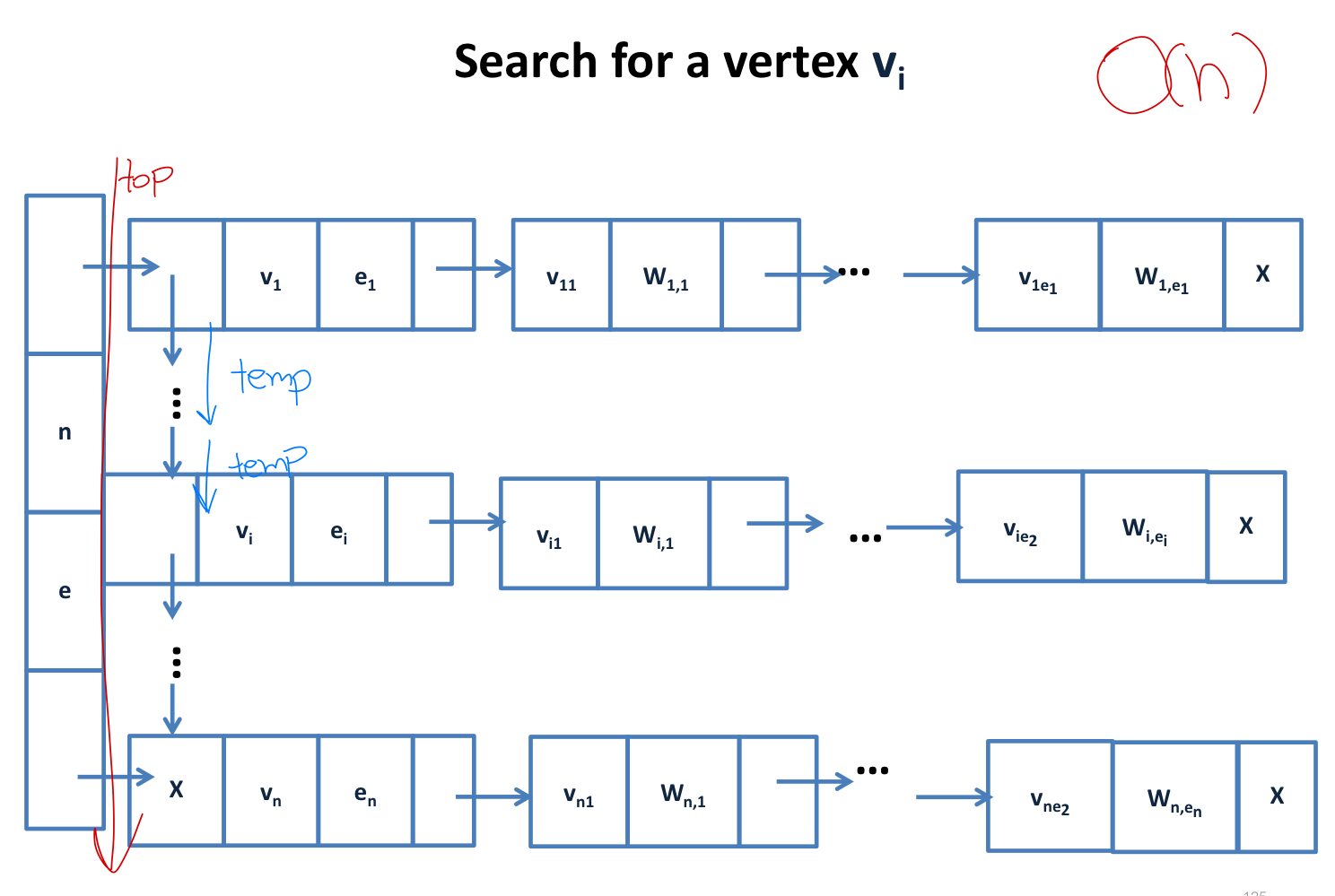
Search for a Vertex
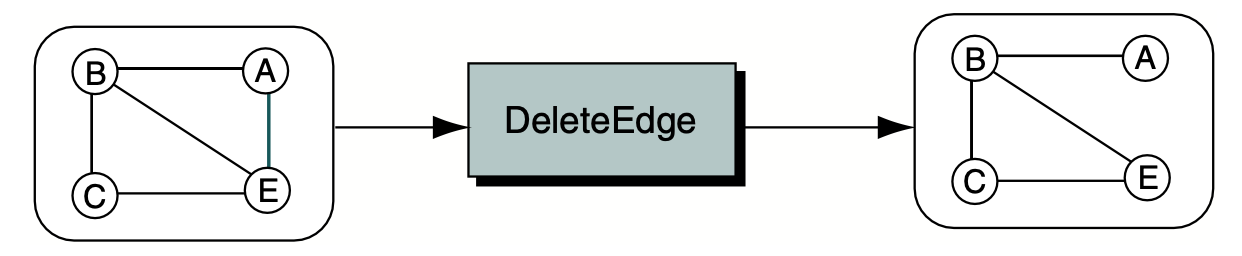
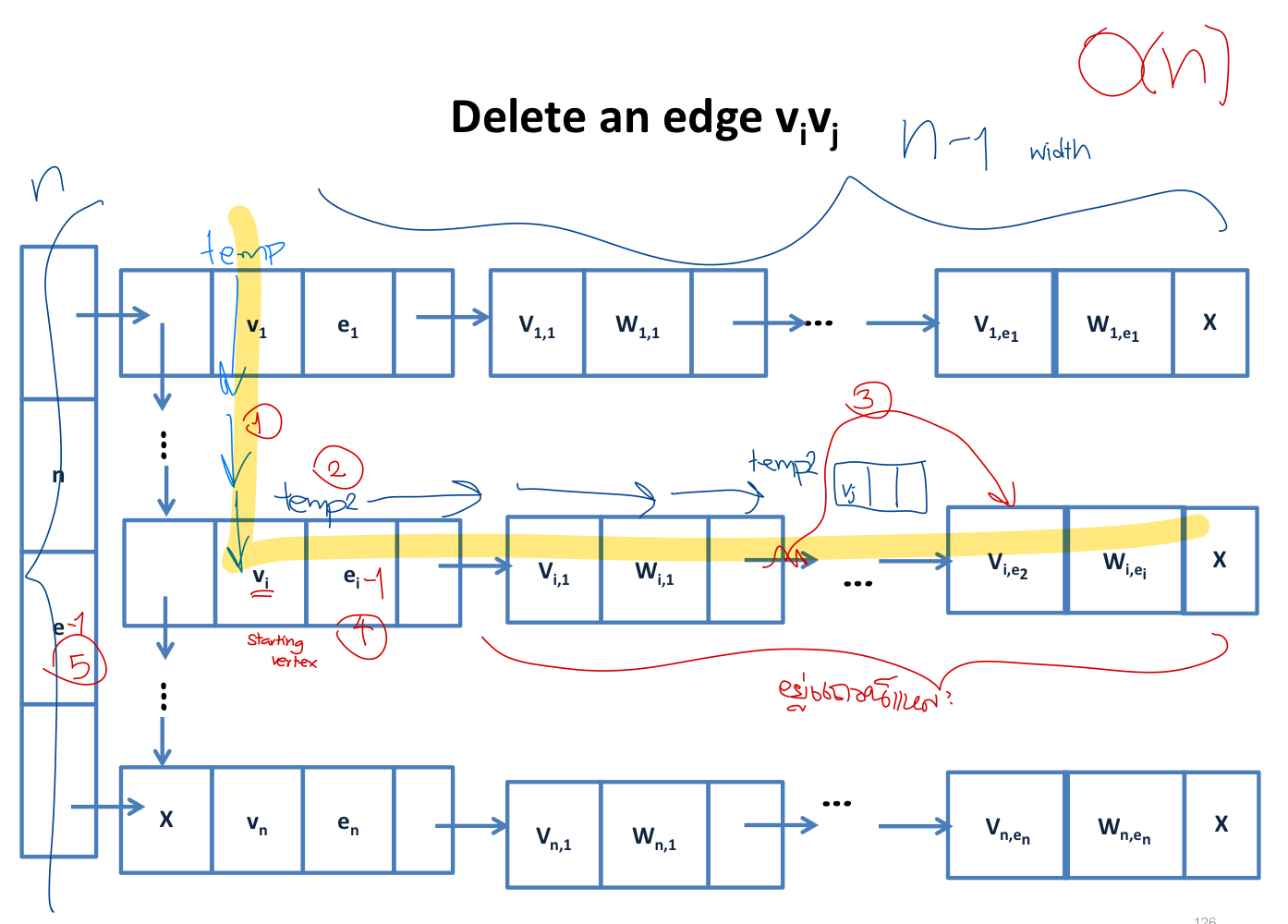
Delete an Edge
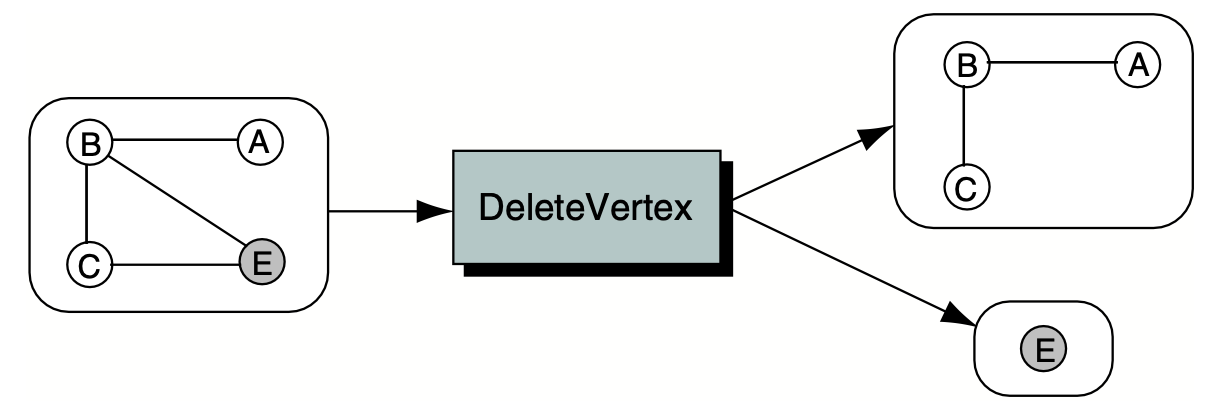
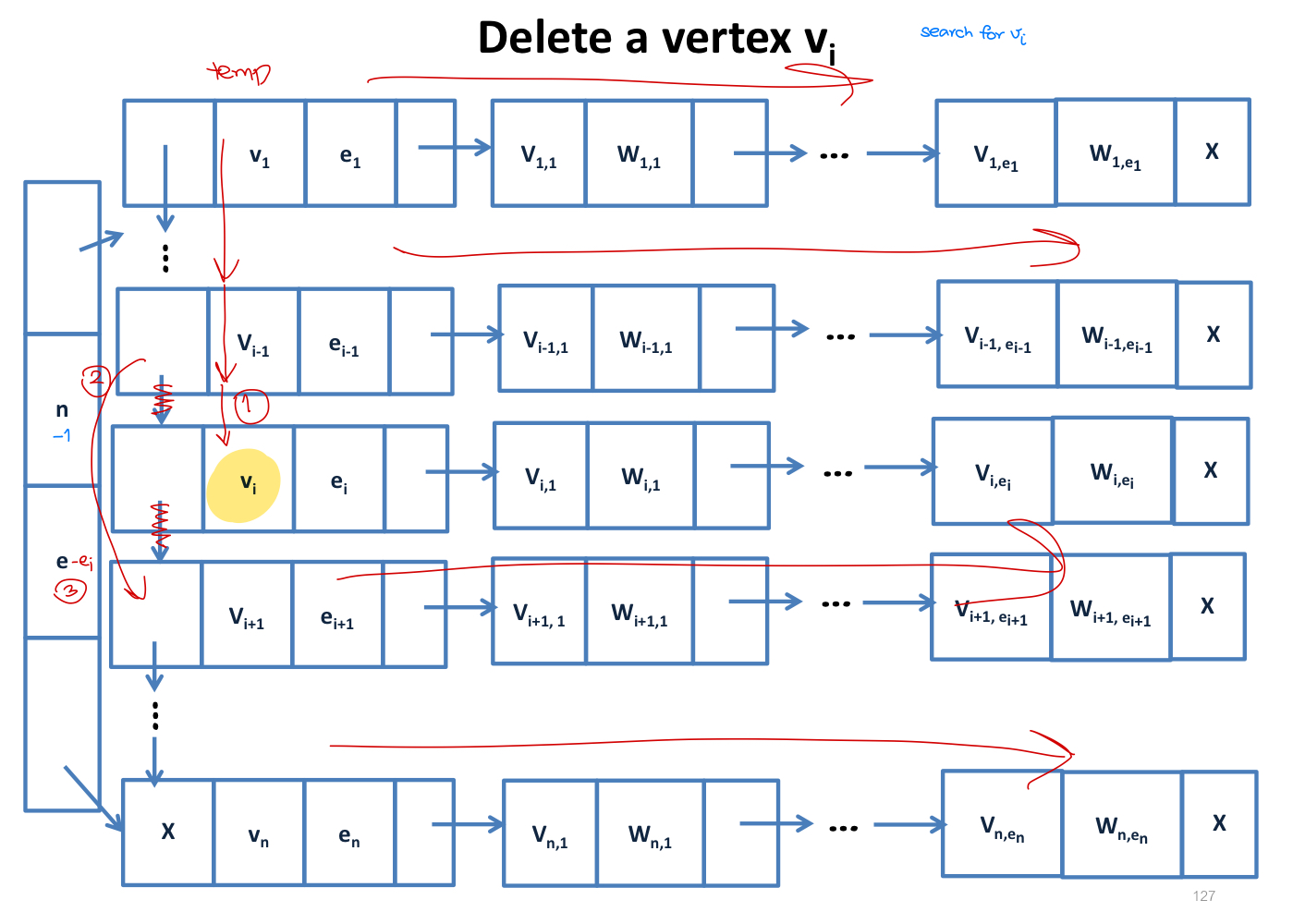
Delete a vertex
| Operations | Big-O in terms of n and e | Big-O in term of n |
|---|---|---|
| Insert a vertex at the first in the vertex list | — | |
| Insert an edge info as the first adjacency node | — | |
| Search for a vertex | — | |
| Delete an edge | — | |
| Delete a vertex | (number of edges, number of ending vertices of ) | |
| Search for an edge |
Traversing a graph
Depth First Traversal (DFS)
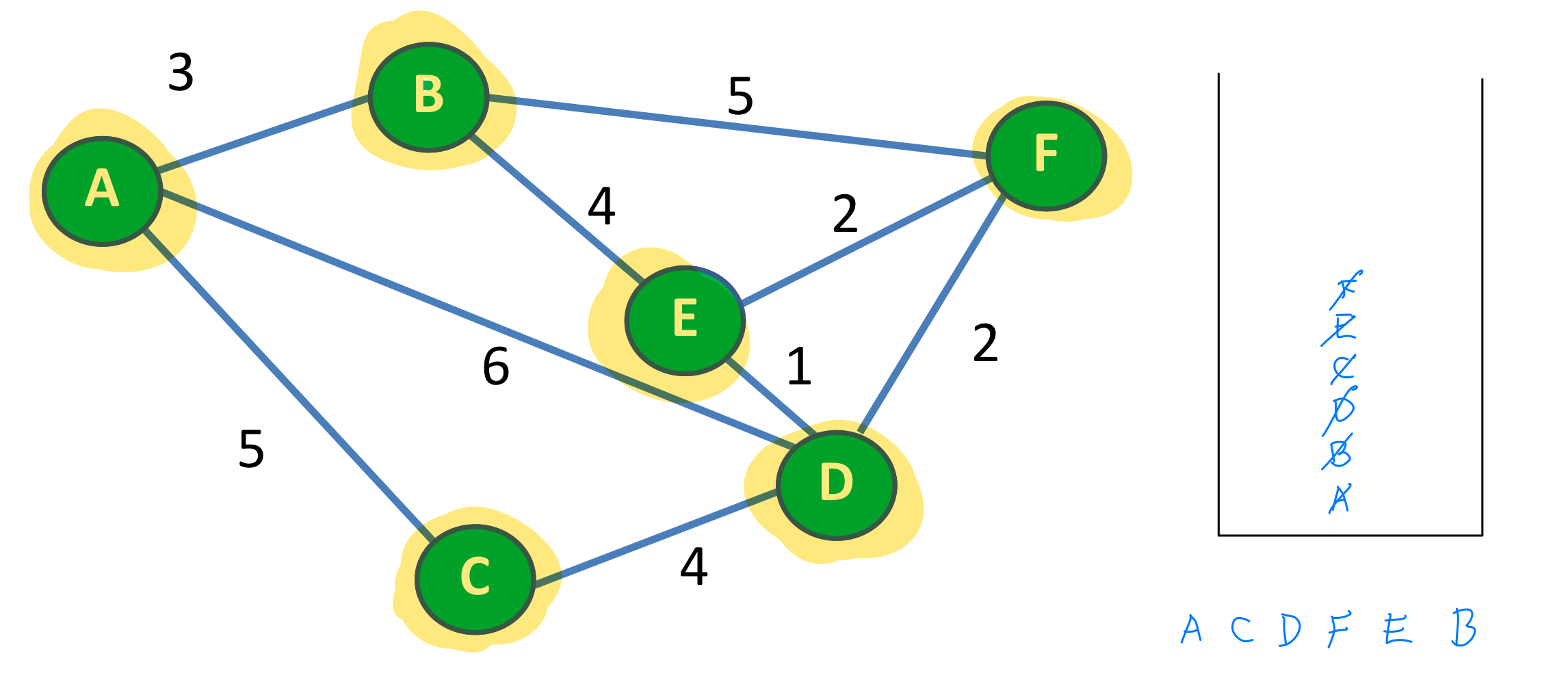
- starts at the starting point and explores as far as possible along each branch before backtracking
- ใช้ Stack—
pop print push- จะเริ่มจากตรงไหนก็ได้! Node ไหนก็ได้เลยนะ
pop printก็ทำปกติ- แต่เวลาจะ
push(สมมติว่าเริ่มที่ A) ก็ดูว่า A สามารถไปไหนได้บ้าง ในที่นี้ B, C, D ก็pushเข้า Stack ไปได้เลย Order จะเป็นแบบไหนก็ได้ ไม่สนใจนะ- Highlight ที่เลือกไปแล้วก็ดีนะ เพราะว่าถ้าจะ
pushรอบต่อไป ห้ามเลือกตัวซ้ำ
- Highlight ที่เลือกไปแล้วก็ดีนะ เพราะว่าถ้าจะ
Breadth First Traversal (BFS)
- The BFS begins at a root node and inspect all the neighboring nodes. Then for each of those neighbor nodes in turn, it inspects their neighbor nodes which were unvisited, and so on.
- ใช้ Queue—
dequeue print enqueue- เหมือนเดิมเลยก็คือ จะเริ่มจาก Node ไหนก็ได้
dequeue printทำปกติ- เวลา
pushก็เลือกลูกที่เชื่อมอยู่ของตัวนั้น ๆ (ไม่ซ้ำ) คล้าย ๆ เดิม
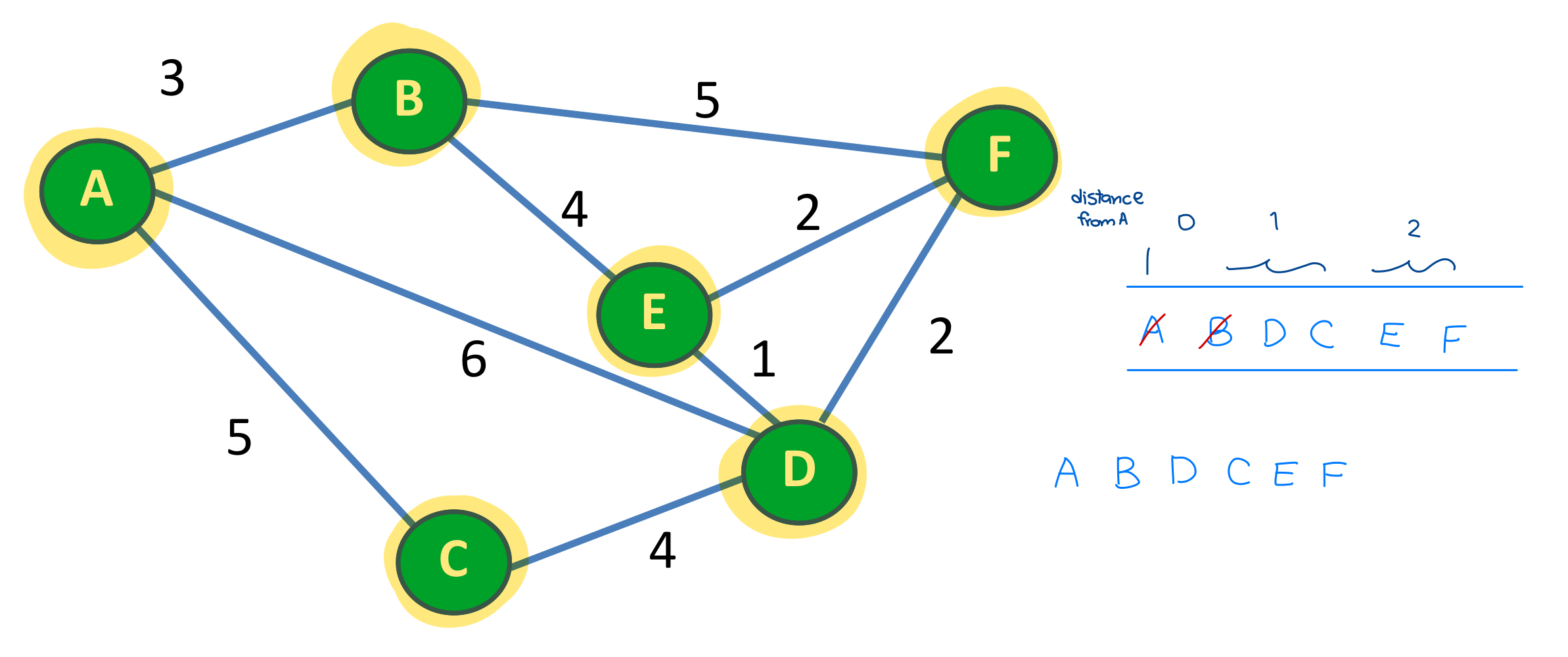
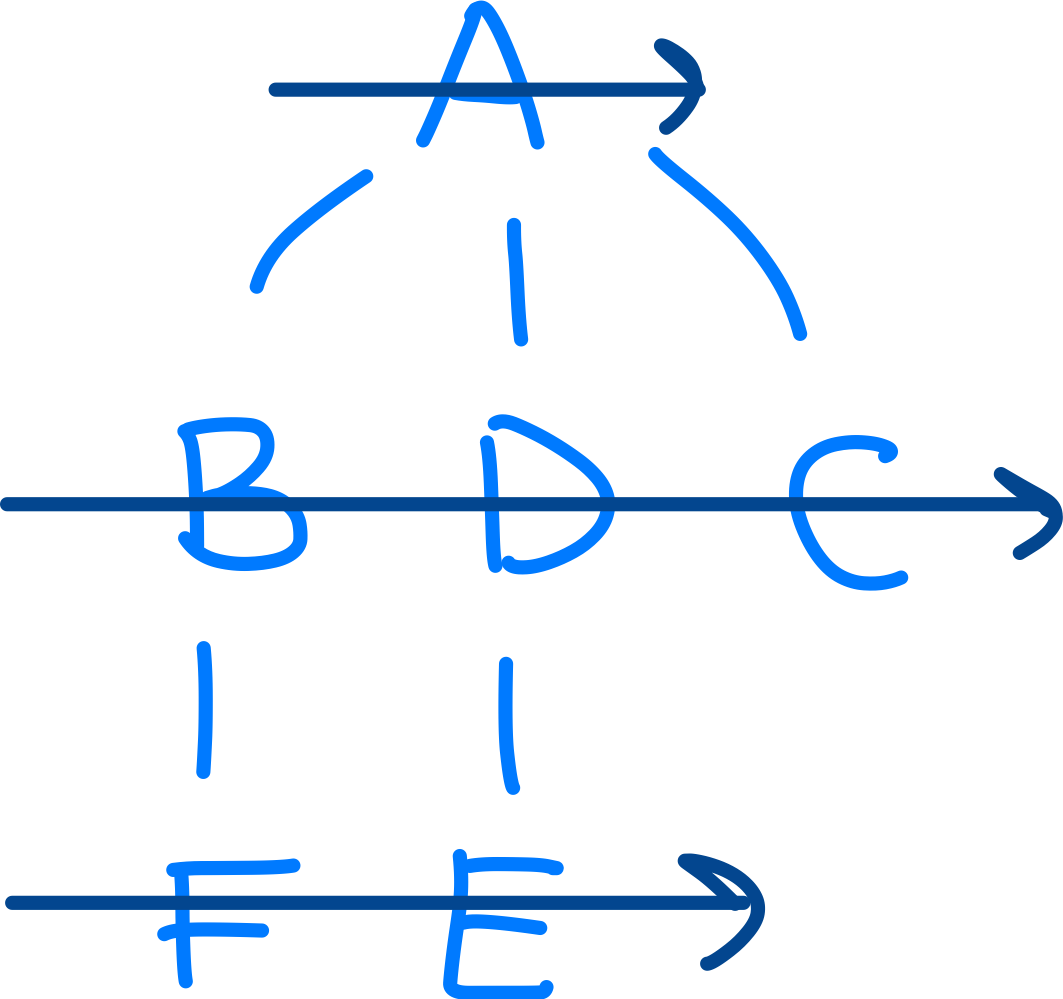
The spanning tree
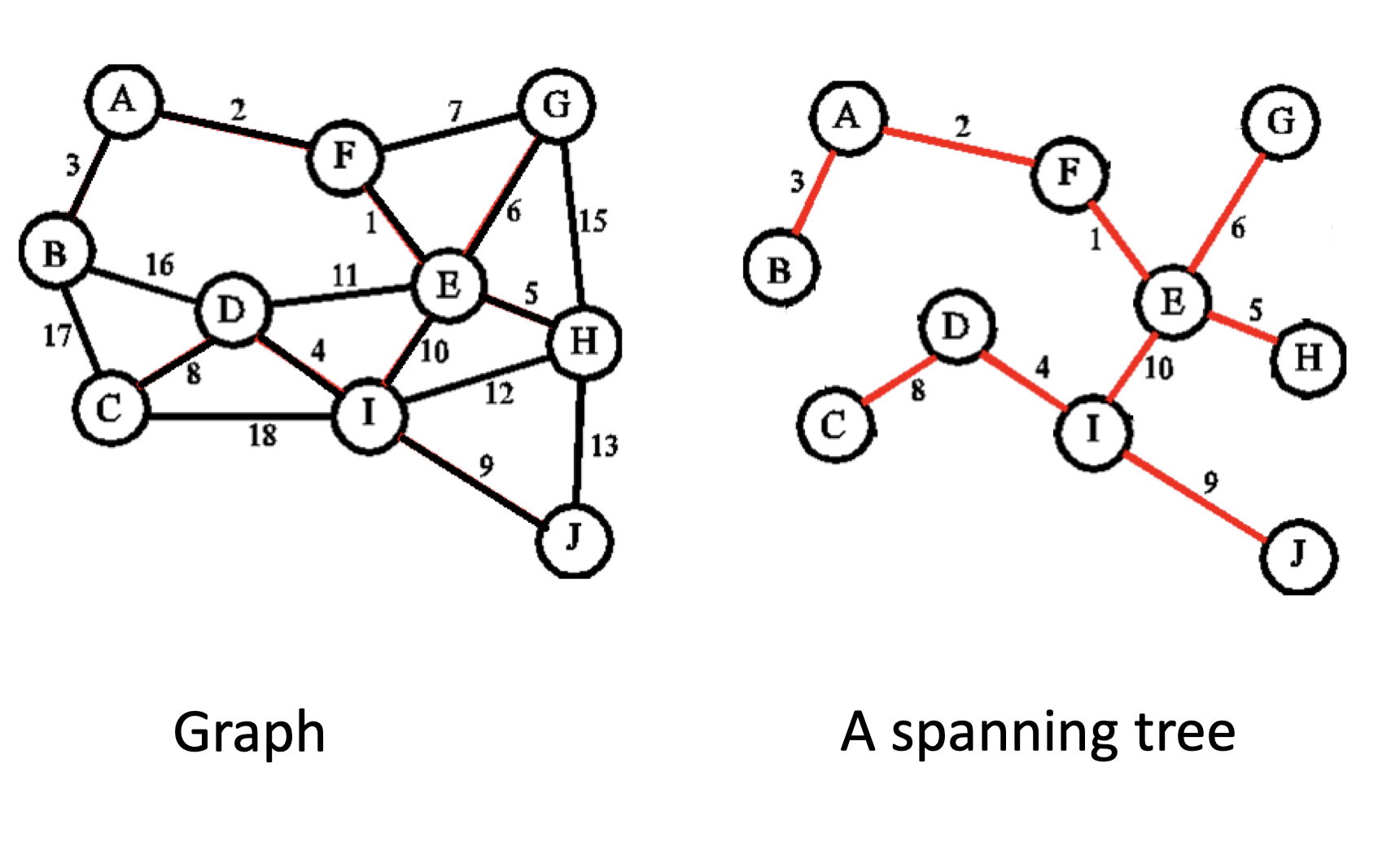
- A spanning tree is a sub-tree of a graph that contains all vertices of an undirected graph. A spanning tree must contain no cycles.
- Spanning tree of a graph with nodes has branches.
- Spanning trees are NOT unique.
- Spanning trees สามารถสร้างได้จาก DFS, BFS ได้นะ
Minimum Spanning Tree
- A minimum spanning tree (MST) is the spanning tree of which the total sum of the edges’ weights is minimum
- If the weights in a graph G is not distinct, then the minimum spanning tree is not unique.
MST Algorithms for Undirected Graphs
- สุดท้ายถ้าถามว่า MST Weight คืออะไร ก็ให้เอาเลขมาบวกกันนะ!
Prim-Jarnik’s Algorithm
- Choose an arbitrary start vertex — เริ่มจาก Node (Vertex) ไหนก็ได้เลยเหมือนเดิม
- Grow the tree by one edge: of the edges that connect the tree to vertices not yet in the tree, find the minimum-weight edge, and transfer it to the tree.— เลือก Weight ที่น้อยที่สุด
- Repeat step 2 (until all vertices are in the tree)
Kruskal Algorithm
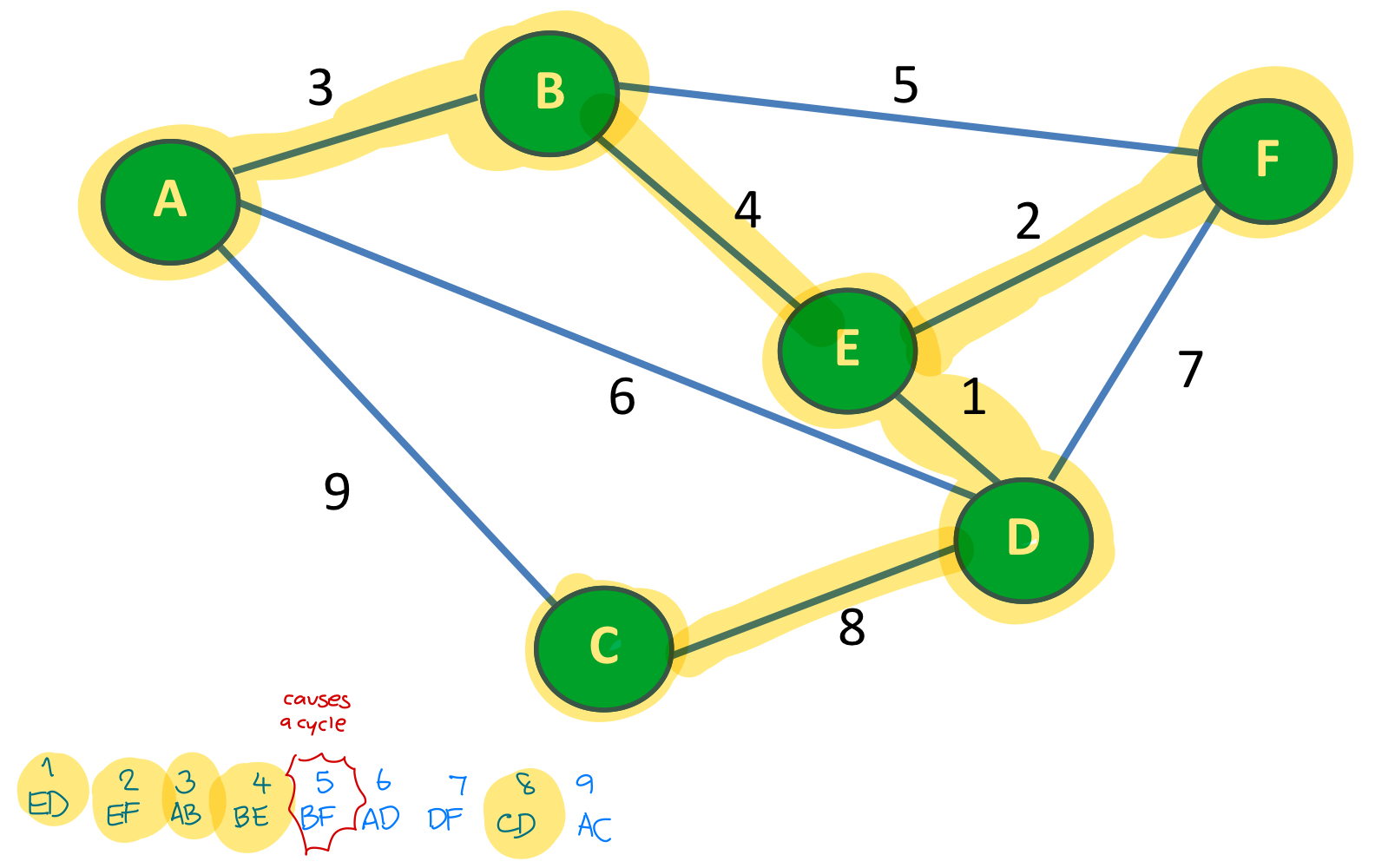
- List all edges of the graph in the increasing order of weights— เขียน List ออกมาเลยว่าแต่ละ Weight จากไหนไปไหนเป็นเท่าไหร่ แล้วต้อง Sort ด้วย
- Select the smallest edge from the list
- if the inclusion of this smallest edge doesn’t make a cycle, add it into the spanning tree (initially it is empty)
- If the selected edge with the smallest weight form a cycle, remove it from the list
- Repeat Steps 2-3 until the tree contains edges or list is empty
- If the tree contain less than edges and the list is empty, no spanning tree is possible for the graph
The Shortest Path Problem
- Given a starting point u and the ending point v in a graph, find the path from u to v that gives the smallest distance.
- Dijkstra Algorithm can be used to find the shortest path problem.
Dijkstra Algorithm
- The idea of the algorithm is to continuously calculate the shortest distance beginning from a starting point, and to exclude longer distances when making an update.
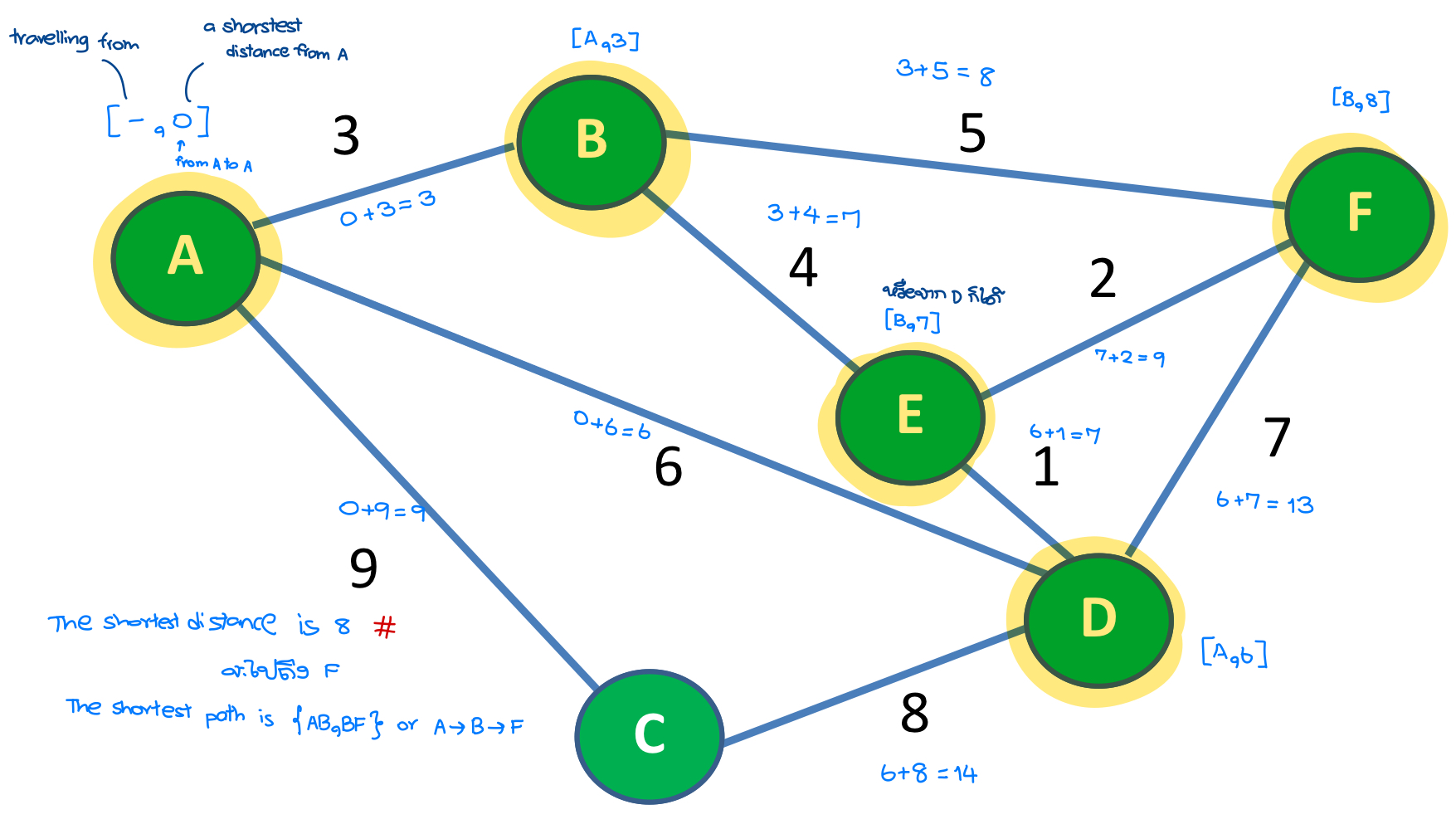
- Prim compared only adjacent, where อันนี้ compare shortest distance with connected edges