1. What is an Inductive Argument?
Key Definitions
Deductive Arguments
- Claim that their conclusion necessarily follows from their premises
- The conclusion makes explicit what was already implied in the premises
- If the premises are true, the conclusion MUST be true
Inductive Arguments
- Claim that their conclusion probably follows from their premises
- The premises support the conclusion but do not guarantee it
- The conclusion goes beyond the sample and applies to all cases
Example Comparison
Deductive Example: Detective Case
- A detective investigating a murder notices that nothing was taken from the wallet
- Reasoning:
- If robbery was the motive, the money would have been taken
- But the money was not taken
- Therefore, robbery was not the motive
Inductive Example: Disease Outbreak
- A scientist investigating a disease outbreak examines a random sample of victims
- Findings:
- All victims have recently eaten mangos from Ayutthaya
- They had nothing else in common
- Therefore, something in the mangos was causing the disease in the victims
Deductive vs Inductive Arguments - Key Differences
Structure & Logic
Deductive Arguments
1 + 1 = 2
- The conclusion makes explicit what was already implied in the premises
- If the premises are true, the conclusion MUST be true
- They are either valid or invalid
- Valid: Impossible for the premises to be true and the conclusion false
- Sound argument = Valid + True premises
- เพราะถ้าบอกว่า Moon is smelly, moon is yellow, conclusion moon is cheese แบบนี้ก็ไม่ได้ เพราะว่ามันเป็น False premises ไง จะไปรู้ได้ไงว่า moon smelly มั้ย
Inductive Arguments
1 + 1 + therefore 3 (CHCK)
- Conclusion goes beyond the premises (ampliative)
- Strength can vary: stronger with more evidence, weaker with less
- Cogent argument = Strong + True premises
Truth Preservation vs Evidence Building
Deductive Arguments
- Sound = Valid + True premises
- Example: "If robbery were the motive, then the money would be taken. The money was not taken. Therefore, robbery was not the motive."
- Deduction is "truth-preserving" - the truth of the premises is neither diminished nor added to; the conclusion just makes it explicit
Inductive Arguments
- Cogent = Strong + True premises
- Example: "Something in the mangos was causing the disease"
- Additional supporting evidence: "A group of tourists also got sick eating the same mangos last week"
- The more relevant premises (proof) are added, the stronger the argument becomes
- Conversely, disconfirming/contradicting proof would weaken the argument
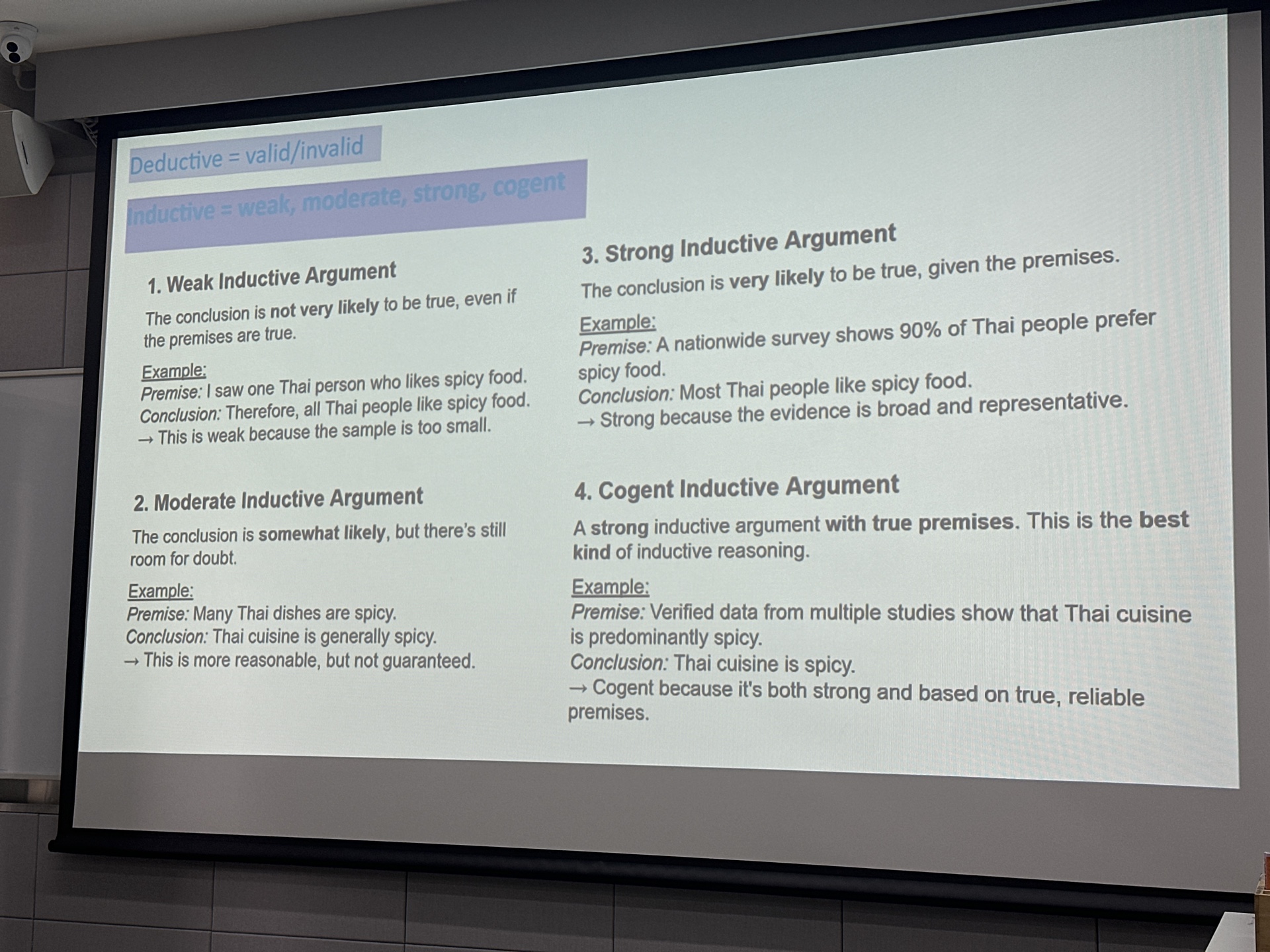
3) I can still doubt the evidence, like how many people were asked?
Quick Review Examples
Example A: The Barking Dog (INDUCTIVE)
- "I heard lots of barking last night. The neighbor's dog must have been pretty upset about something, since it rarely barks."
- Why it's inductive: The arguer is making an inference from experience
- Barking comes from dogs
- It's the neighbor's dog that barked
- Associating lots of barking with being upset
Example B: Company Income Streams (DEDUCTIVE)
- "The company has three income streams: property rental, delivery service, and dine-in restaurants. In 2021 and 2022, all of its dine-in restaurants were closed. It follows that the company only had income from property rental and delivery service in the last three years."
- Why it's deductive: The conclusion necessarily follows the premise
- If it is true that the company has 3 sources of income, and 1 source of income ceased in the last three years, then it cannot be false that the company had only 2 sources of income in the last two years
Example C: Height Comparison (DEDUCTIVE)
- "Jin is taller than JK. Jimin is shorter than JK. Therefore, Jin is taller than Jimin."
- Why it's deductive: The argument's premises guarantee the conclusion
- This is an easy example of the conclusion making explicit the implicit truth in the premises
But what if i say they can use differnet mesasurement?
Example D: Delivery Time (INDUCTIVE)
- "It usually takes 2-3 days for a delivery to ship from the warehouse to your door via most shipping services. You ordered on Tuesday morning, so it's safe to assume that your package will arrive Thursday or Friday."
- Why it's inductive: The premises do not guarantee the conclusion
- It can be true that it usually takes 2-3 days, but it doesn't mean that it's not possible for the package to arrive earlier or later than 2-3 days
- "Usually" indicates a conclusion that follows "probability"
Example E: Election Poll (INDUCTIVE)
- "Based on a randomly selected 770 Thammasat University students, 57% indicate that they will vote for the XYZ Party in the coming election. Therefore, in the election, around 57% of Thammasat students will vote for XYZ Party."
- Why it's inductive: The conclusion does not necessarily follow the premise; it follows the premises with some probability
2. Generalization
- Types of Inductive Argument
Take a small amount of evidence (met 3 woman from Columbia), and 3 of them are gorgeous, then you assume all Columbia woman are gorgeous!
Definition
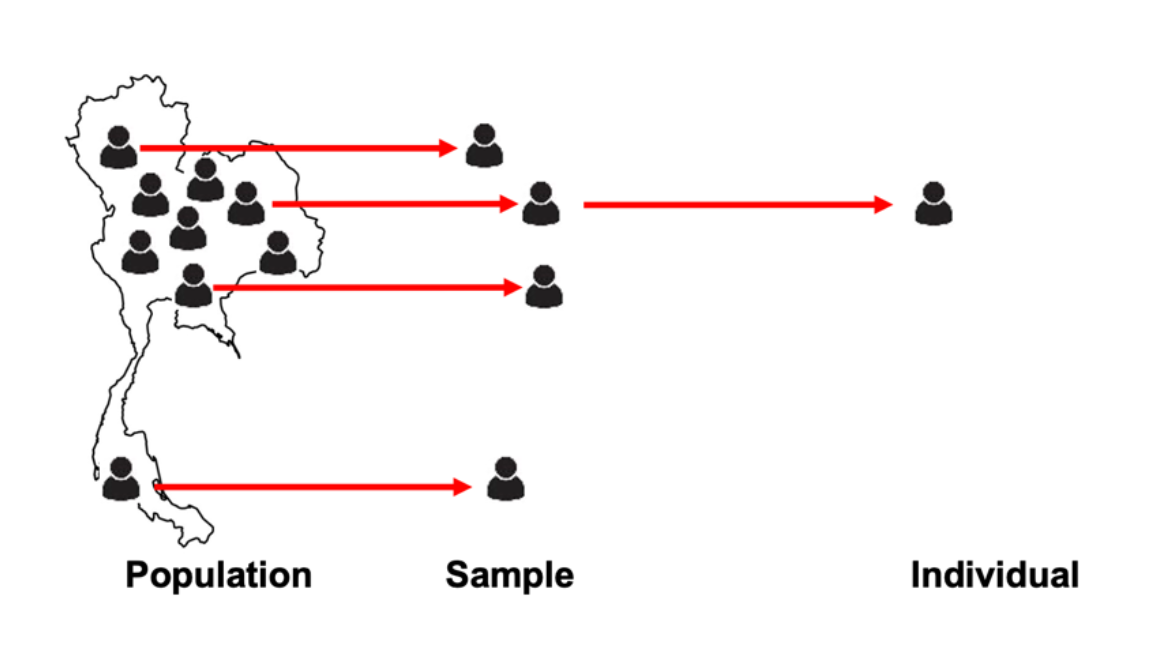
Generalization: Drawing a conclusion about a certain characteristic of a population based on a sample from it
Formula
Scientific Applications
- Scientists frequently use arguments based on generalization
- Involves studying a sample to make claims about an entire population
Data Collection & Inductive Generalization
Polls
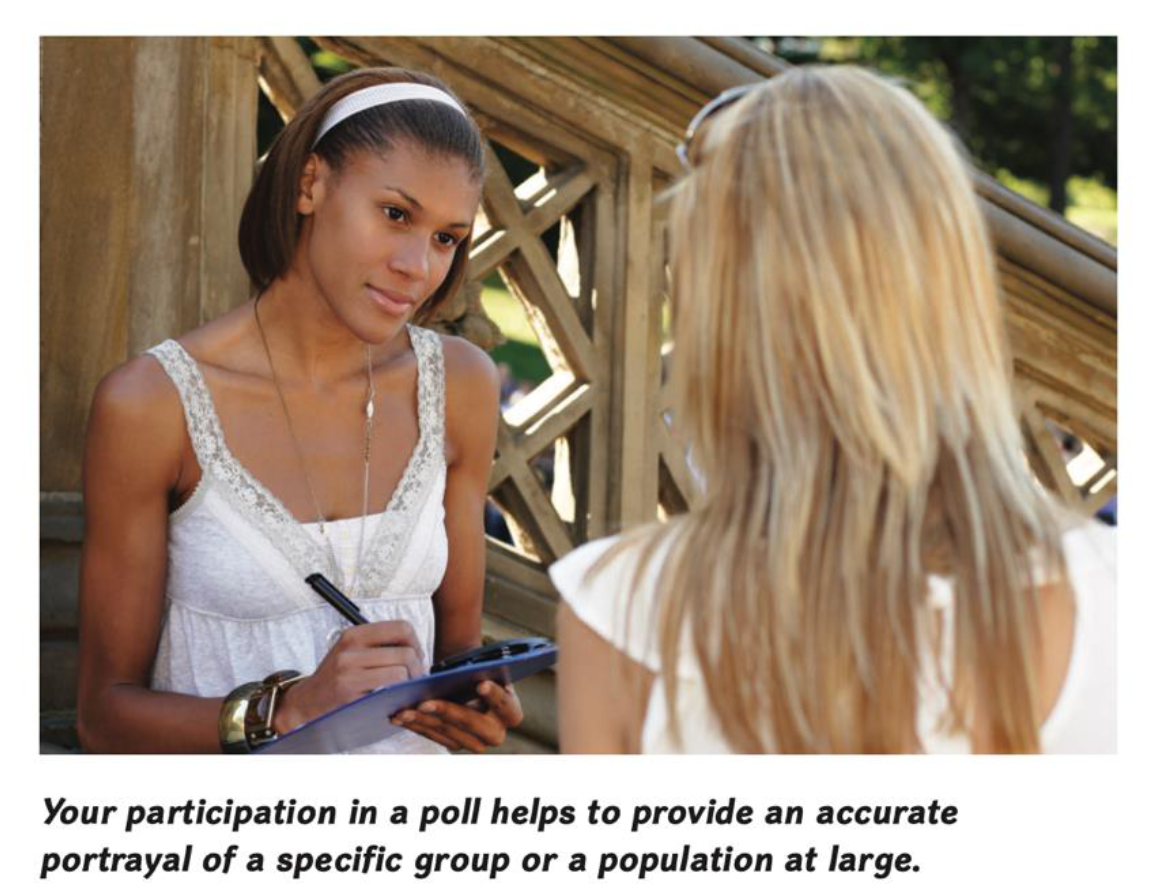
- A type of survey that involves collecting opinions or information on a subject from a sample group of people
- Your participation in a poll helps to provide an accurate portrayal of a specific group or a population at large
Sampling Techniques
Sampling Definition
- Selecting some small members of a group and making generalizations about the whole population on the basis of their characteristics
Representative Sample
- Sampling that is similar to the respects of the larger population
Random Sampling
- When every member of the population has an equal chance of becoming a member of that sample
Weighted Response
- Used to ensure that the sample is representative even when random sampling may be difficult to get
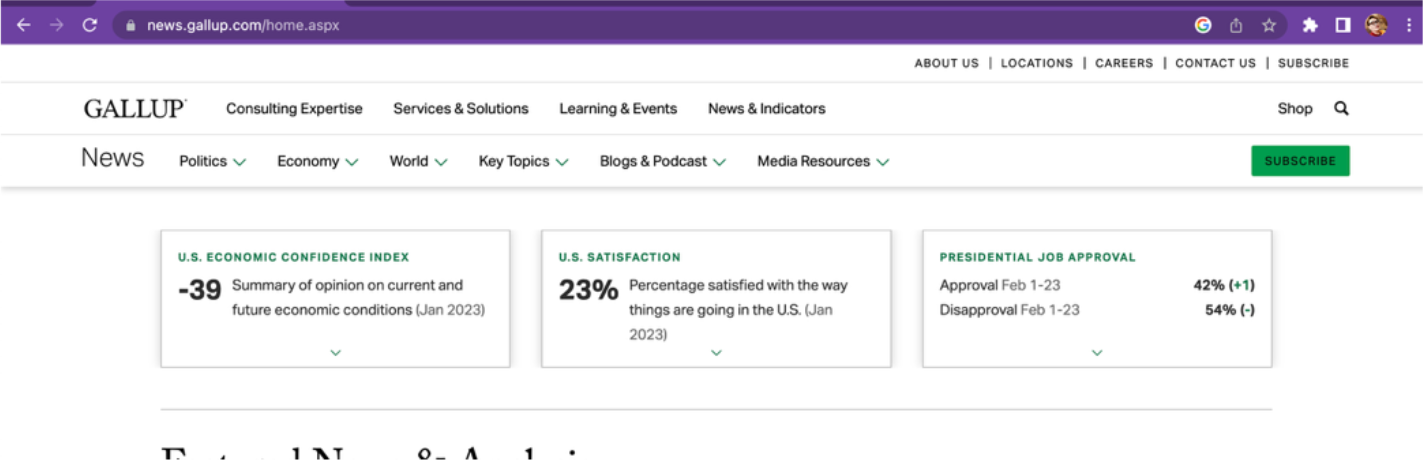
- Example: The Gallup Poll makes consistent predictions about the views of Americans on the basis of a representative sample of 1,500 to 2,000 people
Ask 100 people, do you wear lipstick?, ต้อง ask ให้ถูก target!
Sample Size Considerations
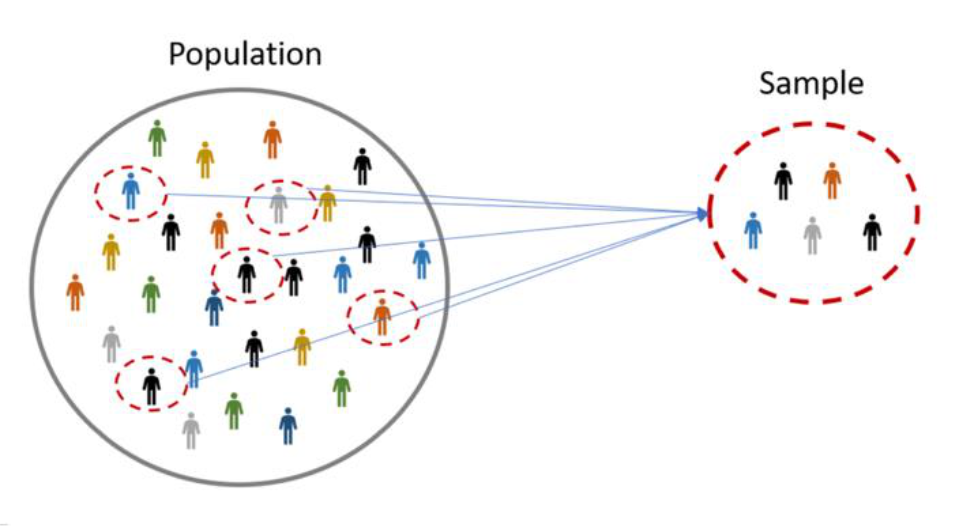
The sample size necessary to make a reliable generalization about the population depends on:
- Population size ✅
- Amount of variation in the population ✅
Survey Reliability & Potential Biases
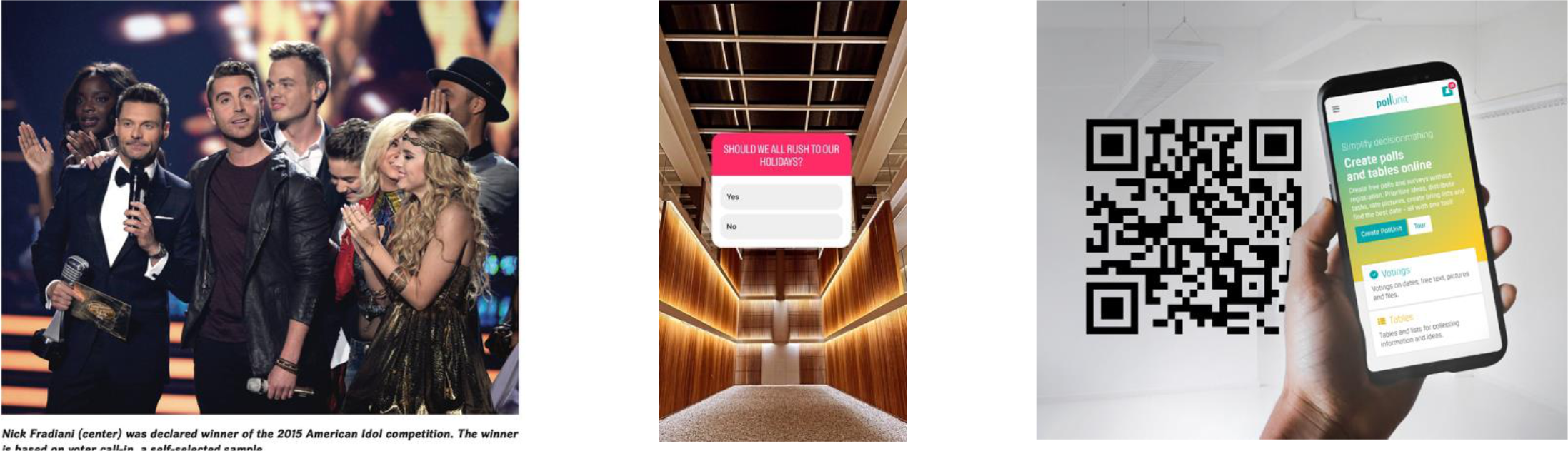
Self-Selected Samples
- Not all polls or surveys use random sampling or correct for biases
- Self-selected sample may be biased or unrepresentative
- Examples of potentially biased self-selected samples:
- Award show voting
- Comment cards
- QR code surveys
Effects of Question Wording
Slanted Questions
- A question that is written to elicit a particular response
- Example from the 1980 National Abortion Rights League Case:
- Version A: "Do you think there should be an amendment to the Constitution prohibiting abortions, or shouldn't there be such an amendment?"
- Version B: "Do you believe there should be an amendment to the Constitution protecting the life of the unborn child, or shouldn't there be such an amendment?"
Push Poll
- A poll that starts by presenting the pollsters' views before asking for a response
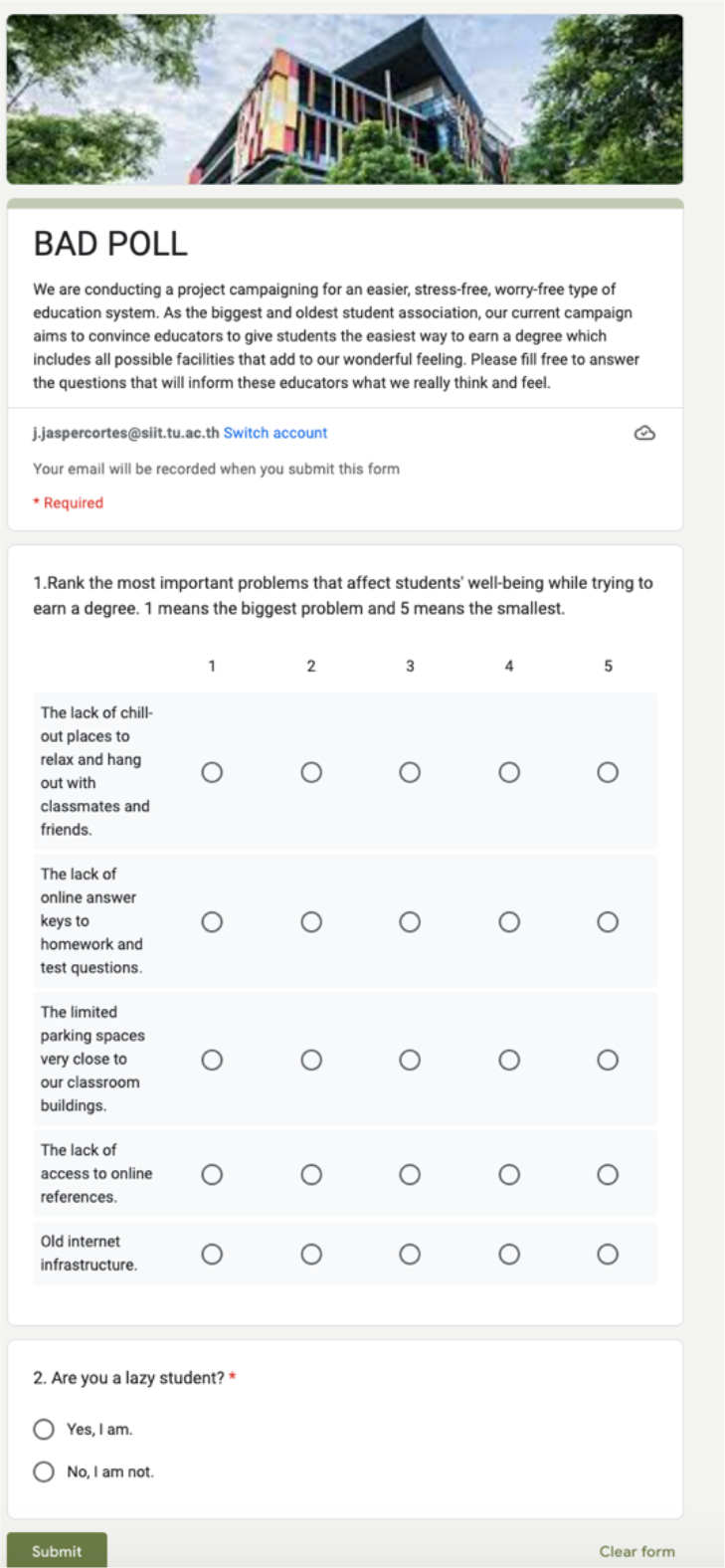
Loaded Question
- A fallacy that assumes a particular answer to an unasked question
Additional Considerations
- Survey tools should avoid false dilemma questions
- To avoid self-serving bias, questions should not threaten the respondent's self-image
Questions to Ask in Determining if a Poll or Survey is Reliable
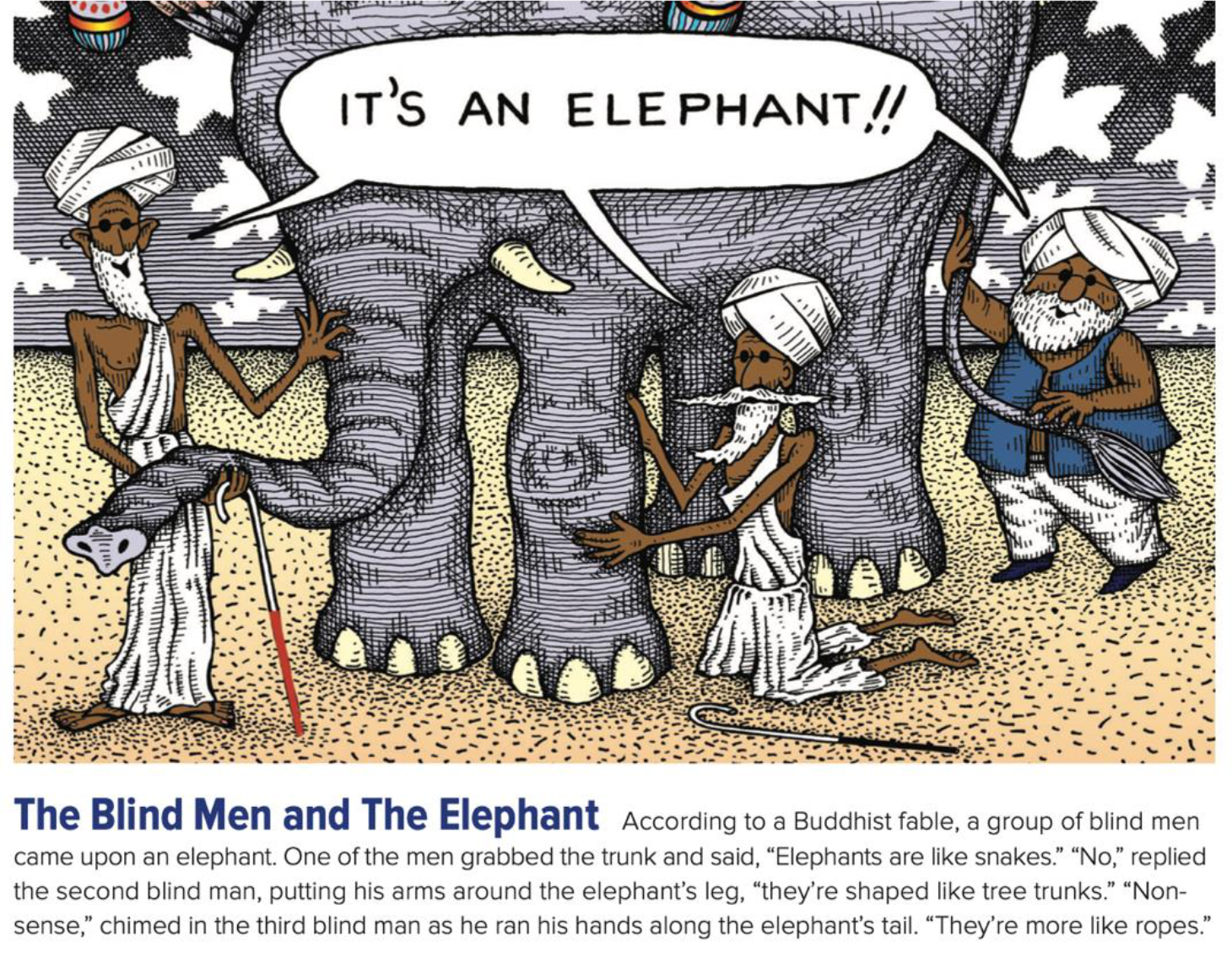
- Who conducted the poll, and what was its purpose?
- How was the ==sample selected?==
- Was the ==sample large enough?==
- Was the ==sample representative== of the population under study?
- What method was used to carry out the poll?
- What questions were asked?
- Were the questions ==well written and unbiased==?
- What ==other polls== have been done on this issue?
- Are this poll's findings ==consistent== with their findings?
Application: Find an example in the text of an answer to each of these questions
Applying Generalization to Particular Cases
Structure
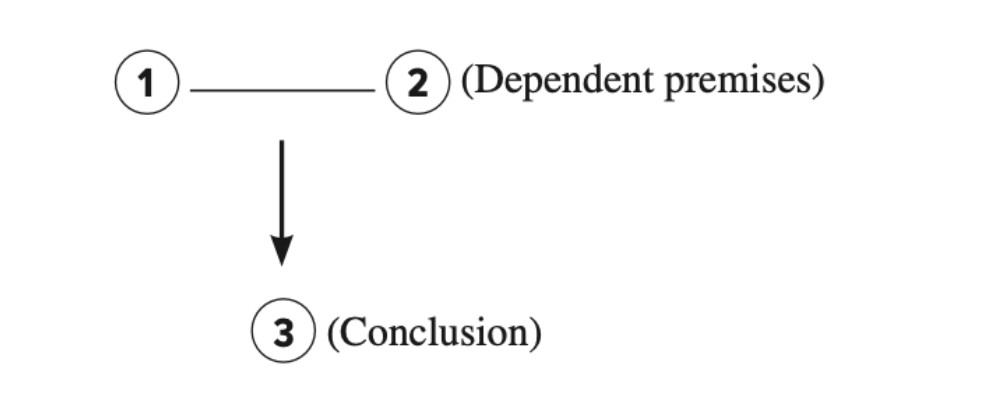
Generalization about the population (Premise) → Claim about a member of the population (Conclusion)
Example: Valentine's Day Decision
Argument Structure:
- [I was going to get my wife Ling a new bathroom scale for Valentine's Day] until I read a study that said
- [most women prefer to be taken out to a romantic dinner.]
- [Ling will probably like going out to dinner more than the scale.]
Diagram:
Key Principle:
"When a generalization about a population is applied to an individual member of that group, statistics are often used regarding the prevalence of the characteristic in the population. The higher the prevalence of a characteristic in the population, the more likely it is that the application to the individual will be true."
Example: Executive Height
Argument:
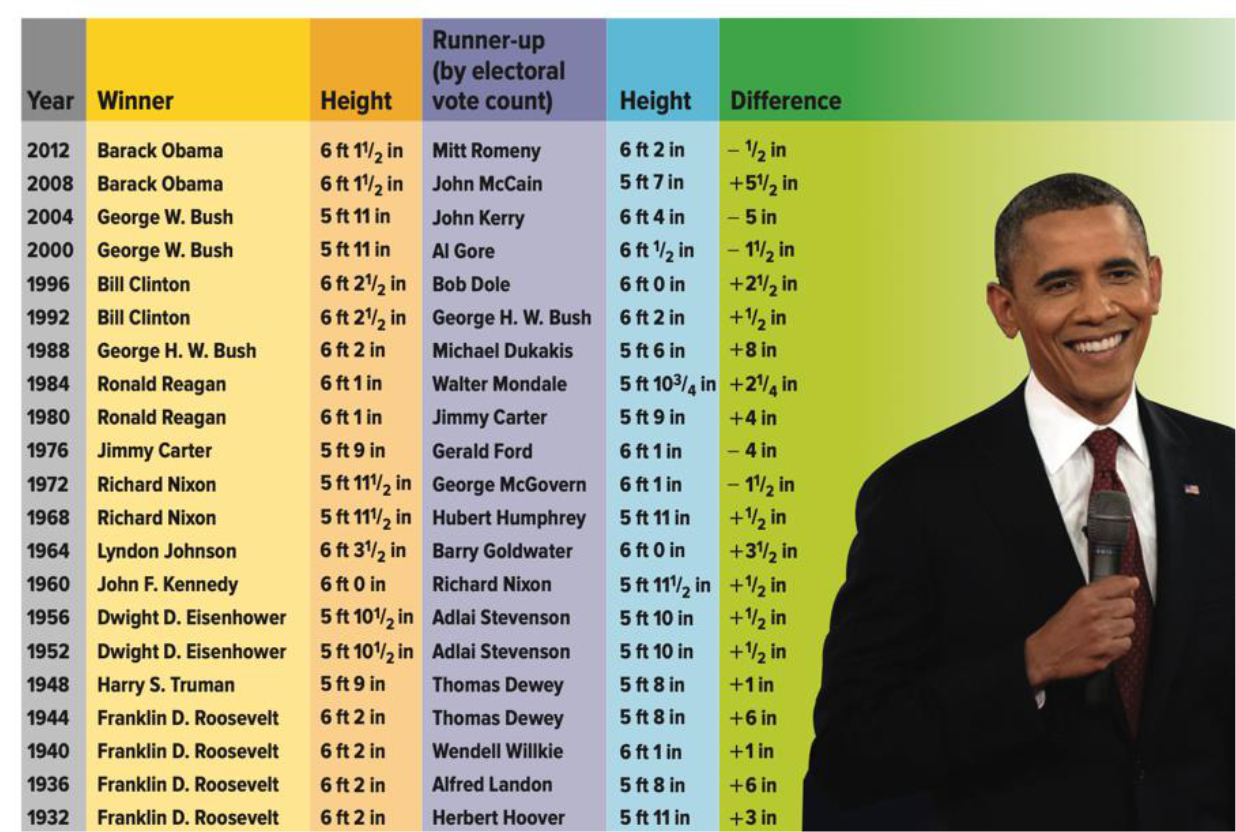
- "Studies show that executives tend to be significantly taller than employees of a company. Therefore, Anna Gable, the CEO of Buzzword Electronics, is probably taller than 5'4", the average height of women in the United States."
Note: The same generalization can be made about US presidential candidates who get elected as presidents and their height compared with their opponents'
3. Analogy (Analogical Arguments)
Definition
Analogy: A comparison of two or more similar events or things
Analogical Reasoning
Fundamental Tool
- May be the most fundamental & most common tool in creating an argument
Examples:
Example 1: Canned Fish
- A guy is deciding between a new flavor of Select tuna and Brand X
- He recalls that all other types of canned fish from Select were good
- He then picks a can of Select
Example 2: Stephen King Novel
- A woman who was thinking of reading a Stephen King novel recalled that the last 3 novels by the author were all thrilling
- She concluded that his latest novel would also be thrilling
Key Principle:
- Analogical reasoning depends on a comparison of instances
- If the instances are similar enough, the decision reached in the end is good
- But if they are not similar enough, the decision is bad
Framework of Analogical Arguments
Simple Structure
X has attributes a, b, c, and z.
Y has attributes a, b, and c.
Therefore, Y probably has z also.
Parts of the Analogical Argument
Using Beyoncé Example:
- "Beyoncé's latest album is probably good because her previous albums were all good."

Key Terms:
- Analogues: The items being compared
- Secondary Analogue (Latest album)
- Primary Analogues (Previous albums)
- Primary Analogues: The original analogue to which the newer analogue is being compared (AKA The source of comparison)
- Secondary Analogue: The newer analogue, AKA the target of the comparison
Learning is like gardening. Just as plants need time, care and the right environment to grow, students need nurturing, patience, and a supportive classroom to thrive academically
- Primary analogue is Gardening
- Secondary analogue is Learning
Six Principles of Analogical Arguments
- Relevance of the Similarities
- Number of Similarities
- Nature and Degree of Disanalogy
- Number of Primary Analogues
- Diversity Among the Primary Analogues
- Specificity of the Conclusion
Case Study: Alex's Sneaker Purchase
Context
Alex is thinking of buying a new pair of sneakers because she wants economical footwear that will give her comfort while she teaches and does her work at SIIT.
Criteria 1: Relevance of Similarities ✓
The similarities must support the conclusion.
Good Example:
- "I need a new pair of sneakers that's economical and comfortable for me to stand and walk in for hours. Ms. Pun wears a pair of Nike Zoom sneakers like this one. Both pairs have light material, use breathable fabric, their soles are bouncy, and they are only 2,500 baht. So, I should get this pair that is as good as Pun's."
Analysis Table:
| A | B | C | D | E | |
|---|---|---|---|---|---|
| Primary Analogue (Pun's shoes) | Nike Zoom | Light material & breathable fabric | Bouncy soles | 2,500 THB | Cheap and comfortable to use |
| Secondary Analogue (Shoes on display) | Nike Zoom | Light material & breathable fabric | Bouncy soles | 2,500 THB | ? |
Conclusion: "This pair is so similar to Pun's shoes. Therefore, this pair is as cheap and as good as Pun's." ✓
Bad Example: ✗
- "I need a new pair of sneakers that's economical and comfortable for me to stand and walk in for hours. Ms. Pun wears a pair of Nike Zoom sneakers like this one. Both her shoes and this pair are in gorgeous colors. Both pairs also make our legs look long and thin. So, I should get this pair that is as good as Pun's."
Why it fails: The similarities (color, appearance of legs) are not relevant to the conclusion (economic value and comfort)
Criteria 2: Number of Similarities ✓
The argument will be strengthened with the more relevant similarities.
Stronger Example:
- "I need a new pair of sneakers that's economical and comfortable for me to stand and walk in for hours. Ms. Pun wears a pair of Nike Zoom sneakers like this one. Both pairs have light material, use breathable fabric, their soles are bouncy, and they are only 2,500 baht. Ms. Pun has been wearing her pair to work almost every day. So I should get this pair that is as good as Pun's."
Why it's stronger: The additional information about daily use at work adds another relevant similarity that supports the conclusion about durability and comfort
Criteria 3: Nature and Degree of Disanalogy
Disanalogies are the differences between primary and secondary analogues.
Question: Which of these disanalogies would weaken, not affect, or strengthen Alex's argument?
(a) Pun's sneakers are purple.
- Effect: Does not affect (color is irrelevant to comfort and economy)
(b) Pun wears her sneakers for her dance workout too but Alex does not work out.
- Effect: Does not affect (may even strengthen - if they work for dancing, they'll work for standing)
(c) Pun inserts a gel padding on the sole so they would be comfortable enough for herself.
- Effect: Weakens the argument (the shoes may not be comfortable without the padding)
Criteria 4: Number of Primary Analogues
Principle: More primary analogues strengthen the argument
Current Situation:
- So far, Alex has based her conclusion on the similarity between the sneakers she intends to buy and the sneakers that Ms. Pun wears
Improvement:
- What if Alex knew more workmates who used the same sneakers?
- If those other workmates use them daily and report that their shoes are comfortable as well, then Alex's argument to get Zoom sneakers is strengthened
Criteria 5: Diversity Among the Primary Analogues
Weak Scenario:
- What if Pun, Ploy, and Preaw all wear the same Zoom sneakers and all use a gel padding to feel comfortable?
- This would weaken the argument (lack of diversity suggests the shoes may need padding)
Strong Scenario:
- If it is only Pun who uses the gel padding, but the other two do not
- And they do physical activities while wearing their shoes
- And are still comfortable for long hours in those shoes
- Then these diverse primary analogues strengthen the argument
Criteria 6: Specificity of the Conclusion
Principle: The more specific the conclusion, the easier it is to falsify or disprove
Comparison:
Conclusion A (Less Specific):
- "So, I should get this pair that is as good as Pun's."
Conclusion B (More Specific):
- "So, I should get this pair that can be worn comfortably for 10 straight hours like Pun's."
Analysis: Conclusion B is more specific and therefore more easily testable/falsifiable, but also requires stronger evidence to support
Small Group Activity: Strengthening Analogical Arguments
Instructions
- Work in groups of 3-4
- Pick an argument (maximum of 3 groups per argument)
- Create a diagram of the analogy
- Identify the primary and secondary analogues
- Add at least 1 disanalogous pair and 1 analogous pair to strengthen the argument
Arguments to Choose From
Argument 1:
- My classmate took a math tutorial class and got an A. I should take a math tutorial class.
Argument 2:
- Last year, I worked during the summer break and saved 20,000.00 baht. I should work again this summer to save money.
Argument 3:
- My friend walks out of his dorm at 7:30 and gets to SIIT by 8:00. I should also leave my dorm early, so I arrive at SIIT early.
Summary Notes
Key Takeaways
Deductive vs Inductive Arguments
- Deductive: Conclusion necessarily follows; truth-preserving
- Inductive: Conclusion probably follows; evidence-building
Generalization
- Drawing population-level conclusions from sample data
- Critical factors: sample size, representativeness, random selection
- Beware of biases: self-selection, question wording, push polls
Analogy
- Comparing similar instances to draw conclusions
- Strength depends on: relevance, number of similarities, number of primary analogues, diversity, and specificity of conclusion
- Watch for disanalogies that may weaken arguments
Six Principles for Strong Analogical Arguments:
- Similarities must be relevant to the conclusion
- More relevant similarities = stronger argument
- Consider nature and degree of differences (disanalogies)
- Multiple primary analogues strengthen the argument
- Diversity among primary analogues adds strength
- More specific conclusions require stronger evidence